Tag Archives: scholarly communication

Data Diversity Podcast #3 – Dr Nick H. Wise (4/4)

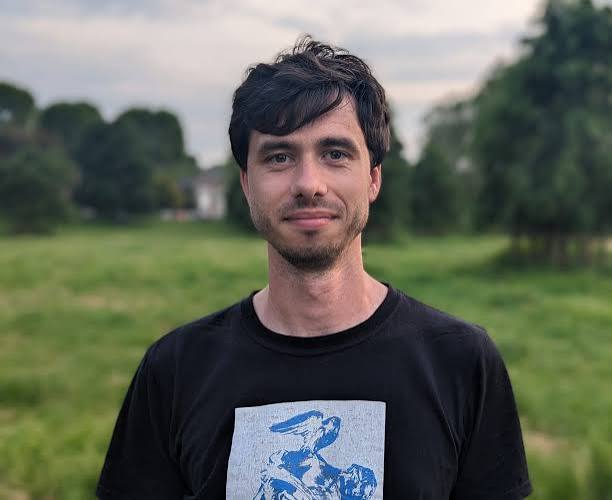
Thank you for staying with us throughout this four-part series with Dr Nick Wise, scientist and an engineer, who has made his name as a scientific sleuth. By now, it is hoped that he needs no introduction (though if you would like one, please look back at the previous posts).

In this final post, we get Nick’s take on what he thinks the repercussions should be for engaging in fraud, and we get a parting tip from Nick on what researchers should do when performing a literature search on papers in their field. Below are some excerpts from the conversation, which can be listened to in full here.


Most people don’t go into science wanting to fake stuff. With such cases, it can often be a sign that there’s a real problem in the lab or in the group. Why else would someone feel so compelled to do this? If the pressure is coming from the university demanding papers from them, then it’s the problem with the university. 


Repercussions for research fraud 

LO: You have mentioned that some editors have been let go from their positions as editors – are there any other repercussions for getting involved with fraud? 

NW: Often, institutions are the worst in terms of responding. Recently, I was at the World Conference on Research Integrity in Athens and spoke to other investigators like me, including publishers and people in the research integrity space. Some publishers have informed me that even when they want to make a retraction and have gone to the author’s or editor’s institution to inform them that a staff member has been involved with fraud, often the institution doesn’t reply at all, or even if they do, they will not do anything. They are very defensive, and they do not want any bad publicity for the institution and so they will not respond at all. Even in a well-regarded western University where someone has been caught fabricating their data, the response could just be that they have been relieved of teaching duties for six months, but they’ve kept their job and there will be no publicity that we know.  

In Spain, a professor that has just been made Rector, the Head of the University of Salamanca, the oldest university in Spain, has been linked to questionable publication practices for the last decade or so. He was found to have his name on an incredible number of papers which have been cited an incredible number of times, including by people who don’t exist. There has been a fight in the Spanish press to try highlight this. But despite of all this press, including national press in Spain, this person has become the Rector of the University of Salamanca. And it’s basically the same the world over: institutions very much go into protection mode even if publishers have agreed on retracting the papers. Often there are no career repercussions at all. Sometimes, they will just go and be editor of a different journal or for a different publisher. 

LO: In your opinion, what should happen to an academic or researcher who has engaged in fraud? 

NW: I think it really depends on the nature of the fraud and the position that the researcher holds. If a PhD student has done something and if they have been caught after, say, the first offence, then I think there should be leniency. Regardless of if they have bought an authorship, or if they have tried to fake some data, they still have a way out and it should be offered to them. Again, a lot of the drive for PhD students faking some data is because their P.I. (Principal Investigator) is demanding results, demanding that things happen faster, or demanding ground-breaking results. At some point, people become desperate. Most people don’t go into science wanting to fake stuff. With such cases, it can often be a sign that there’s a real problem in the lab or in the group. Why else would someone feel so compelled to do this? If the pressure is coming from the university demanding papers from them, then it’s the problem with the university. A lot of this drive is external to researchers. But if you have someone that is a tenured professor who has been doing this for a long time and they have been caught out on a decade or more of fabricated results, those feel like that should be the end of the road. It really depends on the nature of what has been done, the stage of career of the person, and how much fraud has been committed. 

LO: Do you ever worry about being called out for being sued for defamation? 

NW: I have thought about it, and I try to err on the side of caution and make sure that there is fairly hard evidence for anything I say publicly. You can have suspicions without saying anything publicly – you would just go to the publisher. But when I find an advert for a named paper and then six months later a paper with that same title is published, then it is clear cut that someone should investigate. But fortunately, so far, I have not been threatened with anything. 

I think it is also partly due to the fact that accusing people of making up their data is more personal. When authorship is bought, by the time I find it, some of these people would have already got what they needed. If they needed to have a publication in order to graduate, once they have graduated, they do not care if the publication is retracted. Often when you read a retraction notice after the authorship has been sold, they will normally say that none of the authors responded. This may also be down to the fact that they know that they have been caught but there is nothing to defend. But when you are accusing someone of making up data, I think that is far more personal attack. When someone has bought authorship, they do not have a personal connection to the paper, so they move on. They are probably annoyed, but they cannot do anything about it. 

Parting advice

LO: To end, are there any takeaways that you would like to share? 

 NW: I would encourage all researchers to download the PubPeer plugin, which means that whenever they are looking at a paper, it will flag whether there are any comments about that paper, or indeed any comments in the reference or the reference papers on PubPeer. If someone else has found a problem with that paper, they can just quickly go and check and be more informed. 


We are grateful for Dr Nick Wise sharing his perspective on the publishing industry and research culture that many of us are not privy to. Nick has highlighted many issues which raise pressing concerns for research integrity. We thank him for his time speaking with us and we hope that readers will take his advice on using PubPeer when they embark on literature searching (and of course, refrain from committing fraud, lest you will have Nick on your case).

Data Diversity Podcast #3 – Dr Nick H. Wise (3/4)

Welcome back to the penultimate post featuring Dr Nick H. Wise, Research Associate in Architectural Fluid Mechanics at the Department of Engineering, University of Cambridge. If you have been with us for the previous two posts, you would know that besides being a scientist and an engineer, Nick has made his name as a scientific sleuth who, based on an article on the blog Retraction Watch which was written in 2022, is responsible for more than 850 retractions, leading Times Higher Education to dub him as a research fraudbuster. Since then, through his X account @Nickwizzo, he has continued his investigations, tracking cases of fraud and in some cases, naming and shaming the charlatans. In this four-part series, we will learn from Nick about some of the shady activities that taint the scientific publishing industry today.

In part three, we learn from Nick about how researchers try to generate more citations from a single piece of research through a trick called ‘salami slicing’ and the blurred lines between illegality and desperately coping to meet with the unrealistic expectations of academia (to the point of engaging with fraud). Below are some excerpts from the conversation, which can be listened to in full here


Citation count was once a proxy for quality and now it is citation count regardless of quality. People are only looking at the citation count, and not the actual quality. Actually assessing quality takes a lot more effort. 


‘Salami slicing’ and the Game of Citations

LO: What do you think is better for science? A slower, more thoughtful process of publishing and everything in between? Or more information, more research, but then things like fraud slip through and occur more frequently?

NW: I don’t think there’s necessarily more research. Another phenomenon that paper mills take advantage of is salami slicing. Imagine you have completed a research project. Now you could write this up as one, thirty-page paper or two, twenty-page papers. You could write two comprehensive papers or try to put out multiple ten-page papers where you have some minor parameters changed. I see this happening in nanofluids research because it is an area of research close to mine. The nanofluid is simply a base liquid – it might be water, it might be ethanol – and into that you mix these very small nanoscale particles of some other material, such as gold, silver, or iron oxide. And in this sort of mixture of liquid and particles, you want to investigate its fluid flow and describe this with some differential equations. You can use computers to solve the differential equations and then plot some results about velocity profiles and heat transfer coefficients, etcetera. Now, you could write a paper for a given situation where you say, I’m not going to specify the liquid, but here is a general and viscosity of this liquid. If you want to apply this to your own research, you plug in the density and viscosity of your liquid, and likewise the particles. I’m not going to specify which particles are used, because all that changes is their density and their heat transfer coefficient properties. So that’s one way you could do it.

Another way to do it is to go I’m going to write a paper about water and gold particles; that’s one paper. Then you can write another paper which has water and silver particles, and then you can write one with ethanol and iron oxide, and there are so many varieties. You can also vary the geometry that this flow is going around, and you can add in an electric field and a magnetic field, etcetera. You can build up in this n-factorial way. There are thirty possible liquids multiplied by a hundred possible particles and multiplied by however many geometric configurations. You can see that this is what they are doing. Rather than writing a few quite general comprehensive papers, they are writing hundreds of very specific papers which enables them to produce more papers and sell more authorships and put more citations in. But this overwhelm of papers produced; there’s still only so many peer reviewers, and so many editors. And this phenomenon happens in lots of fields, they find something where there are just these variables that they can keep writing almost the same paper. Yet, the paper is original. It has not been done before. It is incredibly derivative, but that is not necessarily a barrier to publication.

LO: What I’m getting from this is, this is part of the whole system, and the issue at hand is definitely enabled by certain motivations like getting more citations. You can take one big piece of salami or publish that in one book, or you can slice the salami thirty ways. And if they are in the position to slice the salami, they say why not, I suppose, right? A game is there to be played.

NW: Right, they are playing the game that is in front of them. And again, there are people who do this who are not from a paper mill. They just want to maximize the number of citations and publications. The question is why are they doing this? Why do they want to maximize their publications? Because they want a promotion, or they want a tenured job. There are also countries where you get a cash reward for publishing a paper in a good journal so the more papers you publish, the more money you get paid. Your government might have told all the universities that they need to increase their ranking in the World University rankings. How do you do that? By increasing your research output and the citations you get. That is another driver. These drivers come from all sorts of places but there is always an emphasis on numbers. Citation count was once a proxy for quality and now it is citation count regardless of quality. People are only looking at the citation count and not the actual quality. Assessing quality takes a lot more effort.

LO: Citations used to be a proxy for quality, but that is not the case anymore. But it still implies the quality of the research, or you would hope.

NW: You would hope, but only because there is an assumption that the only reason something has a lot of citations is because it is good quality. Citations are also easier to count. Quality is much harder to account for, but that incentivizes people to do things like cite their colleagues. Again, you could still track it if people from the same university were citing each other. But then you get bigger scale things with middlemen who organize people from across the world to cite each other or just do it for cash. If you are publishing and you are producing papers to order, each one of those papers has a reference section which is real estate. You can throw in and have some genuine references which are relevant to this paper, but you can also throw in some irrelevant references that someone paid you to include. You can also pay someone to include references that are actually relevant to a topic.

LO: If it is relevant to a topic, it is almost like merely encouraging someone to be aware of certain work as opposed to a scam, which sounds like a gray area.

NW: Well, I would say that as soon as someone is paying money, then it starts to be illegitimate. But I mean if someone emails you and says “I’ve just published this paper, I think you might be interested, it’s in your research field: maybe read it or maybe you do cite it”, it’s different from someone emailing you to say “I’ll pay you £50 if you cite my paper” and you do. Then I would say that you have crossed a line. So, it does get very gray. Then there are these organized paper mills who are doing this as a business and that is where I think it becomes quite clear that it is probably not legitimate.

Facebook (authorship) marketplace

NW: You could go on Facebook and there are people selling authorship of their paper as a one off. There are PhD students in some country with no research funding who say “it costs $2500 for the article processing charge for me to publish where I would like to publish, I do not have $2500 so if you pay the $2500, you can be first author on the paper” and that is the only way they can get their paper published. They’re not doing this as a business, they’re just doing this once for this one paper. And you get people responding. Quite often professors or more established academics with access to budgets are the ones who will say yes. And the only thing that the person has done is to provide the funding for the publication.

The minimum thing that one is supposed to have done to be considered an author is to have either written the draft or reviewed and edited the paper. You might have also done data analysis or conceptualization. I think we would agree that if all this person does is just pay the fee for publication, then that is not acceptable. But what if they read the paper and then made a couple of comments? Now they have reviewed and edited it, and so now they have done review, editing and funding. There are many big labs around the world that have some very senior scientist whose name is on every single paper that comes out of the lab. And what have they done? Well, they provided all the funding, and they have reviewed the paper. I bet there are some who have barely glanced at the paper. But let’s say that they have reviewed the paper, and they provided the funding for the publication. Is that what makes it different to the person on Facebook who has found some random professor from another country to pay for their publication? Where is the difference? I don’t think it is an easy line to draw. In this way, the move to Open Access publishing requiring large fees for publication has also driven quite a bit of this phenomenon.

LO: It also seems like you have developed a bit of empathy. Maybe you’ve looked at so many cases and you see that it’s not always clear.

NW: Absolutely. Again, if you have the people running a paper mill, or if you have some professor who is being bribed and waving through dozens of papers, I don’t have much empathy for them. But the Masters or PhD student who has been told that they have to publish papers to get their PhD or even a Masters and they have this demand placed on them, or they even have produced a paper but they need this on the all this money to get it published, I don’t blame them for what they’re doing. It’s the situation they’ve been placed in. It is the system that they are part of. I have a lot of empathy for them.


Look out for the final post coming next week, where we get Nick’s take on what he thinks should be the repercussions for engaging in fraud, and we get a parting tip from Nick on what researchers should do when performing a literature search on papers in their field.

Data Diversity Podcast #3 – Dr Nick H. Wise (2/4)

We are back again with our second blog post featuring Dr Nick H. Wise, Research Associate in Architectural Fluid Mechanics at the Department of Engineering, University of Cambridge. As is the theme of the Data Diversity podcast, we spoke to Nick about his experience as a researcher, but this is a special edition of the podcast. Besides being a scientist and an engineer, Nick has made his name as a scientific sleuth who, based on an article on the blog Retraction Watch which was written in 2022, is responsible for more than 850 retractions, leading Times Higher Education to dub him as a research fraudbuster. Since then, through his X account @Nickwizzo, he has continued his investigations, tracking cases of fraud and in some cases, naming and shaming the charlatans.

In this four-part series, we will learn from Nick about some of the shady activities that taint the scientific publishing industry today. In this second part, we get Nick’s take on the peer review process and fake research data, and I ask his opinion on where the fault lies in the publication of fraudulent research. Below are some excerpts from the conversation, which can be listened to in full here


There are indices like Scopus or Web of Science or SCI, all these different bodies who claim journals are trustworthy, but every journal is going to get attacked by fraud and some will slip through. It is what you do afterwards that matters. 


On the peer review process

LO: As an Early Career Researcher, scientist, engineer, and researcher yourself, is your trust in the whole system still intact? Do you still see value in the peer review process? 

NW: It has absolutely changed how I read a paper and how I view particular journals. When you see a problem happening in a journal that you have read in your research or a journal you have considered submitting to, it really gives you pause for thought. There is an entire ecosystem of journals, right from the from the very good down to the very bad, that are implicated. There are indices like Scopus or Web of Science or SCI, all these different bodies who claim journals are trustworthy, but every journal is going to get attacked by fraud and some will slip through. It is what you do afterwards that matters. Another phenomenon that particularly happens with publishers with a wide list of journals, is that the paper mill will legitimately buy the journal. They may even take it over in a hostile way: they will make a clone of the journal and the website, and they will even redirect the publisher’s link to a different website. They now control a journal that is officially on this trustworthy list. Now they have a short period of time before someone notices and in that time, they will try to publish as many papers as possible and charge everyone for publication. They will absolutely cram this journal with any content. It does not even have to be relevant to the topic because they’re fully in control of the whole process up until the publisher notices and removes the journal from the list. For an author who needs a journal in a paper published in a well-regarded journal, they have achieved what they needed but as soon as the journal is removed from the list, then it becomes worthless. But there is a large supply of these journals, and they will keep trying to take them over. This tends to happen with low tier journals, but there are also paper mills which are targeting journals with an impact factor of over five, over ten – the supposedly absolute top tier journals. 

Between incompetence and conspiration

LO: These days, fraud is so convincing, scams are so rampant, and they always target your insecurities, the insecurity here being authors who want citations. 

NW: I would say that it is not a scam or fraud for the researcher, in the normal sense. These people are selling citations, and the buyer gets citations as opposed to someone getting cheated for their money and getting nothing in return. They are scamming the publishers and scamming the scientific community, but they are not scamming an actual person paying the money. It is a business that is operating as it says it is.  

LO: What does it say, though, that fraudulent papers are still getting through the peer review process. It’s still quite a long way from first draft to publication, and we have seen some cases where remnants of text from Chat GPT replies like “as a large language model…” gets through the review process. In your mind, what does it say about the industry? What’s happening here? 

NW: I think that it is somewhere between incompetence, people in a rush, and peer reviewers being bypassed or being paid. They could also be colluding with authors or the paper mill. To be fair, there are dodgy things that get through a legitimate peer review in the first place. All the peer reviewers are independent but how many people read every single word right of a paper they peer review? Not everyone. People have different standards that they hold themselves to. There is no agreed standard of what you are supposed to do to peer review a paper. As I’m sure anyone who has received peer review reports would know, sometimes you receive a five-page PDF document with hundreds of bullet points, and sometimes you receive a paragraph which maybe took them half an hour to put together. Legitimate peer reviewers could just not do a good job. Then there are also people who pride themselves on doing a load of peer reviews, and in fact you can get certificates from the publisher about how many peer reviews you do. There are people who say they peer review nearly a paper a day – I doubt that they are doing a great job at it.  

Even if someone is reading the text, how much is a peer reviewer supposed to be checking the data? Should someone be trying to run statistical analysis to see if they have been fudged? Should they be spotting that the image is manipulated? Is that something we should expect the peer reviewer to be doing? Or should a peer reviewer go into a review assuming the work is honest? It becomes a different process if you are also thinking about whether a piece of work is fraudulent or not. The easiest things to find are the people who are very lazy or very incompetent and there is just something that is so blatant that it is hard to miss. But if most people are trying to cover their tracks, then it comes down to just how well they have managed to do that. Again, if you are including remnants of Chat GPT like “as a large language model” in your text, you are either extremely lazy, or maybe you don’t read English. But if someone got rid of that bit, you would not notice from reading the abstract. You might think this is a bit bland, but people can write bland text; that is allowed. 

Sometimes peer reviewers are definitely compromised, and I don’t know what the balance is. When you see a bad paper, say a paper with an obvious problem or with chat GPT remnants lying around: is that bad peer reviewing or have they been paid not to notice, or even not to do it? I don’t know what the balance is there. I suspect it is more on the bad peer reviewing side than the criminal or the fraudulent to be honest, but I don’t know. There are times when you think OK, well, maybe they were paying the peer reviewers but did the editor look through this? Did the copy editor? We might want to think that copy editors and type setters are going through and questioning these things like this. It really depends on the journal. I have had things come back where they have gone through and changed from a comma to a dash, so they are clearly going through everything character by character. And there are other journals where the typesetter is clearly just taking everything with no thought. Their job is just to transfer what they have been given into the journal paper and they don’t do any spell checking or checking for grammar or anything. But should that be their job? I don’t know. Then there are journals where the only priority appears to be publishing as many papers as quickly as possible. And if you have made that your priority, even if everyone is acting in good faith, you are going to let a lot more things through. If you are just trying to push everything out the door and do things as quickly as possible, you are not going to give the things as much scrutiny. 

Fake research data

Even from doing my own research, I’ve realized that it would be very easy to fake some data. It would be very hard for anyone who wasn’t in the lab to know if data has been faked. There is no real way for someone to check. Even if you go open data; one experiment might need a few gigabytes of video footage to produce one data point. You can say what you have done to produce that data point, but for someone to go and check its validity, they would in theory need access to gigabytes and gigabytes of data that is not shared. But yes, there have been some things where it has been very easy to check. For instance, in material science, there are lots of experiments which result in the spectra diagram, basically producing a squiggly line on a graph. One thing that would always be true, and you don’t need any subject expertise to know this, is that the line should not double back on itself. Every X value should have one Y value. Well, if you are faking this by drawing it by hand with a mouse, it is quite hard to not double back and there are plenty of published Spectra which have bits where a peak bends over. And it is clearly because someone has drawn it by hand, and some of them are very bad. And that is again where you question what is happening with peer review because it is obvious that something is wrong. Sometimes they will even go outside the lines of the bounding box. I do see some of those because they are quite easy to spot. 


Stay tuned as we release the third conversation with Nick next week. In the penultimate post, we learn from Nick about how researchers try to generate more citations from a single piece of research from a trick called ‘salami slicing’ and the blurred lines between illegality and desperately coping to meet with the unrealistic expectations of academia to the point of engaging with fraud.

Data Diversity Podcast #3 – Dr Nick H. Wise (1/4)

In our third instalment of the Data Diversity Podcast, we are joined by Dr Nick H. Wise, Research Associate in Architectural Fluid Mechanics at the Department of Engineering, University of Cambridge. As is the theme of the podcast, we spoke to Nick about his experience as a researcher, but this is a special edition of the podcast. Besides being a scientist and an engineer, Nick has made his name as a scientific sleuth who, based on an article on the blog Retraction Watch which was written in 2022, is responsible for more than 850 retractions, leading Times Higher Education to dub him as a research fraudbuster. Since then, through his X account @Nickwizzo, he has continued his investigations, tracking cases of fraud and in some cases, naming and shaming the charlatans. Nick was kind to share with us many great insights over a 90-minute conversation, and as such we have decided to release a four part-series dedicated to the topic of research integrity. 

In this four-part series, we will learn from Nick about some of the shady activities that taint the scientific publishing industry today. In part one, we learn how Nick was introduced into the world of publication fraud and how that led him to investigate the industry behind it. Below are some excerpts from the conversation, which can be listened to in full here


I have found evidence of a papermill bribing some editors and there have been many, at least tens, if not hundreds, of editors that have been let go or told to stop being editors by journals in the last year because they have been found to be compromised. This could be because of bribery or some other way of being compromised. This is what I try to uncover. – Dr Nick H. Wise


Tortured Phrases and PubPeer: Nick’s beginnings as a Scientific Sleuth  

My background is in fluid dynamics where I mostly think about fluid dynamics within buildings. For instance, I think about the air flows generated by different heating systems and things like pollutant transport such as smells or COVID which can travel with the air and interact with other each other. That was my PhD and the post-doc in the Engineering department.

About three years ago whilst trying to avoid writing my thesis, I saw a tweet from the great Elizabeth Bik, who is possibly the most famous research fraud investigator. She mostly looks at biomedical images and her great skill is she would be able to look through a paper and see photos of Western blots of microscopy slides and see if parts of an image are identical to other parts, or if the image overlaps with images from different papers. She has an incredible memory and ability to spot these images. She’s been doing this for over 10 years and has caused many retractions. I was aware of her work but there was no way for me to assist with that because it is not my area of research. I don’t have an appreciation of what these images should look like.

But about three years ago she shared a preprint written by three computer scientists on her Twitter account about a phenomenon they called ‘tortured phrases’. In doing their research and reading the literature, these computer scientists noticed that there were papers with very weird language in them. What they surmised was that to overcome plagiarism checks by software like Turnitin, people would run text through paraphrasing software. These software were very crude in that they would go word by word. For instance, it would look at a word and replace it with the first synonym it found in a thesaurus. It would do this word for word, which makes the text barely readable. However, it is novel and so it will not flag any plagiarism checking software. Eventually, if you as a publisher have outsourced the plagiarism checks to some software, and neither your editor or peer reviewer reads the text to check if it makes sense, then this will get through peer review process without any problem and the paper would get published.  

For an example of tortured phrases: sometimes there’s not only one way to say something. Particularly if English is not someone’s first language, you don’t want to be too harsh on anyone who’s just chosen a word which just isn’t what a native speaker would pick. But there are some phrases where there’s only one right way to say it. For instance, artificial intelligence is the phrase for the phenomenon you want to talk about, and if instead you use “man-made consciousness”, that’s not the phrase you need to use, particularly if the original text said artificial intelligence brackets AI, and your text says “man-made consciousness” brackets AI. It’s going to be very clear what has happened.  

The three computer scientists highlighted this phenomenon of ‘tortured phrases’, but entirely from within the computer science field. I wondered if a similar phenomenon was happening in my own field in fluid dynamics. Samples of these paraphrasing software are freely available online as little widgets so I took some standard phrases from fluid dynamics, which were the kind that would not make sense if you swapped the words around and generated a few of these tortured phrases, I googled them and up popped hundreds of papers featuring these phrases. That was the beginning for me. 

I started reporting papers with these phrases on a website called PubPeer, which is a website for post-publication peer review. I commented on these papers and started being in conversation with the computer scientists who wrote the paper on ‘tortured phrases’ because they built a tool to scrape the literature and automatically tabulate these papers featuring these phrases. They basically had a dictionary of phrases which they knew would be spat out by the software because some of this paraphrasing software are so crude, such that if you put in “artificial intelligence”, you are always going to get out “man-made consciousness” or a handful of variants. It didn’t come up with a lot of different things. If you could just search for “man-made consciousness” and it brings up many papers, you knew what has been going on. I contributed a lot of new ‘fingerprints’, which is what they call their dictionary that they would search the literature for. That is my origin story. 

On Paper Mills and the Sale of Authorships 

There is also the issue of meta-science, which has nothing to do with the text of the paper or with the data itself, but more to do with how someone may add a load of references through the paper which are not relevant, or they are all references to one person or a colleague. In that way you would be gaming the system to boost profiles, careers, and things like H-index. Because having more publications and more citations is so desirable, there is a market for this. It is easy to find online advertisements for authorship of scientific papers ranging from $100 to over $1000, depending on the impact factor of the journal, and the position of authorship you want: first authorship, seventh authorship, or whether you want to be the corresponding author, these sorts of factors. Likewise, you can buy citations.  

There are also organizations known as paper mills. For example, as an author I might have written the paper and want, or need, to make some money and so I go to this broker and say: I want to sell authorships, I’ll be author number six, but I can sell the first five authorships. Can you put me in touch with someone selling authorships? At the same time, there are people who go to them saying I want to buy an authorship, and they put two and two together acting as a middleman. Also, some of these paper mills do not want to wait for someone to come to them with a paper – they will write papers to order. They have an in-house team of scientific writers who produce papers. This does not necessarily mean that the paper is bad. Depending on where they want the paper to publish, the paper might have to be good if it has to get published. So, they will employ people with degrees, qualified people or PhD students who need to earn some money, and then they will sell the authorships and get the papers published. This is a big business. 

There is a whole industry behind it, and something I have moved onto investigating quite a lot is where these papers are going. When I identify these papers, I try to find out where they are being published, how they’re being published, who is behind them, who is running these paper mills, who is collaborating with them. Something I found out which resulted in an article in Science was that paper mills want to guarantee acceptance as much as they can. If a paper is not accepted, it creates a lot of work for them and it means a longer time before their customers get what they paid for. For example, if a paper that they wrote and sold authorships for gets rejected, they’re going to have to resubmit it to another journal. So something paper mills will do is they will submit a paper to 10 journals at once and publish with whichever journal gave them the easiest time. But still, they want to try and guarantee acceptance and one way to do that is to simply bribe the editor. I have found evidence of a papermill bribing some editors and there have been many, at least tens, if not hundreds, of editors that have been let go or told to stop being editors by journals in the last year because they have been found to be compromised. This could be because of bribery or some other way of being compromised. This is what I try to uncover.

Although I’m not fighting this alone, it can feel like that. Publishers are doing things to some extent and they’re doing things that they can’t tell you about as well. And then there’s other people like me investigating this in their free time or as a side project. Not enough of us are doing it because it is a multi-million-dollar industry that is generating these papers. More papers are being published than ever before so it is a big fight.


Stay tuned as we release the rest of the conversation with Nick over the next month. In the next post, we get Nick’s take on the peer review process and fake research data, and I ask his opinion on where the fault lies in the publication of fraudulent research. 

Data Diversity Podcast #2 – Dr Alfredo Cortell-Nicolau

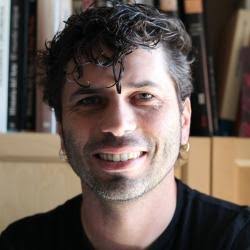
In our second instalment of the Data Diversity Podcast, we are joined by archaeologist Dr Alfredo Cortell-Nicolau, a Senior Teaching Associate in Quantitative and Computational Methods in Archaeology and Biological Anthropology at the McDonald Institute for Archaeological Research and Data Champion.

As is the theme of the podcast, we spoke to Alfredo about his relationship with data and learned from his experiences as a researcher. The conversation also touched on the different interpersonal, and even diplomatic, skills that an archaeologist must possess to carry out their research, and how one’s relationship with individuals such as landowners and government agents might impact their access to data. Alfredo also sheds light on some of the considerations that archaeologists must go through when storing physical data and discussed some ways that artificial intelligence is impacting the field. Below are some excerpts from the conversation, which can be listened to in full here.

I see data in a twofold way. This implies that there are different ways to liaise with the data. When you’re talking about the actual arrowhead or the actual pot, then you would need to liaise with all the different regional and national laws regarding heritage and how they want you to treat the data because it’s going to be different for every country and even for every region. Then, of course, when you’re using all these morphometric information, all the CSV files, the way to liaise with the data becomes different. You have to think of data in this twofold way.

Dr Alfredo Cortell-Nicolau

Lutfi Othman (LO): What is data to you?

Alfredo Cortell-Nicolau (ACN): In archaeology in general, there are two ways to see the data. In my case for example, one way to see it is that the data is as the arrowhead and that’s the primary data. But then when I conduct my studies, I extract lots of morphometric measures and I produce a second level of data, which are CSV files with all of these measurements and different information about the arrowheads. So, what is the data? Is it the arrowhead or is it the file with information about the arrowhead? This raises some issues in terms of who owns the data and how you are going to treat the data because it’s not the same. In my case, I always share my data and make everything reproducible. But when I share my data, I’m sharing the data that I collected from the arrowheads. I’m not sharing the arrowheads because they are not mine to share.

This is kind of a second layer of thought when you’re working with Archaeology. When you’re studying, for example, pottery residues, then you’re sharing the information of the residues and not the pot that you used to obtain those residues. There are two levels of data. Which is the actual data itself? The data which can be reanalyzed in different ways by different people, or the data that you extracted only for your specific analysis? I see data in this twofold way. This implies that there are different ways to liaise with the data. When you’re talking about the actual arrowhead or the actual pot, then you would need to liaise with all the different regional and national laws regarding heritage and how they want you to treat the data because it’s going to be different for every country and even for every region. Then, of course, when you’re using all these morphometric information, all the CSV files, the way to liaise with the data becomes different. You have to think of data in this twofold way.

On some of the barriers to sharing of archaeological data

ACN: There are some issues in how you would acknowledge that the field archaeologist is the one who got the data. Say that you might have excavated a site in the 1970s and some other researcher comes later, and they may be doing many publications after that excavation, but you are not always giving the proper attribution to the field archaeologist because you cited the first excavation in the first publication, and you’re done. Sometimes, that makes field archaeologists reluctant to share the data because they don’t feel that their work is acknowledged enough. This is one issue which we need to try to solve. Take for example a huge radiocarbon database of 5000 dates: if I use that database, I will cite whoever produced that database, but I will not be citing everyone who actually contributed indirectly to that database. How do I include all of these citations? Maybe we can discuss something like meta-citations, but there must be some way in which everyone feels they are getting something out of sharing the data. Otherwise, there might be a reaction where they think “well, I just won’t share. There’s nothing in for me to share it so why should I share my data”, which would be understandable.

On dealing with local communities, archaeological site owners and government officials

ACN: When we have had to deal with private owners, local politicians and different heritage caretakers, not everyone feels the same way. Not everyone feels the same way about everything, and you do need a lot of diplomatic skills to navigate through this because to excavate the site you need all kinds of permits. You need the permit of the owner of the site, the municipality, the regional authorities, the museum where you’re going to store the material. You need all of these to work and you need the money, of course. Different levels of discussion with indigenous communities is another layer of complexity which you have to deal with. In some cases, like in the site where we’re excavating now, the owner is the sweetest person in the world, and we are so lucky to have him. I called him two days ago because we were going to go to the site, and I was just joking with him, saying I’ll try not to break anything in your cave, and he was like, “this is not my cave. This is heritage for everyone. This is not mine. This is for everyone to know and to share”. It is so nice to find people like that. That may happen also with some kinds of indigenous communities. The levels of politics and negotiation are probably different in every case.

On how archaeologists are perceived

LO: When you approach a field or people, how do they view the archaeologists and the work?

ACN: It really depends on the owner. The one that we’re working with now, he’s super happy because he didn’t know that he had archaeology in his cave. When we told him, he was happy because he’s able to bring something to the community and he wants his local community to be aware that there is something valuable in terms of heritage. This is one good example. But we have also had other examples, for instance, where the owner of the cave was a lawyer and the first thing he thought was “are there going to be legal problems for me? If something happens in the cave, who’s the legal responsibility.” In another case there was there was another person that just didn’t care, she said “you want to come? Fine. The field is there, just do whatever you want.” So, there are different sensibilities to this. Some people are really happy about the heritage and don’t see it as a nuisance that they have to deal with. 

LO: How about yourself as a researcher, archaeologist: do you see yourself as the custodian of sorts, or someone who’s trying to contribute to this or local heritage for the place? Or is it almost scientific and you’re there to dig.

ACN: When I approach the different owners, I think the most important thing is to let them know that they have something valuable to the local community and they can be a part of that. They can be a part of being valuable to the local community. Also, you must make it clear that it’s not going to be a nuisance for them and they don’t have to do anything. I think the most important part is letting them know how it can be valuable for the community. I usually like them to be involved, and they can come and see the cave and see what we are doing. In the end it’s their land and if they see that we are producing something that is valuable to the community then it is good for them. In this case, the type of data that we produce is the primary type of data, that is, the actual different pottery sherds, the different arrowheads, etcetera. In this current excavation, we got an arrowhead that is probably some 4- or 5000 years old and you get (the land owners) to touch this arrowhead that no one in 5000 years has seen. If you can get the owners to think of it in this way, that they’re doing something valuable for your community, then they will be happier to participate in this whole thing and to just let us do whatever we want to do, which is science.

LO: How do you store physical data? Or do you let the landowner store it?

ACN: That depends on the national and regional laws and different countries have different laws about this. The cave where I’m working right now is in Spain, so I’m going to talk about the Spanish law, which is the one that I that I follow and it’s going to be different depending on every country. In our case, with the different assemblages that you find, you have a period of up to 10 years where you can store them yourself in your university and that period is for you to do your research with them. After that period, it goes to whichever museum they are supposed to be going, which depends on the law that says that it has to be the museum that is the closest to the cave or site where they were excavated. Here, the objects can then be displayed and the museum is the ones responsible for managing them, and storing them long term.

There is one additional thing: If you are excavating a site that has already been excavated, then there is a principle of keeping the objects and assemblages together. For example, there is this cave that was excavated in the 1950s and they store all the assemblages in the Museum of Prehistory of Valencia, which was the only museum in the whole region. Now, they excavated it again a few years ago and now there are museums that are closer to the cave but because the bulk of the assemblages are in Valencia and they don’t want to have it separated in two museums, they still have to go to Valencia. This is the principle of not having the assemblages separated and it is the most important one.


As always, we learn so much by engaging with our researchers about their relationship with data, and we thank Alfredo for joining us for this conversation. Please let us know how you think the podcast is going and if there are any question relation to research data that you would like us to ask!

Thoth Archiving Network goes live at Cambridge 

Dr Agustina Martínez-García, Head of Open Research Systems, Digital Initiatives

Cambridge University Library (CUL) is piloting participation in the Thoth Archiving Network, which allows small presses to use a simple deposit option to archive their publications in multiple repository locations, creating the opportunity to safeguard against the complete loss of their open books catalogue, should they cease to operate. 

Participation in the pilot has allowed us to explore the implementation of suitable infrastructure, built on interoperable, open, and widely adopted platforms to support discovery, access, and long-term availability of open scholarly works. 

Work done so far 

We are pleased to share that the Cambridge repository platform participating in the Thoth network is now live at https://thoth-arch.lib.cam.ac.uk/home, and now includes a full back catalogue of two open monograph publishers. This repository is based on the open-source DSpace software

Through the implementation phase, we have worked very closely with the Thoth technical team to support the implementation and testing of standard and automated deposit mechanisms into DSpace-based repositories. This work has allowed us to further our knowledge and expertise on scholarly and research platforms by using well adopted repository platforms (DSpace) in a new area: open access books and monographs. It has also provided us with the opportunity to test the implementation of additional infrastructure to support discovery, access, and dissemination of such open access content, and potentially experiment with other types of scholarly work. 

What’s next 

Now that the repository platform is live, we would like to gather insights about volume of content, required storage and staff resources (both infrastructure and user support). This will help us estimating associated costs for provision of such a service as well as preservation costs for the longer term, during the 3-year pilot.  

In terms of long-term preservation, we will explore several preservation options, including preserving the content in-house as part of the Libraries’ wider Digital Preservation Programme. The types of material hosted in this platform can provide an exemplary use case of scholarly content that is “preservation ready”, uses open and standard file formats (i.e., PDF and epub) and is accompanied by rich, high quality descriptive metadata. 

See this post by the Open Book Futures Team for more details about the pilot:  

https://copim.pubpub.org/pub/thoth-archiving-network-goes-live-at-university-of-cambridge/release/1

Data Diversity Podcast #1 – Danny van der Haven

Last week, the Research Data Team at the Office of Scholarly Communication recorded the inaugural Data Diversity Podcast with Data Champion Danny van der Haven from the Department of Material Science and Metallurgy.

As is the theme of the podcast, we spoke to Danny about his relationship with data and learned from his experiences as a researcher. The conversation also touched on the differences between lab research and working with human participants, his views on objectivity in scientific research, and how unexpected findings can shed light on datasets that were previously insignificant. We also learn about Danny’s current PhD research studying the properties of pharmaceutical powders to enhance the production of medication tablets.   

Click here to listen to the full conversation.

If you have heart rate data, you do not want to get a different diagnosis if you go to a different doctor. Ideally, you would get the same diagnosis with every doctor, so the operator or the doctor should not matter, but only the data should matter.
– Danny van der Haven

   ***  

What is data to you?  

Danny: I think I’m going to go for a very general description. I think that you have data as soon as you record something in any way. If it’s a computer signal or if it’s something written down in your lab notebook, I think that is already data. So, it can be useless data, it can be useful data, it can be personal data, it can be sensitive data, it can be data that’s not sensitive, but I would consider any recording of any kind already data. The experimental protocol that you’re trying to draft? I think that’s already data.   

If you’re measuring something, I don’t think it’s necessarily data when you’re measuring it. I think it becomes data only when it is recorded. That’s how I would look at it. Because that’s when you have to start thinking about the typical things that you need to consider when dealing with regular data, sensitive data or proprietary data etc.   

When you’re talking about sensitive data, I would say that any data or information of which the public disclosure or dissemination may be undesirable for any given reason. That’s really when I start to draw the distinction between data and sensitive data. That’s more my personal view on it, but there’s also definitely a legal or regulatory view. Looking for example at the ECG, the electrocardiogram, you can take the electrical signal from one of the 12 stickers on a person’s body. I think there is practically nobody that’s going to call that single electrical signal personal data or health data, and most doctors wouldn’t bat an eye.   

But if you would take, for example, the heart rate per minute that follows from the full ECG, then it becomes not only personal data but also becomes health data, because then it starts to say something about your physiological state, your biology, your body. So there’s a transition here that is not very obvious. Because I would say that heart rate is obviously health data and the electrical signal from one single sticker is quite obviously not health data. But where is the change? Because what if I have the electrical signal from all 12 stickers? Then I can calculate the heart rate from the signal of all the 12 stickers. In this case, I would start labelling this as health data already. But even then, before it becomes health data, you also need to know where the stickers are on the body.   

So when is it health data? I would say that somebody with decent technical knowledge, if they know where the stickers are, can already compute the heart rate. So then it becomes health data, even if it’s even if it’s not on the surface. A similar point is when metadata becomes real data. For example, your computer always saves that date and time you modified files. But sometimes, if you have sensitive systems or you have people making appointments, even such simple metadata can actually become sensitive data.   

On working within the constraints of GDPR  

Danny: We struggled with that because with our startup Ares Analytics, we also ran into the issues with GDPR. In the Netherlands at the time, GDPR was interpreted really stringently by the Dutch government. Data was not anonymous if you could, in any way, no matter how difficult, retrace the data to the person. Some people are not seeing these possibilities, but just to take it really far: if I would be a hacker with infinite resources, I could say I’m going to hack into the dataset and see the moments that the data that were recorded. And then I can hack into the calendar of everybody whose GPS signal was at the hospital on this day, and then I can probably find out who at that time was taking the test… I mean is that reasonable? Is anybody ever going do that? If you put those limitations on data because that is a very, very remote possibility; is that fair or are you going hinder research too much? I understand the cautionary principle in this case, but it ends up being a struggle for us in in that sense.  

Lutfi: Conceivably, data will lose its value. If you really go to the full extent on how to anonymise something, then you will be dataless really because the only true way to anonymise and to protect the individual is to delete the data.  

Danny: You can’t. You’re legally not allowed to because you need to know what data was recorded with certain participants. Because if some accident happens to this person five years later, and you had a trial with this person, you need to know if your study had something to do with that accident. This is obvious when you you’re testing drugs. So in that sense, the hospital must have a non-anonymised copy, they must. But if they have a non-anonymized copy and I have an anonymised copy… If you overlay your data sets, you can trace back the identity. So, this is of course where you end up with a with a deadlock.  

What is your relationship to data?  

Danny: I see my relationship to data more as a role that I play with respect to the data, and I have many roles that I cycle through. I’m the data generator in the lab. Then at some point, I’m the data processor when I’m working on it, and then I am the data manager when I’m storing it and when I’m trying to make my datasets Open Access. To me, that varies, and it seems more like a functional role. All my research depends on the data.  

Lutfi: Does the data itself start to be more or less humanised along the way, or do you always see it as you’re working on someone, a living, breathing human being, or does that only happen toward the end of that spectrum?   

Danny: Well, I think I’m very have the stereotypical scientist mindset in that way. To me, when I’m working on it, in the moment, I guess it’s just numbers to me. When I am working on the data and it eventually turns into personal and health data, then I also become the data safe guarder or protector. And I definitely do feel that responsibility, but I am also trying to avoid bias. I try not to make a personal connection with the data in any sense. When dealing with people and human data, data can be very noisy. To control tests properly, you would like to be double blind. You would like not to know who did a certain test, you would like not to know the answer beforehand, more or less, as in who’s more fit or less fit. But sometimes you’re the same person as the person who collected the data, and you actually cannot avoid knowing that. But there are ways that you can trick yourself to avoid that. For example, you can label the data in certain clever way and you make sure that the labelling is only something that you see afterwards.   

Even in very dry physical lab data, for example microscopy of my powders, the person recording it can introduce a significant bias because of how they tap the microscopy slide when there’s powder on it. Now, suddenly, I’m making an image of two particles that are touching instead of two separate particles. I think it’s also kind of my duty, that when I do research, to make the data, how I acquire it, and how it’s processed to be as independent of the user as possible. Because otherwise user variation is going to overlap with my results and that’s not something I want, because I want to look at the science itself, not who did the science. 

Lutfi: In a sentence, in terms of the sort of accuracy needed for your research, the more dehumanised the data is, the more accurate the data so to speak.   

Danny: I don’t like the phrasing of the word “dehumanised”. I guess I would say that maybe we should be talking about not having person-specific or operator-specific data. If you have heart rate data, you do not want to get a different diagnosis if you go to a different doctor. Ideally, you would get the same diagnosis with every doctor, so the operator or the doctor should not matter, but only the data should matter. 

             ***  

If you would like to be a guest on the Data Diversity Podcast and have some interesting data related stories to share, please get in touch with us at info@data.cam.ac.uk and state your interest. We look forward to hearing from you!  

The September 2023 Data Champion Forum

The Cambridge Data Champions had a fantastic September Forum at the West Hub. The forum started with an introduction to the West Hub by  Library Manager Daniele Campello and we welcomed Clair Castle as the new interim Research Data Manager with the Office of Scholarly Communication (University Library).

Dr Mandy Wigdorowitz kicked off the presentations by sharing with the Data Champions what she aims to achieve as the University’s Open Research Community Manager. This includes raising the profile of Open Research at the University and ensuring that scholarly and research outputs that are deemed to be open are indeed accessible and interoperable in accordance with FAIR principles.  As Open Research Community Manager, Mandy advocates for Open Research among University researchers from both the STEMM and AHSS (Art, Humanities and Social Sciences) disciplines. The latter proves to be more challenging as researchers in AHSS may often have valid reasons from refraining from making their research data open, such as working with sensitive data or working with interlocutors who object to their data being shared. Such issues will be addressed at the Cambridge Open Research Conference that she is organising, which takes place on 17th November 2023 at Downing College, Cambridge as well as online. To end, Mandy invited the Data Champions to join her Open Research initiative, a community of advocates for Open Research across the University.

Before lunch, Madeleine Taylor (Information Security Risk and Governance Manager with University Information Services, UIS) presented a follow up to a webinar session on monitoring the Information and Cybersecurity (ICS) risks for research data across the university, which she conducted with the Data Champions a couple weeks prior. After a brief introduction of what she has done so far to protect Cambridge’s research communities against ICS threats, she asked the Data Champions for help in her task of securing research data against ICS risks. They can do so by providing her with a sense of what data their own research communities are working with and how they were storing them. As the Data Champions ate the delicious lunch of sandwiches and cakes provided by the West Hub caterers, they provided feedback to Madeleine on two forms that she proposed as methods of gathering the information she needed: a 3-minute research data impact assessment form and a research data cyber security risk form. Maddy will continue to work with the Research Data Team and the Data Champions to refine, and gather information, through these forms.

Thank you to the West Hub and Daniele Campello for hosting the Data Champions Forum in your welcoming building!

If you are a member of the University of Cambridge and are interested in attending the Data Champions Forum, please join us as a Data Champion. If you are passionate about research data management and data sharing or you would like to find out more about what being a Data Champion entails, please visit the Data Champions webpage. We welcome applications from those working in all academic subjects across AHSS and STEMM disciplines. If you are unsure about how being a Data Champion would impact your research, please get in touch with the Research Data Team!

Cartoon by Clare Trowell CC-BY-NC-ND


Preparing for the end of COAF

The Open Access team are getting ready for the end of Charity Open Access Fund (COAF), which is due to dissolve on 30th September 2020.  

From 1st October 2020 onward, there are going to be changes to the block grants that we receive, and as a result, there will be a change in our policies on whether or not we can cover researchers’ article processing charges (APCs).  

We have outlined how researchers should go about securing funding for the APC’s below: 

Funder name Are article processing charges covered by a block grant? How do I pay for my article processing charge? 
UKRI Yes No change: researchers should continue to upload their paper to us for a funding decision
Wellcome Trust Yes No change: researchers should continue to upload their paper to us for a funding decision
Cancer Research UK Yes No change: researchers should continue to upload their paper to us for a funding decision
British Heart Foundation YesNo change: researchers should continue to upload their paper to us for a funding decision
Blood Cancer UK No- authors must include cost in their grant application  1. For payment, contact research@bloodcancer.org.uk
2. Upload your paper to ensure REF compliance. 
Parkinson’s UK No- authors must include cost in their grant application  1. For payment, contact researchapplications@parkinsons.org.uk,
2. Upload your paper to ensure REF compliance. 
Versus Arthritis No – authors must request support direct from funder  1. Use funder’s Grant Tracker for OA support,
2. Upload your paper to ensure REF compliance. 
Multiple funders acknowledged  If your paper includes funding from UKRI, Wellcome Trust, Cancer Research UK or British Heart Foundation then we may be able to help with the APC. Researchers should upload their paper to us for a funding decision

There is no change in the funder’s open access policies for the rest of 2020. However, there are significant changes due in 2021, specifically to Wellcome Trust and Cancer Research UK.  

We have outlined the policy changes in the table below: 

Funder name Change? Outline of policy 
Wellcome Trust Changesee new policy document   1. Policy covers original research articles, 
2. Policy applies to papers submitted for publication after 1/1/2021, 
3. Papers must be made immediately open access (no embargo allowed) in Europe PMC, 
4. Papers must be published with a CC BY licence, 
5. Papers must be published in a journal that is indexed in DOAJ (Wellcome will no longer cover APCs for subscription journals)
6. The authors must retain their copyright. 
Cancer Research UK Changesee new policy document 1. Policy covers original research articles, 
2. Policy applies to all papers after 1/1/2021, 
3. Papers must be made immediately open access (no embargo allowed) in Europe PMC,
4. Papers must be published with a CC BY licence. 
Multiple funders acknowledged  Any papers acknowledging Wellcome Trust or Cancer Research UK must be compliant in order to access funds. 

To summarise:

From 1 October 2020, authors should continue to submit their papers to the Open Access Team as usual via our website. The Open Access Team will continue to advise on the best course of action to meet funder requirements, but we may not always be able to pay APCs. 

The funders’ policies remain the same until 1st January 2021. We advise authors covered by Wellcome Trust and Cancer Research UK to familiarise themselves with the changes to their funder’s open access policies, which are outlined in COAF’s table

The Role of Open Data in Science Communication

Itamar Shatz has written a guest blog post for the Office of Scholarly Communication about how public trust in the scientific community increases when researchers make their data openly available to all. He also emphasizes that science communicators (e.g. press offices, journalists, publishers) have a responsibility to point attention directly at the primary source of the data. Itamar is a PhD candidate in the Department of Theoretical and Applied Linguistics at the University of Cambridge. He is also a member of the Cambridge Data Champion programme, having joined at the start of this year. He writes about science and philosophy that have practical applications at Effectiviology.com.

It’s no secret that the public’s view of the scientific community is far from ideal.

For example, a global survey published by the Wellcome Trust in 2019 showed that, on average, only 18% of people indicate that they have a high level of trust in scientists. Furthermore, the survey showed that there are stark differences between people living in different areas of the world; for instance, this rate was more than twice as high in Northern Europe (33%) and Central Asia (32%) than in Eastern Europe (15%), South America (13%), and Central Africa (12%).

Things do appear to be improving, to some degree, especially in light of the recent pandemic. For example, a recent survey in the UK, conducted by the Open Knowledge Foundation, has found that, following the COVID-19 pandemic, 64% of people are now “more likely to listen expert advice from qualified scientists and researchers”. Similar increases in public confidence have been found in other countries, such as Germany and the USA. However, despite these recent increases, there is still much room for improvement.

Open data can help increase the public’s confidence in scientists

The public’s lack of confidence in scientists is a complex, multifaceted issue, that is unlikely to be resolved by a single, neat solution. Nevertheless, one thing that can help alleviate this issue to some degree is open data, which is the practice of making data from scientific studies publicly accessible.

Research on the topic shows just how powerful this tool can be. For example, the recent survey by the Open Knowledge Foundation, conducted in the UK in response to the COVID-19 pandemic, found that 97% of those polled believed that it’s important for COVID-19 data to be openly available for people to check, and 67% believed that all COVID-19 related research and data should be openly available for anyone to use freely. Similarly, a 2019 US survey conducted before the pandemic found that 57% of Americans say that they trust the outcomes of scientific studies more if the data from the studies is openly available to the public.

Overall, such surveys strongly suggest that open data can help increase the public’s trust in scientists. However, it’s not enough for studies to just have open data for it to increase the public’s trust; if people don’t know about the open data, or if don’t fully understand what it means, then open data is unlikely to be as beneficial as it could be. As such, in the following section we will see some guidelines on how to properly incorporate open data into science communication, in order to utilize this tool as effectively as possible.

How to incorporate open data into science communication

To properly incorporate open data into science communication, there are several key things that people who engage in science communication—such as journalists and scientists—should generally do:

  • Say that the study has open data. That is, you should explicitly mention that the researchers have made the data from their research openly available. Do not assume that people will go to the original study and then learn there about the data being open.
  • Explain what open data is. That is, you should briefly explain what it means for the data to be openly available, and potentially also mention the benefits of making the data available, for example in terms of making research more transparent, and in terms of helping other researchers reproduce the results.
  • Describe what sort of data has been made openly available. For example, you can include descriptions of the type of data involved (surveys, clinical reports, brain scans, etc.), together with some concrete examples that help the audience understand the data.
  • Explain where the data can be found. For example, this can be in the article’s “supplementary information” section, though data should preferably be available in a repository where the dataset has its own persistent identifier, such as a DOI. This ensures that the audience can find and access the data, which may otherwise be hidden behind a paywall, and offers other benefits, such as allowing researchers to directly access and cite the dataset, without navigating through the article.

These practices can help people better understand the concept of open data, particularly as it pertains to the study in question, and can help increase their trust in the openness of the data, especially if it is placed somewhere that they can access themselves.

For one example of how open data might be communicated effectively in a press release, consider the following:

“The researchers have made all the data from this study openly available; this means that all the results from their experiments can be freely accessed by anyone through a repository available at: https://www.doi.org/10.xxxxx/xxxxxxx. This can help other scientists verify and reproduce their results, and will aid future research on the topic.”

Open data in different types of scientific communications

It’s important to note that there’s no single right way to incorporate open data into scientific communications. This can be attributed to various factors, such as:

  • Differences between fields (e.g. biology, economics, or psychology)
  • Differences between types of studies (e.g. computational or experimental)
  • Differences between media (e.g. press release or social media post).

Nevertheless, the guidelines outlined earlier can be beneficial as initial considerations to take into account when deciding how to incorporate open data into science communication. It is up to communicators to make the final modifications, in order to use open data as effectively as possible in their particular situation.

Summarizing what we’ve learned

Though the public’s trust in science is currently growing, there is much room for improvement. One powerful tool that can aid the academic community is open data—the practice of making data from research studies openly available. However, to benefit as much as possible from the presence of open data, it’s not sufficient for a study to merely make its data open. Rather, the accessibility of the data needs to be promoted and explained in scientific communication, and the dataset needs to be cited appropriately (see the Joint Declaration of Data Citation Principles for guidelines regarding this latter point).

What is currently being done

It is important to note that much work is already being done to promote the concept of open data. For example, organizations such as the Research Data Alliance promote discussion of the topic and publish relevant material, as in the case of their recent guidelines and recommendations regarding COVID-19 data.

In addition, at the University of Cambridge, in particular, we can already see a substantial push for open data practices, where appropriate, and from many angles as outlined in the University’s Open Research position statement. Many funding bodies mandate that data be made available, and the University facilitates the process of sharing the data via Apollo, the institutional repository. Furthermore, there are the various training courses and publications—including this very blog—led by bodies such as the Office of Scholarly Communication (OSC), which help to promote Open Research practices at the University. Most notably, there is the OSC’s Data Champion programme, which deals, among other things, with supporting researchers with open data practices.

Moving forward

Promoting the use of open data in scientific communication is something that different stakeholders can do in different ways.

For example, those engaging in science communication—such as journalists and universities’ communication offices—can mention and explain open data when covering studies. Similarly, scientists can ask relevant communicators to cite their open data, and can also mention this information themselves when they engage in science communication directly. In addition, consumers of scientific communication and other relevant stakeholders—such as the general public, politicians, regulators, and funding bodies—can ask, whenever they hear about new research findings, whether the data was made openly available, and if not, then why.

Overall, such actions will lead to increased and more effective use of open data over time, which will help increase the trust people have in scientists. Furthermore, this will help promote the adoption of open data practices in the scientific community, by making more scientists aware of the concept, and by increasing their incentives for engaging in it.

Published 19 June 2020

Written by Itamar Shatz

CCBY icon