Tag Archives: open data

Data Diversity Podcast #5 – Abdulwahab Alshallal

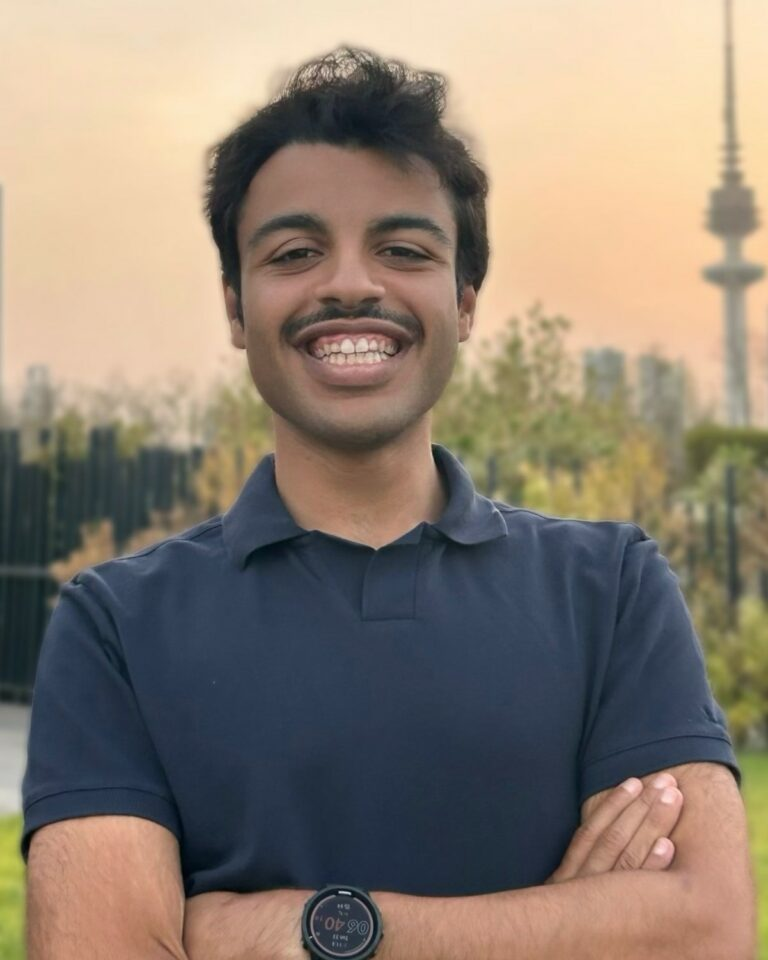
Welcome back to another edition of the Data Diversity Podcast, the Research Data podcast from the University of Cambridge Office of Scholarly Communication (OSC). If this is your first time here, in this podcast, I speak to Cambridge Data Champions about their journeys in acquiring and working with data in their research, with the hope to highlight interesting facets of data work, but also academic research in general. In this episode, I spoke to Cambridge PhD student Abdulwahab Alshallal, from the MRC Epidemiology Unit, and who is part of the Physical Activity Epidemiology research group.  

Currently for his PhD, he is exploring associations of physical activity, behaviour and fitness with cardio metabolic risk in different global populations. Abdulwahab recently presented at a Data Champion Forum, where he talked about working with datasets from international sources, specifically from non-Western nations, and discussed the barriers to collaboration and differences in the flexibility of institutions regarding data access and sharing. In this episode, we discussed those matters and also went into his aspirations for public health policy making and how his data driven mindset applies to this endeavour. 


I am of the mind that your social and physical environments are a big determinant of your physical activity and your general lifestyle behaviours. For example, it is unfair to to compare the UK and India because it is much easier to cycle in streets and walk around in the UK than it is in India, or Mexico or even Kuwait, and the barriers can be different. It could be pedestrian access, it could be heat, in my case it would be humidity. All of these factors matter, and we need to get data to represent those populations and use that data in such studies. – Abdulwahab Alshallal


The overrepresentation of data from Western studies in global understandings of fitness 

LO: Is it true to say that most of the data that is available now is all based on Western data sources and is it problematic then to use that to represent a global understanding of fitness?

AA: I would rephrase that. It is not that the data does not exist, rather, it is that its representation in the literature is absent. The data exists but when it comes to the data making into the literature and influencing policy guidelines, this is not yet prevalent. Take for example physical activity guidelines: every few years, data from a lot of the literature of what is published is gathered and used to make new recommendations for physical activity. It is through these guidelines that it was recommended that people exercise, for example, 30 to 60 minutes of physical activity per day. Now, the guidelines say that it is 150 minutes of physical activity per week, no matter which day you do it. But the data that influences these policies are mostly data from North America, Europe, Australia (because these are the data used in the literature cited for the creation of these guidelines). This implies that we do not think that it matters much to look at data from other places, because humans are humans. But I am of the mind that your social and physical environments are a big determinant of your physical activity and your general lifestyle behaviours. For example, it is unfair to to compare the UK and India because it is much easier to cycle in streets and walk around in the UK than it is in India, or Mexico or even Kuwait and the barriers can be different. It could be pedestrian access, it could be heat, in my case, it would be humidity. All of these factors matter, and we need to get data to represent those populations and use that data in such studies. 

The data does exist and thankfully I have made an effort to do include it in my research. One of the places where you can acquire this data is from the World Health Organisation (WHO). That is the most wide-ranging data source, and then the few others that I’m using are from the South Asia Biobank, which covers four countries in South Asia: India, Sri Lanka, Pakistan and Bangladesh. Another source is the biobank from the UAE Healthy Future Study which would cover the Gulf populations, and the Qatar biobank.  

Data in his research 

LO: what are the research questions that you’re asking and what and and how is data used, or what data is needed to answer those questions? 

AA: I am interested in physical activity and asking are the associations of physical activity in the different ethnic populations different or the same? Does it matter where you live in the world? And we have made progress in this discovery. You would be the first to hear this actually but we have finished up our analysis for my first paper, and this is using the WHO data. We are close to submitting the manuscript. This is a bit of a segue but it is worth mentioning because it highlights one of the problems of the literature, but this paper touches on one of the controversies in my field. What the paper addresses is that all physical activity is good for you. For some context: there has been a recent phenomenon that we found in the current literature that uses mostly European data, that views occupational and non-occupational physical activity separately. They show that non-occupational physical activity is good for you, but occupational physical activity either has no effect or is actually bad for you in terms of mortality outcomes. What is alarming for us to instigate is to frame a paper that states that in low- and low-income countries outside of Europe, there is very little concept of non-occupational leisure time physical activity. Most of your activity is going to be in travel behavior or activity during your occupation, for example if you are doing heavy manual labor like construction and farming. So, we had to investigate that and I’m glad to report that, at least in terms of our findings, we found that occupational physical activity is not bad for you. Non-occupational physical activity is also good for you and it doesn’t matter what type of activity you do. We also were able to control the proportion accumulated in either occupational and non-occupational physical activity and based on what we found, any physical activity wherever you do it is good for you. 

We need to understand the physical activity in different parts of the world. The types of activity you’re going in one part of the world is going to be different to other parts of the world so one guideline is not going to be appropriate. We currently have one guideline from The WHO for the whole world which has 150 minutes of moderate to vigorous physical activity as the goal. Does that seem appropriate for the whole world? It might not be in terms of different countries or even different population subgroups such as young versus old or men versus women, or different occupations or different activity levels, and what really is the barrier between light, physical activity and moderate activity? It is going to be relative and likely complex. This is a shift of mindset that hopefully I will be able to contribute through my research. 

The experience of acquiring data for his research from global data banks

LO: What has your experience of acquiring data from different sources been? From what I understand, there are different barriers in place to getting the data. 

AA: Just to put it out there, I think it’s completely understandable that these barriers are in place. The data that these organisations produce is particularly high-quality, high-resolution data. Besides the WHO data, the studies from the biobank’s that I have mentioned plan on collecting data every few years from the same participants so the data really tells you about the health of the population because these cohorts are meant to be representative of the population. To put this data in the hands of researchers that you do not properly vet can be quite a risk, even if it means using anonymised data, so I completely understand the barriers. 

In terms of the the difficulty in which to get that data, it has been different. In regard to WHO data – and this is not my experience, but an experience of a researcher before me, a post doc that that worked on the same data set before me – a few years back she had to go all the way to Geneva and to perform the data analysis there because they did not have an online infrastructure in order to allow researchers from abroad to use the data. That has since changed and the way that I was able to request it is through the WHO microdata Repository.  

For the South Asia Biobank, after going through the data request, researchers are given a link to the data. The data request process itself is very comprehensive and can cause delays. It takes a lot of time, and there is a lot of emphasis on the protocol. They want to make sure that you have a proper protocol to say what you’re authorized to do. If you want to make small changes, even small changes, you have to rectify them before submitting the proposal and that can cause delays. In my case it took around six months and we just received the data, so we have not had a chance to use it. 

For the UAE healthy future study, it is actually a bit more secure than that. You do go through that process of the back and forth of going through the protocol. In terms of getting the data, from what I understand, you are using it locally. I know this from a researcher that I spoke to who works between Cambridge and the UAE. To work with the UAE healthy future study data, she’s given a laptop by the University (NYU Abu Dhabi), and she must be connected to a VPN. While she while connected to the VPN, she’s using a secure platform called NYU-Box. I believe NYU uses this platform in all of its institutions; Shanghai, Abu Dhabi. I have been told that it is very secure and you can use it offline as well.  

Regarding the Qatar Biobank, I don’t know much about the data security measures of Qatar Biobank. Through my experiences, I only know about trying to get that data. They are willing to work with foreign institutions, which is good, but the main PI of the project must be based in Qatar and the analysis must be conducted in Qatar. However, I think going through that effort and that process is very much worth it because it has one of the most comprehensive data sources in all of the Middle East that is available in recent times. It was established around 2014 and they have now up to 47,000 participants and counting. 30,000 of them are Qatar nationals and around 17,000 are foreign nationals who are long term residents. You have people from various populations which includes participants who are Indian, Egyptian, Lebanese. So, you can get to look at migrant workers, you get to look at other Arabs that are living in a specific environment, meaning that you can parse genetics out of social and physical environments. There is so much you can do and in addition to that, what makes it special, for my PhD at least, is that they have treadmill data. This is where they put people through a treadmill around treadmill test and they look at their heart rate response to exercise instead of just going through self-reported physical activity or through wearables. The Qatar biobank is the only study in that region that actually uses heart rate data so we can definitely estimate fitness in that population. For this reason, it is very much worth the effort of trying to push for it.


One thing I am grappling with at the moment is policy development, which is a bit of a departure from data. On one end, I’m gathering the evidence in order to understand the different populations of the world through physical activity to look at the different trends in fitness. Then, once we have the physical activity data, how do we know which resources to allocate to? Who should we target so fitness can tell us that in terms of policy? Who needs it the most might not necessarily be in the volume of activity. – Abdulwahab Alshallal


On the difference between self-reported fitness data and objective data

LO: Are self-reported fitness data less valuable than objective data obtained from wearables? 

AA: It is important to understand that for a long time, it was difficult to get objective data. If you spoke to a researcher from 30 or 40 years ago telling them about a cohort study that would be using wearables, they would not believe you and they wouldn’t think it would be scalable and they think it would be too expensive, and so self-reported data was the only resource that we had. Also, there are downsides to data from wearables. For example, there is going to be noise and glitches with data obtained from accelerometry. So, I wouldn’t say that self-reported data is useless.

I am a big critic of self-reported data and the dependence of the literature on self-reported data and my supervisor has made mellow about it by reminding me that it gives you context. One of the things that we haven’t been able to overcome with accelerometry is knowing what is actually happening. We can tell that they are being active, but what are they doing? When are they doing it? For example, in the questionnaires (that are used to generate self-reported data), we don’t ask people when they leave work or when they start work or commuting, we ask them to estimate their physical strain while doing those things in those specific contexts. This removes from the researcher the burden of trying to estimate what activity is happening. 

In terms of accuracy of the numbers and their influence on policy? That is a good question, and I think accelerometry would answer those questions. Using wearables and attaining objective data, in terms of specific numbers, is much more valuable. But policies in the past are not necessarily based on numbers, and self-reports have benefited us and there is still continued benefit. It is about data points which have a degree of relativity. There are people who are going to misreport because they don’t remember accurately how much activity they were doing, or they might be lying because they feel self-conscious or they want people to think that they are more active, or there might be a recall bias or a social desirability bias which could all lead to misclassifications. We asked for moderate and vigorous activity, but what is moderate to me and light to you? It’s different and relative. While there are accuracy problems in self-reported data, for the most part it tells us something that is relative to people. Take for example someone who reports 30 minutes of activity throughout the whole week versus someone who is reporting 200 or 300 minutes of physical activity per week. We could tell that the person who was reporting the more minutes of activity is more likely to be someone who’s more physically active. It’s going to be aligned more with a better blood profile than the person reporting less activity and so in terms of a relative sense, it is helpful. But having the resources that we have now and the ability to use wearable data, we should be making a transition towards that, but self-reported data still has value. I think they can compliment each other and provide context for the type of activity that you’re doing. 

On data and policy making

AA: One thing I am grappling with at the moment is policy development, which is a bit of a departure from data. On one end, I’m gathering the evidence in order to understand the different populations of the world through physical activity to look at the different trends in fitness. Then, once we have the physical activity data, how do we know which resources to allocate to? Who should we target so fitness can tell us that in terms of policy? Who needs it the most might not necessarily be in the volume of activity. For example, we may have some barriers to fitness such as environmental factors like heat and humidity, also infrastructure factors such as pedestrian access, green spaces, and how these are different in different parts of the world. But how can we use these data to influence policy development? This is something I’m starting to understand and trying to get a grip on. Soon, I will begin a policy internship so I will hopefully learn more about that. I’ve had some conversations with people in physical activity policy, and I’ve learned that in terms of what would actually influence policy, I should be looking for a shared problem and the shared solution. Take for example, cycling lanes. Say you want to create more cycling lanes, but then the government says they don’t have enough money for cycling lanes so they decide against it. But then, you also have a congestion problem and you want to achieve net zero, and you also have an obesity problem. You know what can fix that? Cycling lanes. More cycling lanes means more people are going to be actively commuting and less cars on the road, so there will be less carbon. Then, they will be interested to get on board. So it’s about framing it and that’s what I’ve realized, because framing it in terms of health is not going to take you very far. But in terms of money, or the overall goal, matching them up is going to be helpful. And it’s quite a departure from the way that I’ve been doing things which is being driven by data and what is good for health.


We thank Abdulwahab for speaking with us. We are certainly excited to see how he gets on with policy making. It would be comforting to know that there is a data driven thinker in the world of policy making, especially one that is aware of, and takes into consideration, the contextual, environmental and behavioural differences of people in different communities and parts of the world when integrating data into public health policy decisions

Data Diversity Podcast (#4) – Dr Stefania Merlo (2/2)

We return with another post featuring our Data Diversity conversation with University of Cambridge Data Champion, archaeologist Dr Stefania Merlo from the McDonald Institute of Archaeological Research, the Remote Sensing Digital Data Coordinator and project manager of the Mapping Africa’s Endangered Archaeological Sites and Monuments (MAEASaM) project and coordinator of the Metsemegologolo project. This post is short in word count but not in importance, as it touches on two reflections on the challenges of data management as a researcher who works in a global context, two aspects of present-day academia that may be relevant to many readers. This edition follows on from the previous post where Stefania talks about the challenges of extending UK-based Open Data policies to non-UK communities that may not share the same enthusiasm for making their cultural heritage artefacts available Open Access.  

In this post, Stefania reflects on how she conducts herself as a European researcher working in the African continent where her intention may sometimes be misaligned with the local data co-creators. Stefania also shares the challenge of academic mobility, where migrating from one academic institution to another results in data that is left behind, provoking an uncomfortable thought: what would happen to your data when you are suddenly rendered uncontactable? 


One would like to think that this is a rare situation, but I suspect that the situation where somebody passes away unexpectedly or even not, or somebody retires and has not made a plan for what happens to an entire careers’ data set happens more often than we know. I think it is an individual’s responsibility to make plans, but I think support should be given by the institutions and people should be accompanied through this path. – Dr Stefania Merlo


Working in the African continent and being honest about the objectives of research 

Working in Africa and in African countries, gives somebody coming from a European background, and an Italian background like me, a particular set of challenges and opportunities, because you encounter a different set up with everything – with life, and with research. Living and working in this context in various African countries, allows a researcher coming from a different background to question and challenge themselves on how they do their work. Many things that are taken for granted in other settings cannot be taken for granted in that setting. In particular that relationship with the land, with nature, and with the past. Any archaeologist that works in this setting would tell you that there are certain things that you just know from very early on that you should do. For example, although we’re dealing with the past of archaeological landscapes, you don’t just go and do your work there without acknowledging that these landscapes come in spaces and areas occupied by people today, and that those people are the custodians of the land and of the archaeology today. So there needs to be a deep engagement with communities and with people even before you put your spade in the ground. And it takes time to build relationships of trust, and relationships that then allow you to do work on your own or together, depending on what the aim of your research is.

When I do work that fulfills certain academic goals that may not be of interest to the communities that I work with, I think it is better to be honest and tell them that I’m doing this piece of work because there is an archaeological question that probably only archaeologists are interested in, and this is the part of work that I’m doing. At the same time, I think it is also important then to acknowledge that you work in a setting that includes other people, and start thinking about what work you can do with the people that are custodians of or inhabit a particular part of the world. Then you start thinking, OK, there’s a different set of activities that I can do with people that people want to do with me and let’s do that. I think that it is important to have this honesty of saying that particular things are of interest to me and to my academic community that I would like to do, and then we can negotiate together. You have to engage with the community, and I think we should be a bit more honest and a bit more specific about what the expectations from both parties are, and from the setting, we’re coming and the setting we’re going to. 

There are certain academic activities that I’m expected to do that are of no interest whatsoever for the communities that I’m working with, such as the academic publications on which my career rests. Then, there are other things that the communities are interested in that will give me no weight whatsoever in my academic career but contribute to building a relationship with the local community. These give me so much fulfillment because I realise that I am doing research work that is useful not only for my academic community, but for other people, be it students, colleagues elsewhere in the world, or the building of policies around archaeological heritage. 

Global researcher, global data 

LO: As someone who has engaged in research all over the globe, how do you deal with data that is in various places around the world? 

SM: How do I deal with my data? – poorly. I may be a digital data champion, but it has been a difficult road, and it is still a difficult road, that of even managing and curating my own data. Just to give you an example, a lot of the data I’ve collected for the past 20 years is both in analog and digital format for the same project. I have some data with me here (in Cambridge) and I still have data backed up in hard drives that I haven’t opened in a long time. The majority of my analogue data sets, maps, drawings, diaries, I have left behind in South Africa when I moved here, and I haven’t been able to bring them with me. Some of my materials are in Italy with my family. Some of my diaries I had left back in Cambridge when I left to go to Botswana in 2006 and somehow got lost. So, it has been messy and I’m not proud of it. But I’m saying it because it is a problem with a lot of researchers that have become highly mobile and have migrated from one place to another, in some cases without sufficient funding to bring all of the paperwork with them. I have been a messy data collector, since my undergraduate and PhD days, and I’ve been trying to train myself to be better, I’m still not there yet, and in part it’s just me. But I think it has also to do with this very high mobility and having to change institutions in my career so many times. And what changed is not only the location, but the requirement of what you do with data where you put it, how you avail it to yourself and to others.

And so yes, I’m not very good at it but I’m trying very hard to find a way of now putting everything together because I do feel the responsibility that comes with collecting data in different countries. Some of it is actually information that was given to me from community members or friends, or colleagues that I work with and it’s with me. 
It’s their work, it’s with me and if anything ever happens to me – if I were to change institutions, or if anything were to happen to me, including losing my memory – let me put it like that – what’s going to happen? I’ve never really thought of what would happen if I were to move or to shift? I left my previous institution quite abruptly and during COVID, and I was able to take some materials out, but some other materials I didn’t get access to and they are still all over the place.  

And then I started thinking: I have never made a plan for this kind of situation to happen. So what am I going to do now in order to make sure that these data are usable and useful for me, but perhaps also to others when I’m not present as the curator that will be able to tell you what each data asset is. I’m not even talking about the creation of metadata. Most of my photographs, digital photographs, for example, have got metadata that have been ordered. But archaeological datasets are complex, fragmented and can be dispersed so the main challenge is how would you connect the photographs with the drawings within my diary? Of course, there are dates, but it’s going take so much time for somebody else to put all of it together, especially because half of it is in digital format and half of this is in analog format. That is going be a nightmare and may not even be doable. And so, I’ve become acutely aware of the fact that we never think of this situation. We rarely think about handing over data to others in a particular form that will allow others accessibility and ability to still reuse this complex interrelated data if they were to do so. 

Worst case (data) scenario

I have another example. One of my collaborators and mentors in South Africa passed away quite suddenly a couple of years ago. They had never made a plan for what would happen to their materials. They published prolifically, so we know a lot of the research that was done over 50 years, but I am aware that they had so much more material, both physical material and files in computers. Their physical collection was transferred from their house to the University by another colleague but, to the best of my knowledge, to date, no one has been able to get access to the digital data, stored in a password protected computer. One would like to think that this is a rare situation, but I suspect that the situation where somebody passes away unexpectedly or even not, or somebody retires and has not made a plan for what happens to an entire career’s data set happens more often than we know. I think it is an individual’s responsibility to make plans, but I think support should be given by the institutions and people should be accompanied through this path. In particular, perhaps academics from other generations that may not be so knowledgeable about how to deal with data management. In particular of digital data, but also of analog data. 

Once upon a time, archaeologists used to just put everything into a library or an archive so at least we have the analog records. But again, putting them together and having them make sense is extremely difficult if we don’t think of a framework for doing so. Another issue that I’ve mentioned before is mobility. You know, how do we assist researchers that have got high mobility to deal with this every time they move? I don’t have an exact formula, but when I changed institutions before, both the institution that I was leaving and the ones that were accepting me, I was never asked ‘do you need any financial or other kind of help to transfer your data?’ I was asked to fill in forms for transferring my goods, I was given money for my visa, but nobody ever asked about my academic research and the related data. 


We once again thank Stefania for taking the time to speak to us and giving us food for thought. Stefania raises, we believe, a very important question – are we taking for granted that we will always be at hand to ensure that the data that we produce will be understood? Researchers tend to wait until a project is completed before supplying their data with the information needed to make them understood and reusable. If there’s one thing that Stefania brings to mind, is that data FAIR-ness needs to be implemented from the onset of a project and then at every juncture of the project’s lifecycle, as the research unfolds. That way, the research data will be reusable in a self-contained manner. 

The Research Data Sustainability Workshop – November 2024

The rapid advance of computing and data centres means there is an increasing amount of generated and stored research data worldwide, leading to an emerging awareness that this may have an impact on the environment. Wellcome have recently published their Environmental sustainability policy, which stipulates that any Wellcome funded research projects must be conducted in an environmentally sustainable way. Cancer Research UK have also updated their environmental sustainability in research policy and it is anticipated that more funders will begin to adopt similar policies in the near future. 

In November we held our first Research Data Sustainability Workshop in collaboration with Cambridge University Press & Assessment (CUP&A). The aim was to address some of the areas common to researchers with a focus on how research data can impact the environment. The workshop was attended by Cambridge Data Champions and other interested researchers at the University of Cambridge. This blog summarises some of the presentations and group activities that took place at the workshop to help us to better understand the impact that processing and storing data can have on the environment and identify what steps researchers could take in their day-to-day research to help minimise their impact.  

The Invisible Cost to Storing Data 

Our first speaker at the workshop was Dr Loïc Lannelongue, Research Associate at the University of Cambridge. Loïc leads on the Green Algorithms initiative which aims to promote more environmentally sustainable computational science and has developed an online calculator to check computational carbon footprint. Loïc suggested that the aim is not that we shouldn’t have data, as we all use computing, just that we should be more aware of the work we do and the impact it has on the environment so we can make informed choices. Loïc emphasised that computing is not free, even though it might look like that to the end user. There is an invisible cost to storing data, whilst the exact costs are largely unknown, the estimates calculated for data centres suggest that they emit around 126mt of CO2 e/year. Loïc furthered explained that there are many more aspects to the footprint than just greenhouse gas emissions such as water use, toxicity, land use, minerals, metals and human toxicity. For example, there is a huge amount of water consumption needed to cool data centres, and you often find that cheaper data centres tend to use larger amounts of water. 

Loïc continued to discuss how there are a wide range of carbon footprints in research with some datasets having a large footprint. The estimate for storing data is ~10kg CO2 per tb per year, although there are many varying factors that could affect this figure. Loïc pointed out that the bottom line is – don’t store useless data! He suggested we shouldn’t stop doing research, we just have to do it better. Incentivising and addressing sustainability in Data Management Plans from the outset of projects could help. Artificial Intelligence (AI) is predicted to help to combat the impact on the environment in the future, although as AI comes at a large environmental cost, whether any benefit will outweigh the impact is still unknown. Loic has written a paper on the Ten simple rules to make your computing more sustainable, and he recommends looking at the Green DiSC Certification which is a free, open-access roadmap for anyone working in research (dry lab) to learn how to be more sustainable.

The Shift to Digital Publishing 

Next to present was Andri Johnston, Digital Sustainability Lead at CUP&A. Andri discussed how her role was newly created to address the carbon footprint within the digital publishing environment at CUP&A. In publishing, there has been a shift from print to digital, but after publishing digitally, what can be done to make it more sustainable? CUP&A are committed to being carbon zero by 2048, aiming for a 72% reduction by 2030. As 43% of all their digital emissions for the wider technology sector come from digital products such as software, CUP&A have been looking at how they can create their digital products more sustainably. They have been investigating methods to calculate digital emissions by looking at their hardware and cloud hosting, which is mostly Amazon Web Services (AWS) but they use some Cambridge data centres. Andri explained how it has been hard to find information on AWS data centres emissions and knowing whether your users use a fixed line or cellular internet network connection (some cellular network towers use backup diesel generators which have a higher environmental impact) is hard to pinpoint. AWS doesn’t supply accurate information on the emissions of using their services and Andri is fully aware that they are using data to get data!

Andri introduced the DIMPACT project (digital impact), where they are using the DIMPACT tool to report and better understand the carbon emissions of platforms serving digital media products. Carbon emissions of the academic publishing websites at CUP&A have reduced in the last year as the team looked at where they can make improvements. At CUP&A, they want to publish more and allow more to access their content globally, but this needs to be done in a sustainable way to not increase the websites’ carbon emissions. The page weight of web pages is also something to consider; heavy web pages due to media such as videos can be difficult to download for people in areas with low bandwidth so this needs to be taken into account when designing them. The Sustainable web design guide for 2023 has been produced with Wholegrain Digital, and can be downloaded for free. Andri mentioned that in the future they need to be aware of the impact of AI as it is becoming a significant part of publishing and academia and will increase energy consumption. 

Andri concluded by summarising that in academic publishing, they will always be adding more content such as videos and articles for download. It is likely that researchers may need to report on the carbon impact of research in the future, but the question on how best to do this is still to be decided. The impact of downloaded papers is also a question that the industry is struggling with, for example how many of these papers are read and stored. 

Digital Preservation: Promising for the Environment and Scholarship  

Alicia Wise who is Executive Director at CLOCKSS gave us an overview of the infrastructure in place to preserve scholarship for the long-term. This is vital to be able to reliably refer to research from the past. Alicia explained that there is an awareness to consider sustainability during preservation. When print publishing was the main research output, preservation was largely taken care of by librarians, in a digital world this is now undertaken by digital archives such as CLOCKSS. The plan is to prepare to archive research for future generations 200-500 years from now!

CLOCKSS was founded in the 1990’s to solve the problem of digital preservation. There is a now a growing collection of digitally archived books, articles, data, software and code. CLOCKSS consists of 12 mirror repository sites located across the world, all of which contain the same copies. The 12 sites are in constant communication, using network self-healing to restore the original if a problem is detected. CLOCKSS currently store 57.5 million journal articles and 530,500 books.  

CLOCKSS are a dark archive, this means they don’t provide access unless it is needed, such as when a publisher goes out of business, or a repository goes down. If this happens, the lost material is made open access. CLOCKSS have been working with the DIMPACT project to map and calculate their carbon footprint. They have looked at the servers at all their 12 repository sites to estimate the environmental impact. It became clear that not all their sites are equal. The best was their site at Stanford University, where the majority of the CLOCKSS machines are located. Stanford has a high renewable energy profile, largely due to their climate and even have their own a solar power plant! They also have a renewable, recirculating, chilled underground water system for cooling the servers. The site at Indiana University was their worst performing as this is supplied by 70% coal. The estimated carbon emissions at the Indiana University site is estimated to be 9 tonnes of carbon per month (equivalent to a fleet of 20 petrol cars). 

Alicia explained that most of the carbon emissions come from the integrity checking (self-healing network). CLOCKSS mission is to reduce the emissions, and they are looking into whether reducing the number of repository sites to 6 copies could still predict preservation will be available in 500 years’ time. They are reviewing what they need to keep and informing publishers of their contribution so they can consider this impact.  

Alicia summarised by saying that it appears that digital preservation may have a lower carbon footprint than print preservation. CLOCKSS are working with the Digital Preservation Coalition to help other digital archives reduce their footprint too (with DIMPACT), they are finalising a general tool for calculation of emissions that can be used by other archives. They don’t want to discourage long-term preservation, as currently, 25% of academic journals are not preserved anywhere. This risks access to scholarship in the future. They want to encourage preservation, but in an environmentally friendly way. 

Preserving for the future at the University of Cambridge 

There are many factors that could impact data remaining accessible now and over time. Digital Preservation maintains the integrity of digital files and ensures ongoing access to content for as long as necessary. Caylin Smith, Head of Digital Preservation at Cambridge University Libraries, gave an overview of the CUL Digital Preservation Programme that is changing how the Libraries manages its digital collection materials to ensure they can be accessed for teaching, learning, and research. These include the University’s research outputs in a wide range of content types and formats; born-digital special collections, including archives; and digitised versions of print and physical collection items.  

Preserving and providing access to data, as well as using cloud services and storing multiple copies of files and metadata, all impact the environment.  Monitoring usage of cloud services and appraising the content are two ways of working towards more responsible Digital Preservation. Within the Programme, the team is delivering a Workbench, which is a web user interface for curatorial staff to undertake collection management activities, including appraising files and metadata deposited to archives.  This work will help confirm that any deposited files, whether these are removed from a storage carrier or securely uploaded, must be preserved long term. Curatorial staff will also be alerted to any potential duplicate files, export metadata for creating archival records, and create an audit trail of appraisal activities before the files are moved to the preservation workflow and storage.  

Within the University Library, where the Digital Preservation team is based, there may be additional carbon emissions from computers kept on overnight to run workflows and e-waste (some of the devices that become obsolete may still have a use for reading data from older carriers e.g. floppy disk drives). Caylin explained that CUL pays for the cloud services and storage used by the Digital Preservation infrastructure, which means you can scale up and scale down as needed. They are considering whether there is a need for an offline backup and weighing up if the benefit to having such a backup would outweigh costs and energy consumption.  

Caylin discussed what they and other researchers could do to reduce the impact on the environment: use tools available to estimate personal carbon footprint and associated costs of research; minimise access to data where necessary to minimise use of computing. Ideally data centres and cloud computing suppliers should have green credentials so researchers can make informed choices. There is a choice to make between using second hand equipment and repair equipment where possible. At Cambridge we have the Research Cold Store which is low energy as it uses tapes and robots to store dark data, but the question remains as to whether this is really more energy efficient in the long term.   

What could help reduce the impact of research data on the environment? 

The afternoon session at the workshop involved group work to discuss two extreme hypothetical mandated scenarios for research data preservation. It allowed the pros and cons of each scenario to be addressed, how this could impact sustainability and problems that could arise. We will use the information gathered in this group session to consider what is possible right now to help researchers at the University of Cambridge make informed choices for research data sustainability. Some of the suggestions that could reduce research data storage (and carbon footprint) include improving documentation and metadata of files, regularly appraising files as part of weekly tasks and making data open to prevent duplication of research. It could also be helpful to address environmental sustainability at the start of projects such as in a Data Management Plan.  

We have learned in this workshop, that research data can have an environmental impact and as computing capabilities expand, this impact is likely to increase in the future. There are now tools available to help estimate research carbon footprints. We also need stakeholders (e.g. publishers, funders) to work together to advocate that relevant companies provide transparent information so researchers can make informed choices on managing their research data more sustainably.  


Data Diversity Podcast (#4) – Dr Stefania Merlo (1/2) 

Welcome back to the fourth instalment of Data Diversity, the podcast where we speak to Cambridge University Data Champions about their relationship with research data and highlight their unique data experiences and idiosyncrasies in their journeys as a researcher. In this edition, we speak to Data Champion Dr Stefania Merlo from the McDonald Institute of Archaeological Research, the Remote Sensing Digital Data Coordinator and project manager of the Mapping Africa’s Endangered Archaeological Sites and Monuments (MAEASaM) project and coordinator of the Metsemegologolo project. This is the first of a two-part series and in this first post, Stefania shares with us her experiences of working with research data and outputs that are part of heritage collections, and how her thoughts about research data and the role of the academic researcher have changed throughout her projects. She also shares her thoughts about what funders can do to ensure that research participants, and the data that they provide to researchers, can speak for themselves.   

This is the first of a two-part series and in this first post, Stefania shares with us her experiences of working with research data and outputs that are part of heritage collections, and how her thoughts about research data and the role of the academic researcher have changed throughout her projects. She also shares her thoughts about what funders can do to ensure that research participants, and the data that they provide to researchers, can speak for themselves.   


I’ve been thinking for a while about the etymology of the word data. Datum in Latin means ‘given’. Whereas when we are collecting data, we always say we’re “taking measurements”. Upon reflection, it has made me come to a realisation that we should approach data more as something that is given to us and we hold responsibility for, and something that is not ours, both in terms of ownership, but also because data can speak for itself and tell a story without our intervention – Dr Stefania Merlo


Data stories (whose story is it, anyway?) 

LO: How do you use data to tell the story that you want to tell? To put it another way, as an archaeologist, what is the story you want to tell and how do you use data to tell that story?

SM: I am currently working on two quite different projects. One is Mapping Africa’s Endangered Archaeological Sites and Monuments (funded by Arcadia) which is funded to create an Open Access database of information on endangered archaeological sites and monuments in Africa. In the project, we define “endangered” very broadly because ultimately, all sites are endangered. We’re doing this with a number of collaborators and the objective is to create a database that is mainly going to be used by national authorities for heritage management. There’s a little bit less storytelling there, but it has more to do with intellectual property: who are the custodians of the sites and the custodians of the data? A lot of questions are asked about Open Access, which is something that the funders of the projects have requested, but something that our stakeholders have got a lot of issues with. The issues surround where the digital data will be stored because currently, it is stored in Cambridge temporarily. Ideally all our stakeholders would like to see it stored in a server in the African continent at the least, if not actually in their own country. There are a lot of questions around this. 

The other project stems out of the work I’ve been doing in Southern Africa for almost the past 20 years, and is about asking how do you articulate knowledge of the African past that is not represented in history textbooks? This is a history that is rarely taught at university and is rarely discussed. How do you avail knowledge to publics that are not academic publics? That’s where the idea of creating a multimedia archive and a platform where digital representations of archaeological, archival, historical, and ethnographic data could be used to put together stories that are not the mainstream stories. It is a work in progress. The datasets that we deal with are very diverse because it is required to tell a history in a place and in periods for which we don’t have written sources.  

It’s so mesmerizing and so different from what we do in contexts where history is written. It gives us the opportunity to put together so many diverse types of sources. From oral histories to missionary accounts with all the issues around colonial reports and representations of others as they were perceived at the time, putting together information on the past environment combining archaeological data. We have a collective of colleagues that work in universities and museums. Each performs different bits and pieces of research, and we are trying to see how we would put together these types of data sets. How much do we curate them to avail them to other audiences? We’ve used the concept of data curation very heavily, and we use it purposefully because there is an impression of the objectivity of data, and we know, especially as social scientists, that this just doesn’t exist. 

I’ve been thinking for a while about the etymology of the word data. Datum in Latin means ‘given’. Whereas when we are collecting data, we always say we’re taking measurements. Upon reflection, it has made me come to a realisation that we should approach data more as something that is given to us and we hold responsibility for, and something that is not ours, both in terms of ownership, but also because data can speak for itself and tell a story without our intervention. That’s the kind of thinking surrounding data that we’ve been going through with the project. If data are given, our work is an act of restitution, and we should also acknowledge that we are curating it. We are picking and choosing what we’re putting together and in which format and framework. We are intervening a lot in the way these different records are represented so that they can be used by others to tell stories that are perhaps of more relevance to us. 

So there’s a lot of work in this project that we’re doing about representation. We are explaining – not justifying but explaining – the choices that we have made in putting together information that we think could be useful to re-create histories and tell stories. The project will benefit us because we are telling our own stories using digital storytelling, and in particular story mapping, but it could become useful for others as resources that can be used to tell their own stories. It’s still a work in progress because we also work in low resourced environments. The way in which people can access digital repositories and then use online resources is very different in Botswana and in South Africa, which are the two countries where I mainly work with in this project. We also dedicate time into thinking how useful the digital platform will be for the audiences that we would like to get an engagement from. 

The intended output is an archive that can be used in a digital storytelling platform. We have tried to narrow down our target audience to secondary school and early university students of history (and archaeology). We hope that the platform will eventually be used more widely, but we realised that we had to identify an audience to be able to prepare the materials. We have also realised that we need to give guidance on how to use such a platform so in the past year, we have worked with museums and learnt from museum education departments about using the museum as a space for teaching and learning, where some of these materials could become useful. Teachers and museum practitioners don’t have a lot of time to create their own teaching and learning materials, so we’re trying to create a way of engaging with practitioners and teachers in a way that doesn’t overburden them. For these reasons, there is more intervention that needs to come from our side into pre-packaging some of these curations, but we’re trying to do it in collaboration with them so that it’s not something that is solely produced by us academics. We want this to be something that is negotiated. As archaeologists and historians, we have an expertise on a particular part of African history that the communities that live in that space may not know about and cannot know because they were never told. They may have learned about the history of these spaces from their families and their communities, but they have learned only certain parts of the history of that land, whereas we can go much deeper into the past. So, the question becomes, how do you fill the gaps of knowledge, without imposing your own worldview? It needs to be negotiated but it’s a very difficult process to establish. There is a lot of trial and error, and we still don’t have an answer. 

Negotiating communities and funders 

LO: Have you ever had to navigate funders’ policies and stakeholder demands?  

SM: These kinds of projects need to be long and they need continuous funding, but they have outputs that are not always necessarily valued by funding bodies. This brings to the fore what funding bodies are interested in – is it solely data production, as it is called, and then the writing up of certain academic content? Or can we start to acknowledge that there are other ways of creating and sharing knowledge? As we know, there has been a drive, especially with UK funding bodies, to acknowledge that there are different ways in which information and knowledge is produced and shared. There are alternative ways of knowledge production from artistic ones to creative ones and everything in between, but it’s still so difficult to account for the types of knowledge production that these projects may have. When I’m reporting on projects, I still find it cumbersome and difficult to represent these types of knowledge production. There’s so much more that you need to do to justify the output of alternative knowledge compared to traditional outputs. I think there needs to be change to make it easier for researchers that produce alternative forms of knowledge to justify it rather than more difficult than the mainstream. 

One thing I would say is there’s a lot that we’ve learned with the (Mapping Africa’s Endangered Archaeological Sites and Monuments) project because there we engage directly with the custodians of the site and of the analog data. When they realise that the funders of the project expect to have this data openly accessible, then the questions come and the pushback comes, and it’s a pushback on a variety of different levels. The consequence is that basically we still haven’t been able to finalise our agreements with the custodians of the data. They trust us, so they have informed us that in the interim we can have the data as a project, but we haven’t been able to come to an agreement on what is going to happen to the data at the end of the project. In fact, the agreement at the moment is the data are not going to be going on a completely Open Access sphere. The negotiation now is about what they would be willing to make public, and what advantages they would have as a custodian of the data to make part, or all, of these data public.

This has created a disjuncture between what the funders thought they were doing. I’m sure they thought they were doing good by mandating that the data needs to be Open Access, but perhaps they didn’t consider that in other parts of the world, Open Access may not be desirable, or wanted, or acceptable, for a variety of very valid reasons. It’s a node that we still haven’t resolved and it makes me wonder: when funders are asking for Open Access, have they really thought about work outside of UK contexts with communities outside of the UK context? Have they considered these communities’ rights to data and their right to say, “we don’t want our data to be shared”? There’s a lot of work that has happened in North America in particular, because indigenous communities are the ones that put forward the concept of C.A.R.E., but in UK we are still very much discussing F.A.I.R. and not C.A.R.E.. I think the funders may have started thinking about it, but we’re not quite there. There is still this impression that Open Data and Open Access is a universal good without having considered that this may not be the case. It puts researchers that don’t work in UK or the Global North in an awkward position. This is definitely something that we are still grappling with very heavily. My hope is that this work is going to help highlight that when it comes to Open Access, there are no universals. We should revisit these policies in light of the fact that we are interacting with communities globally, not only those in some countries of the world. Who is Open Access for? Who does it benefit? Who wants it and who doesn’t want it, and for what reasons? These are questions that we need to keep asking ourselves. 

LO: Have you been in a position where you had to push back on funders or Open Access requirements before? 

Not necessarily a pushback, but our funders have funded a number of similar projects in South Asia, in Mongolia, in Nepal and the MENA region and we have come together as a collective to discuss issues around the ethics and the sustainability of the projects. We have engaged with representatives of our funders trying to explain that what they wanted initially, which is full Open Access, may not be practicable. In fact, there has already been a change in the terminology that is used by the funders. From Open Access, they changed the concept to Public Access, and they have come back to us to say that they can change their contractual terms to be more nuanced and acknowledge the fact that we are in negotiation with national stakeholders and other stakeholders about what should happen to the data. Some of this has been articulated in various meetings, but some of it was trial and error on our side. In other words, with our new proposal for renewal of funding, which was approved, we just included these nuances in the proposal and in our commitment and they were accepted. So in the course of the past four years, through lobbying of the funded projects, we have been able to bring nuance to the way in which the funders themselves think about Open Access. 


Stay tuned for part two of this conversation where Stefania will share some of the challenges of managing research data that are located in different countries!


Towards enriched open scholarly information: integrating DSpace and OpenAlex

We are pleased to announce that, thanks to the support of the Vietsch Foundation, we will be developing an integration between DSpace repositories and OpenAlex. We are partnering with 4Science, a certified platinum DSpace provider, to deliver this project that will integrate two key systems within the global scholarly ecosystem, the DSpace repository (https://www.dspace.org/) and OpenAlex (https://openalex.org/), a free and open catalogue of the world’s scholarly research system.

Using OpenAlex’s open API (Application Programming Interface), this integration will allow for the quick import of relevant research and scholarly (meta)data into DSpace repositories, helping institutions to improve the quality and completeness of their records of research outputs and streamlining researcher publication and reporting workflows by providing accurate and relevant information in automated ways. This integration will also save time for researchers and librarians, who would be able to dedicate time to more research-oriented tasks.

Reusing the data in OpenAlex will help institutions to improve the quality and completeness of data in institutional repositories and strengthen the wider open access network by increasing the number of versions and access points to content. Moreover, the availability of multiple (open access) copies of the materials can provide a more effective strategy for long-term preservation.

The research and scholarly publishing environment is changing rapidly and there is an increasing expectation that research findings will be shared, both among funders and policy makers, and the wider research and public community. We strongly believe that institutional research repositories and scholarly platforms play a critical role in supporting these open research practices by preserving and disseminating research findings and supporting materials produced by institutions. The solution developed in this project will greatly contribute to increasing and enhancing the availability of open and accurate information about research outputs in the wider scholarly ecosystem.

Project information at the Vietsch Foundation site: https://www.vietsch-foundation.org/projects/

Data Diversity Podcast #3 – Dr Nick H. Wise (3/4)

Welcome back to the penultimate post featuring Dr Nick H. Wise, Research Associate in Architectural Fluid Mechanics at the Department of Engineering, University of Cambridge. If you have been with us for the previous two posts, you would know that besides being a scientist and an engineer, Nick has made his name as a scientific sleuth who, based on an article on the blog Retraction Watch which was written in 2022, is responsible for more than 850 retractions, leading Times Higher Education to dub him as a research fraudbuster. Since then, through his X account @Nickwizzo, he has continued his investigations, tracking cases of fraud and in some cases, naming and shaming the charlatans. In this four-part series, we will learn from Nick about some of the shady activities that taint the scientific publishing industry today.

In part three, we learn from Nick about how researchers try to generate more citations from a single piece of research through a trick called ‘salami slicing’ and the blurred lines between illegality and desperately coping to meet with the unrealistic expectations of academia (to the point of engaging with fraud). Below are some excerpts from the conversation, which can be listened to in full here


Citation count was once a proxy for quality and now it is citation count regardless of quality. People are only looking at the citation count, and not the actual quality. Actually assessing quality takes a lot more effort. 


‘Salami slicing’ and the Game of Citations

LO: What do you think is better for science? A slower, more thoughtful process of publishing and everything in between? Or more information, more research, but then things like fraud slip through and occur more frequently?

NW: I don’t think there’s necessarily more research. Another phenomenon that paper mills take advantage of is salami slicing. Imagine you have completed a research project. Now you could write this up as one, thirty-page paper or two, twenty-page papers. You could write two comprehensive papers or try to put out multiple ten-page papers where you have some minor parameters changed. I see this happening in nanofluids research because it is an area of research close to mine. The nanofluid is simply a base liquid – it might be water, it might be ethanol – and into that you mix these very small nanoscale particles of some other material, such as gold, silver, or iron oxide. And in this sort of mixture of liquid and particles, you want to investigate its fluid flow and describe this with some differential equations. You can use computers to solve the differential equations and then plot some results about velocity profiles and heat transfer coefficients, etcetera. Now, you could write a paper for a given situation where you say, I’m not going to specify the liquid, but here is a general and viscosity of this liquid. If you want to apply this to your own research, you plug in the density and viscosity of your liquid, and likewise the particles. I’m not going to specify which particles are used, because all that changes is their density and their heat transfer coefficient properties. So that’s one way you could do it.

Another way to do it is to go I’m going to write a paper about water and gold particles; that’s one paper. Then you can write another paper which has water and silver particles, and then you can write one with ethanol and iron oxide, and there are so many varieties. You can also vary the geometry that this flow is going around, and you can add in an electric field and a magnetic field, etcetera. You can build up in this n-factorial way. There are thirty possible liquids multiplied by a hundred possible particles and multiplied by however many geometric configurations. You can see that this is what they are doing. Rather than writing a few quite general comprehensive papers, they are writing hundreds of very specific papers which enables them to produce more papers and sell more authorships and put more citations in. But this overwhelm of papers produced; there’s still only so many peer reviewers, and so many editors. And this phenomenon happens in lots of fields, they find something where there are just these variables that they can keep writing almost the same paper. Yet, the paper is original. It has not been done before. It is incredibly derivative, but that is not necessarily a barrier to publication.

LO: What I’m getting from this is, this is part of the whole system, and the issue at hand is definitely enabled by certain motivations like getting more citations. You can take one big piece of salami or publish that in one book, or you can slice the salami thirty ways. And if they are in the position to slice the salami, they say why not, I suppose, right? A game is there to be played.

NW: Right, they are playing the game that is in front of them. And again, there are people who do this who are not from a paper mill. They just want to maximize the number of citations and publications. The question is why are they doing this? Why do they want to maximize their publications? Because they want a promotion, or they want a tenured job. There are also countries where you get a cash reward for publishing a paper in a good journal so the more papers you publish, the more money you get paid. Your government might have told all the universities that they need to increase their ranking in the World University rankings. How do you do that? By increasing your research output and the citations you get. That is another driver. These drivers come from all sorts of places but there is always an emphasis on numbers. Citation count was once a proxy for quality and now it is citation count regardless of quality. People are only looking at the citation count and not the actual quality. Assessing quality takes a lot more effort.

LO: Citations used to be a proxy for quality, but that is not the case anymore. But it still implies the quality of the research, or you would hope.

NW: You would hope, but only because there is an assumption that the only reason something has a lot of citations is because it is good quality. Citations are also easier to count. Quality is much harder to account for, but that incentivizes people to do things like cite their colleagues. Again, you could still track it if people from the same university were citing each other. But then you get bigger scale things with middlemen who organize people from across the world to cite each other or just do it for cash. If you are publishing and you are producing papers to order, each one of those papers has a reference section which is real estate. You can throw in and have some genuine references which are relevant to this paper, but you can also throw in some irrelevant references that someone paid you to include. You can also pay someone to include references that are actually relevant to a topic.

LO: If it is relevant to a topic, it is almost like merely encouraging someone to be aware of certain work as opposed to a scam, which sounds like a gray area.

NW: Well, I would say that as soon as someone is paying money, then it starts to be illegitimate. But I mean if someone emails you and says “I’ve just published this paper, I think you might be interested, it’s in your research field: maybe read it or maybe you do cite it”, it’s different from someone emailing you to say “I’ll pay you £50 if you cite my paper” and you do. Then I would say that you have crossed a line. So, it does get very gray. Then there are these organized paper mills who are doing this as a business and that is where I think it becomes quite clear that it is probably not legitimate.

Facebook (authorship) marketplace

NW: You could go on Facebook and there are people selling authorship of their paper as a one off. There are PhD students in some country with no research funding who say “it costs $2500 for the article processing charge for me to publish where I would like to publish, I do not have $2500 so if you pay the $2500, you can be first author on the paper” and that is the only way they can get their paper published. They’re not doing this as a business, they’re just doing this once for this one paper. And you get people responding. Quite often professors or more established academics with access to budgets are the ones who will say yes. And the only thing that the person has done is to provide the funding for the publication.

The minimum thing that one is supposed to have done to be considered an author is to have either written the draft or reviewed and edited the paper. You might have also done data analysis or conceptualization. I think we would agree that if all this person does is just pay the fee for publication, then that is not acceptable. But what if they read the paper and then made a couple of comments? Now they have reviewed and edited it, and so now they have done review, editing and funding. There are many big labs around the world that have some very senior scientist whose name is on every single paper that comes out of the lab. And what have they done? Well, they provided all the funding, and they have reviewed the paper. I bet there are some who have barely glanced at the paper. But let’s say that they have reviewed the paper, and they provided the funding for the publication. Is that what makes it different to the person on Facebook who has found some random professor from another country to pay for their publication? Where is the difference? I don’t think it is an easy line to draw. In this way, the move to Open Access publishing requiring large fees for publication has also driven quite a bit of this phenomenon.

LO: It also seems like you have developed a bit of empathy. Maybe you’ve looked at so many cases and you see that it’s not always clear.

NW: Absolutely. Again, if you have the people running a paper mill, or if you have some professor who is being bribed and waving through dozens of papers, I don’t have much empathy for them. But the Masters or PhD student who has been told that they have to publish papers to get their PhD or even a Masters and they have this demand placed on them, or they even have produced a paper but they need this on the all this money to get it published, I don’t blame them for what they’re doing. It’s the situation they’ve been placed in. It is the system that they are part of. I have a lot of empathy for them.


Look out for the final post coming next week, where we get Nick’s take on what he thinks should be the repercussions for engaging in fraud, and we get a parting tip from Nick on what researchers should do when performing a literature search on papers in their field.

Data Diversity Podcast #3 – Dr Nick H. Wise (1/4)

In our third instalment of the Data Diversity Podcast, we are joined by Dr Nick H. Wise, Research Associate in Architectural Fluid Mechanics at the Department of Engineering, University of Cambridge. As is the theme of the podcast, we spoke to Nick about his experience as a researcher, but this is a special edition of the podcast. Besides being a scientist and an engineer, Nick has made his name as a scientific sleuth who, based on an article on the blog Retraction Watch which was written in 2022, is responsible for more than 850 retractions, leading Times Higher Education to dub him as a research fraudbuster. Since then, through his X account @Nickwizzo, he has continued his investigations, tracking cases of fraud and in some cases, naming and shaming the charlatans. Nick was kind to share with us many great insights over a 90-minute conversation, and as such we have decided to release a four part-series dedicated to the topic of research integrity. 

In this four-part series, we will learn from Nick about some of the shady activities that taint the scientific publishing industry today. In part one, we learn how Nick was introduced into the world of publication fraud and how that led him to investigate the industry behind it. Below are some excerpts from the conversation, which can be listened to in full here


I have found evidence of a papermill bribing some editors and there have been many, at least tens, if not hundreds, of editors that have been let go or told to stop being editors by journals in the last year because they have been found to be compromised. This could be because of bribery or some other way of being compromised. This is what I try to uncover. – Dr Nick H. Wise


Tortured Phrases and PubPeer: Nick’s beginnings as a Scientific Sleuth  

My background is in fluid dynamics where I mostly think about fluid dynamics within buildings. For instance, I think about the air flows generated by different heating systems and things like pollutant transport such as smells or COVID which can travel with the air and interact with other each other. That was my PhD and the post-doc in the Engineering department.

About three years ago whilst trying to avoid writing my thesis, I saw a tweet from the great Elizabeth Bik, who is possibly the most famous research fraud investigator. She mostly looks at biomedical images and her great skill is she would be able to look through a paper and see photos of Western blots of microscopy slides and see if parts of an image are identical to other parts, or if the image overlaps with images from different papers. She has an incredible memory and ability to spot these images. She’s been doing this for over 10 years and has caused many retractions. I was aware of her work but there was no way for me to assist with that because it is not my area of research. I don’t have an appreciation of what these images should look like.

But about three years ago she shared a preprint written by three computer scientists on her Twitter account about a phenomenon they called ‘tortured phrases’. In doing their research and reading the literature, these computer scientists noticed that there were papers with very weird language in them. What they surmised was that to overcome plagiarism checks by software like Turnitin, people would run text through paraphrasing software. These software were very crude in that they would go word by word. For instance, it would look at a word and replace it with the first synonym it found in a thesaurus. It would do this word for word, which makes the text barely readable. However, it is novel and so it will not flag any plagiarism checking software. Eventually, if you as a publisher have outsourced the plagiarism checks to some software, and neither your editor or peer reviewer reads the text to check if it makes sense, then this will get through peer review process without any problem and the paper would get published.  

For an example of tortured phrases: sometimes there’s not only one way to say something. Particularly if English is not someone’s first language, you don’t want to be too harsh on anyone who’s just chosen a word which just isn’t what a native speaker would pick. But there are some phrases where there’s only one right way to say it. For instance, artificial intelligence is the phrase for the phenomenon you want to talk about, and if instead you use “man-made consciousness”, that’s not the phrase you need to use, particularly if the original text said artificial intelligence brackets AI, and your text says “man-made consciousness” brackets AI. It’s going to be very clear what has happened.  

The three computer scientists highlighted this phenomenon of ‘tortured phrases’, but entirely from within the computer science field. I wondered if a similar phenomenon was happening in my own field in fluid dynamics. Samples of these paraphrasing software are freely available online as little widgets so I took some standard phrases from fluid dynamics, which were the kind that would not make sense if you swapped the words around and generated a few of these tortured phrases, I googled them and up popped hundreds of papers featuring these phrases. That was the beginning for me. 

I started reporting papers with these phrases on a website called PubPeer, which is a website for post-publication peer review. I commented on these papers and started being in conversation with the computer scientists who wrote the paper on ‘tortured phrases’ because they built a tool to scrape the literature and automatically tabulate these papers featuring these phrases. They basically had a dictionary of phrases which they knew would be spat out by the software because some of this paraphrasing software are so crude, such that if you put in “artificial intelligence”, you are always going to get out “man-made consciousness” or a handful of variants. It didn’t come up with a lot of different things. If you could just search for “man-made consciousness” and it brings up many papers, you knew what has been going on. I contributed a lot of new ‘fingerprints’, which is what they call their dictionary that they would search the literature for. That is my origin story. 

On Paper Mills and the Sale of Authorships 

There is also the issue of meta-science, which has nothing to do with the text of the paper or with the data itself, but more to do with how someone may add a load of references through the paper which are not relevant, or they are all references to one person or a colleague. In that way you would be gaming the system to boost profiles, careers, and things like H-index. Because having more publications and more citations is so desirable, there is a market for this. It is easy to find online advertisements for authorship of scientific papers ranging from $100 to over $1000, depending on the impact factor of the journal, and the position of authorship you want: first authorship, seventh authorship, or whether you want to be the corresponding author, these sorts of factors. Likewise, you can buy citations.  

There are also organizations known as paper mills. For example, as an author I might have written the paper and want, or need, to make some money and so I go to this broker and say: I want to sell authorships, I’ll be author number six, but I can sell the first five authorships. Can you put me in touch with someone selling authorships? At the same time, there are people who go to them saying I want to buy an authorship, and they put two and two together acting as a middleman. Also, some of these paper mills do not want to wait for someone to come to them with a paper – they will write papers to order. They have an in-house team of scientific writers who produce papers. This does not necessarily mean that the paper is bad. Depending on where they want the paper to publish, the paper might have to be good if it has to get published. So, they will employ people with degrees, qualified people or PhD students who need to earn some money, and then they will sell the authorships and get the papers published. This is a big business. 

There is a whole industry behind it, and something I have moved onto investigating quite a lot is where these papers are going. When I identify these papers, I try to find out where they are being published, how they’re being published, who is behind them, who is running these paper mills, who is collaborating with them. Something I found out which resulted in an article in Science was that paper mills want to guarantee acceptance as much as they can. If a paper is not accepted, it creates a lot of work for them and it means a longer time before their customers get what they paid for. For example, if a paper that they wrote and sold authorships for gets rejected, they’re going to have to resubmit it to another journal. So something paper mills will do is they will submit a paper to 10 journals at once and publish with whichever journal gave them the easiest time. But still, they want to try and guarantee acceptance and one way to do that is to simply bribe the editor. I have found evidence of a papermill bribing some editors and there have been many, at least tens, if not hundreds, of editors that have been let go or told to stop being editors by journals in the last year because they have been found to be compromised. This could be because of bribery or some other way of being compromised. This is what I try to uncover.

Although I’m not fighting this alone, it can feel like that. Publishers are doing things to some extent and they’re doing things that they can’t tell you about as well. And then there’s other people like me investigating this in their free time or as a side project. Not enough of us are doing it because it is a multi-million-dollar industry that is generating these papers. More papers are being published than ever before so it is a big fight.


Stay tuned as we release the rest of the conversation with Nick over the next month. In the next post, we get Nick’s take on the peer review process and fake research data, and I ask his opinion on where the fault lies in the publication of fraudulent research. 

Data Diversity Podcast #2 – Dr Alfredo Cortell-Nicolau

In our second instalment of the Data Diversity Podcast, we are joined by archaeologist Dr Alfredo Cortell-Nicolau, a Senior Teaching Associate in Quantitative and Computational Methods in Archaeology and Biological Anthropology at the McDonald Institute for Archaeological Research and Data Champion.

As is the theme of the podcast, we spoke to Alfredo about his relationship with data and learned from his experiences as a researcher. The conversation also touched on the different interpersonal, and even diplomatic, skills that an archaeologist must possess to carry out their research, and how one’s relationship with individuals such as landowners and government agents might impact their access to data. Alfredo also sheds light on some of the considerations that archaeologists must go through when storing physical data and discussed some ways that artificial intelligence is impacting the field. Below are some excerpts from the conversation, which can be listened to in full here.

I see data in a twofold way. This implies that there are different ways to liaise with the data. When you’re talking about the actual arrowhead or the actual pot, then you would need to liaise with all the different regional and national laws regarding heritage and how they want you to treat the data because it’s going to be different for every country and even for every region. Then, of course, when you’re using all these morphometric information, all the CSV files, the way to liaise with the data becomes different. You have to think of data in this twofold way.

Dr Alfredo Cortell-Nicolau

Lutfi Othman (LO): What is data to you?

Alfredo Cortell-Nicolau (ACN): In archaeology in general, there are two ways to see the data. In my case for example, one way to see it is that the data is as the arrowhead and that’s the primary data. But then when I conduct my studies, I extract lots of morphometric measures and I produce a second level of data, which are CSV files with all of these measurements and different information about the arrowheads. So, what is the data? Is it the arrowhead or is it the file with information about the arrowhead? This raises some issues in terms of who owns the data and how you are going to treat the data because it’s not the same. In my case, I always share my data and make everything reproducible. But when I share my data, I’m sharing the data that I collected from the arrowheads. I’m not sharing the arrowheads because they are not mine to share.

This is kind of a second layer of thought when you’re working with Archaeology. When you’re studying, for example, pottery residues, then you’re sharing the information of the residues and not the pot that you used to obtain those residues. There are two levels of data. Which is the actual data itself? The data which can be reanalyzed in different ways by different people, or the data that you extracted only for your specific analysis? I see data in this twofold way. This implies that there are different ways to liaise with the data. When you’re talking about the actual arrowhead or the actual pot, then you would need to liaise with all the different regional and national laws regarding heritage and how they want you to treat the data because it’s going to be different for every country and even for every region. Then, of course, when you’re using all these morphometric information, all the CSV files, the way to liaise with the data becomes different. You have to think of data in this twofold way.

On some of the barriers to sharing of archaeological data

ACN: There are some issues in how you would acknowledge that the field archaeologist is the one who got the data. Say that you might have excavated a site in the 1970s and some other researcher comes later, and they may be doing many publications after that excavation, but you are not always giving the proper attribution to the field archaeologist because you cited the first excavation in the first publication, and you’re done. Sometimes, that makes field archaeologists reluctant to share the data because they don’t feel that their work is acknowledged enough. This is one issue which we need to try to solve. Take for example a huge radiocarbon database of 5000 dates: if I use that database, I will cite whoever produced that database, but I will not be citing everyone who actually contributed indirectly to that database. How do I include all of these citations? Maybe we can discuss something like meta-citations, but there must be some way in which everyone feels they are getting something out of sharing the data. Otherwise, there might be a reaction where they think “well, I just won’t share. There’s nothing in for me to share it so why should I share my data”, which would be understandable.

On dealing with local communities, archaeological site owners and government officials

ACN: When we have had to deal with private owners, local politicians and different heritage caretakers, not everyone feels the same way. Not everyone feels the same way about everything, and you do need a lot of diplomatic skills to navigate through this because to excavate the site you need all kinds of permits. You need the permit of the owner of the site, the municipality, the regional authorities, the museum where you’re going to store the material. You need all of these to work and you need the money, of course. Different levels of discussion with indigenous communities is another layer of complexity which you have to deal with. In some cases, like in the site where we’re excavating now, the owner is the sweetest person in the world, and we are so lucky to have him. I called him two days ago because we were going to go to the site, and I was just joking with him, saying I’ll try not to break anything in your cave, and he was like, “this is not my cave. This is heritage for everyone. This is not mine. This is for everyone to know and to share”. It is so nice to find people like that. That may happen also with some kinds of indigenous communities. The levels of politics and negotiation are probably different in every case.

On how archaeologists are perceived

LO: When you approach a field or people, how do they view the archaeologists and the work?

ACN: It really depends on the owner. The one that we’re working with now, he’s super happy because he didn’t know that he had archaeology in his cave. When we told him, he was happy because he’s able to bring something to the community and he wants his local community to be aware that there is something valuable in terms of heritage. This is one good example. But we have also had other examples, for instance, where the owner of the cave was a lawyer and the first thing he thought was “are there going to be legal problems for me? If something happens in the cave, who’s the legal responsibility.” In another case there was there was another person that just didn’t care, she said “you want to come? Fine. The field is there, just do whatever you want.” So, there are different sensibilities to this. Some people are really happy about the heritage and don’t see it as a nuisance that they have to deal with. 

LO: How about yourself as a researcher, archaeologist: do you see yourself as the custodian of sorts, or someone who’s trying to contribute to this or local heritage for the place? Or is it almost scientific and you’re there to dig.

ACN: When I approach the different owners, I think the most important thing is to let them know that they have something valuable to the local community and they can be a part of that. They can be a part of being valuable to the local community. Also, you must make it clear that it’s not going to be a nuisance for them and they don’t have to do anything. I think the most important part is letting them know how it can be valuable for the community. I usually like them to be involved, and they can come and see the cave and see what we are doing. In the end it’s their land and if they see that we are producing something that is valuable to the community then it is good for them. In this case, the type of data that we produce is the primary type of data, that is, the actual different pottery sherds, the different arrowheads, etcetera. In this current excavation, we got an arrowhead that is probably some 4- or 5000 years old and you get (the land owners) to touch this arrowhead that no one in 5000 years has seen. If you can get the owners to think of it in this way, that they’re doing something valuable for your community, then they will be happier to participate in this whole thing and to just let us do whatever we want to do, which is science.

LO: How do you store physical data? Or do you let the landowner store it?

ACN: That depends on the national and regional laws and different countries have different laws about this. The cave where I’m working right now is in Spain, so I’m going to talk about the Spanish law, which is the one that I that I follow and it’s going to be different depending on every country. In our case, with the different assemblages that you find, you have a period of up to 10 years where you can store them yourself in your university and that period is for you to do your research with them. After that period, it goes to whichever museum they are supposed to be going, which depends on the law that says that it has to be the museum that is the closest to the cave or site where they were excavated. Here, the objects can then be displayed and the museum is the ones responsible for managing them, and storing them long term.

There is one additional thing: If you are excavating a site that has already been excavated, then there is a principle of keeping the objects and assemblages together. For example, there is this cave that was excavated in the 1950s and they store all the assemblages in the Museum of Prehistory of Valencia, which was the only museum in the whole region. Now, they excavated it again a few years ago and now there are museums that are closer to the cave but because the bulk of the assemblages are in Valencia and they don’t want to have it separated in two museums, they still have to go to Valencia. This is the principle of not having the assemblages separated and it is the most important one.


As always, we learn so much by engaging with our researchers about their relationship with data, and we thank Alfredo for joining us for this conversation. Please let us know how you think the podcast is going and if there are any question relation to research data that you would like us to ask!

Mapping the world through data – The November 2023 Data Champion Forum 

The November Data Champion forum was a geography/geospatial data themed edition of the bi-monthly gathering, this time hosted by the Physiology department. As usual, the Data Champions in attendance were treated to two presentations. Up first was Martin Lucas-Smith from the Department of Geography who introduced the audience to the OpenStreetMap (OSM) project, a global community mapping project using crowdsourcing. Just as Wikipedia is for textual information, OSM results in a worldwide map created by everyday people who map the world themselves. The resulting maps can vary in terms of its focus such as the transport map, which is a map which shows public transport lanes like railways, buses and trams worldwide, and the humanitarian map, which is an initiative dedicated to humanitarian action through open mapping. Martin is personally involved in a project called CycleStreets which, as the name implies, uses open mapping of bicycle infrastructure. The Department of Geography uses OSM as a background for its Cambridge Air Photos websites. Projects like these, Martin highlighted, demonstrate how community gets generated around open data. 

CycleStreets: Martin at the November 2023 Data Champion Forum

In his presentation, Martin explained the mechanics of OSM such as its data structure, how the maps are edited, and how data can be used in systems like routing engines. Editing the maps and the decision-making processes that go behind how a path is represented visually on the map is the point where the OSM community comes to action. While the data in OSM consists primarily of geometric points (called ‘Nodes’) and lines (called ‘Ways’) coupled with tags which denotes metadata values, the norms about how to define this information can only come about by consensus from the OSM community. This is perhaps different to more formal database structures that might be employed within corporate efforts such as Google. Because of its widespread crowdsourced nature, OSM tends to be more detailed than other maps for less well-served communities such as people cycling or walking, and its metadata is richer, as they are created by people who are intimately familiar with the areas that they are mapping. A map by users for users. 

Next up was Dr Rachel Sippy, a Research Associate with the Department of Genetics who presented how geospatial data factored into epidemiological research. In her work, the questions of ‘who’, ‘when’, and ‘where’ a disease outbreak occurred are important, at it is the where that gives her research a geographical focus. Maps, however, are often not detailed enough to provide information about an outbreak of disease among a population or community as maps can only mark out the incident site, the place, whereas the spatial context of that place, which she denotes as space, is equally as important in understanding disease outbreaks.  

Of ‘Space’ and ‘Place’: Rachel at the November 2023 Data Champion forum

It can be difficult, however, to understand what a researcher is measuring and what types of data can be used to measure space and/or place. Spatial data, as Rachel pointed out, can be difficult to work with and the researcher has to decide if spatial data is a burden or fundamental to the understanding of a disease outbreak in a particular setting. Rachel discussed several aspects of spatial data which she has considered in her research such as visualisation techniques, data sources and methods of analysis. They all come with their own sets of challenges and researchers have to navigate them to decide how best to tell the fundamental story that answers the research question. This essentially comes down to an act of curation of spatial data, as Rachel pointed out, quoting Mark Monmoneir, that “not only is it easy to lie with maps, it’s essential”. In doing so, researchers working with spatial data would have to navigate the political and cultural hierarchies that are explicitly and implicitly inherent to places, and any ethical considerations relating to both the human and non-human (animal) inhabitants of those geographical locations. Ultimately, how data owners choose to model the spatial data will affect the analysis of the research, and with it, its utility for public health. 

After lunch, both Martin and Rachel sat together to hold a combined Q&A session and a discussion emerged around the topic of subjectivity. A question was raised to Rachel regarding mapping and subjectivity, as it was noticed that how she described place, which included socio-cultural meanings and personal preferences of the inhabitants of the place, can be considered to be subjective in manner. Rachel agreed and alluded back to her presentation, where she mentioned that these aspects of mapping can get fuzzy as researchers would have to deal with matters relating to identity, political affiliations and personal opinions, such as how safe an individual may feel in a particular place. Martin added that with the OSM project the data must be objective as possible, yet the maps themselves are subjective views of objective data.  

Rachel and Martin answering questions from the Data Champions at the November 2023 forum

Martin also brought to attention that maps are contested spaces because spaces can be political in nature. Rachel added that sometimes, maps do not appropriately represent the contested nature of her field sites, which she only learned through time on the field. In this way, context is very important for “real mapping”. As an example, Martin discussed his “UK collision data” map, created outside the University, which states where collisions have happened, giving the example of one of central Cambridge’s busiest streets, Mill Road: without contextual information such as what time these collisions occurred, what vehicles were involved, and the environmental conditions at the time of the accident, a collision map may not be that valuable. To this end, it was asked whether ethnographic research could provide useful data in the act of mapping and the speakers agreed. 

US requirements for public access to research

Niamh Tumelty, Head of Open Research Services, Cambridge University Libraries

Yesterday it was announced that the White House Office of Science and Technology Policy has updated US policy guidance to make the results of taxpayer-supported research immediately available to the American public at no cost:
https://www.whitehouse.gov/ostp/news-updates/2022/08/25/ostp-issues-guidance-to-make-federally-funded-research-freely-available-without-delay/

Federal agencies have been asked to update their public access policies to make publications and supporting data publicly accessible without an embargo. This applies to all federal agencies (the previous policy only applied to those with more than $100 million in annual research and development expenditure) and allows for flexibility for the agencies to decide on some of the details while encouraging alignment of approaches. It applies to all peer-reviewed research articles in journals and includes the potential to also include peer-reviewed book chapters, editorials and peer-reviewed conference proceedings.

The emphasis on “measures to reduce inequities of, and access to, federally funded research and data” is particularly important in light of the serious risk that we will just move from a broken system with built-in inequities around access to information to a new broken system with built-in inequities around whose voices can be heard. Active engagement will be needed to ensure that the agencies take these issues into account and are not contributing to these inequities.

While there will be a time lag in terms of development/updating and implementation of agency policies and we don’t yet have the fine print around licences etc, this will bring requirements for US researchers more closely in line with what many of our researchers already need to do as a result of e.g. UKRI and Wellcome Trust policies. Closer alignment should help address some of the collaborator issues that have arisen following the recent cOAlition S policy updates – though of course a lot will depend on the detail of what each agency puts in place. Researchers availing of US federal funding need to engage now if they would like to influence the approach taken by those who fund their work.

There continues to be a very real question around sustainable business models both from publisher and institutional perspectives, alongside the other big questions around whether the current approaches to scholarly publishing are serving the needs of researchers adequately. It is essential that this doesn’t just become an additional cost for researchers or institutions as many of those who have commented in the past 24 hours fear. Many alternatives to the APC and transitional agreement/big deal approaches have been proposed, from diamond approaches through to completely reimagined approaches to publishing (e.g. Octopus).

There will be mixed feelings about this. While there is likely to be little sympathy for the publishers with the widest profit margins, this move is sure to push more of the smaller publishers, including many (but not all!) learned societies, to think differently. We need to ensure that we understand what researchers most value about these publishers and how to preserve those aspects in whatever comes in future – I am reminded of the thought-provoking comments from our recent working group on open research in the humanities on this topic.

These are big conversations that were already underway and will now take on greater urgency. The greatest challenge of all remains how to change the research culture such researchers can have confidence in sharing their work and expertise in ways that maximise access to their work while also aligning with their (differing!) values and priorities.