Tag Archives: data champions

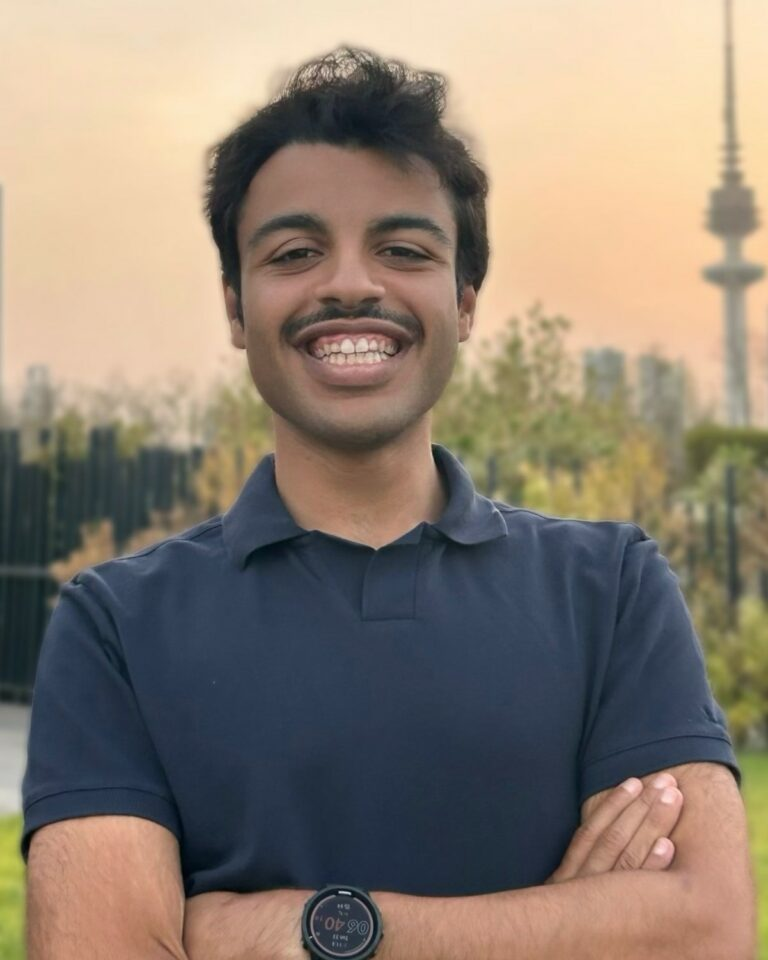
Data Diversity Podcast #5 – Abdulwahab Alshallal

Welcome back to another edition of the Data Diversity Podcast, the Research Data podcast from the University of Cambridge Office of Scholarly Communication (OSC). If this is your first time here, in this podcast, I speak to Cambridge Data Champions about their journeys in acquiring and working with data in their research, with the hope to highlight interesting facets of data work, but also academic research in general. In this episode, I spoke to Cambridge PhD student Abdulwahab Alshallal, from the MRC Epidemiology Unit, and who is part of the Physical Activity Epidemiology research group.  

Currently for his PhD, he is exploring associations of physical activity, behaviour and fitness with cardio metabolic risk in different global populations. Abdulwahab recently presented at a Data Champion Forum, where he talked about working with datasets from international sources, specifically from non-Western nations, and discussed the barriers to collaboration and differences in the flexibility of institutions regarding data access and sharing. In this episode, we discussed those matters and also went into his aspirations for public health policy making and how his data driven mindset applies to this endeavour. 


I am of the mind that your social and physical environments are a big determinant of your physical activity and your general lifestyle behaviours. For example, it is unfair to to compare the UK and India because it is much easier to cycle in streets and walk around in the UK than it is in India, or Mexico or even Kuwait, and the barriers can be different. It could be pedestrian access, it could be heat, in my case it would be humidity. All of these factors matter, and we need to get data to represent those populations and use that data in such studies. – Abdulwahab Alshallal


The overrepresentation of data from Western studies in global understandings of fitness 

LO: Is it true to say that most of the data that is available now is all based on Western data sources and is it problematic then to use that to represent a global understanding of fitness?

AA: I would rephrase that. It is not that the data does not exist, rather, it is that its representation in the literature is absent. The data exists but when it comes to the data making into the literature and influencing policy guidelines, this is not yet prevalent. Take for example physical activity guidelines: every few years, data from a lot of the literature of what is published is gathered and used to make new recommendations for physical activity. It is through these guidelines that it was recommended that people exercise, for example, 30 to 60 minutes of physical activity per day. Now, the guidelines say that it is 150 minutes of physical activity per week, no matter which day you do it. But the data that influences these policies are mostly data from North America, Europe, Australia (because these are the data used in the literature cited for the creation of these guidelines). This implies that we do not think that it matters much to look at data from other places, because humans are humans. But I am of the mind that your social and physical environments are a big determinant of your physical activity and your general lifestyle behaviours. For example, it is unfair to to compare the UK and India because it is much easier to cycle in streets and walk around in the UK than it is in India, or Mexico or even Kuwait and the barriers can be different. It could be pedestrian access, it could be heat, in my case, it would be humidity. All of these factors matter, and we need to get data to represent those populations and use that data in such studies. 

The data does exist and thankfully I have made an effort to do include it in my research. One of the places where you can acquire this data is from the World Health Organisation (WHO). That is the most wide-ranging data source, and then the few others that I’m using are from the South Asia Biobank, which covers four countries in South Asia: India, Sri Lanka, Pakistan and Bangladesh. Another source is the biobank from the UAE Healthy Future Study which would cover the Gulf populations, and the Qatar biobank.  

Data in his research 

LO: what are the research questions that you’re asking and what and and how is data used, or what data is needed to answer those questions? 

AA: I am interested in physical activity and asking are the associations of physical activity in the different ethnic populations different or the same? Does it matter where you live in the world? And we have made progress in this discovery. You would be the first to hear this actually but we have finished up our analysis for my first paper, and this is using the WHO data. We are close to submitting the manuscript. This is a bit of a segue but it is worth mentioning because it highlights one of the problems of the literature, but this paper touches on one of the controversies in my field. What the paper addresses is that all physical activity is good for you. For some context: there has been a recent phenomenon that we found in the current literature that uses mostly European data, that views occupational and non-occupational physical activity separately. They show that non-occupational physical activity is good for you, but occupational physical activity either has no effect or is actually bad for you in terms of mortality outcomes. What is alarming for us to instigate is to frame a paper that states that in low- and low-income countries outside of Europe, there is very little concept of non-occupational leisure time physical activity. Most of your activity is going to be in travel behavior or activity during your occupation, for example if you are doing heavy manual labor like construction and farming. So, we had to investigate that and I’m glad to report that, at least in terms of our findings, we found that occupational physical activity is not bad for you. Non-occupational physical activity is also good for you and it doesn’t matter what type of activity you do. We also were able to control the proportion accumulated in either occupational and non-occupational physical activity and based on what we found, any physical activity wherever you do it is good for you. 

We need to understand the physical activity in different parts of the world. The types of activity you’re going in one part of the world is going to be different to other parts of the world so one guideline is not going to be appropriate. We currently have one guideline from The WHO for the whole world which has 150 minutes of moderate to vigorous physical activity as the goal. Does that seem appropriate for the whole world? It might not be in terms of different countries or even different population subgroups such as young versus old or men versus women, or different occupations or different activity levels, and what really is the barrier between light, physical activity and moderate activity? It is going to be relative and likely complex. This is a shift of mindset that hopefully I will be able to contribute through my research. 

The experience of acquiring data for his research from global data banks

LO: What has your experience of acquiring data from different sources been? From what I understand, there are different barriers in place to getting the data. 

AA: Just to put it out there, I think it’s completely understandable that these barriers are in place. The data that these organisations produce is particularly high-quality, high-resolution data. Besides the WHO data, the studies from the biobank’s that I have mentioned plan on collecting data every few years from the same participants so the data really tells you about the health of the population because these cohorts are meant to be representative of the population. To put this data in the hands of researchers that you do not properly vet can be quite a risk, even if it means using anonymised data, so I completely understand the barriers. 

In terms of the the difficulty in which to get that data, it has been different. In regard to WHO data – and this is not my experience, but an experience of a researcher before me, a post doc that that worked on the same data set before me – a few years back she had to go all the way to Geneva and to perform the data analysis there because they did not have an online infrastructure in order to allow researchers from abroad to use the data. That has since changed and the way that I was able to request it is through the WHO microdata Repository.  

For the South Asia Biobank, after going through the data request, researchers are given a link to the data. The data request process itself is very comprehensive and can cause delays. It takes a lot of time, and there is a lot of emphasis on the protocol. They want to make sure that you have a proper protocol to say what you’re authorized to do. If you want to make small changes, even small changes, you have to rectify them before submitting the proposal and that can cause delays. In my case it took around six months and we just received the data, so we have not had a chance to use it. 

For the UAE healthy future study, it is actually a bit more secure than that. You do go through that process of the back and forth of going through the protocol. In terms of getting the data, from what I understand, you are using it locally. I know this from a researcher that I spoke to who works between Cambridge and the UAE. To work with the UAE healthy future study data, she’s given a laptop by the University (NYU Abu Dhabi), and she must be connected to a VPN. While she while connected to the VPN, she’s using a secure platform called NYU-Box. I believe NYU uses this platform in all of its institutions; Shanghai, Abu Dhabi. I have been told that it is very secure and you can use it offline as well.  

Regarding the Qatar Biobank, I don’t know much about the data security measures of Qatar Biobank. Through my experiences, I only know about trying to get that data. They are willing to work with foreign institutions, which is good, but the main PI of the project must be based in Qatar and the analysis must be conducted in Qatar. However, I think going through that effort and that process is very much worth it because it has one of the most comprehensive data sources in all of the Middle East that is available in recent times. It was established around 2014 and they have now up to 47,000 participants and counting. 30,000 of them are Qatar nationals and around 17,000 are foreign nationals who are long term residents. You have people from various populations which includes participants who are Indian, Egyptian, Lebanese. So, you can get to look at migrant workers, you get to look at other Arabs that are living in a specific environment, meaning that you can parse genetics out of social and physical environments. There is so much you can do and in addition to that, what makes it special, for my PhD at least, is that they have treadmill data. This is where they put people through a treadmill around treadmill test and they look at their heart rate response to exercise instead of just going through self-reported physical activity or through wearables. The Qatar biobank is the only study in that region that actually uses heart rate data so we can definitely estimate fitness in that population. For this reason, it is very much worth the effort of trying to push for it.


One thing I am grappling with at the moment is policy development, which is a bit of a departure from data. On one end, I’m gathering the evidence in order to understand the different populations of the world through physical activity to look at the different trends in fitness. Then, once we have the physical activity data, how do we know which resources to allocate to? Who should we target so fitness can tell us that in terms of policy? Who needs it the most might not necessarily be in the volume of activity. – Abdulwahab Alshallal


On the difference between self-reported fitness data and objective data

LO: Are self-reported fitness data less valuable than objective data obtained from wearables? 

AA: It is important to understand that for a long time, it was difficult to get objective data. If you spoke to a researcher from 30 or 40 years ago telling them about a cohort study that would be using wearables, they would not believe you and they wouldn’t think it would be scalable and they think it would be too expensive, and so self-reported data was the only resource that we had. Also, there are downsides to data from wearables. For example, there is going to be noise and glitches with data obtained from accelerometry. So, I wouldn’t say that self-reported data is useless.

I am a big critic of self-reported data and the dependence of the literature on self-reported data and my supervisor has made mellow about it by reminding me that it gives you context. One of the things that we haven’t been able to overcome with accelerometry is knowing what is actually happening. We can tell that they are being active, but what are they doing? When are they doing it? For example, in the questionnaires (that are used to generate self-reported data), we don’t ask people when they leave work or when they start work or commuting, we ask them to estimate their physical strain while doing those things in those specific contexts. This removes from the researcher the burden of trying to estimate what activity is happening. 

In terms of accuracy of the numbers and their influence on policy? That is a good question, and I think accelerometry would answer those questions. Using wearables and attaining objective data, in terms of specific numbers, is much more valuable. But policies in the past are not necessarily based on numbers, and self-reports have benefited us and there is still continued benefit. It is about data points which have a degree of relativity. There are people who are going to misreport because they don’t remember accurately how much activity they were doing, or they might be lying because they feel self-conscious or they want people to think that they are more active, or there might be a recall bias or a social desirability bias which could all lead to misclassifications. We asked for moderate and vigorous activity, but what is moderate to me and light to you? It’s different and relative. While there are accuracy problems in self-reported data, for the most part it tells us something that is relative to people. Take for example someone who reports 30 minutes of activity throughout the whole week versus someone who is reporting 200 or 300 minutes of physical activity per week. We could tell that the person who was reporting the more minutes of activity is more likely to be someone who’s more physically active. It’s going to be aligned more with a better blood profile than the person reporting less activity and so in terms of a relative sense, it is helpful. But having the resources that we have now and the ability to use wearable data, we should be making a transition towards that, but self-reported data still has value. I think they can compliment each other and provide context for the type of activity that you’re doing. 

On data and policy making

AA: One thing I am grappling with at the moment is policy development, which is a bit of a departure from data. On one end, I’m gathering the evidence in order to understand the different populations of the world through physical activity to look at the different trends in fitness. Then, once we have the physical activity data, how do we know which resources to allocate to? Who should we target so fitness can tell us that in terms of policy? Who needs it the most might not necessarily be in the volume of activity. For example, we may have some barriers to fitness such as environmental factors like heat and humidity, also infrastructure factors such as pedestrian access, green spaces, and how these are different in different parts of the world. But how can we use these data to influence policy development? This is something I’m starting to understand and trying to get a grip on. Soon, I will begin a policy internship so I will hopefully learn more about that. I’ve had some conversations with people in physical activity policy, and I’ve learned that in terms of what would actually influence policy, I should be looking for a shared problem and the shared solution. Take for example, cycling lanes. Say you want to create more cycling lanes, but then the government says they don’t have enough money for cycling lanes so they decide against it. But then, you also have a congestion problem and you want to achieve net zero, and you also have an obesity problem. You know what can fix that? Cycling lanes. More cycling lanes means more people are going to be actively commuting and less cars on the road, so there will be less carbon. Then, they will be interested to get on board. So it’s about framing it and that’s what I’ve realized, because framing it in terms of health is not going to take you very far. But in terms of money, or the overall goal, matching them up is going to be helpful. And it’s quite a departure from the way that I’ve been doing things which is being driven by data and what is good for health.


We thank Abdulwahab for speaking with us. We are certainly excited to see how he gets on with policy making. It would be comforting to know that there is a data driven thinker in the world of policy making, especially one that is aware of, and takes into consideration, the contextual, environmental and behavioural differences of people in different communities and parts of the world when integrating data into public health policy decisions

Data Diversity Podcast (#4) – Dr Stefania Merlo (2/2)

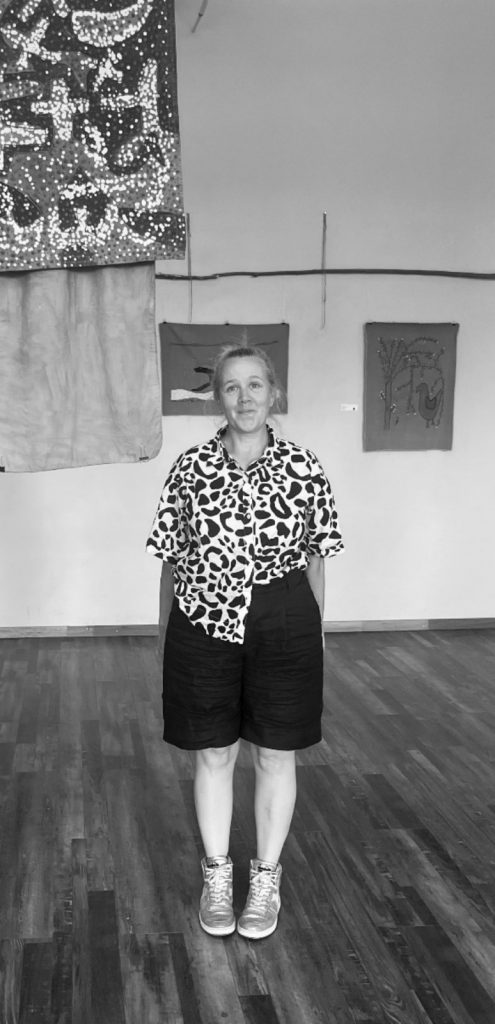
We return with another post featuring our Data Diversity conversation with University of Cambridge Data Champion, archaeologist Dr Stefania Merlo from the McDonald Institute of Archaeological Research, the Remote Sensing Digital Data Coordinator and project manager of the Mapping Africa’s Endangered Archaeological Sites and Monuments (MAEASaM) project and coordinator of the Metsemegologolo project. This post is short in word count but not in importance, as it touches on two reflections on the challenges of data management as a researcher who works in a global context, two aspects of present-day academia that may be relevant to many readers. This edition follows on from the previous post where Stefania talks about the challenges of extending UK-based Open Data policies to non-UK communities that may not share the same enthusiasm for making their cultural heritage artefacts available Open Access.  

In this post, Stefania reflects on how she conducts herself as a European researcher working in the African continent where her intention may sometimes be misaligned with the local data co-creators. Stefania also shares the challenge of academic mobility, where migrating from one academic institution to another results in data that is left behind, provoking an uncomfortable thought: what would happen to your data when you are suddenly rendered uncontactable? 


One would like to think that this is a rare situation, but I suspect that the situation where somebody passes away unexpectedly or even not, or somebody retires and has not made a plan for what happens to an entire careers’ data set happens more often than we know. I think it is an individual’s responsibility to make plans, but I think support should be given by the institutions and people should be accompanied through this path. – Dr Stefania Merlo


Working in the African continent and being honest about the objectives of research 

Working in Africa and in African countries, gives somebody coming from a European background, and an Italian background like me, a particular set of challenges and opportunities, because you encounter a different set up with everything – with life, and with research. Living and working in this context in various African countries, allows a researcher coming from a different background to question and challenge themselves on how they do their work. Many things that are taken for granted in other settings cannot be taken for granted in that setting. In particular that relationship with the land, with nature, and with the past. Any archaeologist that works in this setting would tell you that there are certain things that you just know from very early on that you should do. For example, although we’re dealing with the past of archaeological landscapes, you don’t just go and do your work there without acknowledging that these landscapes come in spaces and areas occupied by people today, and that those people are the custodians of the land and of the archaeology today. So there needs to be a deep engagement with communities and with people even before you put your spade in the ground. And it takes time to build relationships of trust, and relationships that then allow you to do work on your own or together, depending on what the aim of your research is.

When I do work that fulfills certain academic goals that may not be of interest to the communities that I work with, I think it is better to be honest and tell them that I’m doing this piece of work because there is an archaeological question that probably only archaeologists are interested in, and this is the part of work that I’m doing. At the same time, I think it is also important then to acknowledge that you work in a setting that includes other people, and start thinking about what work you can do with the people that are custodians of or inhabit a particular part of the world. Then you start thinking, OK, there’s a different set of activities that I can do with people that people want to do with me and let’s do that. I think that it is important to have this honesty of saying that particular things are of interest to me and to my academic community that I would like to do, and then we can negotiate together. You have to engage with the community, and I think we should be a bit more honest and a bit more specific about what the expectations from both parties are, and from the setting, we’re coming and the setting we’re going to. 

There are certain academic activities that I’m expected to do that are of no interest whatsoever for the communities that I’m working with, such as the academic publications on which my career rests. Then, there are other things that the communities are interested in that will give me no weight whatsoever in my academic career but contribute to building a relationship with the local community. These give me so much fulfillment because I realise that I am doing research work that is useful not only for my academic community, but for other people, be it students, colleagues elsewhere in the world, or the building of policies around archaeological heritage. 

Global researcher, global data 

LO: As someone who has engaged in research all over the globe, how do you deal with data that is in various places around the world? 

SM: How do I deal with my data? – poorly. I may be a digital data champion, but it has been a difficult road, and it is still a difficult road, that of even managing and curating my own data. Just to give you an example, a lot of the data I’ve collected for the past 20 years is both in analog and digital format for the same project. I have some data with me here (in Cambridge) and I still have data backed up in hard drives that I haven’t opened in a long time. The majority of my analogue data sets, maps, drawings, diaries, I have left behind in South Africa when I moved here, and I haven’t been able to bring them with me. Some of my materials are in Italy with my family. Some of my diaries I had left back in Cambridge when I left to go to Botswana in 2006 and somehow got lost. So, it has been messy and I’m not proud of it. But I’m saying it because it is a problem with a lot of researchers that have become highly mobile and have migrated from one place to another, in some cases without sufficient funding to bring all of the paperwork with them. I have been a messy data collector, since my undergraduate and PhD days, and I’ve been trying to train myself to be better, I’m still not there yet, and in part it’s just me. But I think it has also to do with this very high mobility and having to change institutions in my career so many times. And what changed is not only the location, but the requirement of what you do with data where you put it, how you avail it to yourself and to others.

And so yes, I’m not very good at it but I’m trying very hard to find a way of now putting everything together because I do feel the responsibility that comes with collecting data in different countries. Some of it is actually information that was given to me from community members or friends, or colleagues that I work with and it’s with me. 
It’s their work, it’s with me and if anything ever happens to me – if I were to change institutions, or if anything were to happen to me, including losing my memory – let me put it like that – what’s going to happen? I’ve never really thought of what would happen if I were to move or to shift? I left my previous institution quite abruptly and during COVID, and I was able to take some materials out, but some other materials I didn’t get access to and they are still all over the place.  

And then I started thinking: I have never made a plan for this kind of situation to happen. So what am I going to do now in order to make sure that these data are usable and useful for me, but perhaps also to others when I’m not present as the curator that will be able to tell you what each data asset is. I’m not even talking about the creation of metadata. Most of my photographs, digital photographs, for example, have got metadata that have been ordered. But archaeological datasets are complex, fragmented and can be dispersed so the main challenge is how would you connect the photographs with the drawings within my diary? Of course, there are dates, but it’s going take so much time for somebody else to put all of it together, especially because half of it is in digital format and half of this is in analog format. That is going be a nightmare and may not even be doable. And so, I’ve become acutely aware of the fact that we never think of this situation. We rarely think about handing over data to others in a particular form that will allow others accessibility and ability to still reuse this complex interrelated data if they were to do so. 

Worst case (data) scenario

I have another example. One of my collaborators and mentors in South Africa passed away quite suddenly a couple of years ago. They had never made a plan for what would happen to their materials. They published prolifically, so we know a lot of the research that was done over 50 years, but I am aware that they had so much more material, both physical material and files in computers. Their physical collection was transferred from their house to the University by another colleague but, to the best of my knowledge, to date, no one has been able to get access to the digital data, stored in a password protected computer. One would like to think that this is a rare situation, but I suspect that the situation where somebody passes away unexpectedly or even not, or somebody retires and has not made a plan for what happens to an entire career’s data set happens more often than we know. I think it is an individual’s responsibility to make plans, but I think support should be given by the institutions and people should be accompanied through this path. In particular, perhaps academics from other generations that may not be so knowledgeable about how to deal with data management. In particular of digital data, but also of analog data. 

Once upon a time, archaeologists used to just put everything into a library or an archive so at least we have the analog records. But again, putting them together and having them make sense is extremely difficult if we don’t think of a framework for doing so. Another issue that I’ve mentioned before is mobility. You know, how do we assist researchers that have got high mobility to deal with this every time they move? I don’t have an exact formula, but when I changed institutions before, both the institution that I was leaving and the ones that were accepting me, I was never asked ‘do you need any financial or other kind of help to transfer your data?’ I was asked to fill in forms for transferring my goods, I was given money for my visa, but nobody ever asked about my academic research and the related data. 


We once again thank Stefania for taking the time to speak to us and giving us food for thought. Stefania raises, we believe, a very important question – are we taking for granted that we will always be at hand to ensure that the data that we produce will be understood? Researchers tend to wait until a project is completed before supplying their data with the information needed to make them understood and reusable. If there’s one thing that Stefania brings to mind, is that data FAIR-ness needs to be implemented from the onset of a project and then at every juncture of the project’s lifecycle, as the research unfolds. That way, the research data will be reusable in a self-contained manner. 

Data Diversity Podcast (#4) – Dr Stefania Merlo (1/2) 

Welcome back to the fourth instalment of Data Diversity, the podcast where we speak to Cambridge University Data Champions about their relationship with research data and highlight their unique data experiences and idiosyncrasies in their journeys as a researcher. In this edition, we speak to Data Champion Dr Stefania Merlo from the McDonald Institute of Archaeological Research, the Remote Sensing Digital Data Coordinator and project manager of the Mapping Africa’s Endangered Archaeological Sites and Monuments (MAEASaM) project and coordinator of the Metsemegologolo project. This is the first of a two-part series and in this first post, Stefania shares with us her experiences of working with research data and outputs that are part of heritage collections, and how her thoughts about research data and the role of the academic researcher have changed throughout her projects. She also shares her thoughts about what funders can do to ensure that research participants, and the data that they provide to researchers, can speak for themselves.   

This is the first of a two-part series and in this first post, Stefania shares with us her experiences of working with research data and outputs that are part of heritage collections, and how her thoughts about research data and the role of the academic researcher have changed throughout her projects. She also shares her thoughts about what funders can do to ensure that research participants, and the data that they provide to researchers, can speak for themselves.   


I’ve been thinking for a while about the etymology of the word data. Datum in Latin means ‘given’. Whereas when we are collecting data, we always say we’re “taking measurements”. Upon reflection, it has made me come to a realisation that we should approach data more as something that is given to us and we hold responsibility for, and something that is not ours, both in terms of ownership, but also because data can speak for itself and tell a story without our intervention – Dr Stefania Merlo


Data stories (whose story is it, anyway?) 

LO: How do you use data to tell the story that you want to tell? To put it another way, as an archaeologist, what is the story you want to tell and how do you use data to tell that story?

SM: I am currently working on two quite different projects. One is Mapping Africa’s Endangered Archaeological Sites and Monuments (funded by Arcadia) which is funded to create an Open Access database of information on endangered archaeological sites and monuments in Africa. In the project, we define “endangered” very broadly because ultimately, all sites are endangered. We’re doing this with a number of collaborators and the objective is to create a database that is mainly going to be used by national authorities for heritage management. There’s a little bit less storytelling there, but it has more to do with intellectual property: who are the custodians of the sites and the custodians of the data? A lot of questions are asked about Open Access, which is something that the funders of the projects have requested, but something that our stakeholders have got a lot of issues with. The issues surround where the digital data will be stored because currently, it is stored in Cambridge temporarily. Ideally all our stakeholders would like to see it stored in a server in the African continent at the least, if not actually in their own country. There are a lot of questions around this. 

The other project stems out of the work I’ve been doing in Southern Africa for almost the past 20 years, and is about asking how do you articulate knowledge of the African past that is not represented in history textbooks? This is a history that is rarely taught at university and is rarely discussed. How do you avail knowledge to publics that are not academic publics? That’s where the idea of creating a multimedia archive and a platform where digital representations of archaeological, archival, historical, and ethnographic data could be used to put together stories that are not the mainstream stories. It is a work in progress. The datasets that we deal with are very diverse because it is required to tell a history in a place and in periods for which we don’t have written sources.  

It’s so mesmerizing and so different from what we do in contexts where history is written. It gives us the opportunity to put together so many diverse types of sources. From oral histories to missionary accounts with all the issues around colonial reports and representations of others as they were perceived at the time, putting together information on the past environment combining archaeological data. We have a collective of colleagues that work in universities and museums. Each performs different bits and pieces of research, and we are trying to see how we would put together these types of data sets. How much do we curate them to avail them to other audiences? We’ve used the concept of data curation very heavily, and we use it purposefully because there is an impression of the objectivity of data, and we know, especially as social scientists, that this just doesn’t exist. 

I’ve been thinking for a while about the etymology of the word data. Datum in Latin means ‘given’. Whereas when we are collecting data, we always say we’re taking measurements. Upon reflection, it has made me come to a realisation that we should approach data more as something that is given to us and we hold responsibility for, and something that is not ours, both in terms of ownership, but also because data can speak for itself and tell a story without our intervention. That’s the kind of thinking surrounding data that we’ve been going through with the project. If data are given, our work is an act of restitution, and we should also acknowledge that we are curating it. We are picking and choosing what we’re putting together and in which format and framework. We are intervening a lot in the way these different records are represented so that they can be used by others to tell stories that are perhaps of more relevance to us. 

So there’s a lot of work in this project that we’re doing about representation. We are explaining – not justifying but explaining – the choices that we have made in putting together information that we think could be useful to re-create histories and tell stories. The project will benefit us because we are telling our own stories using digital storytelling, and in particular story mapping, but it could become useful for others as resources that can be used to tell their own stories. It’s still a work in progress because we also work in low resourced environments. The way in which people can access digital repositories and then use online resources is very different in Botswana and in South Africa, which are the two countries where I mainly work with in this project. We also dedicate time into thinking how useful the digital platform will be for the audiences that we would like to get an engagement from. 

The intended output is an archive that can be used in a digital storytelling platform. We have tried to narrow down our target audience to secondary school and early university students of history (and archaeology). We hope that the platform will eventually be used more widely, but we realised that we had to identify an audience to be able to prepare the materials. We have also realised that we need to give guidance on how to use such a platform so in the past year, we have worked with museums and learnt from museum education departments about using the museum as a space for teaching and learning, where some of these materials could become useful. Teachers and museum practitioners don’t have a lot of time to create their own teaching and learning materials, so we’re trying to create a way of engaging with practitioners and teachers in a way that doesn’t overburden them. For these reasons, there is more intervention that needs to come from our side into pre-packaging some of these curations, but we’re trying to do it in collaboration with them so that it’s not something that is solely produced by us academics. We want this to be something that is negotiated. As archaeologists and historians, we have an expertise on a particular part of African history that the communities that live in that space may not know about and cannot know because they were never told. They may have learned about the history of these spaces from their families and their communities, but they have learned only certain parts of the history of that land, whereas we can go much deeper into the past. So, the question becomes, how do you fill the gaps of knowledge, without imposing your own worldview? It needs to be negotiated but it’s a very difficult process to establish. There is a lot of trial and error, and we still don’t have an answer. 

Negotiating communities and funders 

LO: Have you ever had to navigate funders’ policies and stakeholder demands?  

SM: These kinds of projects need to be long and they need continuous funding, but they have outputs that are not always necessarily valued by funding bodies. This brings to the fore what funding bodies are interested in – is it solely data production, as it is called, and then the writing up of certain academic content? Or can we start to acknowledge that there are other ways of creating and sharing knowledge? As we know, there has been a drive, especially with UK funding bodies, to acknowledge that there are different ways in which information and knowledge is produced and shared. There are alternative ways of knowledge production from artistic ones to creative ones and everything in between, but it’s still so difficult to account for the types of knowledge production that these projects may have. When I’m reporting on projects, I still find it cumbersome and difficult to represent these types of knowledge production. There’s so much more that you need to do to justify the output of alternative knowledge compared to traditional outputs. I think there needs to be change to make it easier for researchers that produce alternative forms of knowledge to justify it rather than more difficult than the mainstream. 

One thing I would say is there’s a lot that we’ve learned with the (Mapping Africa’s Endangered Archaeological Sites and Monuments) project because there we engage directly with the custodians of the site and of the analog data. When they realise that the funders of the project expect to have this data openly accessible, then the questions come and the pushback comes, and it’s a pushback on a variety of different levels. The consequence is that basically we still haven’t been able to finalise our agreements with the custodians of the data. They trust us, so they have informed us that in the interim we can have the data as a project, but we haven’t been able to come to an agreement on what is going to happen to the data at the end of the project. In fact, the agreement at the moment is the data are not going to be going on a completely Open Access sphere. The negotiation now is about what they would be willing to make public, and what advantages they would have as a custodian of the data to make part, or all, of these data public.

This has created a disjuncture between what the funders thought they were doing. I’m sure they thought they were doing good by mandating that the data needs to be Open Access, but perhaps they didn’t consider that in other parts of the world, Open Access may not be desirable, or wanted, or acceptable, for a variety of very valid reasons. It’s a node that we still haven’t resolved and it makes me wonder: when funders are asking for Open Access, have they really thought about work outside of UK contexts with communities outside of the UK context? Have they considered these communities’ rights to data and their right to say, “we don’t want our data to be shared”? There’s a lot of work that has happened in North America in particular, because indigenous communities are the ones that put forward the concept of C.A.R.E., but in UK we are still very much discussing F.A.I.R. and not C.A.R.E.. I think the funders may have started thinking about it, but we’re not quite there. There is still this impression that Open Data and Open Access is a universal good without having considered that this may not be the case. It puts researchers that don’t work in UK or the Global North in an awkward position. This is definitely something that we are still grappling with very heavily. My hope is that this work is going to help highlight that when it comes to Open Access, there are no universals. We should revisit these policies in light of the fact that we are interacting with communities globally, not only those in some countries of the world. Who is Open Access for? Who does it benefit? Who wants it and who doesn’t want it, and for what reasons? These are questions that we need to keep asking ourselves. 

LO: Have you been in a position where you had to push back on funders or Open Access requirements before? 

Not necessarily a pushback, but our funders have funded a number of similar projects in South Asia, in Mongolia, in Nepal and the MENA region and we have come together as a collective to discuss issues around the ethics and the sustainability of the projects. We have engaged with representatives of our funders trying to explain that what they wanted initially, which is full Open Access, may not be practicable. In fact, there has already been a change in the terminology that is used by the funders. From Open Access, they changed the concept to Public Access, and they have come back to us to say that they can change their contractual terms to be more nuanced and acknowledge the fact that we are in negotiation with national stakeholders and other stakeholders about what should happen to the data. Some of this has been articulated in various meetings, but some of it was trial and error on our side. In other words, with our new proposal for renewal of funding, which was approved, we just included these nuances in the proposal and in our commitment and they were accepted. So in the course of the past four years, through lobbying of the funded projects, we have been able to bring nuance to the way in which the funders themselves think about Open Access. 


Stay tuned for part two of this conversation where Stefania will share some of the challenges of managing research data that are located in different countries!


Mapping the world through data – The November 2023 Data Champion Forum 

The November Data Champion forum was a geography/geospatial data themed edition of the bi-monthly gathering, this time hosted by the Physiology department. As usual, the Data Champions in attendance were treated to two presentations. Up first was Martin Lucas-Smith from the Department of Geography who introduced the audience to the OpenStreetMap (OSM) project, a global community mapping project using crowdsourcing. Just as Wikipedia is for textual information, OSM results in a worldwide map created by everyday people who map the world themselves. The resulting maps can vary in terms of its focus such as the transport map, which is a map which shows public transport lanes like railways, buses and trams worldwide, and the humanitarian map, which is an initiative dedicated to humanitarian action through open mapping. Martin is personally involved in a project called CycleStreets which, as the name implies, uses open mapping of bicycle infrastructure. The Department of Geography uses OSM as a background for its Cambridge Air Photos websites. Projects like these, Martin highlighted, demonstrate how community gets generated around open data. 

CycleStreets: Martin at the November 2023 Data Champion Forum

In his presentation, Martin explained the mechanics of OSM such as its data structure, how the maps are edited, and how data can be used in systems like routing engines. Editing the maps and the decision-making processes that go behind how a path is represented visually on the map is the point where the OSM community comes to action. While the data in OSM consists primarily of geometric points (called ‘Nodes’) and lines (called ‘Ways’) coupled with tags which denotes metadata values, the norms about how to define this information can only come about by consensus from the OSM community. This is perhaps different to more formal database structures that might be employed within corporate efforts such as Google. Because of its widespread crowdsourced nature, OSM tends to be more detailed than other maps for less well-served communities such as people cycling or walking, and its metadata is richer, as they are created by people who are intimately familiar with the areas that they are mapping. A map by users for users. 

Next up was Dr Rachel Sippy, a Research Associate with the Department of Genetics who presented how geospatial data factored into epidemiological research. In her work, the questions of ‘who’, ‘when’, and ‘where’ a disease outbreak occurred are important, at it is the where that gives her research a geographical focus. Maps, however, are often not detailed enough to provide information about an outbreak of disease among a population or community as maps can only mark out the incident site, the place, whereas the spatial context of that place, which she denotes as space, is equally as important in understanding disease outbreaks.  

Of ‘Space’ and ‘Place’: Rachel at the November 2023 Data Champion forum

It can be difficult, however, to understand what a researcher is measuring and what types of data can be used to measure space and/or place. Spatial data, as Rachel pointed out, can be difficult to work with and the researcher has to decide if spatial data is a burden or fundamental to the understanding of a disease outbreak in a particular setting. Rachel discussed several aspects of spatial data which she has considered in her research such as visualisation techniques, data sources and methods of analysis. They all come with their own sets of challenges and researchers have to navigate them to decide how best to tell the fundamental story that answers the research question. This essentially comes down to an act of curation of spatial data, as Rachel pointed out, quoting Mark Monmoneir, that “not only is it easy to lie with maps, it’s essential”. In doing so, researchers working with spatial data would have to navigate the political and cultural hierarchies that are explicitly and implicitly inherent to places, and any ethical considerations relating to both the human and non-human (animal) inhabitants of those geographical locations. Ultimately, how data owners choose to model the spatial data will affect the analysis of the research, and with it, its utility for public health. 

After lunch, both Martin and Rachel sat together to hold a combined Q&A session and a discussion emerged around the topic of subjectivity. A question was raised to Rachel regarding mapping and subjectivity, as it was noticed that how she described place, which included socio-cultural meanings and personal preferences of the inhabitants of the place, can be considered to be subjective in manner. Rachel agreed and alluded back to her presentation, where she mentioned that these aspects of mapping can get fuzzy as researchers would have to deal with matters relating to identity, political affiliations and personal opinions, such as how safe an individual may feel in a particular place. Martin added that with the OSM project the data must be objective as possible, yet the maps themselves are subjective views of objective data.  

Rachel and Martin answering questions from the Data Champions at the November 2023 forum

Martin also brought to attention that maps are contested spaces because spaces can be political in nature. Rachel added that sometimes, maps do not appropriately represent the contested nature of her field sites, which she only learned through time on the field. In this way, context is very important for “real mapping”. As an example, Martin discussed his “UK collision data” map, created outside the University, which states where collisions have happened, giving the example of one of central Cambridge’s busiest streets, Mill Road: without contextual information such as what time these collisions occurred, what vehicles were involved, and the environmental conditions at the time of the accident, a collision map may not be that valuable. To this end, it was asked whether ethnographic research could provide useful data in the act of mapping and the speakers agreed. 

Data Diversity Podcast #1 – Danny van der Haven

Last week, the Research Data Team at the Office of Scholarly Communication recorded the inaugural Data Diversity Podcast with Data Champion Danny van der Haven from the Department of Material Science and Metallurgy.

As is the theme of the podcast, we spoke to Danny about his relationship with data and learned from his experiences as a researcher. The conversation also touched on the differences between lab research and working with human participants, his views on objectivity in scientific research, and how unexpected findings can shed light on datasets that were previously insignificant. We also learn about Danny’s current PhD research studying the properties of pharmaceutical powders to enhance the production of medication tablets.   

Click here to listen to the full conversation.

If you have heart rate data, you do not want to get a different diagnosis if you go to a different doctor. Ideally, you would get the same diagnosis with every doctor, so the operator or the doctor should not matter, but only the data should matter.
– Danny van der Haven

   ***  

What is data to you?  

Danny: I think I’m going to go for a very general description. I think that you have data as soon as you record something in any way. If it’s a computer signal or if it’s something written down in your lab notebook, I think that is already data. So, it can be useless data, it can be useful data, it can be personal data, it can be sensitive data, it can be data that’s not sensitive, but I would consider any recording of any kind already data. The experimental protocol that you’re trying to draft? I think that’s already data.   

If you’re measuring something, I don’t think it’s necessarily data when you’re measuring it. I think it becomes data only when it is recorded. That’s how I would look at it. Because that’s when you have to start thinking about the typical things that you need to consider when dealing with regular data, sensitive data or proprietary data etc.   

When you’re talking about sensitive data, I would say that any data or information of which the public disclosure or dissemination may be undesirable for any given reason. That’s really when I start to draw the distinction between data and sensitive data. That’s more my personal view on it, but there’s also definitely a legal or regulatory view. Looking for example at the ECG, the electrocardiogram, you can take the electrical signal from one of the 12 stickers on a person’s body. I think there is practically nobody that’s going to call that single electrical signal personal data or health data, and most doctors wouldn’t bat an eye.   

But if you would take, for example, the heart rate per minute that follows from the full ECG, then it becomes not only personal data but also becomes health data, because then it starts to say something about your physiological state, your biology, your body. So there’s a transition here that is not very obvious. Because I would say that heart rate is obviously health data and the electrical signal from one single sticker is quite obviously not health data. But where is the change? Because what if I have the electrical signal from all 12 stickers? Then I can calculate the heart rate from the signal of all the 12 stickers. In this case, I would start labelling this as health data already. But even then, before it becomes health data, you also need to know where the stickers are on the body.   

So when is it health data? I would say that somebody with decent technical knowledge, if they know where the stickers are, can already compute the heart rate. So then it becomes health data, even if it’s even if it’s not on the surface. A similar point is when metadata becomes real data. For example, your computer always saves that date and time you modified files. But sometimes, if you have sensitive systems or you have people making appointments, even such simple metadata can actually become sensitive data.   

On working within the constraints of GDPR  

Danny: We struggled with that because with our startup Ares Analytics, we also ran into the issues with GDPR. In the Netherlands at the time, GDPR was interpreted really stringently by the Dutch government. Data was not anonymous if you could, in any way, no matter how difficult, retrace the data to the person. Some people are not seeing these possibilities, but just to take it really far: if I would be a hacker with infinite resources, I could say I’m going to hack into the dataset and see the moments that the data that were recorded. And then I can hack into the calendar of everybody whose GPS signal was at the hospital on this day, and then I can probably find out who at that time was taking the test… I mean is that reasonable? Is anybody ever going do that? If you put those limitations on data because that is a very, very remote possibility; is that fair or are you going hinder research too much? I understand the cautionary principle in this case, but it ends up being a struggle for us in in that sense.  

Lutfi: Conceivably, data will lose its value. If you really go to the full extent on how to anonymise something, then you will be dataless really because the only true way to anonymise and to protect the individual is to delete the data.  

Danny: You can’t. You’re legally not allowed to because you need to know what data was recorded with certain participants. Because if some accident happens to this person five years later, and you had a trial with this person, you need to know if your study had something to do with that accident. This is obvious when you you’re testing drugs. So in that sense, the hospital must have a non-anonymised copy, they must. But if they have a non-anonymized copy and I have an anonymised copy… If you overlay your data sets, you can trace back the identity. So, this is of course where you end up with a with a deadlock.  

What is your relationship to data?  

Danny: I see my relationship to data more as a role that I play with respect to the data, and I have many roles that I cycle through. I’m the data generator in the lab. Then at some point, I’m the data processor when I’m working on it, and then I am the data manager when I’m storing it and when I’m trying to make my datasets Open Access. To me, that varies, and it seems more like a functional role. All my research depends on the data.  

Lutfi: Does the data itself start to be more or less humanised along the way, or do you always see it as you’re working on someone, a living, breathing human being, or does that only happen toward the end of that spectrum?   

Danny: Well, I think I’m very have the stereotypical scientist mindset in that way. To me, when I’m working on it, in the moment, I guess it’s just numbers to me. When I am working on the data and it eventually turns into personal and health data, then I also become the data safe guarder or protector. And I definitely do feel that responsibility, but I am also trying to avoid bias. I try not to make a personal connection with the data in any sense. When dealing with people and human data, data can be very noisy. To control tests properly, you would like to be double blind. You would like not to know who did a certain test, you would like not to know the answer beforehand, more or less, as in who’s more fit or less fit. But sometimes you’re the same person as the person who collected the data, and you actually cannot avoid knowing that. But there are ways that you can trick yourself to avoid that. For example, you can label the data in certain clever way and you make sure that the labelling is only something that you see afterwards.   

Even in very dry physical lab data, for example microscopy of my powders, the person recording it can introduce a significant bias because of how they tap the microscopy slide when there’s powder on it. Now, suddenly, I’m making an image of two particles that are touching instead of two separate particles. I think it’s also kind of my duty, that when I do research, to make the data, how I acquire it, and how it’s processed to be as independent of the user as possible. Because otherwise user variation is going to overlap with my results and that’s not something I want, because I want to look at the science itself, not who did the science. 

Lutfi: In a sentence, in terms of the sort of accuracy needed for your research, the more dehumanised the data is, the more accurate the data so to speak.   

Danny: I don’t like the phrasing of the word “dehumanised”. I guess I would say that maybe we should be talking about not having person-specific or operator-specific data. If you have heart rate data, you do not want to get a different diagnosis if you go to a different doctor. Ideally, you would get the same diagnosis with every doctor, so the operator or the doctor should not matter, but only the data should matter. 

             ***  

If you would like to be a guest on the Data Diversity Podcast and have some interesting data related stories to share, please get in touch with us at info@data.cam.ac.uk and state your interest. We look forward to hearing from you!  

The September 2023 Data Champion Forum

The Cambridge Data Champions had a fantastic September Forum at the West Hub. The forum started with an introduction to the West Hub by  Library Manager Daniele Campello and we welcomed Clair Castle as the new interim Research Data Manager with the Office of Scholarly Communication (University Library).

Dr Mandy Wigdorowitz kicked off the presentations by sharing with the Data Champions what she aims to achieve as the University’s Open Research Community Manager. This includes raising the profile of Open Research at the University and ensuring that scholarly and research outputs that are deemed to be open are indeed accessible and interoperable in accordance with FAIR principles.  As Open Research Community Manager, Mandy advocates for Open Research among University researchers from both the STEMM and AHSS (Art, Humanities and Social Sciences) disciplines. The latter proves to be more challenging as researchers in AHSS may often have valid reasons from refraining from making their research data open, such as working with sensitive data or working with interlocutors who object to their data being shared. Such issues will be addressed at the Cambridge Open Research Conference that she is organising, which takes place on 17th November 2023 at Downing College, Cambridge as well as online. To end, Mandy invited the Data Champions to join her Open Research initiative, a community of advocates for Open Research across the University.

Before lunch, Madeleine Taylor (Information Security Risk and Governance Manager with University Information Services, UIS) presented a follow up to a webinar session on monitoring the Information and Cybersecurity (ICS) risks for research data across the university, which she conducted with the Data Champions a couple weeks prior. After a brief introduction of what she has done so far to protect Cambridge’s research communities against ICS threats, she asked the Data Champions for help in her task of securing research data against ICS risks. They can do so by providing her with a sense of what data their own research communities are working with and how they were storing them. As the Data Champions ate the delicious lunch of sandwiches and cakes provided by the West Hub caterers, they provided feedback to Madeleine on two forms that she proposed as methods of gathering the information she needed: a 3-minute research data impact assessment form and a research data cyber security risk form. Maddy will continue to work with the Research Data Team and the Data Champions to refine, and gather information, through these forms.

Thank you to the West Hub and Daniele Campello for hosting the Data Champions Forum in your welcoming building!

If you are a member of the University of Cambridge and are interested in attending the Data Champions Forum, please join us as a Data Champion. If you are passionate about research data management and data sharing or you would like to find out more about what being a Data Champion entails, please visit the Data Champions webpage. We welcome applications from those working in all academic subjects across AHSS and STEMM disciplines. If you are unsure about how being a Data Champion would impact your research, please get in touch with the Research Data Team!

Cartoon by Clare Trowell CC-BY-NC-ND


Open Research 101

Dr. Sacha Jones and Dr. Samuel Moore, Office of Scholarly Communication, Cambridge University Libraries

The Open Research at Cambridge conference took place between 22–26 November 2021. In a series of talks, panel discussions and interactive Q&A sessions, researchers, publishers, and other stakeholders explored how Cambridge can make the most of the opportunities offered by open research. This blog is part of a series summarising each event. 

As part of the Cambridge Open Research conference, the Office of Scholarly Communication hosted a ‘101’ session on open research, covering the basics and answering queries for the audience on all aspects of open access publication and open data. With over 80 participants, we were thrilled with the response and wanted to recap some of the topics we covered in this post.

Firstly, as we discussed in the session, it is easy to assume that open research is simply an issue for the sciences rather than all academic disciplines. Practices such as open access and open data have been taken up widely in the sciences, although in different ways, and there is a common association with science and openness. This is compounded by the fact that in many European countries Open Science is inclusive of arts and humanities scholarship and so is functionally equivalent to open research. At the OSC, we are keen to support open practices across all disciplines while being sensitive to different ways of working. We are guided by the university’s Open Research Position Statement that requires work to be ‘as open as possible, as closed as necessary’.

After an introduction to open research, Sam then outlined the key issues in open access, including the different licences for making your research open access, the differences between green and gold open access, and the many and various reasons for making your work open access. Open access allows us to reach new audiences, improve the economics of research access, and reassess knowledge production and dissemination in a digital world. We also learned about open access monographs, the complex policy landscape and the various ways in which you can make your research open access through repositories and journals. The OSC’s Open Access webpages are an excellent set of resources for learning more.

We then moved onto open data – research data shared publicly – and how this fits into open research (see the University’s policy framework on research data). After highlighting that all research regardless of discipline generates or uses data of one kind or another (e.g. text, audio-visual, numerical, etc.), Sacha posed a series of questions with answers, anticipating what the audience might want to know more about. Do I have to share my data? What data do I share – is it meant to be everything from my research? My data contains sensitive information so I can’t share my data, or can I? How do I share my data? I don’t want to be criticised after making my data open, so how can I prevent this? How can I stop someone else from taking my data, using it, and getting all the credit? The OSC’s Research Data website contain information about data management and data sharing, and check out our list of Cambridge Data Champion experts to see if there’s anyone who’s volunteered to be a local source of data-related advice in your department or discipline.

We are always available as a source of support and guidance in all matters relating to open research and encourage you to contact us if you have any questions. The OSC has webpages on open research and sites dedicated to both open access and research data. For general open research enquires, we can be emailed at info@osc.cam.ac.uk, for open access at info@openaccess.cam.ac.uk and for data at info@data.cam.ac.uk. There are also a number of training sessions provided throughout the year and online that relate to the topics covered in this session. If you think that those in your department or institute at Cambridge would like to know more about the topics covered here then please do get in touch as we’d be happy to speak to these and answer any questions you may have.

Research Data at Cambridge – highlights of the year so far

By Dr Sacha Jones, Research Data Coordinator

This year we have continued, as always, to provide support and services for researchers to help with their research data management and open data practices. So far in 2020, we have approved more than 230 datasets into our institutional repository, Apollo. This includes Apollo’s 2000th dataset on the impact of health warning labels on snack selection, which represents a shining example of reproducible research, involving the full gamut: preregistration, and sharing of consent forms, code, protocols, data. There are other studies that have sparked media interest for which the data are also openly available in Apollo, such as the data supporting research that reports the development of a wireless device that can convert sunlight, carbon dioxide and water into a carbon-neutral fuel. Or, data supporting a study that has used computational modelling to explain why blues and greens are the brightest colours in nature. Also, and in the year of COVID, a dataset was published in April on the ability of common fabrics to filter ultrafine particles, associated with an article in BMJ Open. Sharing data associated with publications is critical for the integrity of many disciplines and best practice in the majority of studies, but there is also an important responsibility of science communication in particular to bring research datasets to the forefront. This point was discussed eloquently this summer in a guest blog post in Unlocking Research by Itamar Shatz, a researcher and Cambridge Data Champion. Making datasets open permits their reuse, and if you have wondered how research data is reused and then read this comprehensive data sharing and reuse case study written by the Research Data team’s Dominic Dixon. This centres on the use and value of the Mammographic Image Society database, published in Apollo five years ago. 

This year has seen the necessary move from our usual face-to-face Research Data Management (RDM) training to provision of training online. This has led us to produce an online training session in RDM, covering topics such as data organisation, storage, back up and sharing, as well as data management plans. This forms one component of a broader Research Skills Guide – an online course for Cambridge researchers on publishing, managing data, finding and disseminating research  – developed by Dr Bea Gini, the OSC’s training coordinator. We have also contributed to a ‘Managing your study resources’ CamGuide for Master’s students, providing guidance on how to work reproducibly. In collaboration with several University stakeholders we released last month new guidance on the use of electronic research notebooks (ERNs), providing information on the features of ERNs and guidance to help researchers select one that is suitable. 

At the start of this year we invited members of the University to apply to become Data Champions, joining the pre-existing community of 72 Data Champions. The 2020 call was very successful, with us welcoming 56 new Data Champions to the programme. The community has expanded this year, not only in terms of numbers of volunteers but also in terms of disciplinary focus, where there are now Data Champions in several areas of the arts, humanities and social sciences in particular where there were none previously. During this year, we have held forums in person and then online, covering themes such as how to curate manual research records, ideas for RDM guidance materials, data management in the time of coronavirus, and data practices in the arts and humanities and how these can be best supported. We look forward to further supporting and advocating the fantastic work of the Cambridge Data Champions in the months and years to come.  

The Role of Open Data in Science Communication

Itamar Shatz has written a guest blog post for the Office of Scholarly Communication about how public trust in the scientific community increases when researchers make their data openly available to all. He also emphasizes that science communicators (e.g. press offices, journalists, publishers) have a responsibility to point attention directly at the primary source of the data. Itamar is a PhD candidate in the Department of Theoretical and Applied Linguistics at the University of Cambridge. He is also a member of the Cambridge Data Champion programme, having joined at the start of this year. He writes about science and philosophy that have practical applications at Effectiviology.com.

It’s no secret that the public’s view of the scientific community is far from ideal.

For example, a global survey published by the Wellcome Trust in 2019 showed that, on average, only 18% of people indicate that they have a high level of trust in scientists. Furthermore, the survey showed that there are stark differences between people living in different areas of the world; for instance, this rate was more than twice as high in Northern Europe (33%) and Central Asia (32%) than in Eastern Europe (15%), South America (13%), and Central Africa (12%).

Things do appear to be improving, to some degree, especially in light of the recent pandemic. For example, a recent survey in the UK, conducted by the Open Knowledge Foundation, has found that, following the COVID-19 pandemic, 64% of people are now “more likely to listen expert advice from qualified scientists and researchers”. Similar increases in public confidence have been found in other countries, such as Germany and the USA. However, despite these recent increases, there is still much room for improvement.

Open data can help increase the public’s confidence in scientists

The public’s lack of confidence in scientists is a complex, multifaceted issue, that is unlikely to be resolved by a single, neat solution. Nevertheless, one thing that can help alleviate this issue to some degree is open data, which is the practice of making data from scientific studies publicly accessible.

Research on the topic shows just how powerful this tool can be. For example, the recent survey by the Open Knowledge Foundation, conducted in the UK in response to the COVID-19 pandemic, found that 97% of those polled believed that it’s important for COVID-19 data to be openly available for people to check, and 67% believed that all COVID-19 related research and data should be openly available for anyone to use freely. Similarly, a 2019 US survey conducted before the pandemic found that 57% of Americans say that they trust the outcomes of scientific studies more if the data from the studies is openly available to the public.

Overall, such surveys strongly suggest that open data can help increase the public’s trust in scientists. However, it’s not enough for studies to just have open data for it to increase the public’s trust; if people don’t know about the open data, or if don’t fully understand what it means, then open data is unlikely to be as beneficial as it could be. As such, in the following section we will see some guidelines on how to properly incorporate open data into science communication, in order to utilize this tool as effectively as possible.

How to incorporate open data into science communication

To properly incorporate open data into science communication, there are several key things that people who engage in science communication—such as journalists and scientists—should generally do:

  • Say that the study has open data. That is, you should explicitly mention that the researchers have made the data from their research openly available. Do not assume that people will go to the original study and then learn there about the data being open.
  • Explain what open data is. That is, you should briefly explain what it means for the data to be openly available, and potentially also mention the benefits of making the data available, for example in terms of making research more transparent, and in terms of helping other researchers reproduce the results.
  • Describe what sort of data has been made openly available. For example, you can include descriptions of the type of data involved (surveys, clinical reports, brain scans, etc.), together with some concrete examples that help the audience understand the data.
  • Explain where the data can be found. For example, this can be in the article’s “supplementary information” section, though data should preferably be available in a repository where the dataset has its own persistent identifier, such as a DOI. This ensures that the audience can find and access the data, which may otherwise be hidden behind a paywall, and offers other benefits, such as allowing researchers to directly access and cite the dataset, without navigating through the article.

These practices can help people better understand the concept of open data, particularly as it pertains to the study in question, and can help increase their trust in the openness of the data, especially if it is placed somewhere that they can access themselves.

For one example of how open data might be communicated effectively in a press release, consider the following:

“The researchers have made all the data from this study openly available; this means that all the results from their experiments can be freely accessed by anyone through a repository available at: https://www.doi.org/10.xxxxx/xxxxxxx. This can help other scientists verify and reproduce their results, and will aid future research on the topic.”

Open data in different types of scientific communications

It’s important to note that there’s no single right way to incorporate open data into scientific communications. This can be attributed to various factors, such as:

  • Differences between fields (e.g. biology, economics, or psychology)
  • Differences between types of studies (e.g. computational or experimental)
  • Differences between media (e.g. press release or social media post).

Nevertheless, the guidelines outlined earlier can be beneficial as initial considerations to take into account when deciding how to incorporate open data into science communication. It is up to communicators to make the final modifications, in order to use open data as effectively as possible in their particular situation.

Summarizing what we’ve learned

Though the public’s trust in science is currently growing, there is much room for improvement. One powerful tool that can aid the academic community is open data—the practice of making data from research studies openly available. However, to benefit as much as possible from the presence of open data, it’s not sufficient for a study to merely make its data open. Rather, the accessibility of the data needs to be promoted and explained in scientific communication, and the dataset needs to be cited appropriately (see the Joint Declaration of Data Citation Principles for guidelines regarding this latter point).

What is currently being done

It is important to note that much work is already being done to promote the concept of open data. For example, organizations such as the Research Data Alliance promote discussion of the topic and publish relevant material, as in the case of their recent guidelines and recommendations regarding COVID-19 data.

In addition, at the University of Cambridge, in particular, we can already see a substantial push for open data practices, where appropriate, and from many angles as outlined in the University’s Open Research position statement. Many funding bodies mandate that data be made available, and the University facilitates the process of sharing the data via Apollo, the institutional repository. Furthermore, there are the various training courses and publications—including this very blog—led by bodies such as the Office of Scholarly Communication (OSC), which help to promote Open Research practices at the University. Most notably, there is the OSC’s Data Champion programme, which deals, among other things, with supporting researchers with open data practices.

Moving forward

Promoting the use of open data in scientific communication is something that different stakeholders can do in different ways.

For example, those engaging in science communication—such as journalists and universities’ communication offices—can mention and explain open data when covering studies. Similarly, scientists can ask relevant communicators to cite their open data, and can also mention this information themselves when they engage in science communication directly. In addition, consumers of scientific communication and other relevant stakeholders—such as the general public, politicians, regulators, and funding bodies—can ask, whenever they hear about new research findings, whether the data was made openly available, and if not, then why.

Overall, such actions will lead to increased and more effective use of open data over time, which will help increase the trust people have in scientists. Furthermore, this will help promote the adoption of open data practices in the scientific community, by making more scientists aware of the concept, and by increasing their incentives for engaging in it.

Published 19 June 2020

Written by Itamar Shatz

CCBY icon

Towards widespread Open Research: insights from Cambridge Data Champions and beyond

The Cambridge Data Champions are an example of a community of volunteers engaged in promoting open research and good research data management (RDM). Currently entering its third year, the programme has attracted a total of 127 volunteers (86 current, 41 alumni) from diverse disciplinary backgrounds and positions. It continues to grow and has inspired similar initiatives at other universities within and outside the UK (Madsen, 2019). Dr Sacha Jones, Research Data Coordinator at the Office of Scholarly Communication, recently shared information about the programme at ‘FAIR Science: tricky problems and creative solutions’, an Open Science event held on 4th June 2019 at The Queen’s Medical Research Institute in Edinburgh, and organised by a previous Cambridge Data Champion – Dr Ralitsa Madsen. The aim of this event was to disseminate information about Open Science and promote the subsequent set-up of a network of Edinburgh Open Research Champions, with inspiration from the Cambridge Data Champion programme. Running a Data Champion programme, however, is not free of challenges. In this blog, Sacha highlights some of these alongside potential solutions in the hope that this information may be helpful to others. In this vein, Ralitsa adds her insights from ‘FAIR Science’ in Edinburgh and discusses how similar local events may spearhead the development of additional Open Science programmes/networks, thus broadening the local reach of this movement in the UK and beyond.  

#FAIRscienceEDI 

On 4 June 2019, the University of Edinburgh hosted ‘FAIR Science: tricky problems and creative solutions’ – a one-day event that brought together local life scientists and research support staff to discuss systemic flaws within current academic culture as well as potential solutions. Funded by the Institute for Academic Development and the UK Biochemical Society, the event was popular – with around 100 attendees – featuring both students, postdocs, principal investigators (PIs) and administrative staff. The programme featured talks by a range of local researchers – Dr Ralitsa Madsen (postdoctoral fellow and event organiser), Dr William Cawthorn (junior PI), Prof Robert Semple (Dean of Postgraduate Research and senior PI), Prof Malcolm Macleod (senior PI and member of the UK Reproducibility Network steering group), Prof Andrew Millar (senior PI and Chief Scientific Advisor on Environment, Natural Resources and Agriculture, for Scottish Government), Aki MacFarlene (Wellcome Trust Open Research Programme Officer), Dr Naomi Penfold (Associate Director, ASAPbio), Dr Nigel Goddard and Rory Macneil (RSpace developers) and Robin Rice (Research Data Service, University of Edinburgh), and Dr Sacha Jones (University of Cambridge). All slides have been made available via the Open Science Framework, and “live” tweets can be found via #FAIRScienceEDI.  

Shifting the balance of research culture for the better. Image source: Presentation by Ralitsa Madsen, ‘Why FAIR Science and why now?

Why is open science important? What is the extent of the reproducibility problem in science, and what are the responsibilities of individual stakeholders? Do all researchers need to engage with open research? Are the right metrics used when assessing researchers for appointment, promotion and funding? What are the barriers to widespread change, and can they be overcome through collective efforts? These were some of the ‘tricky’ problems that were addressed during the first half of the ‘Fair Science’ event, with the second half focussing on ‘creative solutions’, including: abandoning the journal impact factor in favour of alternative and fairer assessment criteria such as those proposed in DORA; preprinting of scientific articles and pre-registration of individual studies; new incentives introduced by funders like the Wellcome Trust who seek to promote Open Science; and data management tools such as electronic lab notebooks. Finally, the event sought to inspire local efforts in Edinburgh to establish a volunteer-driven network of Open Research Champions by providing insight into the maturing Data Champion programme at the University of Cambridge. This was a popular ‘creative solution’, with more than 20 attendees providing their contact details to receive additional information about Open Science and the set-up of a local network. 

Overall, community engagement was a recurring theme during the ‘FAIR Science’ event, recognised as a catalyst required for research culture to change direction toward open practices and better science. Robert Semple discussed this in the greatest detail, suggesting that early stage researchers – PhDs and post-docs – are the building blocks of such a community, supported also by senior academics who have a responsibility to use their positions (e.g. as group leaders, editors) to promote open science. “Open Science is a responsibility also of individual groups and scientists, and grass roots efforts will be key to culture shift” (Robert Semple’s presentation). On a larger scale, Aki MacFarlene aptly stated that a supportive research ecosystem is needed to support open research; for example, where institutions as well as funders recognise and reward open practices.  

Insights from the Cambridge Data Champion programme 

The Data Champions at the University of Cambridge are an example of a community and a source of support for others in the research ecosystem. Promoting good RDM and the FAIR principles are two fundamental goals that Data Champions commit to when they join the programme. For some, endorsing open research practices is a fortuitous by-product of being part of the programme, yet for others, this is a key motivation for joining.

This word cloud depicts the reasons why the Cambridge Data Champions applied to become a Data Champion (the larger the text size, the more common the response). It is based on data from 105 applicants responding to the following: “What is your main motivation for becoming a Data Champion?”  

Now that the Data Champion programme has been running for three years, what challenges does it face, and might disclosing these here – alongside ongoing efforts to solve them – help others to establish and maintain similar initiatives elsewhere?

Four main challenges are outlined that the programme either has or continues to experience. These are discussed in increasing scale of difficulty to overcome. 

  • Support
  • Retention 
  • Disciplinary coverage 
  • Measuring effectiveness 

(See also a recent article about the Data Champion programme by James Savage and Lauren Cadwallader.) 

What challenges does the Cambridge Data Champion programme face and how may these be overcome? (image: CC0) 

Support 

At a basic level, an initiative like the Data Champion programme needs both financial and institutional support. The Data Champions commit their time on a voluntary basis, yet the management of the programme, its regular events and occasional ad hoc projects all require funds. Currently, the programme is secure, but we continue to seek funding opportunities to support a community that is both expanding and deserving of reward (e.g. small grants awarded to Data Champions to support their ‘championing’ activities). Institutional support is already in place and hopefully this will continue to consolidate and grow now that the University has publicly committed to supporting open research

Retention 

Not all Data Champions who join will remain Data Champions. In fact, there is a growing community of alumni Data Champions. There are currently 41 alumni Data Champions. From the feedback provided by just over half of these, 68% left the programme because they left the University of Cambridge (as expected given that the majority of Data Champions are either post-docs or PhD students), and 32% left because of a lack of time to commit to the role. Of course, there might be other reasons that we are not aware of, and we cannot speculate here in the absence of data. Feedback from Data Champions is actively sought and is an essential part of sustaining and developing this type of community.

We are exploring various methods to enhance retention. To combat the pressures of individuals’ workloads, we are being transparent about the time that certain activities will involve – a task or process may be less overwhelming when a time estimate is provided (cf ‘this survey should take approximately ten minutes to complete’). We also initiated peer-mentoring amongst Data Champions this year, in part to encourage a stronger community. We are attempting to enhance networking within the community in other ways, during group discussion sessions in the bimonthly forums, and via a virtual space where Data Champions can view each other’s data-related specialisms – with mutual support and collaboration as intended by-products. These are just a few examples, and given that Data Champions are volunteers, retention is one of several aspects of the programme that requires frequent assessment.

Disciplinary coverage 

Cambridge has six Schools – Arts and Humanities, Humanities and Social Sciences, Biological Sciences, Physical Sciences, Clinical Medicine, and Technology – with faculties, departments, centres, units, institutes nested within these. The ideal situation would be for each research community (e.g. a department) to be supported by at least one Data Champion. Currently this is not the case, and the distribution of Data Champions across the different disciplinary areas is patchy. Biological Sciences is relatively well-represented by Data Champions (there are 22 Data Champions to represent around 1742 researchers in the School, i.e. 1.3%) (see bar chart below). There is a clear bias towards STEM (science, technology, engineering and maths) disciplines, yet representation in the social sciences is fair. At the more extreme end is an absence of Data Champions in the Arts and Humanities. We are looking to resolve this via a more targeted approach, guided in part by insights gained into researcher needs via the OSC’s training programme for arts, humanities and social sciences researchers. 

The bars depict the number of Data Champions within each School. Percentage values give the number of Data Champions as a proportion of the total number of researchers within each School. For example, within the School of Clinical Medicine, the ratio of Data Champions to researchers is around 1:100 (researchers include contract and established researchers, and PhD students).

Measuring effectiveness  

Determining how well the Data Champion programme is working is a sizeable challenge, as discussed previously. In those research communities represented by Data Champions, do we see improvements in data management, do we see a greater awareness of the FAIR principles, is there a change in research culture toward open research? These aspects are extremely difficult to measure and to assign to cause and effect, with multiple confounding factors to consider. We are working on how best to do this without overloading Data Champions and researchers with too many administrative tasks (e.g. surveys, questionnaires, etc.). Yet, the crux is for there to exist good communication and exchange of information between us (as a unit that is centrally managing the Data Champion programme) and the Data Champions, and between the Data Champions and the researchers who they are reaching out to and working with. We need to be the recipients of this information so that we can characterise the programme’s effectiveness and make improvements. As a start, the bimonthly Data Champion forums are used as an ideal venue to exchange and sound out ideas about best approaches, so that decisions on how to measure the programme’s impact lie also with the Data Champions.

A fifth challenge – recognition and reward 

At the ‘FAIR Science’ event, two speakers (Naomi Penfold and Robert Semple) made a plea for those researchers who practise open science to be recognised for this – a change in reward culture is required. In a presentation centred on the misuse of metrics, Will Cawthorn referred to poor mental health in researchers as a result of the pressures of intrinsic but flawed methods of assessment. Understandably, DORA was mentioned multiple times at ‘FAIR Science’, and hopefully, with multiple universities including the University of Cambridge and University of Edinburgh as recent signatories of DORA, this marks the first steps toward a healthier and fairer researcher ecosystem. This may seem rather tangential to the Data Champions, but it is not: 66% of Data Champions, current and alumni, are or have been researchers (e.g. PhDs, post-docs, PIs). Despite the pressures of ‘publish or perish’, they have given precious time voluntarily to be a Data Champion and require recognition for this.

This raises a fifth challenge faced by the programme – how best to reward Data Champions for their contributions? Effectively addressing this may also help, via incentivisation, toward meeting three of the four challenges above – retention, coverage and measurement. While there is no official reward structure in place (see Higman et al. 2017), the benefits of being part of the programme are emphasised (networking opportunities, skills development, online presence as an expert, etc.), and we write to Heads of Departments so that Data Champions are recognised officially for their contributions. Is this enough? Perhaps not. We will address this issue via discussions at the September forum – how would those who are PhD students, post-docs, PIs, librarians, IT managers, data professionals (to name a few of the roles of Data Champions) like to be rewarded? In sharing these thoughts, we can then see what can be done.

Towards growing communities of volunteers 

The Cambridge Data Champion programme is one among several UK- and Europe-wide initiatives that seek to promote good RDM and, more generally, Open Science. Their emergence speaks to a wider community interest and engagement in identifying solutions to some of the key issues haunting today’s academic culture (Madsen 2019). While the foundations of a network of Edinburgh Open Research Champions are still being laid, TU Delft in the Netherlands has already got their Data Champion programme up and running with inspiration from Cambridge. Independently, several Universities in the UK have also established their own Open Research groups, many of which are joined together through the recently established UK Reproducibility Network (UKRN) and the associated UK Network of Open Research Working Groups (UK-ORWG). Such integration fosters network crosstalk and is a step in the right direction, giving volunteers a stronger sense of ‘belonging’ while also actively working towards their formal recognition. Network crosstalk allows for beneficial resource sharing through centralised platforms such as the Open Science Framework or through direct knowledge exchange among neighbouring institutions. Following ‘FAIR Science’ in Edinburgh, for example, a meeting to discuss its outcome(s) involved members from Glasgow University’s Library Services (Valerie McCutcheon, Research Information Manager) and the UKRN’s local lead at Aberdeen University (Dr Jessica Butler, Research Fellow, Institute of Applied Health Science). Thus, similar to plans in Aberdeen, the ‘FAIR Science’ organisers are currently working with Edinburgh University’s Research Data Support team to adapt an Open Science survey developed and used at Cardiff University to guide the development of a specific Open Science strategy. This reflects the critical requirements for such strategies to be successful – active peer-to-peer engagement and community involvement to ensure that any initiatives match the needs of those who ought to benefit from them.

The long-term success of Open Science strategies – and any associated networks – will also hinge upon incorporation of formal recognition, as alluded to in the context of the Cambridge Data Champion programme. The importance of formal recognition of Open Science volunteers is also exemplified in SPARC Europe’s recent initiative – Europe’s Open Data Champions – which aims to showcase Open Data leaders who help ‘to change the hearts and minds of their peers towards more Openness’.

For formal recognition to gain traction, it will be critical to work towards recruitment of several prominent senior academics on board the Open Science wagon. By virtue of their academic status, such individuals will be able to put Open Science credentials high on the agenda of funding and academic institutions. Indeed, the establishment of the UKRN can be ascribed to a handful of senior researchers who have been able to secure financial support for this initiative, in addition to inspiring and nucleating local engagement across several UK universities. The ‘FAIR Science’ experience in Edinburgh supports this view. While difficult to prove, its impact would likely have been minimal without the involvement of prominent senior academics, including Professor Robert Semple (Dean of Postgraduate Research), Professor Malcolm Macleod (UKRN steering group member) and Professor Andrew Millar (Chief Scientific Advisor on Environment, Natural Resources and Agriculture, for Scottish Government). Thus, in addition to targeted and continuous communication by the ‘FAIR Science’ organisers before and after the event, ongoing efforts to establish a network of Edinburgh Open Research Champions has been dependent on these senior academics and their ability to mobilise essential forces throughout the University of Edinburgh.

Amongst several other factors, community engagement is central to making improvements toward reproducibility, Open Science and Open Research in general. There are multiple stakeholders involved with their own responsibilities, and senior academics are a notable part of this. Image source: Robert Semple’s presentation at #FAIRscienceEdi, ‘The “Reproducibility Crisis”: lessons learnt on the job’

Top-down or bottom-up? 

Establishing and maintaining a champions initiative need not be conceived of as succeeding via either a top-down or bottom-up approach. Instead, a combination of the best of both of these approaches is optimal, as hopefully comes across here. The emphasis on such initiatives being community driven is essential, yet structure is also required so as to ensure their maintenance and longevity. Hierarchies have little place in such communities – there are enough of these already in the ‘researcher ecosystem’ – and the beauty of such initiatives is that they bring together people from various contexts (e.g. in terms of role, discipline, institution). In this sense, the Cambridge Data Champions community is especially robust because of its diversity, being comprised of individuals who derive from highly varied roles and disciplinary backgrounds. Every champion brings their own individual strengths; collectively, this is a powerful resource in terms of knowledge and skills. Through acting on these strengths and acknowledging their responsibilities (e.g. to influence, teach, engage others), and by being part of a community like those described here, champions have the opportunity to make perhaps a wider contribution to research than ever anticipated, and certainly one that enhances its overall integrity.

References 

Higman, R., Teperek, M. & Kingsley, D. (2017). Creating a community of Data Champions. International Journal of Digital Curation 12 (2): 96–106. DOI: https://doi.org/10.2218/ijdc.v12i2.562   

Madsen, R. (2019). Scientific impact and the quest for visibility. The FEBS Journal. DOI: https://doi.org/10.1111/febs.15043 

Savage, J. & Cadwallader, L. (2019). Establishing, Developing, and Sustaining a Community of Data Champions. Data Science Journal 18 (23): 1–8. DOI: https://doi.org/10.5334/dsj-2019-023 

Published 16 September 2019

Written by Dr Sacha Jones and Dr Ralitsa Madsen 

This icon displays that the content of this blog is licensed under CC BY 4.0