Tag Archives: policy

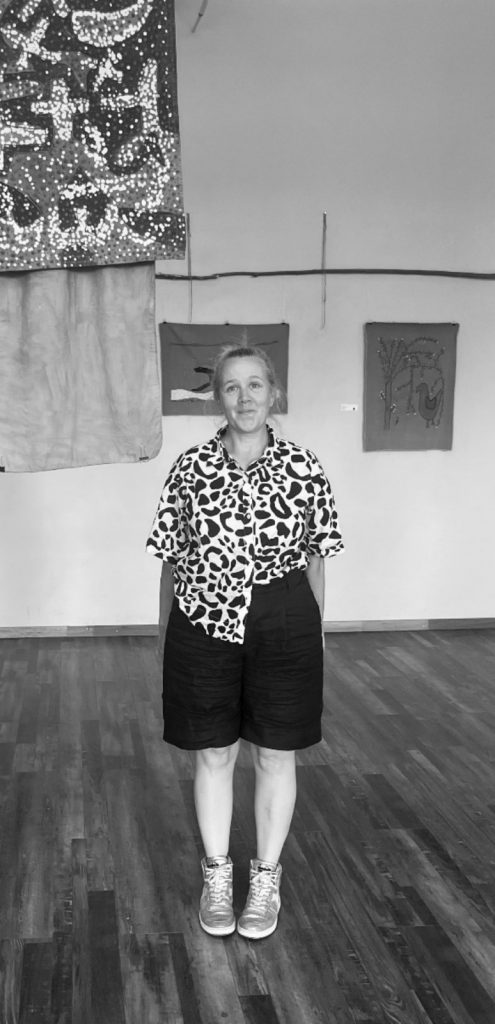
Data Diversity Podcast (#4) – Dr Stefania Merlo (2/2)

We return with another post featuring our Data Diversity conversation with University of Cambridge Data Champion, archaeologist Dr Stefania Merlo from the McDonald Institute of Archaeological Research, the Remote Sensing Digital Data Coordinator and project manager of the Mapping Africa’s Endangered Archaeological Sites and Monuments (MAEASaM) project and coordinator of the Metsemegologolo project. This post is short in word count but not in importance, as it touches on two reflections on the challenges of data management as a researcher who works in a global context, two aspects of present-day academia that may be relevant to many readers. This edition follows on from the previous post where Stefania talks about the challenges of extending UK-based Open Data policies to non-UK communities that may not share the same enthusiasm for making their cultural heritage artefacts available Open Access.  

In this post, Stefania reflects on how she conducts herself as a European researcher working in the African continent where her intention may sometimes be misaligned with the local data co-creators. Stefania also shares the challenge of academic mobility, where migrating from one academic institution to another results in data that is left behind, provoking an uncomfortable thought: what would happen to your data when you are suddenly rendered uncontactable? 


One would like to think that this is a rare situation, but I suspect that the situation where somebody passes away unexpectedly or even not, or somebody retires and has not made a plan for what happens to an entire careers’ data set happens more often than we know. I think it is an individual’s responsibility to make plans, but I think support should be given by the institutions and people should be accompanied through this path. – Dr Stefania Merlo


Working in the African continent and being honest about the objectives of research 

Working in Africa and in African countries, gives somebody coming from a European background, and an Italian background like me, a particular set of challenges and opportunities, because you encounter a different set up with everything – with life, and with research. Living and working in this context in various African countries, allows a researcher coming from a different background to question and challenge themselves on how they do their work. Many things that are taken for granted in other settings cannot be taken for granted in that setting. In particular that relationship with the land, with nature, and with the past. Any archaeologist that works in this setting would tell you that there are certain things that you just know from very early on that you should do. For example, although we’re dealing with the past of archaeological landscapes, you don’t just go and do your work there without acknowledging that these landscapes come in spaces and areas occupied by people today, and that those people are the custodians of the land and of the archaeology today. So there needs to be a deep engagement with communities and with people even before you put your spade in the ground. And it takes time to build relationships of trust, and relationships that then allow you to do work on your own or together, depending on what the aim of your research is.

When I do work that fulfills certain academic goals that may not be of interest to the communities that I work with, I think it is better to be honest and tell them that I’m doing this piece of work because there is an archaeological question that probably only archaeologists are interested in, and this is the part of work that I’m doing. At the same time, I think it is also important then to acknowledge that you work in a setting that includes other people, and start thinking about what work you can do with the people that are custodians of or inhabit a particular part of the world. Then you start thinking, OK, there’s a different set of activities that I can do with people that people want to do with me and let’s do that. I think that it is important to have this honesty of saying that particular things are of interest to me and to my academic community that I would like to do, and then we can negotiate together. You have to engage with the community, and I think we should be a bit more honest and a bit more specific about what the expectations from both parties are, and from the setting, we’re coming and the setting we’re going to. 

There are certain academic activities that I’m expected to do that are of no interest whatsoever for the communities that I’m working with, such as the academic publications on which my career rests. Then, there are other things that the communities are interested in that will give me no weight whatsoever in my academic career but contribute to building a relationship with the local community. These give me so much fulfillment because I realise that I am doing research work that is useful not only for my academic community, but for other people, be it students, colleagues elsewhere in the world, or the building of policies around archaeological heritage. 

Global researcher, global data 

LO: As someone who has engaged in research all over the globe, how do you deal with data that is in various places around the world? 

SM: How do I deal with my data? – poorly. I may be a digital data champion, but it has been a difficult road, and it is still a difficult road, that of even managing and curating my own data. Just to give you an example, a lot of the data I’ve collected for the past 20 years is both in analog and digital format for the same project. I have some data with me here (in Cambridge) and I still have data backed up in hard drives that I haven’t opened in a long time. The majority of my analogue data sets, maps, drawings, diaries, I have left behind in South Africa when I moved here, and I haven’t been able to bring them with me. Some of my materials are in Italy with my family. Some of my diaries I had left back in Cambridge when I left to go to Botswana in 2006 and somehow got lost. So, it has been messy and I’m not proud of it. But I’m saying it because it is a problem with a lot of researchers that have become highly mobile and have migrated from one place to another, in some cases without sufficient funding to bring all of the paperwork with them. I have been a messy data collector, since my undergraduate and PhD days, and I’ve been trying to train myself to be better, I’m still not there yet, and in part it’s just me. But I think it has also to do with this very high mobility and having to change institutions in my career so many times. And what changed is not only the location, but the requirement of what you do with data where you put it, how you avail it to yourself and to others.

And so yes, I’m not very good at it but I’m trying very hard to find a way of now putting everything together because I do feel the responsibility that comes with collecting data in different countries. Some of it is actually information that was given to me from community members or friends, or colleagues that I work with and it’s with me. 
It’s their work, it’s with me and if anything ever happens to me – if I were to change institutions, or if anything were to happen to me, including losing my memory – let me put it like that – what’s going to happen? I’ve never really thought of what would happen if I were to move or to shift? I left my previous institution quite abruptly and during COVID, and I was able to take some materials out, but some other materials I didn’t get access to and they are still all over the place.  

And then I started thinking: I have never made a plan for this kind of situation to happen. So what am I going to do now in order to make sure that these data are usable and useful for me, but perhaps also to others when I’m not present as the curator that will be able to tell you what each data asset is. I’m not even talking about the creation of metadata. Most of my photographs, digital photographs, for example, have got metadata that have been ordered. But archaeological datasets are complex, fragmented and can be dispersed so the main challenge is how would you connect the photographs with the drawings within my diary? Of course, there are dates, but it’s going take so much time for somebody else to put all of it together, especially because half of it is in digital format and half of this is in analog format. That is going be a nightmare and may not even be doable. And so, I’ve become acutely aware of the fact that we never think of this situation. We rarely think about handing over data to others in a particular form that will allow others accessibility and ability to still reuse this complex interrelated data if they were to do so. 

Worst case (data) scenario

I have another example. One of my collaborators and mentors in South Africa passed away quite suddenly a couple of years ago. They had never made a plan for what would happen to their materials. They published prolifically, so we know a lot of the research that was done over 50 years, but I am aware that they had so much more material, both physical material and files in computers. Their physical collection was transferred from their house to the University by another colleague but, to the best of my knowledge, to date, no one has been able to get access to the digital data, stored in a password protected computer. One would like to think that this is a rare situation, but I suspect that the situation where somebody passes away unexpectedly or even not, or somebody retires and has not made a plan for what happens to an entire career’s data set happens more often than we know. I think it is an individual’s responsibility to make plans, but I think support should be given by the institutions and people should be accompanied through this path. In particular, perhaps academics from other generations that may not be so knowledgeable about how to deal with data management. In particular of digital data, but also of analog data. 

Once upon a time, archaeologists used to just put everything into a library or an archive so at least we have the analog records. But again, putting them together and having them make sense is extremely difficult if we don’t think of a framework for doing so. Another issue that I’ve mentioned before is mobility. You know, how do we assist researchers that have got high mobility to deal with this every time they move? I don’t have an exact formula, but when I changed institutions before, both the institution that I was leaving and the ones that were accepting me, I was never asked ‘do you need any financial or other kind of help to transfer your data?’ I was asked to fill in forms for transferring my goods, I was given money for my visa, but nobody ever asked about my academic research and the related data. 


We once again thank Stefania for taking the time to speak to us and giving us food for thought. Stefania raises, we believe, a very important question – are we taking for granted that we will always be at hand to ensure that the data that we produce will be understood? Researchers tend to wait until a project is completed before supplying their data with the information needed to make them understood and reusable. If there’s one thing that Stefania brings to mind, is that data FAIR-ness needs to be implemented from the onset of a project and then at every juncture of the project’s lifecycle, as the research unfolds. That way, the research data will be reusable in a self-contained manner. 

Data Diversity Podcast (#4) – Dr Stefania Merlo (1/2) 

Welcome back to the fourth instalment of Data Diversity, the podcast where we speak to Cambridge University Data Champions about their relationship with research data and highlight their unique data experiences and idiosyncrasies in their journeys as a researcher. In this edition, we speak to Data Champion Dr Stefania Merlo from the McDonald Institute of Archaeological Research, the Remote Sensing Digital Data Coordinator and project manager of the Mapping Africa’s Endangered Archaeological Sites and Monuments (MAEASaM) project and coordinator of the Metsemegologolo project. This is the first of a two-part series and in this first post, Stefania shares with us her experiences of working with research data and outputs that are part of heritage collections, and how her thoughts about research data and the role of the academic researcher have changed throughout her projects. She also shares her thoughts about what funders can do to ensure that research participants, and the data that they provide to researchers, can speak for themselves.   

This is the first of a two-part series and in this first post, Stefania shares with us her experiences of working with research data and outputs that are part of heritage collections, and how her thoughts about research data and the role of the academic researcher have changed throughout her projects. She also shares her thoughts about what funders can do to ensure that research participants, and the data that they provide to researchers, can speak for themselves.   


I’ve been thinking for a while about the etymology of the word data. Datum in Latin means ‘given’. Whereas when we are collecting data, we always say we’re “taking measurements”. Upon reflection, it has made me come to a realisation that we should approach data more as something that is given to us and we hold responsibility for, and something that is not ours, both in terms of ownership, but also because data can speak for itself and tell a story without our intervention – Dr Stefania Merlo


Data stories (whose story is it, anyway?) 

LO: How do you use data to tell the story that you want to tell? To put it another way, as an archaeologist, what is the story you want to tell and how do you use data to tell that story?

SM: I am currently working on two quite different projects. One is Mapping Africa’s Endangered Archaeological Sites and Monuments (funded by Arcadia) which is funded to create an Open Access database of information on endangered archaeological sites and monuments in Africa. In the project, we define “endangered” very broadly because ultimately, all sites are endangered. We’re doing this with a number of collaborators and the objective is to create a database that is mainly going to be used by national authorities for heritage management. There’s a little bit less storytelling there, but it has more to do with intellectual property: who are the custodians of the sites and the custodians of the data? A lot of questions are asked about Open Access, which is something that the funders of the projects have requested, but something that our stakeholders have got a lot of issues with. The issues surround where the digital data will be stored because currently, it is stored in Cambridge temporarily. Ideally all our stakeholders would like to see it stored in a server in the African continent at the least, if not actually in their own country. There are a lot of questions around this. 

The other project stems out of the work I’ve been doing in Southern Africa for almost the past 20 years, and is about asking how do you articulate knowledge of the African past that is not represented in history textbooks? This is a history that is rarely taught at university and is rarely discussed. How do you avail knowledge to publics that are not academic publics? That’s where the idea of creating a multimedia archive and a platform where digital representations of archaeological, archival, historical, and ethnographic data could be used to put together stories that are not the mainstream stories. It is a work in progress. The datasets that we deal with are very diverse because it is required to tell a history in a place and in periods for which we don’t have written sources.  

It’s so mesmerizing and so different from what we do in contexts where history is written. It gives us the opportunity to put together so many diverse types of sources. From oral histories to missionary accounts with all the issues around colonial reports and representations of others as they were perceived at the time, putting together information on the past environment combining archaeological data. We have a collective of colleagues that work in universities and museums. Each performs different bits and pieces of research, and we are trying to see how we would put together these types of data sets. How much do we curate them to avail them to other audiences? We’ve used the concept of data curation very heavily, and we use it purposefully because there is an impression of the objectivity of data, and we know, especially as social scientists, that this just doesn’t exist. 

I’ve been thinking for a while about the etymology of the word data. Datum in Latin means ‘given’. Whereas when we are collecting data, we always say we’re taking measurements. Upon reflection, it has made me come to a realisation that we should approach data more as something that is given to us and we hold responsibility for, and something that is not ours, both in terms of ownership, but also because data can speak for itself and tell a story without our intervention. That’s the kind of thinking surrounding data that we’ve been going through with the project. If data are given, our work is an act of restitution, and we should also acknowledge that we are curating it. We are picking and choosing what we’re putting together and in which format and framework. We are intervening a lot in the way these different records are represented so that they can be used by others to tell stories that are perhaps of more relevance to us. 

So there’s a lot of work in this project that we’re doing about representation. We are explaining – not justifying but explaining – the choices that we have made in putting together information that we think could be useful to re-create histories and tell stories. The project will benefit us because we are telling our own stories using digital storytelling, and in particular story mapping, but it could become useful for others as resources that can be used to tell their own stories. It’s still a work in progress because we also work in low resourced environments. The way in which people can access digital repositories and then use online resources is very different in Botswana and in South Africa, which are the two countries where I mainly work with in this project. We also dedicate time into thinking how useful the digital platform will be for the audiences that we would like to get an engagement from. 

The intended output is an archive that can be used in a digital storytelling platform. We have tried to narrow down our target audience to secondary school and early university students of history (and archaeology). We hope that the platform will eventually be used more widely, but we realised that we had to identify an audience to be able to prepare the materials. We have also realised that we need to give guidance on how to use such a platform so in the past year, we have worked with museums and learnt from museum education departments about using the museum as a space for teaching and learning, where some of these materials could become useful. Teachers and museum practitioners don’t have a lot of time to create their own teaching and learning materials, so we’re trying to create a way of engaging with practitioners and teachers in a way that doesn’t overburden them. For these reasons, there is more intervention that needs to come from our side into pre-packaging some of these curations, but we’re trying to do it in collaboration with them so that it’s not something that is solely produced by us academics. We want this to be something that is negotiated. As archaeologists and historians, we have an expertise on a particular part of African history that the communities that live in that space may not know about and cannot know because they were never told. They may have learned about the history of these spaces from their families and their communities, but they have learned only certain parts of the history of that land, whereas we can go much deeper into the past. So, the question becomes, how do you fill the gaps of knowledge, without imposing your own worldview? It needs to be negotiated but it’s a very difficult process to establish. There is a lot of trial and error, and we still don’t have an answer. 

Negotiating communities and funders 

LO: Have you ever had to navigate funders’ policies and stakeholder demands?  

SM: These kinds of projects need to be long and they need continuous funding, but they have outputs that are not always necessarily valued by funding bodies. This brings to the fore what funding bodies are interested in – is it solely data production, as it is called, and then the writing up of certain academic content? Or can we start to acknowledge that there are other ways of creating and sharing knowledge? As we know, there has been a drive, especially with UK funding bodies, to acknowledge that there are different ways in which information and knowledge is produced and shared. There are alternative ways of knowledge production from artistic ones to creative ones and everything in between, but it’s still so difficult to account for the types of knowledge production that these projects may have. When I’m reporting on projects, I still find it cumbersome and difficult to represent these types of knowledge production. There’s so much more that you need to do to justify the output of alternative knowledge compared to traditional outputs. I think there needs to be change to make it easier for researchers that produce alternative forms of knowledge to justify it rather than more difficult than the mainstream. 

One thing I would say is there’s a lot that we’ve learned with the (Mapping Africa’s Endangered Archaeological Sites and Monuments) project because there we engage directly with the custodians of the site and of the analog data. When they realise that the funders of the project expect to have this data openly accessible, then the questions come and the pushback comes, and it’s a pushback on a variety of different levels. The consequence is that basically we still haven’t been able to finalise our agreements with the custodians of the data. They trust us, so they have informed us that in the interim we can have the data as a project, but we haven’t been able to come to an agreement on what is going to happen to the data at the end of the project. In fact, the agreement at the moment is the data are not going to be going on a completely Open Access sphere. The negotiation now is about what they would be willing to make public, and what advantages they would have as a custodian of the data to make part, or all, of these data public.

This has created a disjuncture between what the funders thought they were doing. I’m sure they thought they were doing good by mandating that the data needs to be Open Access, but perhaps they didn’t consider that in other parts of the world, Open Access may not be desirable, or wanted, or acceptable, for a variety of very valid reasons. It’s a node that we still haven’t resolved and it makes me wonder: when funders are asking for Open Access, have they really thought about work outside of UK contexts with communities outside of the UK context? Have they considered these communities’ rights to data and their right to say, “we don’t want our data to be shared”? There’s a lot of work that has happened in North America in particular, because indigenous communities are the ones that put forward the concept of C.A.R.E., but in UK we are still very much discussing F.A.I.R. and not C.A.R.E.. I think the funders may have started thinking about it, but we’re not quite there. There is still this impression that Open Data and Open Access is a universal good without having considered that this may not be the case. It puts researchers that don’t work in UK or the Global North in an awkward position. This is definitely something that we are still grappling with very heavily. My hope is that this work is going to help highlight that when it comes to Open Access, there are no universals. We should revisit these policies in light of the fact that we are interacting with communities globally, not only those in some countries of the world. Who is Open Access for? Who does it benefit? Who wants it and who doesn’t want it, and for what reasons? These are questions that we need to keep asking ourselves. 

LO: Have you been in a position where you had to push back on funders or Open Access requirements before? 

Not necessarily a pushback, but our funders have funded a number of similar projects in South Asia, in Mongolia, in Nepal and the MENA region and we have come together as a collective to discuss issues around the ethics and the sustainability of the projects. We have engaged with representatives of our funders trying to explain that what they wanted initially, which is full Open Access, may not be practicable. In fact, there has already been a change in the terminology that is used by the funders. From Open Access, they changed the concept to Public Access, and they have come back to us to say that they can change their contractual terms to be more nuanced and acknowledge the fact that we are in negotiation with national stakeholders and other stakeholders about what should happen to the data. Some of this has been articulated in various meetings, but some of it was trial and error on our side. In other words, with our new proposal for renewal of funding, which was approved, we just included these nuances in the proposal and in our commitment and they were accepted. So in the course of the past four years, through lobbying of the funded projects, we have been able to bring nuance to the way in which the funders themselves think about Open Access. 


Stay tuned for part two of this conversation where Stefania will share some of the challenges of managing research data that are located in different countries!


Thoughts on the new White House OSTP open access memo

Dr. Samuel A. Moore, Scholarly Communication Specialist, Cambridge University Libraries

In the USA last Thursday, the White House Office of Science and Technology Policy announced its decision to mandate public access to all federally funded research articles and data. From 2026, the permitted embargo period of one year for funded publications will be removed and all publications arising from federal funding will have to be immediately accessible through a repository. Although more details are to be announced, my colleague Niamh Tumelty, the OSC’s Head of Open Research Services, shared a helpful summary of the policy and some initial reaction here. I want to offer my own personal assessment of what the new policy might mean from the perspective of open access to research articles, something we are working hard to promote and support throughout the university.

To be sure, the new OSTP memo is big news: the US produces a huge amount of research that will now be made immediately available without payment to the world at large. Following in the footsteps of Plan S in Europe, the open access policy landscape is rapidly evolving away from embargo periods and towards immediate access to research across all disciplines. Publishing industry consultants Clarke & Esposito have even argued that this intervention will make the subscription journal all the more unviable, eventually leading to its demise.

Indeed, responses from the publishing industry have been mixed. The STM Association, for example, offer a muted one-paragraph response claiming tepid support for the memo, while organisations such as the AAP were more vocally against what they see as a lack of ‘formal, meaningful consultation or public input’ on the memo, despite the fact that many more details are still to be announced (presumably, following consultation). A similar sense of frustration was displayed by some of the authors of the industry-supported Scholarly Kitchen blog. It’s fair to say that the publishing industry itself – at least the part of it that makes money from journal subscriptions – has not welcomed the new memo with open arms.

Understandably, funders and advocacy organisations have welcomed the news. Johan Rooryck from Coalition S called the memo a ‘game changer for scholarly publishing’, while the Open Research Funders Group ‘applauds bold OSTP action’ in its response. Open access advocates SPARC described the memo as a ‘historic win’ for open access and a ‘giant step towards realizing our collective goal of ensuring that sharing knowledge is a human right – for everyone’. Certainly, for those arguing in favour of greater public access to research, the memo will indeed result in just this. But I still have my reservations.

My PhD thesis analysed and assessed the creation and implementation of open access policy in the UK. As Cambridge researchers no doubt know, the open access policy landscape is composed of a number of mandates, with varying degrees of complexity, and affects the vast majority of UK researchers in one way or another. This is for better and for worse: there is an increase in bureaucracy associated with open access policy (particularly through repositories), even though it results in greater access to research. However, when you remove this bureaucracy through more seamless approaches to OA like transformative agreements, there is a risk of consolidating the power of large commercial publishers who dominate this space and make obscene profits (a fear also shared by Jeff Pooley in his write-up of the policy). There is therefore a delicate balance to be struck between simply throwing money at market-based solutions and requiring researchers and librarians to take on more of the burden of compliance.

The problem with indiscriminate policy mandates for public access to research, such as the OSTP’s memo, is that they shore up the idea that publishing has to be provided by a private industry that is not especially accountable to research communities or the university more broadly. This is precisely because these policies are indiscriminate and therefore apply to everyone equally, which for academic publishing means benefitting those already in a good position to profit. Larger commercial publishers have worked out better than anyone else how to monetise open access through a range of different business models. As long as researchers need to continue publishing with the bigger publishers, which they do for career reasons, these publishers will always be in a better position to benefit from open access policies. It is hard to imagine how the individual funding bodies could implement the OSTP memo in a way that does foreground a more bibliodiverse publishing system at the expense of commercialism (not least because this goal does not appear to be the target of the memo).  

I do not mean to overplay the pessimism here: it is great that we are heading for a world of much more open access research. The point now is to couple this policy with funding and support to continue building the capacity of an ethical and accountable publishing ecosystem, all while trying to embed these ethical alternatives within the mainstream. This kind of culture change cannot be achieved by mandates like the OSTP is proposing, but it can be achieved by the harder work of raising awareness of alternatives and highlighting the downsides of current approaches to publishing. It is also important to reveal the ways in which research cultures shape how researchers decide to publish their work – often at the expense of experimentation and openness – and how they can be changed for the better.

So I am interested to see how the memo is implemented in practice, especially how it is funded and the conditions set on immediate access to research. I am also keen to see what role, if any, rights retention plays in the implementation and how US libraries decide to support the policy and the changing environment more broadly. Ultimately, however, the move to a more scholar-led and scholar-governed ecosystem will not occur on an open/closed binary, nor on a top-down/bottom-up one, and so we must find a range of ways to support new cultures of knowledge production and dissemination in the university and beyond.

Image taken from Public Domain Pictures

US requirements for public access to research

Niamh Tumelty, Head of Open Research Services, Cambridge University Libraries

Yesterday it was announced that the White House Office of Science and Technology Policy has updated US policy guidance to make the results of taxpayer-supported research immediately available to the American public at no cost:
https://www.whitehouse.gov/ostp/news-updates/2022/08/25/ostp-issues-guidance-to-make-federally-funded-research-freely-available-without-delay/

Federal agencies have been asked to update their public access policies to make publications and supporting data publicly accessible without an embargo. This applies to all federal agencies (the previous policy only applied to those with more than $100 million in annual research and development expenditure) and allows for flexibility for the agencies to decide on some of the details while encouraging alignment of approaches. It applies to all peer-reviewed research articles in journals and includes the potential to also include peer-reviewed book chapters, editorials and peer-reviewed conference proceedings.

The emphasis on “measures to reduce inequities of, and access to, federally funded research and data” is particularly important in light of the serious risk that we will just move from a broken system with built-in inequities around access to information to a new broken system with built-in inequities around whose voices can be heard. Active engagement will be needed to ensure that the agencies take these issues into account and are not contributing to these inequities.

While there will be a time lag in terms of development/updating and implementation of agency policies and we don’t yet have the fine print around licences etc, this will bring requirements for US researchers more closely in line with what many of our researchers already need to do as a result of e.g. UKRI and Wellcome Trust policies. Closer alignment should help address some of the collaborator issues that have arisen following the recent cOAlition S policy updates – though of course a lot will depend on the detail of what each agency puts in place. Researchers availing of US federal funding need to engage now if they would like to influence the approach taken by those who fund their work.

There continues to be a very real question around sustainable business models both from publisher and institutional perspectives, alongside the other big questions around whether the current approaches to scholarly publishing are serving the needs of researchers adequately. It is essential that this doesn’t just become an additional cost for researchers or institutions as many of those who have commented in the past 24 hours fear. Many alternatives to the APC and transitional agreement/big deal approaches have been proposed, from diamond approaches through to completely reimagined approaches to publishing (e.g. Octopus).

There will be mixed feelings about this. While there is likely to be little sympathy for the publishers with the widest profit margins, this move is sure to push more of the smaller publishers, including many (but not all!) learned societies, to think differently. We need to ensure that we understand what researchers most value about these publishers and how to preserve those aspects in whatever comes in future – I am reminded of the thought-provoking comments from our recent working group on open research in the humanities on this topic.

These are big conversations that were already underway and will now take on greater urgency. The greatest challenge of all remains how to change the research culture such researchers can have confidence in sharing their work and expertise in ways that maximise access to their work while also aligning with their (differing!) values and priorities.

Open access: fringe or mainstream?

When I was just settling in to the world of open access and scholarly communication, I wrote about the need for open access to stop being a fringe activity and enter the mainstream of researcher behaviour:

“Open access needs to stop being a ‘fringe’ activity and become part of the mainstream. It shouldn’t be an afterthought to the publication process. Whether the solution to academic inaction is better systems or, as I believe, greater engagement and reward, I feel that the scholarly communications and repository community can look forward to many interesting developments over the coming months and years.”

While much has changed in the five years since I (somewhat naïvely) wrote those concluding thoughts, there are still significant barriers towards the complete opening of scholarly discourse. However, should open access be an afterthought for researchers? I’ve changed my mind. Open access should be something researchers don’t even need to think about, and I think that future is already here, though I fear it will ultimately sideline institutional repositories.

According to the 2020 Leiden Ranking, the median rate at which UK institutions make their research outputs open access is over 80%, which is far higher than any other nation (Figure 1). Indeed, the UK is the only country that has ‘levelled up’ over the last five years, while the rest of the world’s institutions have slowly plodded along making slow, but steady, progress.

Figure 1. The median institutional open access percentage for each country according to the Leiden Ranking. Note, these figures are medians of all institutions within a country. This does not mean that 80% of the UK’s publications are open access, but that the median rate of open access at UK institutions is 80%.

The main driver for this increase in open access content in the UK is through green open access (Figure 2), due in large part to the REF 2021 open access policy (announced in 2014 and effective from 2016). This is a dramatic demonstration of the influence that policy can have on researcher behaviour, which has made open access a mainstream activity in the UK.

Figure 2. The median institutional green open access percentage for each country according to the Leiden Ranking.

Like the rest of the UK, Cambridge has seen similar trends across all forms of open access (Figure 3), with rising use of green open access, and steadily increasing adoption of gold and hybrid. Yet despite all the money poured into gold and (more controversially) hybrid open access, the net effect of all this other activity is a measly 3% additional open access content (82% vs 79%). Which begs the question, was it worth it? If open access can be so successfully achieved through green routes, what is the inherent benefit of gold/hybrid open access?

Figure 3. Open access trends in Cambridge according to the Leiden Ranking. In the 2020 ranking, 79% was delivered through green open access. This means that despite all the work to facilitate other forms of open access, this activity only contributed an additional 3% to the total (82%).

Of course, Plan S has now emerged as the most significant attempt to coordinate a clear and coherent international strategy for open access. While it is not without its detractors, I am nonetheless supportive of cOAlition S’s overall aims. However, as the UK scholarly communication community has experienced, policy implementation is messy and can lead to unintended consequences. While Plan S provides options for complying through green open access routes, the discussions that institutions and publishers (both traditional and fully open access alike) have engaged in are almost entirely focussed on gold open access through transformative deals. This is not because we, as institutions, want to spend more on publishing, but rather it is the pragmatic approach to create open access content at the source and provide authors with easy and palatable routes to open access. It also is a recognition that flipping journals requires give and take from institutions and publishers alike.

We are now very close to reaching a point where open access can be an afterthought for researchers, particularly in the UK. In large part, it will be done for them through direct agreements between institutions and publishers. Cambridge already has open access publishing arrangements with over 5000 journals, and this figure will continue to grow as we sign more transformative agreements. However, this will ultimately be to the detriment of green open access. Instead of being the only open access source for a journal article, institutional repositories will instead become secondary storehouses of already gold open access content. The heyday of institutional repositories, if one ever existed, is now over.

For me, that is a sad thought. We have poured enormous resource and effort into maintaining Apollo, but we must recognise the burden that green open access places on researchers. They have better things to do. I expect that the next five years will see a dramatic increase in gold and hybrid open access content produced in the UK. Green open access won’t go away, but we will have entered a time where open access is no longer fringe, nor indeed mainstream, but rather de facto for all research.

Published 23 October 2020

Written by Dr Arthur Smith

This icon displays that the content of this blog is licensed under CC BY 4.0

Compliance is not the whole story

Today, Research England released Monitoring sector progress towards compliance with funder open access policies the results of a survey they ran in August last year in conjunction with RCUK, Wellcome Trust and Jisc.

Cambridge University was one of the 113 institutions that answered a significant number of questions about how we were managing compliance with various open access policies, what systems we were using and our decision making processes. Reading the collective responses has been illuminating.

The rather celebratory commentary from UKRI has focused on the compliance aspect – see the Research England’s press release: Over 80% of research outputs meet requirements of REF 2021 open access policy and the post by the Executive Chair of Research England David Sweeney, Open access – are we almost there for REF?

What’s it all about?

At risk of putting a dampener on the party I’d like to point a few things out. For a start,  compliance with a policy is not the end goal of a policy in itself. While clearly the UK policies over the past five years have increased the amount of UK research that is available open access, we do need to ask ourselves ‘so what?’.

What we are not measuring, or indeed even discussing, is the reason why we are doing this.

While the open access policies of other funders such as Wellcome Trust and Bill and Melinda Gates Foundation articulate the end goal: “foster a richer research culture” in the former and “ information sharing and transparency” in the latter, the REF2021 policy is surprisingly perfunctory. It simply states: “certain research outputs should be made open-access to be eligible for submission to the next Research Excellence Framework”.

It would be enormously helpful to those responsible for ‘selling’ the idea to our research community if there were some evidence to demonstrate the value in what we are all doing. A stick only goes so far.

It’s really hard, people

Part of the reason why we are having so much difficulty selling the idea to both our research community and the administration of the University is because open access compliance is expensive and complicated, as this survey amply demonstrates.

While there may have been an idea that requiring the research community to provide their work on acceptance would mean they would become more aware and engaged with Open Access, it seems this has not been achieved. Given that 71% of HEIs reported that AAMs are deposited by a member of staff from professional services, it is safe to say the past six years since the Finch Report have not significantly changed author behaviour.

With 335 staff at 1.0FTE recorded as “directly engaged in supporting and implementing OA at their institution”, it is clear that compliance is a highly resource hungry endeavour. This is driving the decision making at institutional level. While “the intent of funders’ OA policies is to make as many outputs freely available as possible”, institutions are focusing on the outputs that are likely to be chosen for the REF (as opposed to making everything available).

I suspect this is ideology meeting pragmatism. Not only can institutions not support the overall openness agenda, these policies seem to be further underlining the limited reward systems we currently use in academia.

The infrastructure problem

The first conclusion of the report was that “systems which support and implement OA are largely manual, resource-intensive processes”. The report notes that compliance checking tools are inadequate partly because of the complexity of funder policies and the labyrinth that is publisher embargo policies. It goes on to say the findings “demonstrate the need for CRIS systems, and other compliance tools used by institutions be reviewed and updated”.

This may the case, but buried in that suggestion is years of work and considerable cost. We know from experience. It has taken us at Cambridge 2.5 years and a very significant investment to link our CRIS system (Symplectic Elements) to our DSpace repository Apollo. And we are still not there in terms of being able to provide meaningful reports to our departments.

Who is paying for all of this?

When we say ‘open’…

The report touches on what is a serious problem in the process. Because we are obtaining works at time of acceptance (an aspect of the policy Cambridge supports), and embargo periods cannot be set until the date of publication is known, there is a significant body of material languishing under indefinite embargoes waiting to be manually checked and updated.

The report notes that ‘there is no clear preference…as to how AAMs are augmented or replaced in repositories following the release of later versions’. Given the lack of any automated way of checking this information the problem is unmanageable without huge human intervention.

At Cambridge we offer a ‘Request a Copy’ service which at least makes the works accessible, but this is an already out of control situation that is compounding as time progresses.

Solutions?

We really need to focus on sector solutions rather than each institution investing independently. Indeed, the second last conclusion is that ‘the survey has demonstrated the need for publishers, funders and research institutions to work towards reducing burdensome manual processes”. One such solution, which has a sole mention in the report, is the UK Scholarly Communication Licence as a way of managing the host of licences.

Right at the end of the report in the second last point something very true to my heart was mentioned: “Finally, respondents highlighted the need for training and skills at an institutional level to ensure that staff are kept up to date with resources and tools associated with OA processes.” Well, yes. This is something we have been trying to address at a sector level, and the solutions are not yet obvious.

This report is an excellent snapshot and will allow institutions such as ours some level of benchmarking. But it does highlight that we have a long way to go.

Published 14 June 2018
Written by Dr Danny Kingsley
Creative Commons License

Strategies for engaging senior leadership with RDM – IDCC discussion

This blog post gathers key reflections and take-home messages from a Birds of a Feather discussion on the topic of senior management engagement with RDM, and while written by a small number of attendees, the content reflects the wider discussion in the room on the day. [Authors: Silke Bellanger, Rosie Higman, Heidi Imker, Bev Jones, Liz Lyon, Paul Stokes, Marta Teperek*, Dirk Verdicchio]

On 20 February 2017, stakeholders interested in different aspects of data management and data curation met in Edinburgh to attend the 12th International Digital Curation Conference, organised by the Digital Curation Centre. Apart from discussing novel tools and services for data curation, the take-home message from many presentations was that successful development of Research Data Management (RDM) services requires the buy-in of a broad range of stakeholders, including senior institutional leadership

Summary

The key strategies for engaging senior leadership with RDM that were discussed were:

  • Refer to doomsday scenarios and risks to reputations
  • Provide high profile cases of fraudulent research
  • Ask senior researchers to self-reflect and ask them to imagine a situation of being asked for supporting research data for their publication
  • Refer to the institutional mission statement / value statement
  • Collect horror stories of poor data management practice from your research community
  • Know and use your networks – know who your potential allies are and how they can help you
  • Work together with funders to shape new RDM policies
  • Don’t be afraid to talk about the problems you are experiencing – most likely you are not alone and you can benefit from exchanging best practice with others

Why it is important to talk about engaging senior leadership in RDM?

Endorsement of RDM services by senior management is important because frequently it is a prerequisite for the initial development of any RDM support services for the research community. However, the sensitive nature of the topic (both financially and sometimes politically as well) means there are difficulties in openly discussing the issues that RDM service developers face when proposing business cases to senior leadership. This means the scale of the problem is unknown and is often limited to occasional informal discussions between people in similar roles who share the same problems.

This situation prevents those developing RDM services from exchanging best practice and addressing these problems effectively. In order to flesh out common problems faced by RDM service developers and to start identifying possible solutions, we organised an informal Birds of a Feather discussion on the topic during the 12th IDCC conference. The session was attended by approximately 40 people, including institutional RDM service providers, senior organisational leaders, researchers and publishers.

What is the problem?

We started by fleshing out the problems, which vary greatly between institutions. Many participants said that their senior management was disengaged with the RDM agenda and did not perceive good RDM as an area of importance to their institution. Others complained that they did not even have the opportunity to discuss the issue with their senior leadership. So the problems identified were both with the conversations themselves, as well as with accessing senior management in the first place.

We explored the type of senior leadership groups that people had problems engaging with. Several stakeholders were identified: top level institutional leadership, heads of faculties and schools, library leadership, as well as some research team leaders. The types of issues experienced when interacting with these various stakeholder groups also differed.

Common themes

Next we considered if there were any common factors shared between these different stakeholder groups. One of the main issues identified was that people’s personal academic/scientific experience and historic ideals of scientific practice were used as a background for decision making.

Senior leaders, like many other people, tend to look at problems with their own perspective and experience in mind. In particular, within the rapidly evolving scholarly communication environment what they perceive as community norms (or in fact community problems) might be changing and may now be different for current researchers.

The other common issue was the lack of tangible metrics to measure and assess the importance of RDM which could be used to persuade senior management of RDM’s usefulness. The difficulties in applying objective measures to RDM activities are mostly due to the fact that every researcher is undertaking an amount of RDM by default so it is challenging to find an example of a situation without any RDM activities that could be used as a baseline for an evidenced-based cost benefit analysis of RDM. The work conducted by Jisc in this area might be able to provide some solutions for this. Current results from this work can be found on the Research Data Network website.  

What works?

The core of our discussion was focused on exchanging effective methods of convincing managers and how to start gathering evidence to support the case for an RDM service within an institution.

Doomsday scenarios

We all agreed that one strategy that works for almost all possible audience types are doomsday scenarios – disasters that can happen when researchers do not adhere to good RDM practice. This could be as simple as asking individual senior researchers what they would do if someone accused them of falsifying research data five years after they have published their corresponding research paper. Would they have enough evidence to reject such accusations? The possibility of being confronted with their own potential undoing helped convince many senior managers of the importance of RDM.

Other doomsday scenarios which seem to convince senior leaders were related to broader institutional crises, such as risk of fire. Useful examples are the fire which destroyed the newly built Chemistry building at the University of Nottingham, the fire which destroyed valuable equipment and research at the University of Southampton (£120 million pounds’ worth of equipment and facilities), the recent fire at the Cancer Research UK Manchester Institute and a similar disaster at the University of Santa Cruz.

Research integrity and research misconduct

Discussion of doomsday scenarios led us to talk about research integrity issues. Reference to documented cases of fraudulent research helped some institutions convince their senior leadership of the importance of good RDM. These cases included the fraudulent research by Diederik Stapel from Tilburg University or by Erin Potts-Kant from Duke University, where $200 million in grants was awarded based on fake data. This led to a longer discussion about research reproducibility and who owns the problem of irreproducible research – individual researchers, funders, institutions or perhaps publishers. We concluded that responsibility is shared, and that perhaps the main reason for the current reproducibility crisis lies in the flawed reward system for researchers. 

Research ethics and research integrity are directly connected to good RDM practice and are also the core ethical values of academia. We therefore reflected on the importance of referring to the institutional value statement/mission statement or code of conduct when advocating/arguing for good RDM. One person admitted adding a clear reference to the institutional mission statement whenever asking senior leadership for endorsement for RDM service improvements. The UK Concordat on Open Research Data is a highly regarded external document listing core expectations on good research data management and sharing, which might be worth including as a reference. In addition, most higher education institutions will have mandates in teaching and research, which might allow good RDM practice to be endorsed through their central ethics committees.

Bottom up approaches to reach the top

The discussion about ethics and the ethos of being a researcher started a conversation about the importance of bottom up approaches in empowering the research community to drive change and bring innovation. As many researcher champions as possible should convince senior leadership about important services. Researcher voices are often louder than those of librarians, or those running central support services, so consider who will best help to champion your cause.

Collecting testimonies from researchers about the difficulties of working with research data when good data management practice was not adhered to is also a useful approach. Shared examples of these included horror stories such as data loss from stolen laptops (when data had not been backed up), newly started postdocs inheriting projects and the need to re-do all the experiments from scratch due to lack of sufficient data documentation from their predecessor, or lost patent cases. One person mentioned that what worked at their institution was an ‘honesty box’ where researchers could anonymously share their horror data management stories.

We also discussed the potential role of whistle-blowers, especially given the fact that reputational damage is extremely important for institutions. There was a suggestion that institutions should add consequences of poor data management practice to their institutional risk registers. The argument that good data management practice leads to time and efficiency savings also seems to be powerful when presented to senior leadership.

The importance of social networks

We then discussed the importance of using one’s relationships in getting senior management’s endorsement for RDM. The key to this is getting to know the different stakeholders, their interests and priorities, and thinking strategically about target groups: who are potential allies? Who are the groups who are most hesitant about the importance of RDM? Why are they hesitant? Could allies help with any of these discussions? A particularly powerful example was from someone who had a Nobel Prize winner ally, who knew some of the senior institutional leaders and helped them to get institutional endorsement for their cause.

Can people change?

The question was asked whether anyone had an example of a senior leader changing their opinion, not necessarily about RDM services. Someone suggested that in case of unsupportive leadership, persistence and patience are required and that sometimes it is better to count on a change of leadership than a change of opinions. Another suggestion was that rebranding the service tends to be more successful than hoping for people to change. Again, knowing the stakeholders and their interests is helpful in getting to know what is needed and what kind of rebranding might be appropriate. For example, shifting the emphasis from sharing of research data and open access to supporting good research data management practice and increasing research efficiency was something that had worked well at one institution.

This also led to a discussion about the perception of RDM services and whether their governance structure made a difference to how they were perceived. There was a suggestion that presenting RDM services as endeavours from inside or outside the Library could make a difference to people’s perceptions. At one science-focused institution anything coming from the library was automatically perceived as a waste of money and not useful for the research community and, as a result, all business cases for RDM services were bound to be unsuccessful due to the historic negative perception of the library as a whole. Opinion seemed to confirm that in places where libraries had not yet managed to establish themselves as relevant to 21st century academics, pitching library RDM services to senior leadership was indeed difficult. A suggested approach is to present RDM services as collaborative endeavours, and as joint ventures with other institutional infrastructure or service providers, for example as a collaboration between the library and the central IT department. Again, strong links and good relationships with colleagues at other University departments proved to be invaluable in developing RDM services as joint ventures.

The role of funding bodies

We moved on to discuss the need for endorsement for RDM at an institutional level occurring in conjunction with external drivers. Institutions need to be sustainable and require external funding to support their activities, and therefore funders and their requirements are often key drivers for institutional policy changes. This can happen on two different levels. Funding is often provided on the condition that any research data generated as a result needs to be properly managed during the research lifecycle, and is shared at the end of the project.

Non-compliance with funders’ policies can result in financial sanctions on current grants or ineligibility for individual researchers to apply for future grant funding, which can lead to a financial loss for the University overall. Some funders, such as the Engineering and Physical Sciences Research Council (EPSRC) in the United Kingdom, have clear expectations that institutions should support their researchers in adhering to good research data management practice by providing adequate infrastructure and policy framework support, therefore directly requesting institutions to support RDM service development.

Could funders do more?

There was consensus that funding bodies could perhaps do more to support good research data management, especially given that many non-UK funders do not yet have requirements for research data management and sharing as a condition of their grants. There was also a useful suggestion that funders should make more effort to ensure that their policies on research data management and sharing are adhered to, for example by performing spot-checks on research papers acknowledging their funding to see if supporting research data was made available, as the EPSRC have been doing recently.

Similarly, if funders would do more to review and follow up on data management plans submitted as part of grant applications it would be useful in convincing researchers and senior leadership of the importance of RDM. Currently not all funders require that researchers submit data management plans as part of grant applications. Although some pioneering work aiming to implement active data management plans started, people taking part in the discussion were not aware of any funding body having a structured process in place to review and follow up on data management plans. There was a suggestion that institutions should perhaps be more proactive in working together with funders in shaping new policies. It would be useful to have institutional representatives at funders’ meetings to ensure greater collaboration.

Future directions and resources

Overall we felt that it was useful to exchange tips and tricks so we can avoid making the same mistakes. Also, for those who had not yet managed to secure endorsement for RDM services from their senior leaders it was reassuring to understand that they were not the only ones having difficulty. Community support was recognised as valuable and worth maintaining. We discussed what would be the best way of ensuring that the advice exchanged during the meeting was not lost, and also how an effective exchange of ideas on how best to engage with senior leadership should be continued. First of all we decided to write up a blog post report of the meeting and to make it available to a wider audience.

Secondly, Jisc agreed to compile the various resources and references mentioned and to create a toolkit of techniques with examples for making RDM business cases for RDM. An initial set of resources useful in making the case can be found on the Research Data Network webpages. The current resources include A High Level Business Case, some Case studies and Miscellaneous resources – including Videos, slide decks, infographics, links to external toolkits, etc. Further resources are under development and are being added on a regular basis.

The final tip to all RDM service providers was that the key to success was making the service relevant and that persistence in advocating for the good cause is necessary. RDM service providers should not be shy about sharing the importance of their work with their institution, and should be proud of the valuable work they are doing. Research datasets are vital assets for institutions, and need to be managed carefully, and being able to leverage this is the key in making senior leadership understand that providing RDM services is essential in supporting institutional business.

Published 5 May 2017
Written by Silke Bellanger, Rosie Higman, Heidi Imker, Bev Jones, Liz Lyon, Paul Stokes, Dr Marta Teperek and Dirk Verdicchio

Creative Commons License

Service Level Agreements for TDM

Librarians expect publishers to support our researchers’ rights to Text and Data Mining and not cut access off for a library if they see ‘suspicious’ activity before they establish whether it is legitimate or not. These were the conclusions of a group who met at a workshop to discuss provision of Text and Data Mining services in March. The final conclusions were:

Expectations libraries have of publishers over TDM

The workshop concluded with very different expectations to what was originally proposed. The messages to publishers that were agreed were:

  1. Don’t cut us off over TDM activity! Have a conversation with us first if you notice abnormal behaviour*
  2. If you do cut us off and it turns out to be legitimate then we expect compensation for the time we were cut off
  3. Mechanisms for TDM where certain behaviours are expected need to be built into separate licensing agreements for TDM

*And if you want to cut us off – please demonstrate there are all these illegal TDM activities happening in the UK

Workshop on TDM

The workshop “Developing a research library position statement on Text and Data Mining in the UK” was part of the recent RLUK2017 conference.  My colleagues, Dr Debbie Hansen from the Office of Scholarly Communication and Anna Vernon from Jisc, and I wanted to open up the discussion about Text and Data Mining (TDM) with our library community. We have made the slides available and they contain a summary of all the discussions held during the event. This short blog post is an analysis of that discussion.

We started the workshop with a quick analysis of who was in the room using a live survey tool called Mentimeter. Eleven participants came from research institutions – six large, four small and one  from an ‘other research institution’. There were two publishers, and four people who identified as ‘other’ – which were intermediaries. Of the 19 attendees, 14 worked in a library. There was only one person who said they had extensive experience in TDM, four people said they were TDM practitioners but the largest group were the 14 who classified themselves as having ‘heard of TDM but have had no practical experience’.

The workshop then covered what TDM is, what the legal situation is and what publishers are currently saying about TDM . We then opened up the discussion.

Experiences of TDM for participants

In the initial discussion about experiences of the participants, a few issues were raised if libraries were to offer TDM services. Indeed there was a question whether this should form part of library service delivery at all. The issue is partly that this is new legislation, so currently publisher and institutions are reactive, not strategic in relation to TDM. We agreed:

  • There is a need for clearer understanding of the licensing situation with information
  • We also need to create a mechanism of where to go for advice, both within the institution and the publisher
  • We need to develop procedures of what to do with requests – which is a policy issue 
  • Researcher behaviour is a factor – academics are not concerned by copyright.

Offering TDM is a change of role of the library – traditionally libraries have existed to preserve access to items. The group agreed we would like to be enabling this activity rather than saying “no you can’t”. There are library implications for offering support for TDM, not least that librarians are not always aware of TDM taking place within their institution. This makes it difficult to be the central point for the activity. In addition, TDM could threaten access through being cut off, so this is causing internal disquiet.

TDM activity underway in Europe & UK

We then presented to the workshop some of the activities in TDM that are happening internationally, such as the FutureTDM project. There was also a short run down on the new copyright exception for research organisations carrying out research in public interest being proposed to the European Commission allowing researchers to carry out TDM of copyright protected content if they have lawful access (e.g. subscription) without prior authorisation.

ContentMine is a not for profit organisation that supplies open source TDM software to access and analyse documents. They are currently partnering with Wikimedia Foundation with a grant to develop WikiFactMine which is a project aiming to make scientific data available to editors of Wikidata and Wikipedia.

The ChemDataExtractor is a tool built by the Molecular Engineering Group at the University of Cambridge. It is an open source software package that extracts chemical information from scientific documentation (e.g. text, tables). The extracted data can be used for onward analysis. There is some information in a paper  in the Journal of Chemical Information and Modelling: ChemDataExtractor: A Toolkit for Automated Extraction of Chemical Information from the Scientific Literature“.

The Manchester Institute of Biotechnology hosts the National Centre for Text Mining (NaCTeM), which works with research partners to provide text mining tools and services in the biomedical field.

The British Library had a call for applications for a PhD student placement to undertake thesis text mining on 150,000 theses held in EThOS to extract new metadata such as names of supervisors.  Applications closed 20 February 2017, but according to an EThOS newsletter from March,  they had received no applications for the placement. The suggestion is that “perhaps that few students have content mining skills sufficiently well developed to undertake such a challenging placement”.

The problem with supporting TDM in libraries

We proposed to the workshop group that libraries are worried about getting cut off from their subscription by publishers due to large downloads of papers through TDM activity. This is because publishers’ systems are pre-programmed to react to suspicious activity. If TDM invokes automated investigation, then this may cause an access block.

However universities need to maintain support mechanism to ensure continuity of access. For this to occur we require workflows for swift resolution, fast communication and a team of communicators. This also requires education of researchers of potential issues.

We asked the group to discuss this issue – noting reasons why their organisation is not actively supporting TDM and if they are the main challenges they face.

Discussion about supporting TDM in libraries

The reasons put forward for not supporting TDM included practical issues such as the challenges of handling physical media and the risk of lockout.

The point was made that there was a lack of demand for the service. This is possibly because the researchers are not coming to the Library for help. There may be a lack of awareness in the IT areas that the Library can help and they may not even pass on the queries.  This points to the need for internal discussion with institutions.

It was noted that there was an assumption in the discussion that the Library is at the centre of this type of activity, however and we are not joined up as organisations. The question is who is responsible for this activity? There is often no institutional view on TDM because the issues are not raised at academic level. Policy is required.

Even if researchers do come to the library, there are questions about how we can provide a service. Initially we would be responding to individual queries, but how do we scale it up?

The challenges raised included the need for libraries to ensure everyone understands the needs at the the content owner level. The library, as the coordinator of this work would need to ensure the TDM is not for commercial use, and need to ensure people know their responsibilities. This means the library is potentially being intrusive on the researcher process.

Service Level Agreement proposal

The proposal we put forward to the group was that we draft a statement for a Service Level Agreement for publishers to assure us that if the library is cut off, but the activity is legal, we will be reinstated within and agreed period of time. We asked the group to discuss the issues if we were to do this.

Expectation of publishers

The discussion has raised several issues libraries had experienced with publishers over TDM. One participants said the contract with a particular publisher to allow their researchers to do TDM took two years to finalise.

There was a recognition that for genuine TDM to be identified might require some sort of registry of TDM activity which might not be an administrative task all libraries want to take on. The alternative suggestion was a third party IP registry, which could avoid some of the manual work. Given that LOCKSS crawls publisher software without getting trapped, this could work in the same way with a bank of IP addresses that is secured for this purpose.

Some solutions that publishers could help with include publishers delivering material in different ways – not on a hard drive. The suggestion was that this could be part of a platform and the material was produced in a format that allowed TDM (at no extra cost).

Expectation of libraries

There was some distaste amongst the group for libraries to take on the responsibility for maintaining  a TDM activity register. However libraries could create a safe space for TDM like virtual private networks.

Licenses are the responsibility of libraries, so we are involved whether we wish to be or not. Large scale computational reading is completely different from current library provision. There are concerns that licensing via the library could be unsuitable for some institutions. This raises issues of delivery and legal responsibilities. One solution for TDM could be to record IP address ranges in licence agreements. We need to consider:

  • How do we manage the licenses we are currently signed up to?
  • How do we manage licensing into the future so we separate different uses? Should we have a separate TDM ‘bolt on’ agreement.

The Service Level Agreement (SLA) solution

The group noted that, particularly given the amount publisher licenses cost libraries, being cut off for a week or two weeks with no redress is unusual at best in a commercial environment. At minimum publishers should contact the library to give the library a grace period to investigate rather than being cut off automatically.

The basis for the conversation over the SLA includes the fact that the law is on the subscriber’s side if everyone is doing it legally. It would help to have an understanding of the extent of infringing activity going on with University networks (considering that people can ‘mask’ themselves). This would be useful for thinking of thresholds.

Next steps

We need to open up the conversation to a wider group of librarians. We are hoping that we might be able to work with RLUK and funding councils to come to an agreed set of requirements that we can have endorsed by the community and which we can then take to to publishers.

Debbie Hansen and Danny Kingsley attended the RLUK conference thanks to the support of the Arcadia Fund, a charitable fund of Lisbet Rausing and Peter Baldwin.

Published 30 March 2017
Written by Dr Danny Kingsley
Creative Commons License

An open letter to Blood

The Office of Scholarly Communication routinely advises Cambridge authors about their publishing options, and in the vast majority of cases we can help authors comply with funder mandates. However, there are a few notable journals that offer no compliant open access options for Research Council UK (RCUK) and Charity Open Access Fund (COAF) authors. One of those journals is Blood. We’ve previously called them out on their misleading advice:

Today we are urging Blood to offer their authors either self-archiving rights without cost and a maximum 6 month embargo or immediate open access under a Creative Commons Attribution (CC BY) licence. If Blood does not offer these options we will advise our researchers that they should publish elsewhere so as to remain compliant with their funders’ open access policies.

You can click through and read the open letter in full below:

If you would like to add your name to the list of signatories, please email info@osc.cam.ac.uk


Milestone – 10,000th article processed by OA Service

The Open Access Service at Cambridge has received its 10,000th Open Access submission – highlighting its commitment to making research freely available to anybody who wants to access it, without publisher paywalls or expensive journal subscriptions.

Through open access our research can reach a worldwide audience.

Nita Forouhi

The 10,000th submission, reporting on the impact of eating a Mediterranean diet on the risk of developing cardiovascular disease in a UK population, was deposited by Signe Wulund at the MRC Epidemiology Unit, on behalf of Dr Nita Forouhi, Programme Leader in Nutritional Epidemiology at the MRC Epidemiology Unit, and several co-authors.

The Open Access movement has been growing in strength in academia for many years, and it is increasingly being mandated by funding bodies and government.

Dr Forouhi said: “Through open access our research can reach a worldwide audience. It would be a huge pity if interested researchers, practitioners or policy makers could not read about new research, such as our latest findings on the link between the Mediterranean diet and cardiovascular health in a non-Mediterranean setting, because of something as simple as lacking a journal subscription.

“Open access enables wider dissemination of research findings, and in turn, facilitates better research and evidence-based policy and clinical practice.”

The Cambridge Open Access Service was established within the University Library in 2013 in response to Research Councils UK (RCUK) making Open Access mandatory for anyone accepting their funding. Many other major funders, including the Wellcome Trust, Cancer Research UK and the British Heart Foundation, have similar policies.

In 2014, the Higher Education Funding Council for England announced that Open Access would be compulsory for any article included in the next Research Excellence Framework (REF) exercise. This policy came into force on April 1, 2016, effectively meaning that all research in UK institutions now has to be made freely available.

Since its inception in 2013, the Open Access service has processed 10,000 manuscripts, across all University faculties and departments and worked with 3,000 different members of staff. 6,000 of the papers were covered by the HEFCE open access policy; 4,000 acknowledged RCUK funding and 1,900 COAF (many papers fall into multiple categories, and some into none). More than £5.4 million of Open Access grants from funding bodies have also been distributed.

Meeting these requirements is a major task for the University, and one it has tried to make as simple as possible for researchers. Authors are simply required to upload their manuscript to www.openaccess.cam.ac.uk when it’s accepted for publication, and the Open Access team advise them on what they need to do to comply with funder requirements, eligibility for any funding body grants, and handle depositing the article into Apollo, the University’s institutional repository.

Ten thousand manuscripts have now been received in this way, and the vast majority of them have been able to be made Open Access, free for anyone who wants to read and benefit from them.

The 10,000th article was: ‘Prospective association of the Mediterranean diet with cardiovascular disease incidence and mortality and its population impact in a non-Mediterranean population: the EPIC-Norfolk Study’ in BMC Medicine. [DOI:10.1186/s12916-016-0677-4]

The Open Access team at the University of Cambridge is part of the Office of Scholarly Communication (OSC), within the University Library. As well as assisting researchers with Open Access and Open Data compliance, it advises on scholarly communication tools, techniques, policies and practices, and provides training.

This story originally appeared on the University of Cambridge Research news pages.

Published 05 October 2016
Written by Dr Philip Boyes
Creative Commons License