-
Data Diversity Podcast #3 – Dr Nick H. Wise (4/4)
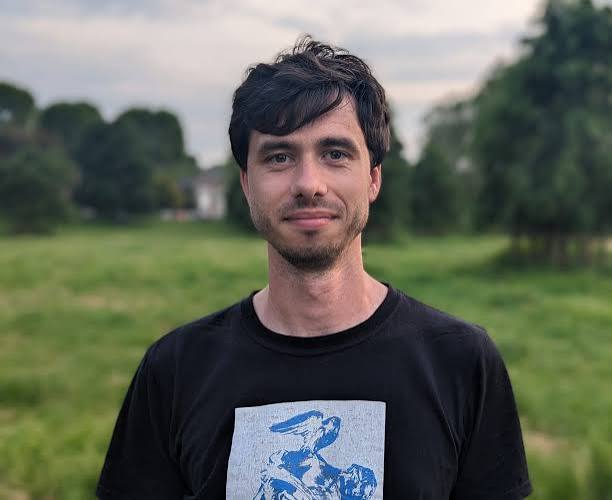
Thank you for staying with us throughout this four-part series with Dr Nick Wise, scientist and an engineer, who has made his name as a scientific sleuth. By now, it is hoped that he needs no introduction (though if you would like one, please look back at the previous posts). In this final post, we get Nick’s take on what he thinks the repercussions should be for engaging in fraud, and we get a parting tip from Nick on what researchers should do when performing a literature search on papers in their field. Below are some excerpts from the conversation, which can be listened to in full here. Most people…
-
Data Diversity Podcast #3 – Dr Nick H. Wise (3/4)
Welcome back to the penultimate post featuring Dr Nick H. Wise, Research Associate in Architectural Fluid Mechanics at the Department of Engineering, University of Cambridge. If you have been with us for the previous two posts, you would know that besides being a scientist and an engineer, Nick has made his name as a scientific sleuth who, based on an article on the blog Retraction Watch which was written in 2022, is responsible for more than 850 retractions, leading Times Higher Education to dub him as a research fraudbuster. Since then, through his X account @Nickwizzo, he has continued his investigations, tracking cases of fraud and in some cases, naming…
-
Data Diversity Podcast #3 – Dr Nick H. Wise (2/4)
We are back again with our second blog post featuring Dr Nick H. Wise, Research Associate in Architectural Fluid Mechanics at the Department of Engineering, University of Cambridge. As is the theme of the Data Diversity podcast, we spoke to Nick about his experience as a researcher, but this is a special edition of the podcast. Besides being a scientist and an engineer, Nick has made his name as a scientific sleuth who, based on an article on the blog Retraction Watch which was written in 2022, is responsible for more than 850 retractions, leading Times Higher Education to dub him as a research fraudbuster. Since then, through his X…
-
Data Diversity Podcast #3 – Dr Nick H. Wise (1/4)
In our third instalment of the Data Diversity Podcast, we are joined by Dr Nick H. Wise, Research Associate in Architectural Fluid Mechanics at the Department of Engineering, University of Cambridge. As is the theme of the podcast, we spoke to Nick about his experience as a researcher, but this is a special edition of the podcast. Besides being a scientist and an engineer, Nick has made his name as a scientific sleuth who, based on an article on the blog Retraction Watch which was written in 2022, is responsible for more than 850 retractions, leading Times Higher Education to dub him as a research fraudbuster. Since then, through his…
-
Open Research in the Humanities: The Future of Scholarly Communication
Authors: Emma Gilby, Matthias Ammon, Rachel Leow and Sam Moore This is the second of a series of blog posts, presenting the reflections of the Working Group on Open Research in the Humanities. Read the opening post here. The working group aimed to reframe open research in a way that was more meaningful to humanities disciplines, and their work will inform the University of Cambridge approach to open research. This post considers the future of scholarly communication from a humanities perspective. PILLAR ONE: THE FUTURE OF SCHOLARLY COMMUNICATION This first pillar deals with ‘open access’ narrowly understood: the future of the publication landscape, and the question of the sustainability and viability…
-
Half-life is half the story
This week the STM Frankfurt Conference was told that a shift away from gold Open Access towards green would mean some publishers would not be ‘viable’ according to a story in The Bookseller. The argument was that support for green OA in the US and China would mean some publishers will collapse and the community will ‘regret it’. It is not surprising that the publishing industry is worried about a move away from gold OA policies. They have proved extraordinarily lucrative in the UK with Wiley and Elsevier each pocketing an extra £2 million thanks to the RCUK block grant funds to support the RCUK policy on Open Access. But…