Tag Archives: research integrity

Data Diversity Podcast #3 – Dr Nick H. Wise (3/4)

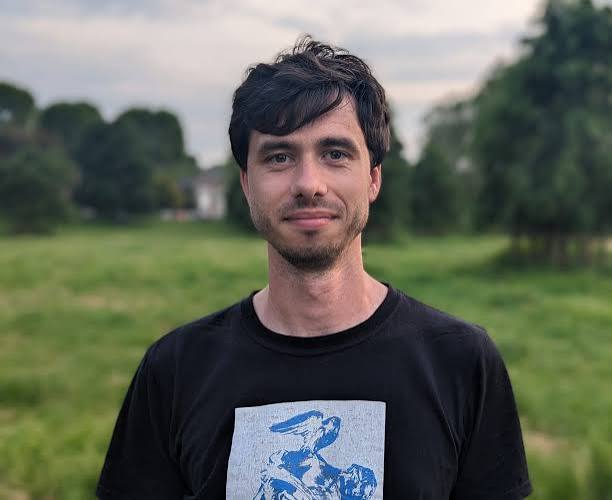
Welcome back to the penultimate post featuring Dr Nick H. Wise, Research Associate in Architectural Fluid Mechanics at the Department of Engineering, University of Cambridge. If you have been with us for the previous two posts, you would know that besides being a scientist and an engineer, Nick has made his name as a scientific sleuth who, based on an article on the blog Retraction Watch which was written in 2022, is responsible for more than 850 retractions, leading Times Higher Education to dub him as a research fraudbuster. Since then, through his X account @Nickwizzo, he has continued his investigations, tracking cases of fraud and in some cases, naming and shaming the charlatans. In this four-part series, we will learn from Nick about some of the shady activities that taint the scientific publishing industry today.

In part three, we learn from Nick about how researchers try to generate more citations from a single piece of research through a trick called ‘salami slicing’ and the blurred lines between illegality and desperately coping to meet with the unrealistic expectations of academia (to the point of engaging with fraud). Below are some excerpts from the conversation, which can be listened to in full here


Citation count was once a proxy for quality and now it is citation count regardless of quality. People are only looking at the citation count, and not the actual quality. Actually assessing quality takes a lot more effort. 


‘Salami slicing’ and the Game of Citations

LO: What do you think is better for science? A slower, more thoughtful process of publishing and everything in between? Or more information, more research, but then things like fraud slip through and occur more frequently?

NW: I don’t think there’s necessarily more research. Another phenomenon that paper mills take advantage of is salami slicing. Imagine you have completed a research project. Now you could write this up as one, thirty-page paper or two, twenty-page papers. You could write two comprehensive papers or try to put out multiple ten-page papers where you have some minor parameters changed. I see this happening in nanofluids research because it is an area of research close to mine. The nanofluid is simply a base liquid – it might be water, it might be ethanol – and into that you mix these very small nanoscale particles of some other material, such as gold, silver, or iron oxide. And in this sort of mixture of liquid and particles, you want to investigate its fluid flow and describe this with some differential equations. You can use computers to solve the differential equations and then plot some results about velocity profiles and heat transfer coefficients, etcetera. Now, you could write a paper for a given situation where you say, I’m not going to specify the liquid, but here is a general and viscosity of this liquid. If you want to apply this to your own research, you plug in the density and viscosity of your liquid, and likewise the particles. I’m not going to specify which particles are used, because all that changes is their density and their heat transfer coefficient properties. So that’s one way you could do it.

Another way to do it is to go I’m going to write a paper about water and gold particles; that’s one paper. Then you can write another paper which has water and silver particles, and then you can write one with ethanol and iron oxide, and there are so many varieties. You can also vary the geometry that this flow is going around, and you can add in an electric field and a magnetic field, etcetera. You can build up in this n-factorial way. There are thirty possible liquids multiplied by a hundred possible particles and multiplied by however many geometric configurations. You can see that this is what they are doing. Rather than writing a few quite general comprehensive papers, they are writing hundreds of very specific papers which enables them to produce more papers and sell more authorships and put more citations in. But this overwhelm of papers produced; there’s still only so many peer reviewers, and so many editors. And this phenomenon happens in lots of fields, they find something where there are just these variables that they can keep writing almost the same paper. Yet, the paper is original. It has not been done before. It is incredibly derivative, but that is not necessarily a barrier to publication.

LO: What I’m getting from this is, this is part of the whole system, and the issue at hand is definitely enabled by certain motivations like getting more citations. You can take one big piece of salami or publish that in one book, or you can slice the salami thirty ways. And if they are in the position to slice the salami, they say why not, I suppose, right? A game is there to be played.

NW: Right, they are playing the game that is in front of them. And again, there are people who do this who are not from a paper mill. They just want to maximize the number of citations and publications. The question is why are they doing this? Why do they want to maximize their publications? Because they want a promotion, or they want a tenured job. There are also countries where you get a cash reward for publishing a paper in a good journal so the more papers you publish, the more money you get paid. Your government might have told all the universities that they need to increase their ranking in the World University rankings. How do you do that? By increasing your research output and the citations you get. That is another driver. These drivers come from all sorts of places but there is always an emphasis on numbers. Citation count was once a proxy for quality and now it is citation count regardless of quality. People are only looking at the citation count and not the actual quality. Assessing quality takes a lot more effort.

LO: Citations used to be a proxy for quality, but that is not the case anymore. But it still implies the quality of the research, or you would hope.

NW: You would hope, but only because there is an assumption that the only reason something has a lot of citations is because it is good quality. Citations are also easier to count. Quality is much harder to account for, but that incentivizes people to do things like cite their colleagues. Again, you could still track it if people from the same university were citing each other. But then you get bigger scale things with middlemen who organize people from across the world to cite each other or just do it for cash. If you are publishing and you are producing papers to order, each one of those papers has a reference section which is real estate. You can throw in and have some genuine references which are relevant to this paper, but you can also throw in some irrelevant references that someone paid you to include. You can also pay someone to include references that are actually relevant to a topic.

LO: If it is relevant to a topic, it is almost like merely encouraging someone to be aware of certain work as opposed to a scam, which sounds like a gray area.

NW: Well, I would say that as soon as someone is paying money, then it starts to be illegitimate. But I mean if someone emails you and says “I’ve just published this paper, I think you might be interested, it’s in your research field: maybe read it or maybe you do cite it”, it’s different from someone emailing you to say “I’ll pay you £50 if you cite my paper” and you do. Then I would say that you have crossed a line. So, it does get very gray. Then there are these organized paper mills who are doing this as a business and that is where I think it becomes quite clear that it is probably not legitimate.

Facebook (authorship) marketplace

NW: You could go on Facebook and there are people selling authorship of their paper as a one off. There are PhD students in some country with no research funding who say “it costs $2500 for the article processing charge for me to publish where I would like to publish, I do not have $2500 so if you pay the $2500, you can be first author on the paper” and that is the only way they can get their paper published. They’re not doing this as a business, they’re just doing this once for this one paper. And you get people responding. Quite often professors or more established academics with access to budgets are the ones who will say yes. And the only thing that the person has done is to provide the funding for the publication.

The minimum thing that one is supposed to have done to be considered an author is to have either written the draft or reviewed and edited the paper. You might have also done data analysis or conceptualization. I think we would agree that if all this person does is just pay the fee for publication, then that is not acceptable. But what if they read the paper and then made a couple of comments? Now they have reviewed and edited it, and so now they have done review, editing and funding. There are many big labs around the world that have some very senior scientist whose name is on every single paper that comes out of the lab. And what have they done? Well, they provided all the funding, and they have reviewed the paper. I bet there are some who have barely glanced at the paper. But let’s say that they have reviewed the paper, and they provided the funding for the publication. Is that what makes it different to the person on Facebook who has found some random professor from another country to pay for their publication? Where is the difference? I don’t think it is an easy line to draw. In this way, the move to Open Access publishing requiring large fees for publication has also driven quite a bit of this phenomenon.

LO: It also seems like you have developed a bit of empathy. Maybe you’ve looked at so many cases and you see that it’s not always clear.

NW: Absolutely. Again, if you have the people running a paper mill, or if you have some professor who is being bribed and waving through dozens of papers, I don’t have much empathy for them. But the Masters or PhD student who has been told that they have to publish papers to get their PhD or even a Masters and they have this demand placed on them, or they even have produced a paper but they need this on the all this money to get it published, I don’t blame them for what they’re doing. It’s the situation they’ve been placed in. It is the system that they are part of. I have a lot of empathy for them.


Look out for the final post coming next week, where we get Nick’s take on what he thinks should be the repercussions for engaging in fraud, and we get a parting tip from Nick on what researchers should do when performing a literature search on papers in their field.

Data Diversity Podcast #3 – Dr Nick H. Wise (2/4)

We are back again with our second blog post featuring Dr Nick H. Wise, Research Associate in Architectural Fluid Mechanics at the Department of Engineering, University of Cambridge. As is the theme of the Data Diversity podcast, we spoke to Nick about his experience as a researcher, but this is a special edition of the podcast. Besides being a scientist and an engineer, Nick has made his name as a scientific sleuth who, based on an article on the blog Retraction Watch which was written in 2022, is responsible for more than 850 retractions, leading Times Higher Education to dub him as a research fraudbuster. Since then, through his X account @Nickwizzo, he has continued his investigations, tracking cases of fraud and in some cases, naming and shaming the charlatans.

In this four-part series, we will learn from Nick about some of the shady activities that taint the scientific publishing industry today. In this second part, we get Nick’s take on the peer review process and fake research data, and I ask his opinion on where the fault lies in the publication of fraudulent research. Below are some excerpts from the conversation, which can be listened to in full here


There are indices like Scopus or Web of Science or SCI, all these different bodies who claim journals are trustworthy, but every journal is going to get attacked by fraud and some will slip through. It is what you do afterwards that matters. 


On the peer review process

LO: As an Early Career Researcher, scientist, engineer, and researcher yourself, is your trust in the whole system still intact? Do you still see value in the peer review process? 

NW: It has absolutely changed how I read a paper and how I view particular journals. When you see a problem happening in a journal that you have read in your research or a journal you have considered submitting to, it really gives you pause for thought. There is an entire ecosystem of journals, right from the from the very good down to the very bad, that are implicated. There are indices like Scopus or Web of Science or SCI, all these different bodies who claim journals are trustworthy, but every journal is going to get attacked by fraud and some will slip through. It is what you do afterwards that matters. Another phenomenon that particularly happens with publishers with a wide list of journals, is that the paper mill will legitimately buy the journal. They may even take it over in a hostile way: they will make a clone of the journal and the website, and they will even redirect the publisher’s link to a different website. They now control a journal that is officially on this trustworthy list. Now they have a short period of time before someone notices and in that time, they will try to publish as many papers as possible and charge everyone for publication. They will absolutely cram this journal with any content. It does not even have to be relevant to the topic because they’re fully in control of the whole process up until the publisher notices and removes the journal from the list. For an author who needs a journal in a paper published in a well-regarded journal, they have achieved what they needed but as soon as the journal is removed from the list, then it becomes worthless. But there is a large supply of these journals, and they will keep trying to take them over. This tends to happen with low tier journals, but there are also paper mills which are targeting journals with an impact factor of over five, over ten – the supposedly absolute top tier journals. 

Between incompetence and conspiration

LO: These days, fraud is so convincing, scams are so rampant, and they always target your insecurities, the insecurity here being authors who want citations. 

NW: I would say that it is not a scam or fraud for the researcher, in the normal sense. These people are selling citations, and the buyer gets citations as opposed to someone getting cheated for their money and getting nothing in return. They are scamming the publishers and scamming the scientific community, but they are not scamming an actual person paying the money. It is a business that is operating as it says it is.  

LO: What does it say, though, that fraudulent papers are still getting through the peer review process. It’s still quite a long way from first draft to publication, and we have seen some cases where remnants of text from Chat GPT replies like “as a large language model…” gets through the review process. In your mind, what does it say about the industry? What’s happening here? 

NW: I think that it is somewhere between incompetence, people in a rush, and peer reviewers being bypassed or being paid. They could also be colluding with authors or the paper mill. To be fair, there are dodgy things that get through a legitimate peer review in the first place. All the peer reviewers are independent but how many people read every single word right of a paper they peer review? Not everyone. People have different standards that they hold themselves to. There is no agreed standard of what you are supposed to do to peer review a paper. As I’m sure anyone who has received peer review reports would know, sometimes you receive a five-page PDF document with hundreds of bullet points, and sometimes you receive a paragraph which maybe took them half an hour to put together. Legitimate peer reviewers could just not do a good job. Then there are also people who pride themselves on doing a load of peer reviews, and in fact you can get certificates from the publisher about how many peer reviews you do. There are people who say they peer review nearly a paper a day – I doubt that they are doing a great job at it.  

Even if someone is reading the text, how much is a peer reviewer supposed to be checking the data? Should someone be trying to run statistical analysis to see if they have been fudged? Should they be spotting that the image is manipulated? Is that something we should expect the peer reviewer to be doing? Or should a peer reviewer go into a review assuming the work is honest? It becomes a different process if you are also thinking about whether a piece of work is fraudulent or not. The easiest things to find are the people who are very lazy or very incompetent and there is just something that is so blatant that it is hard to miss. But if most people are trying to cover their tracks, then it comes down to just how well they have managed to do that. Again, if you are including remnants of Chat GPT like “as a large language model” in your text, you are either extremely lazy, or maybe you don’t read English. But if someone got rid of that bit, you would not notice from reading the abstract. You might think this is a bit bland, but people can write bland text; that is allowed. 

Sometimes peer reviewers are definitely compromised, and I don’t know what the balance is. When you see a bad paper, say a paper with an obvious problem or with chat GPT remnants lying around: is that bad peer reviewing or have they been paid not to notice, or even not to do it? I don’t know what the balance is there. I suspect it is more on the bad peer reviewing side than the criminal or the fraudulent to be honest, but I don’t know. There are times when you think OK, well, maybe they were paying the peer reviewers but did the editor look through this? Did the copy editor? We might want to think that copy editors and type setters are going through and questioning these things like this. It really depends on the journal. I have had things come back where they have gone through and changed from a comma to a dash, so they are clearly going through everything character by character. And there are other journals where the typesetter is clearly just taking everything with no thought. Their job is just to transfer what they have been given into the journal paper and they don’t do any spell checking or checking for grammar or anything. But should that be their job? I don’t know. Then there are journals where the only priority appears to be publishing as many papers as quickly as possible. And if you have made that your priority, even if everyone is acting in good faith, you are going to let a lot more things through. If you are just trying to push everything out the door and do things as quickly as possible, you are not going to give the things as much scrutiny. 

Fake research data

Even from doing my own research, I’ve realized that it would be very easy to fake some data. It would be very hard for anyone who wasn’t in the lab to know if data has been faked. There is no real way for someone to check. Even if you go open data; one experiment might need a few gigabytes of video footage to produce one data point. You can say what you have done to produce that data point, but for someone to go and check its validity, they would in theory need access to gigabytes and gigabytes of data that is not shared. But yes, there have been some things where it has been very easy to check. For instance, in material science, there are lots of experiments which result in the spectra diagram, basically producing a squiggly line on a graph. One thing that would always be true, and you don’t need any subject expertise to know this, is that the line should not double back on itself. Every X value should have one Y value. Well, if you are faking this by drawing it by hand with a mouse, it is quite hard to not double back and there are plenty of published Spectra which have bits where a peak bends over. And it is clearly because someone has drawn it by hand, and some of them are very bad. And that is again where you question what is happening with peer review because it is obvious that something is wrong. Sometimes they will even go outside the lines of the bounding box. I do see some of those because they are quite easy to spot. 


Stay tuned as we release the third conversation with Nick next week. In the penultimate post, we learn from Nick about how researchers try to generate more citations from a single piece of research from a trick called ‘salami slicing’ and the blurred lines between illegality and desperately coping to meet with the unrealistic expectations of academia to the point of engaging with fraud.

Data Diversity Podcast #3 – Dr Nick H. Wise (1/4)

In our third instalment of the Data Diversity Podcast, we are joined by Dr Nick H. Wise, Research Associate in Architectural Fluid Mechanics at the Department of Engineering, University of Cambridge. As is the theme of the podcast, we spoke to Nick about his experience as a researcher, but this is a special edition of the podcast. Besides being a scientist and an engineer, Nick has made his name as a scientific sleuth who, based on an article on the blog Retraction Watch which was written in 2022, is responsible for more than 850 retractions, leading Times Higher Education to dub him as a research fraudbuster. Since then, through his X account @Nickwizzo, he has continued his investigations, tracking cases of fraud and in some cases, naming and shaming the charlatans. Nick was kind to share with us many great insights over a 90-minute conversation, and as such we have decided to release a four part-series dedicated to the topic of research integrity. 

In this four-part series, we will learn from Nick about some of the shady activities that taint the scientific publishing industry today. In part one, we learn how Nick was introduced into the world of publication fraud and how that led him to investigate the industry behind it. Below are some excerpts from the conversation, which can be listened to in full here


I have found evidence of a papermill bribing some editors and there have been many, at least tens, if not hundreds, of editors that have been let go or told to stop being editors by journals in the last year because they have been found to be compromised. This could be because of bribery or some other way of being compromised. This is what I try to uncover. – Dr Nick H. Wise


Tortured Phrases and PubPeer: Nick’s beginnings as a Scientific Sleuth  

My background is in fluid dynamics where I mostly think about fluid dynamics within buildings. For instance, I think about the air flows generated by different heating systems and things like pollutant transport such as smells or COVID which can travel with the air and interact with other each other. That was my PhD and the post-doc in the Engineering department.

About three years ago whilst trying to avoid writing my thesis, I saw a tweet from the great Elizabeth Bik, who is possibly the most famous research fraud investigator. She mostly looks at biomedical images and her great skill is she would be able to look through a paper and see photos of Western blots of microscopy slides and see if parts of an image are identical to other parts, or if the image overlaps with images from different papers. She has an incredible memory and ability to spot these images. She’s been doing this for over 10 years and has caused many retractions. I was aware of her work but there was no way for me to assist with that because it is not my area of research. I don’t have an appreciation of what these images should look like.

But about three years ago she shared a preprint written by three computer scientists on her Twitter account about a phenomenon they called ‘tortured phrases’. In doing their research and reading the literature, these computer scientists noticed that there were papers with very weird language in them. What they surmised was that to overcome plagiarism checks by software like Turnitin, people would run text through paraphrasing software. These software were very crude in that they would go word by word. For instance, it would look at a word and replace it with the first synonym it found in a thesaurus. It would do this word for word, which makes the text barely readable. However, it is novel and so it will not flag any plagiarism checking software. Eventually, if you as a publisher have outsourced the plagiarism checks to some software, and neither your editor or peer reviewer reads the text to check if it makes sense, then this will get through peer review process without any problem and the paper would get published.  

For an example of tortured phrases: sometimes there’s not only one way to say something. Particularly if English is not someone’s first language, you don’t want to be too harsh on anyone who’s just chosen a word which just isn’t what a native speaker would pick. But there are some phrases where there’s only one right way to say it. For instance, artificial intelligence is the phrase for the phenomenon you want to talk about, and if instead you use “man-made consciousness”, that’s not the phrase you need to use, particularly if the original text said artificial intelligence brackets AI, and your text says “man-made consciousness” brackets AI. It’s going to be very clear what has happened.  

The three computer scientists highlighted this phenomenon of ‘tortured phrases’, but entirely from within the computer science field. I wondered if a similar phenomenon was happening in my own field in fluid dynamics. Samples of these paraphrasing software are freely available online as little widgets so I took some standard phrases from fluid dynamics, which were the kind that would not make sense if you swapped the words around and generated a few of these tortured phrases, I googled them and up popped hundreds of papers featuring these phrases. That was the beginning for me. 

I started reporting papers with these phrases on a website called PubPeer, which is a website for post-publication peer review. I commented on these papers and started being in conversation with the computer scientists who wrote the paper on ‘tortured phrases’ because they built a tool to scrape the literature and automatically tabulate these papers featuring these phrases. They basically had a dictionary of phrases which they knew would be spat out by the software because some of this paraphrasing software are so crude, such that if you put in “artificial intelligence”, you are always going to get out “man-made consciousness” or a handful of variants. It didn’t come up with a lot of different things. If you could just search for “man-made consciousness” and it brings up many papers, you knew what has been going on. I contributed a lot of new ‘fingerprints’, which is what they call their dictionary that they would search the literature for. That is my origin story. 

On Paper Mills and the Sale of Authorships 

There is also the issue of meta-science, which has nothing to do with the text of the paper or with the data itself, but more to do with how someone may add a load of references through the paper which are not relevant, or they are all references to one person or a colleague. In that way you would be gaming the system to boost profiles, careers, and things like H-index. Because having more publications and more citations is so desirable, there is a market for this. It is easy to find online advertisements for authorship of scientific papers ranging from $100 to over $1000, depending on the impact factor of the journal, and the position of authorship you want: first authorship, seventh authorship, or whether you want to be the corresponding author, these sorts of factors. Likewise, you can buy citations.  

There are also organizations known as paper mills. For example, as an author I might have written the paper and want, or need, to make some money and so I go to this broker and say: I want to sell authorships, I’ll be author number six, but I can sell the first five authorships. Can you put me in touch with someone selling authorships? At the same time, there are people who go to them saying I want to buy an authorship, and they put two and two together acting as a middleman. Also, some of these paper mills do not want to wait for someone to come to them with a paper – they will write papers to order. They have an in-house team of scientific writers who produce papers. This does not necessarily mean that the paper is bad. Depending on where they want the paper to publish, the paper might have to be good if it has to get published. So, they will employ people with degrees, qualified people or PhD students who need to earn some money, and then they will sell the authorships and get the papers published. This is a big business. 

There is a whole industry behind it, and something I have moved onto investigating quite a lot is where these papers are going. When I identify these papers, I try to find out where they are being published, how they’re being published, who is behind them, who is running these paper mills, who is collaborating with them. Something I found out which resulted in an article in Science was that paper mills want to guarantee acceptance as much as they can. If a paper is not accepted, it creates a lot of work for them and it means a longer time before their customers get what they paid for. For example, if a paper that they wrote and sold authorships for gets rejected, they’re going to have to resubmit it to another journal. So something paper mills will do is they will submit a paper to 10 journals at once and publish with whichever journal gave them the easiest time. But still, they want to try and guarantee acceptance and one way to do that is to simply bribe the editor. I have found evidence of a papermill bribing some editors and there have been many, at least tens, if not hundreds, of editors that have been let go or told to stop being editors by journals in the last year because they have been found to be compromised. This could be because of bribery or some other way of being compromised. This is what I try to uncover.

Although I’m not fighting this alone, it can feel like that. Publishers are doing things to some extent and they’re doing things that they can’t tell you about as well. And then there’s other people like me investigating this in their free time or as a side project. Not enough of us are doing it because it is a multi-million-dollar industry that is generating these papers. More papers are being published than ever before so it is a big fight.


Stay tuned as we release the rest of the conversation with Nick over the next month. In the next post, we get Nick’s take on the peer review process and fake research data, and I ask his opinion on where the fault lies in the publication of fraudulent research. 

Open Research in the Humanities: Research Integrity and Care 

Authors: Emma Gilby, Matthias Ammon, Rachel Leow and Sam Moore

This is the fourth in a series of blog posts presenting the reflections of the Working Group on Open Research in the Humanities.  Read the opening post here. The working group aimed to reframe open research in a way that was more meaningful to humanities disciplines, and their work will inform the University of Cambridge approach to open research.   This post considers research integrity in the context of arts & humanities research.

Research integrity applies to A&H disciplines in gathering CORE data, conveying interpretations, maintaining disciplinary standards, and privileging diversity, transparency, respect, and accountability. This is ‘careful’ scholarship in its truest sense. Our conversation here took the idea of careful scholarship in two main directions, considering the labour associated with the work as process, and the labour associated with establishing and maintaining decolonial integrity. This means allowing for and legitimizing diverse voices, methods and ways of thinking.    

Opportunities 

As the Open Research conference held in November 2021 stated in its call for contributions: 

We have moved beyond the myth of the lone genius: research is a collaborative endeavour. We need to approach all stages of research more openly, to facilitate collaboration and the incremental growth of ideas. Breaking down the walls around information will enable more stakeholders, both lay and professional, to become involved and deepen their trust in research.1

In fact, the myth of the lone scholarly genius is a relatively recent phenomenon, and many of the scholarly processes in which the A&H are engaged pre-date it. The open research movement offers authors the opportunity to look beyond their own status as author, to consider the wider scholarly ecosystem, the processes behind scholarship, the networks of people involved, so that these are acknowledged openly rather than lost. As we have already stated, editing is at the heart of scholarly publishing, taking research into a legitimate, citable, creditable publication. This is particularly the case in A&H research that targets smaller scholarly communities: ‘For society publishers, where we see responsiveness to the community of researchers as mission critical, editorial work is mission central.’² 

More fundamentally, a crucial element of research integrity is tackling the need for appropriate and fair representation across a diversity of voices and communities. A major question for arts and humanities research is how to open up and take account of the global wealth of different voices – opening up to ‘fugitive’ voices that have not traditionally been archived or recognised or able to embody the ‘status’ of author in the first place. 

Support required 

As far as the existing scholarly community is concerned, editing can brought into the open: divided into the work of General Editors, who evaluate overall content and the general direction of intellectual contributions, and who make decisions about what work to accept on the basis of peer review; the work of Managing Editors, who are the chief manuscript editors and engage with the business of day-to-day communication with authors; the work of Copy Editors, who make script clear and consistent; and the work of Type Setters, who even in the digital age arrange documents for publication. All these people share care and responsibility for disciplinary standards. They also require a salary, which brings us back to the future of scholarly communications and the question of funding. Making this labour visible and public is an important way to avoid the exploitation (and self-exploitation) that is endemic in academia.  

Careful consideration here needs to be given to the issue of appropriate and fair representation across a diversity of voices and communities. Open research does not necessarily or without effort tackle the omission of voices from the public sphere, typically those of the non-white, non-male, non-cis, non-anglophone world.3 Indeed, without explicit reflection on decolonial integrity, the move towards open research paradoxically risks a homogenizing effect: allowing researchers to disseminate their research on the condition that they imitate or ventriloquize a certain subset of languages or conventions.

[1] Open Research at Cambridge 2021, call for contributions (no longer accessible online)

[2] Angela Cochran and Karin Wulf ‘Editing is at the Heart of Scholarly Publishing’, 24th April 2019, https://scholarlykitchen.sspnet.org/2019/04/24/editing-is-at-the-heart-of-scholarly-publishing/

[3] Lorena Gautherau, ‘Decolonizing the Digital Humanities’,  20th November 2017, https://recoveryprojectappblog.wordpress.com/2017/11/20/incubator-decolonizing-the-digital-humanities/; see also the article by Coker and Ozment cited above.

‘We found that Open Science policies, mostly stemming from Europe, frame “openness” as a vehicle to promote technological change as part of an inevitable and necessary cultural shift to modernity in scientific production. The global reach of these narratives, and the technologies, standards and models these narratives sustain, are dictating modes of working and collaborating among those who can access them, and creating new categories of exclusion that invalidate knowledge that cannot meet this criteria, putting historically marginalized researchers and publics at further disadvantage.’ D. Albornoz et al., ‘Framing Power: Tracing Key Discourses in Open Science Policies’, ELPUB 2018, https://dx.doi.org/10.4000/proceedings.elpub.2018.23

See also: Rebekka Kiesewetter, Undoing scholarship: Towards an activist genealogy of the OA movement, Tijdschrift voor GenderstudiesVolume 23, Issue 2, Jun 2020, p. 113 – 130

https://www.aup-online.com/content/journals/10.5117/TVGN2020.2.001.KIES The authors of ‘Labour of Love: An Open Access Manifesto for Freedom, Integrity and Creativity in the Humanities and Interpretive Social Sciences’ refer to ‘the increasingly imperiled principles of academic freedom, integrity, and creativity’.  Andrea E. Pia et al., ’Labour of Love: An Open Access Manifesto for Freedom, Integrity, and Creativity in the Humanities and Interpretive Social Sciences’, 16th July 2020, https://commonplace.knowledgefutures.org/pub/y0xy565k/release/2

Strategies for engaging senior leadership with RDM – IDCC discussion

This blog post gathers key reflections and take-home messages from a Birds of a Feather discussion on the topic of senior management engagement with RDM, and while written by a small number of attendees, the content reflects the wider discussion in the room on the day. [Authors: Silke Bellanger, Rosie Higman, Heidi Imker, Bev Jones, Liz Lyon, Paul Stokes, Marta Teperek*, Dirk Verdicchio]

On 20 February 2017, stakeholders interested in different aspects of data management and data curation met in Edinburgh to attend the 12th International Digital Curation Conference, organised by the Digital Curation Centre. Apart from discussing novel tools and services for data curation, the take-home message from many presentations was that successful development of Research Data Management (RDM) services requires the buy-in of a broad range of stakeholders, including senior institutional leadership

Summary

The key strategies for engaging senior leadership with RDM that were discussed were:

  • Refer to doomsday scenarios and risks to reputations
  • Provide high profile cases of fraudulent research
  • Ask senior researchers to self-reflect and ask them to imagine a situation of being asked for supporting research data for their publication
  • Refer to the institutional mission statement / value statement
  • Collect horror stories of poor data management practice from your research community
  • Know and use your networks – know who your potential allies are and how they can help you
  • Work together with funders to shape new RDM policies
  • Don’t be afraid to talk about the problems you are experiencing – most likely you are not alone and you can benefit from exchanging best practice with others

Why it is important to talk about engaging senior leadership in RDM?

Endorsement of RDM services by senior management is important because frequently it is a prerequisite for the initial development of any RDM support services for the research community. However, the sensitive nature of the topic (both financially and sometimes politically as well) means there are difficulties in openly discussing the issues that RDM service developers face when proposing business cases to senior leadership. This means the scale of the problem is unknown and is often limited to occasional informal discussions between people in similar roles who share the same problems.

This situation prevents those developing RDM services from exchanging best practice and addressing these problems effectively. In order to flesh out common problems faced by RDM service developers and to start identifying possible solutions, we organised an informal Birds of a Feather discussion on the topic during the 12th IDCC conference. The session was attended by approximately 40 people, including institutional RDM service providers, senior organisational leaders, researchers and publishers.

What is the problem?

We started by fleshing out the problems, which vary greatly between institutions. Many participants said that their senior management was disengaged with the RDM agenda and did not perceive good RDM as an area of importance to their institution. Others complained that they did not even have the opportunity to discuss the issue with their senior leadership. So the problems identified were both with the conversations themselves, as well as with accessing senior management in the first place.

We explored the type of senior leadership groups that people had problems engaging with. Several stakeholders were identified: top level institutional leadership, heads of faculties and schools, library leadership, as well as some research team leaders. The types of issues experienced when interacting with these various stakeholder groups also differed.

Common themes

Next we considered if there were any common factors shared between these different stakeholder groups. One of the main issues identified was that people’s personal academic/scientific experience and historic ideals of scientific practice were used as a background for decision making.

Senior leaders, like many other people, tend to look at problems with their own perspective and experience in mind. In particular, within the rapidly evolving scholarly communication environment what they perceive as community norms (or in fact community problems) might be changing and may now be different for current researchers.

The other common issue was the lack of tangible metrics to measure and assess the importance of RDM which could be used to persuade senior management of RDM’s usefulness. The difficulties in applying objective measures to RDM activities are mostly due to the fact that every researcher is undertaking an amount of RDM by default so it is challenging to find an example of a situation without any RDM activities that could be used as a baseline for an evidenced-based cost benefit analysis of RDM. The work conducted by Jisc in this area might be able to provide some solutions for this. Current results from this work can be found on the Research Data Network website.  

What works?

The core of our discussion was focused on exchanging effective methods of convincing managers and how to start gathering evidence to support the case for an RDM service within an institution.

Doomsday scenarios

We all agreed that one strategy that works for almost all possible audience types are doomsday scenarios – disasters that can happen when researchers do not adhere to good RDM practice. This could be as simple as asking individual senior researchers what they would do if someone accused them of falsifying research data five years after they have published their corresponding research paper. Would they have enough evidence to reject such accusations? The possibility of being confronted with their own potential undoing helped convince many senior managers of the importance of RDM.

Other doomsday scenarios which seem to convince senior leaders were related to broader institutional crises, such as risk of fire. Useful examples are the fire which destroyed the newly built Chemistry building at the University of Nottingham, the fire which destroyed valuable equipment and research at the University of Southampton (£120 million pounds’ worth of equipment and facilities), the recent fire at the Cancer Research UK Manchester Institute and a similar disaster at the University of Santa Cruz.

Research integrity and research misconduct

Discussion of doomsday scenarios led us to talk about research integrity issues. Reference to documented cases of fraudulent research helped some institutions convince their senior leadership of the importance of good RDM. These cases included the fraudulent research by Diederik Stapel from Tilburg University or by Erin Potts-Kant from Duke University, where $200 million in grants was awarded based on fake data. This led to a longer discussion about research reproducibility and who owns the problem of irreproducible research – individual researchers, funders, institutions or perhaps publishers. We concluded that responsibility is shared, and that perhaps the main reason for the current reproducibility crisis lies in the flawed reward system for researchers. 

Research ethics and research integrity are directly connected to good RDM practice and are also the core ethical values of academia. We therefore reflected on the importance of referring to the institutional value statement/mission statement or code of conduct when advocating/arguing for good RDM. One person admitted adding a clear reference to the institutional mission statement whenever asking senior leadership for endorsement for RDM service improvements. The UK Concordat on Open Research Data is a highly regarded external document listing core expectations on good research data management and sharing, which might be worth including as a reference. In addition, most higher education institutions will have mandates in teaching and research, which might allow good RDM practice to be endorsed through their central ethics committees.

Bottom up approaches to reach the top

The discussion about ethics and the ethos of being a researcher started a conversation about the importance of bottom up approaches in empowering the research community to drive change and bring innovation. As many researcher champions as possible should convince senior leadership about important services. Researcher voices are often louder than those of librarians, or those running central support services, so consider who will best help to champion your cause.

Collecting testimonies from researchers about the difficulties of working with research data when good data management practice was not adhered to is also a useful approach. Shared examples of these included horror stories such as data loss from stolen laptops (when data had not been backed up), newly started postdocs inheriting projects and the need to re-do all the experiments from scratch due to lack of sufficient data documentation from their predecessor, or lost patent cases. One person mentioned that what worked at their institution was an ‘honesty box’ where researchers could anonymously share their horror data management stories.

We also discussed the potential role of whistle-blowers, especially given the fact that reputational damage is extremely important for institutions. There was a suggestion that institutions should add consequences of poor data management practice to their institutional risk registers. The argument that good data management practice leads to time and efficiency savings also seems to be powerful when presented to senior leadership.

The importance of social networks

We then discussed the importance of using one’s relationships in getting senior management’s endorsement for RDM. The key to this is getting to know the different stakeholders, their interests and priorities, and thinking strategically about target groups: who are potential allies? Who are the groups who are most hesitant about the importance of RDM? Why are they hesitant? Could allies help with any of these discussions? A particularly powerful example was from someone who had a Nobel Prize winner ally, who knew some of the senior institutional leaders and helped them to get institutional endorsement for their cause.

Can people change?

The question was asked whether anyone had an example of a senior leader changing their opinion, not necessarily about RDM services. Someone suggested that in case of unsupportive leadership, persistence and patience are required and that sometimes it is better to count on a change of leadership than a change of opinions. Another suggestion was that rebranding the service tends to be more successful than hoping for people to change. Again, knowing the stakeholders and their interests is helpful in getting to know what is needed and what kind of rebranding might be appropriate. For example, shifting the emphasis from sharing of research data and open access to supporting good research data management practice and increasing research efficiency was something that had worked well at one institution.

This also led to a discussion about the perception of RDM services and whether their governance structure made a difference to how they were perceived. There was a suggestion that presenting RDM services as endeavours from inside or outside the Library could make a difference to people’s perceptions. At one science-focused institution anything coming from the library was automatically perceived as a waste of money and not useful for the research community and, as a result, all business cases for RDM services were bound to be unsuccessful due to the historic negative perception of the library as a whole. Opinion seemed to confirm that in places where libraries had not yet managed to establish themselves as relevant to 21st century academics, pitching library RDM services to senior leadership was indeed difficult. A suggested approach is to present RDM services as collaborative endeavours, and as joint ventures with other institutional infrastructure or service providers, for example as a collaboration between the library and the central IT department. Again, strong links and good relationships with colleagues at other University departments proved to be invaluable in developing RDM services as joint ventures.

The role of funding bodies

We moved on to discuss the need for endorsement for RDM at an institutional level occurring in conjunction with external drivers. Institutions need to be sustainable and require external funding to support their activities, and therefore funders and their requirements are often key drivers for institutional policy changes. This can happen on two different levels. Funding is often provided on the condition that any research data generated as a result needs to be properly managed during the research lifecycle, and is shared at the end of the project.

Non-compliance with funders’ policies can result in financial sanctions on current grants or ineligibility for individual researchers to apply for future grant funding, which can lead to a financial loss for the University overall. Some funders, such as the Engineering and Physical Sciences Research Council (EPSRC) in the United Kingdom, have clear expectations that institutions should support their researchers in adhering to good research data management practice by providing adequate infrastructure and policy framework support, therefore directly requesting institutions to support RDM service development.

Could funders do more?

There was consensus that funding bodies could perhaps do more to support good research data management, especially given that many non-UK funders do not yet have requirements for research data management and sharing as a condition of their grants. There was also a useful suggestion that funders should make more effort to ensure that their policies on research data management and sharing are adhered to, for example by performing spot-checks on research papers acknowledging their funding to see if supporting research data was made available, as the EPSRC have been doing recently.

Similarly, if funders would do more to review and follow up on data management plans submitted as part of grant applications it would be useful in convincing researchers and senior leadership of the importance of RDM. Currently not all funders require that researchers submit data management plans as part of grant applications. Although some pioneering work aiming to implement active data management plans started, people taking part in the discussion were not aware of any funding body having a structured process in place to review and follow up on data management plans. There was a suggestion that institutions should perhaps be more proactive in working together with funders in shaping new policies. It would be useful to have institutional representatives at funders’ meetings to ensure greater collaboration.

Future directions and resources

Overall we felt that it was useful to exchange tips and tricks so we can avoid making the same mistakes. Also, for those who had not yet managed to secure endorsement for RDM services from their senior leaders it was reassuring to understand that they were not the only ones having difficulty. Community support was recognised as valuable and worth maintaining. We discussed what would be the best way of ensuring that the advice exchanged during the meeting was not lost, and also how an effective exchange of ideas on how best to engage with senior leadership should be continued. First of all we decided to write up a blog post report of the meeting and to make it available to a wider audience.

Secondly, Jisc agreed to compile the various resources and references mentioned and to create a toolkit of techniques with examples for making RDM business cases for RDM. An initial set of resources useful in making the case can be found on the Research Data Network webpages. The current resources include A High Level Business Case, some Case studies and Miscellaneous resources – including Videos, slide decks, infographics, links to external toolkits, etc. Further resources are under development and are being added on a regular basis.

The final tip to all RDM service providers was that the key to success was making the service relevant and that persistence in advocating for the good cause is necessary. RDM service providers should not be shy about sharing the importance of their work with their institution, and should be proud of the valuable work they are doing. Research datasets are vital assets for institutions, and need to be managed carefully, and being able to leverage this is the key in making senior leadership understand that providing RDM services is essential in supporting institutional business.

Published 5 May 2017
Written by Silke Bellanger, Rosie Higman, Heidi Imker, Bev Jones, Liz Lyon, Paul Stokes, Dr Marta Teperek and Dirk Verdicchio

Creative Commons License