Open Minded #1 – Dr Peter Murray-Rust
The soul of open research, a conversation with Dr Peter Murray-Rust.
In this new series, Open Minded, I take advantage of being able to speak to some of the voices in the open research sphere at the University of Cambridge to learn about what working openly means to them. This series will be less about how researchers practice open research and more about how they think about open research. At Cambridge, we take the position that engaging in open research is more than just creating research outputs that are open, and the open research practices that produce them — it is also about the behaviours and mindsets that underscore them. Open Minded is about uncovering these behaviours and mindsets and learning about the different facets of open research from different points of view.
In the first of this series, we speak to Dr Peter Murray-Rust, who has been advocating for open research for more than two decades. Chemist by training and a foundational figure in open knowledge, Peter has lived through the rise of the web, open-source software, open access publishing, and now the AI era. In this edited conversation, Peter reflects on how his ethos for open research emerged from the world of open-source programming, why licences, communities and tools matter more than policy, and why we are today “literally fighting for the soul of open”.
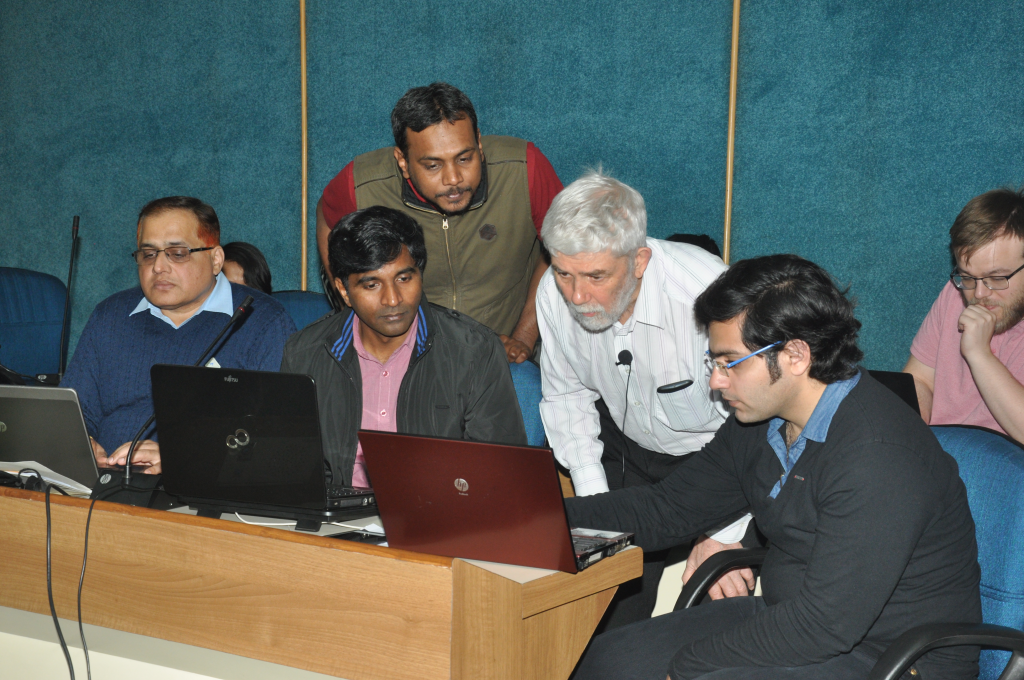
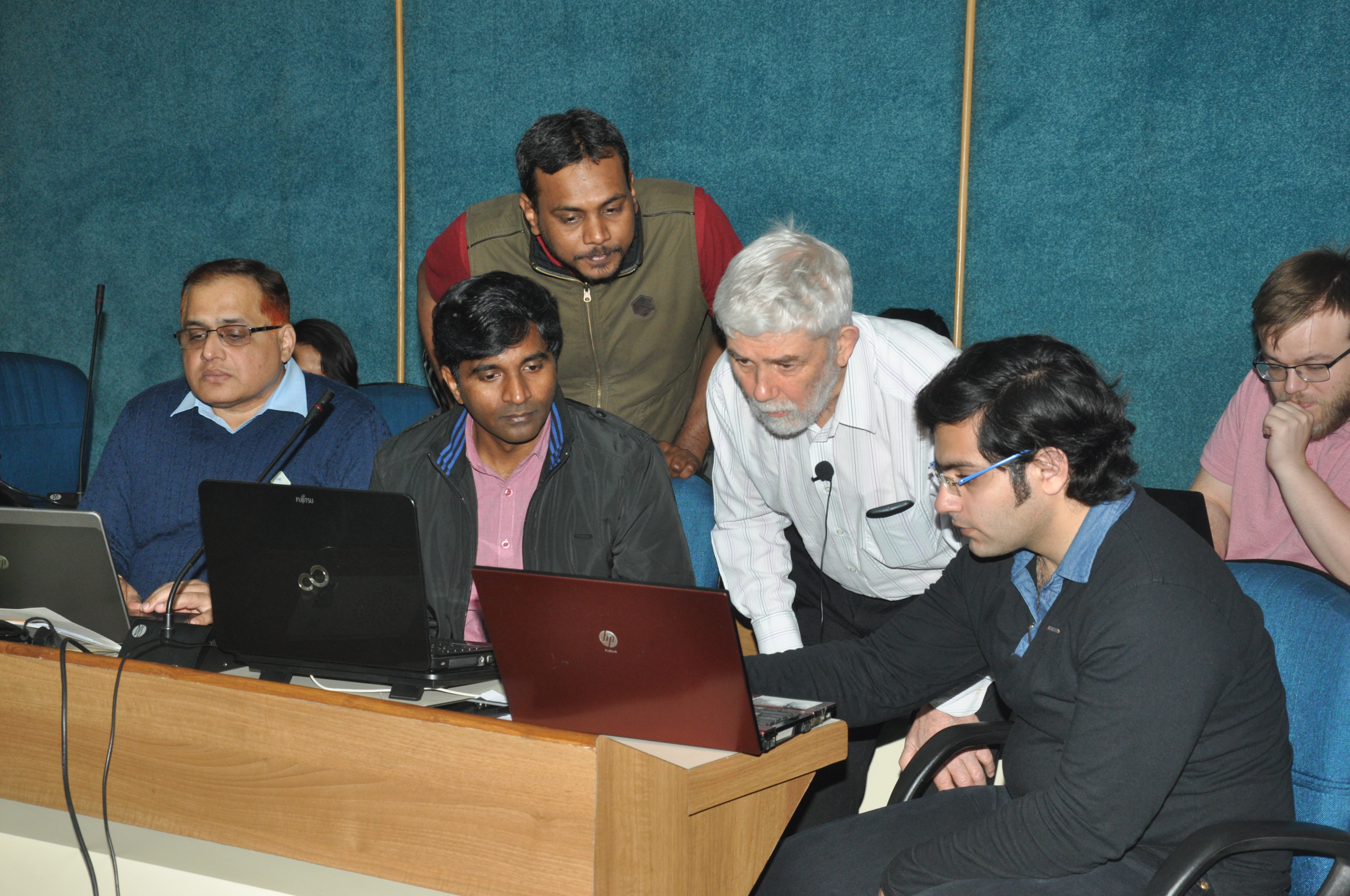
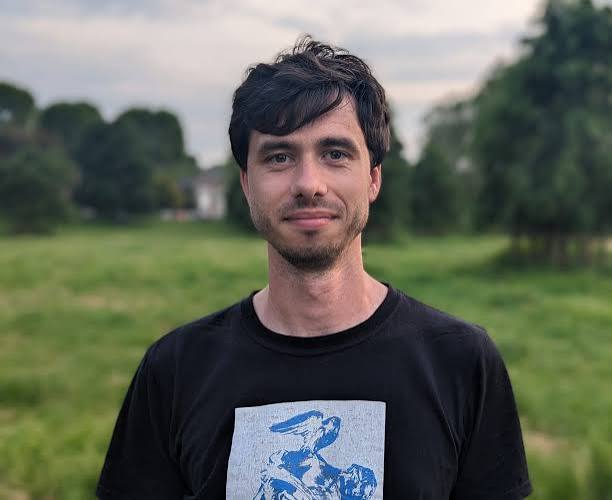
Peter Murray-Rust supports a group of delegates from India with their data mining project (picture taken from this article)
The soul of open is the recognition that there is a better way of doing things. It’s the belief that we could have a world where knowledge should be available to everyone, not just the Global North. – Peter Murray-Rust
Opening up: a personal journey in open research
Peter Murray‑Rust:
If I look at myself, I started to “become open” in the early 1990s. I was between the pharmaceutical industry working as a consultant and part‑time professor. At that time, everything was waking up. This was before the popular internet, and things were just starting to get online. People were looking for new ways of doing things, including sharing information and knowledge.
A seminal moment for me was in 1993, when I attended a talk by Tim Berners‑Lee on the Semantic Web. That talk changed my life. He used this metaphor of semantic universe, which existed in parallel with the physical universe, where everything was mapped and connected. As soon as he said it, it clicked for me and brought together a lot of what I’ve been thinking and doing. Knowledge could be organised in this semantic manner, which would make it vastly more powerful. I became completely clear that this was what I would put the rest of my life into. But to do that, you had to build components and infrastructure, and you had to make knowledge public. I decided to do this for chemistry.
Between technical and social success
Peter Murray‑Rust:
I came to Cambridge in the late 1990s to support online training courses. Technically, it was a success but socially, it didn’t work. That was to become a theme throughout my journey in Open: that you can come up with a technical solution, but the real challenge is getting people to buy into it. That I found to be true about Open everything but in particular open access, because very few people bought into what it actually means.
That started to change in the early 2000s with the Open Knowledge Foundation. Rufus Pollock, who was a key person in Open Knowledge Foundation, convinced many of us that Open needed active participation. Cambridge was unusually strong then. We had OpenStreetMap, which was a Cambridge initiative. We met regularly, in the Panton Arms and so on. Open had a physical presence and a social centre.
Open has to be better
Peter Murray‑Rust:
One thing I always emphasise is this: Open has to be better. It has to produce better knowledge. Working openly is not just better because it is morally better, or because it is cheaper. Working openly should allow us to create better knowledge and better tools than closed knowledge.
OpenStreetMap succeeded because it produced better maps than the ones you could buy. The Human Genome Project succeeded because it showed what open coordination could achieve at scale. Galaxy Zoo worked because it solved a real problem—classifying vast amounts of data—by opening the process to the public.
If openness doesn’t let us do new things that closed systems can’t, if openness doesn’t allow us to produce better things than closed systems can, it won’t survive.
Learning open research from open-source
Peter Murray‑Rust:
You won’t understand my impetus in open research unless you understand open-source software and the Free Software movement. It was systematised by Richard Stallman and the Free Software Foundation in the 1980s. He articulated the idea that software should be free—not free in terms of cost, but free as in that you have the freedom to run it, inspect it, modify it, and redistribute it. And when you redistribute it, it stays free.
Licences are fundamental here since open research is ultimately about ownership, and with that permission and power. What Stallman and others realized was that these interfaces had to be formalised in licenses. If you didn’t, then people could take your material and prevent the rest of the world from using it and even prevent you from using it. Free software means that you have a free license and that when you redistribute any modified version of the software, it has to be distributed with that license.
This works for open-source software because it’s component‑based. No one builds software from scratch. You assemble it on the back of other people’s work and offer others to work off the back of yours. That same model can apply to knowledge. You build on it by bringing in existing components and making something bigger out of it. In the software community, there are half a million program libraries that people build things out of. That’s critical to the idea of open research. So I would say: understand software programming and the software community. Until you do that, you won’t understand my ethos of open research.
Research culture and resistance
Peter Murray‑Rust:
Different disciplines have different cultures. Particle physics is deeply communal. Materials science is deeply secretive. Synthetic chemistry was extremely competitive. Everything comes down to people. If you don’t embed yourself in departments and understand how researchers think, you won’t be addressing the problems which people have day to day.
You’ll never change practices unless you have a good understanding of the different research cultures. When you start to get an understanding of how they think and work, then you will know what tools they need to work openly. We need to have the tools. It’s no good telling people what to do because that’s the policy; they will hate it. You need to have the tools to allow them to work in a better way.
What is the soul of open research?
Peter Murray-Rust:
The soul of open is the recognition that there is a better way of doing things. It’s the belief that we could have a world where knowledge should be available to everyone, not just the Global North. People talk about open access, and how it has made stuff more accessible to people, but if you look at knowledge from the point of view of the Global South, it’s highly neo-colonialist at the moment. I don’t see any sign of that changing because it’s driven by a mixture of commercial interests. And whenever you have commercial interests, you are slanted heavily towards the Global North. I don’t see anything at the moment which will topple the Global North’s model of essentially surveillance capitalism of knowledge and exploitation. We need, as an open research community, to understand this.
Until you understand this, you do not have a soul of open. Until you’ve participated in some activity where you generate things through open and you give that as a gift to the world, you don’t have that open in your soul. And I think until you’ve interacted with people who do have the soul of open then you won’t understand the open community.
A contaminated soul
Peter Murray-Rust:
Open research has been contaminated by lots of things. One of the ongoing tensions is always how do you build product-like tools which require money in a way that means that they are still open. That has not been solved and it’s clear that it’s even worse at the moment with the complete colonisation by the AI tools. In open access, the driving has always been from commercial publishers to make money out of something into which they put no effort to speak of, which they get vast amounts of reward. Commerce has contaminated open access in ways it never fully managed to contaminate open-source.
The traditional publishing industry has only one model, and that model is to enclose knowledge and then essentially ransom it out. It adds no value. We’ve also got into a situation, unfortunately, where published articles are the currency of value for an academic and for the academic department at university. Therefore, we are controlled by the publishers as to what it is that we show the world as our value.
Reflection
In our conversation, Peter Murray-Rust shared his perspective of openness, which emerged from his personal history in the open-source community. From it, a deep insight is offered.
From him we learn that open research is not just a compliance and/or policy framework. Neither is it just a set of practices and the tools that enable them. As a researcher working in present-day academia, open research can be about all those things but first and foremost, open research is a way of thinking, behaving and building. It is a way of working, one where communities come together over the quest for knowledge and offer one another new ways to relate to and interrogate knowledge. Open has a soul, and the soul of open research is not found in how closely one follows funder’s policies. The soul of open research is about being open; being open with knowledge, with tools, and with research itself.
Today, commerce has contaminated open research and for it to win the fight for its soul, it would be necessary for open research to decontaminate itself from commerce, and also to change the esteem that researchers get from publishing papers in certain venues.
Ultimately, open research comes down to, as he puts it, the people. For open research to thrive, we would need to cultivate a culture of sharing and giving. Open research has a social element to it. It is about bringing people together, allowing them to build together, and to present those creations as a gift to the world. Open research is about cultivating that spirit. One way to do it would be to meet people where they are: understand how they work, find the right tools for them, and allow them to use those tools freely and creatively. If we don’t protect that spirit, if we lose the fight for the soul of open research, openness risks becoming just another label: empty, extractive, and controlled by the very forces it was meant to resist.
Currently, Peter is working on semanticClimate, a global project to make climate knowledge accessible to humans and machines. Co-founded with Gita Yadav (Plant Sciences and St Edmunds Hall) semanticClimate works with young people in the Global South to create accessible learning and research materials.
To follow the progress on this initiative, visit https://semanticclimate.github.io/p/en/ and (with OKFN) https://okfn.org/en/projects/ai-learning-labs/climate-change-chatbot/. You can also reach Peter at pm286@cam.ac.uk or peter.murray.rust@googlemail.com.
To find out more about open research at Cambridge, visit https://www.openresearch.cam.ac.uk/ or get in touch with the open research team at info@openresearch.cam.ac.uk.
You May Also Like
Data Diversity Podcast #3 – Dr Nick H. Wise (2/4)
Data Diversity Podcast #5 – Abdulwahab Alshallal