Tag Archives: Open Acccess

Data Diversity Podcast #3 – Dr Nick H. Wise (1/4)

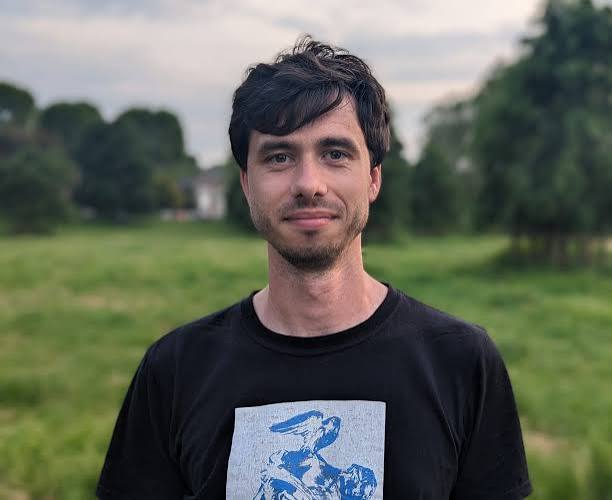
In our third instalment of the Data Diversity Podcast, we are joined by Dr Nick H. Wise, Research Associate in Architectural Fluid Mechanics at the Department of Engineering, University of Cambridge. As is the theme of the podcast, we spoke to Nick about his experience as a researcher, but this is a special edition of the podcast. Besides being a scientist and an engineer, Nick has made his name as a scientific sleuth who, based on an article on the blog Retraction Watch which was written in 2022, is responsible for more than 850 retractions, leading Times Higher Education to dub him as a research fraudbuster. Since then, through his X account @Nickwizzo, he has continued his investigations, tracking cases of fraud and in some cases, naming and shaming the charlatans. Nick was kind to share with us many great insights over a 90-minute conversation, and as such we have decided to release a four part-series dedicated to the topic of research integrity. 

In this four-part series, we will learn from Nick about some of the shady activities that taint the scientific publishing industry today. In part one, we learn how Nick was introduced into the world of publication fraud and how that led him to investigate the industry behind it. Below are some excerpts from the conversation, which can be listened to in full here


I have found evidence of a papermill bribing some editors and there have been many, at least tens, if not hundreds, of editors that have been let go or told to stop being editors by journals in the last year because they have been found to be compromised. This could be because of bribery or some other way of being compromised. This is what I try to uncover. – Dr Nick H. Wise


Tortured Phrases and PubPeer: Nick’s beginnings as a Scientific Sleuth  

My background is in fluid dynamics where I mostly think about fluid dynamics within buildings. For instance, I think about the air flows generated by different heating systems and things like pollutant transport such as smells or COVID which can travel with the air and interact with other each other. That was my PhD and the post-doc in the Engineering department.

About three years ago whilst trying to avoid writing my thesis, I saw a tweet from the great Elizabeth Bik, who is possibly the most famous research fraud investigator. She mostly looks at biomedical images and her great skill is she would be able to look through a paper and see photos of Western blots of microscopy slides and see if parts of an image are identical to other parts, or if the image overlaps with images from different papers. She has an incredible memory and ability to spot these images. She’s been doing this for over 10 years and has caused many retractions. I was aware of her work but there was no way for me to assist with that because it is not my area of research. I don’t have an appreciation of what these images should look like.

But about three years ago she shared a preprint written by three computer scientists on her Twitter account about a phenomenon they called ‘tortured phrases’. In doing their research and reading the literature, these computer scientists noticed that there were papers with very weird language in them. What they surmised was that to overcome plagiarism checks by software like Turnitin, people would run text through paraphrasing software. These software were very crude in that they would go word by word. For instance, it would look at a word and replace it with the first synonym it found in a thesaurus. It would do this word for word, which makes the text barely readable. However, it is novel and so it will not flag any plagiarism checking software. Eventually, if you as a publisher have outsourced the plagiarism checks to some software, and neither your editor or peer reviewer reads the text to check if it makes sense, then this will get through peer review process without any problem and the paper would get published.  

For an example of tortured phrases: sometimes there’s not only one way to say something. Particularly if English is not someone’s first language, you don’t want to be too harsh on anyone who’s just chosen a word which just isn’t what a native speaker would pick. But there are some phrases where there’s only one right way to say it. For instance, artificial intelligence is the phrase for the phenomenon you want to talk about, and if instead you use “man-made consciousness”, that’s not the phrase you need to use, particularly if the original text said artificial intelligence brackets AI, and your text says “man-made consciousness” brackets AI. It’s going to be very clear what has happened.  

The three computer scientists highlighted this phenomenon of ‘tortured phrases’, but entirely from within the computer science field. I wondered if a similar phenomenon was happening in my own field in fluid dynamics. Samples of these paraphrasing software are freely available online as little widgets so I took some standard phrases from fluid dynamics, which were the kind that would not make sense if you swapped the words around and generated a few of these tortured phrases, I googled them and up popped hundreds of papers featuring these phrases. That was the beginning for me. 

I started reporting papers with these phrases on a website called PubPeer, which is a website for post-publication peer review. I commented on these papers and started being in conversation with the computer scientists who wrote the paper on ‘tortured phrases’ because they built a tool to scrape the literature and automatically tabulate these papers featuring these phrases. They basically had a dictionary of phrases which they knew would be spat out by the software because some of this paraphrasing software are so crude, such that if you put in “artificial intelligence”, you are always going to get out “man-made consciousness” or a handful of variants. It didn’t come up with a lot of different things. If you could just search for “man-made consciousness” and it brings up many papers, you knew what has been going on. I contributed a lot of new ‘fingerprints’, which is what they call their dictionary that they would search the literature for. That is my origin story. 

On Paper Mills and the Sale of Authorships 

There is also the issue of meta-science, which has nothing to do with the text of the paper or with the data itself, but more to do with how someone may add a load of references through the paper which are not relevant, or they are all references to one person or a colleague. In that way you would be gaming the system to boost profiles, careers, and things like H-index. Because having more publications and more citations is so desirable, there is a market for this. It is easy to find online advertisements for authorship of scientific papers ranging from $100 to over $1000, depending on the impact factor of the journal, and the position of authorship you want: first authorship, seventh authorship, or whether you want to be the corresponding author, these sorts of factors. Likewise, you can buy citations.  

There are also organizations known as paper mills. For example, as an author I might have written the paper and want, or need, to make some money and so I go to this broker and say: I want to sell authorships, I’ll be author number six, but I can sell the first five authorships. Can you put me in touch with someone selling authorships? At the same time, there are people who go to them saying I want to buy an authorship, and they put two and two together acting as a middleman. Also, some of these paper mills do not want to wait for someone to come to them with a paper – they will write papers to order. They have an in-house team of scientific writers who produce papers. This does not necessarily mean that the paper is bad. Depending on where they want the paper to publish, the paper might have to be good if it has to get published. So, they will employ people with degrees, qualified people or PhD students who need to earn some money, and then they will sell the authorships and get the papers published. This is a big business. 

There is a whole industry behind it, and something I have moved onto investigating quite a lot is where these papers are going. When I identify these papers, I try to find out where they are being published, how they’re being published, who is behind them, who is running these paper mills, who is collaborating with them. Something I found out which resulted in an article in Science was that paper mills want to guarantee acceptance as much as they can. If a paper is not accepted, it creates a lot of work for them and it means a longer time before their customers get what they paid for. For example, if a paper that they wrote and sold authorships for gets rejected, they’re going to have to resubmit it to another journal. So something paper mills will do is they will submit a paper to 10 journals at once and publish with whichever journal gave them the easiest time. But still, they want to try and guarantee acceptance and one way to do that is to simply bribe the editor. I have found evidence of a papermill bribing some editors and there have been many, at least tens, if not hundreds, of editors that have been let go or told to stop being editors by journals in the last year because they have been found to be compromised. This could be because of bribery or some other way of being compromised. This is what I try to uncover.

Although I’m not fighting this alone, it can feel like that. Publishers are doing things to some extent and they’re doing things that they can’t tell you about as well. And then there’s other people like me investigating this in their free time or as a side project. Not enough of us are doing it because it is a multi-million-dollar industry that is generating these papers. More papers are being published than ever before so it is a big fight.


Stay tuned as we release the rest of the conversation with Nick over the next month. In the next post, we get Nick’s take on the peer review process and fake research data, and I ask his opinion on where the fault lies in the publication of fraudulent research. 

Blood: in short supply?

Two years ago (almost to the day) we called out Blood for their misleading open access options that they offered to Research Council and Charity Open Access Fund (COAF) authors. Unfortunately, little has changed since then:

Neither of these routes is sufficient to comply with either Research Councils’ or COAF’s open access policies which require that the accepted text be made available in PMC within 6 months of publication, or that the published paper is available immediately under a CC BY licence.

At the time, we called on Blood to change their offerings or we would advise Research Councils and COAF funded authors to publish elsewhere. And that’s exactly what’s happened:

Figure 1. All articles published in Blood since 2007 which acknowledge MRC, Wellcome, CRUK or BHF funding. Data obtained from Web of Science.

Over the last two years we’ve seen a dramatic decline in the number of papers being published in Blood by Medical Research Council (MRC), Wellcome Trust, Cancer Research UK (CRUK) and British Heart Foundation (BHF) researchers. The number of papers published in Blood that acknowledge these funders in now at its lowest point in over a decade.

It’s important to remember that the 23 papers published in Blood in 2017 are all non-compliant with the open access policies of Research Councils and COAF, and if these papers acknowledge Wellcome Trust funding then those researchers may also be at risk of losing 10% of their total grant. If you are funded by Research Councils or one of the COAF members, please consider publishing elsewhere. SHERPA/FACT confirms our assessment:

Sign the open letter

We’re still collecting signatures for our open letter to the editor of Blood in the hope that they’ll reconsider their open access options. Please join us by adding your name.

Cambridge Open Access spend 2013-2018

Since 2013, the Open Access Team has been helping Cambridge researchers, funded by Research Councils UK (RCUK) and the consortium of biomedical funders which make up the Charity Open Access Fund (COAF), to meet their Open Access obligations. Both RCUK (now part of UKRI) and COAF have Open Access policies which have a preference for ‘gold’, i.e. the published work should be Open Access immediately at the time of publication. Implementing these policies has come at a significant cost. In this time, Cambridge has been awarded just over £10 million from RCUK and COAF to implement their Open Access policies, and the Open Access Team has diligently used this funding to maximum effect.

Figure 1. Comparison of combined RCUK/COAF grant spend and available funds, April 2013 – March 2018.

Initially, expenditure was slow which allowed the Open Access Team to maintain a healthy balance that could guarantee funding for almost any paper which met a few basic requirements. However, since January 2016 expenditure has gradually been catching up on the available funds which has made funding decisions more difficult (specifically Open Access deals tied to multi-year publisher subscriptions). In the first three months of 2018 average monthly expenditure on the RCUK block grant alone exceeded £160,000. We are quickly reaching the point where expenditure will outstrip the available grants.

One technical change which has particularly affected our management of the block grants was RCUK’s decision last year to move away from a direct cash award (which could be rolled over year to year) to a more tightly managed research grant. In the past, carrying over underspend has given us some flexibility in the management of the RCUK funds, whereas the more restrictive style of research grant will mean that any underspend will need to be returned at the end of the grant period, while any overspend cannot be deferred into the next grant period. As we are now dealing with a fixed budget, the Open Access Team will need to ensure that expenditure is kept within the limits of the grant. This is difficult when we have no control over where or when our researchers publish.

Funding from COAF (which is also managed as though it is a research grant) has generally matched our total annual spend quite closely, but the strict grant management rules have caused some problems, especially in the transition period between one grant and another. However, unlike RCUK, the Wellcome Trust will provide supplementary funding in addition to the main COAF award if it is exhausted, and the other COAF partners have similar procedures in place to manage Open Access payments beyond the end of the grant.

Where does it all go?

Most of our expenditure (91%) goes on article processing charges (APCs), as perhaps one might expect, but the block grants are also used to support the staff of the Open Access Team (3%), helpdesk and repository systems (2%), page and colour charges (2%), and publisher memberships (1%) (where this results in a reduced APC). The majority of APCs we’ve paid go towards hybrid journals, which represent approximately 80% of total APC spend.

So let’s take a look at which publishers have received the most funds. We’ve tried to match as much of our raw financial information we have to specific papers, although some of our data is either incomplete or we can’t easily link a payment back to a specific article, particularly if we look back to 2013-2015 when our processes were still developing. Nonetheless, the average APC paid over the last 5 years was £2,291 (inc. 20% VAT), but as can be seen from Table 1, average APCs have been rising year on year at a rate of 7% p.a., significantly higher than inflation. Price increases at this rate are not sustainable in the long term – by 2022 we could be paying on average £3000 per article.

Table 1. Average APC by publication year of article (where known).

Year of publication Average APC paid (£)
2013  £1,794
2014  £1,935
2015  £2,044
2017  £2,187
2018  £2,336

Elsevier has been by far the largest recipient of block grant funds, receiving 29.4% of all APC expenditure from the RCUK and COAF awards (over £2.5 million), though only accounting for 25.5% of articles. In the same time SpringerNature also received in excess of £1 million (which as we’ll see below has mostly been spent on two titles). With such a substantial set of data we can now begin to explore the relative value that each publisher offers. Take for example Taylor & Francis (£107,778 for 120 articles) compared to Wolters Kluwer (£119,551 for 35 articles). Both publishers operate mostly hybrid OA journals and yet the relative value is significantly different. What is so fundamentally different between publishers that such extreme examples as this should exist?

Table 2. Top 20 publishers by combined total RCUK/COAF APC spend 2013-2018.

Value of APCs paid Number of APCs paid Avg. APC paid
Publisher £ % N % £
Elsevier £2,559,736 29.4% 971 25.5% £2,636
SpringerNature £1,050,774 12.1% 402 10.6% £2,614
Wiley £808,847 9.3% 279 7.3% £2,899
American Chemical Society £411,027 4.7% 251 6.6% £1,638
Oxford University Press £379,647 4.4% 169 4.4% £2,246
PLOS £267,940 3.1% 168 4.4% £1,595
BioMed Central £245,006 2.8% 153 4.0% £1,601
Institute of Physics £189,434 2.2% 98 2.6% £1,933
Royal Society of Chemistry £156,018 1.8% 106 2.8% £1,472
BMJ Publishing £144,001 1.7% 68 1.8% £2,118
Company of Biologists £140,609 1.6% 50 1.3% £2,812
Wolters Kluwer £119,551 1.4% 35 0.9% £3,416
Taylor & Francis £107,778 1.2% 120 3.2% £898
Frontiers £103,011 1.2% 61 1.6% £1,689
Cambridge University Press £77,139 0.9% 38 1.0% £2,030
Royal Society £73,890 0.8% 52 1.4% £1,421
Society for Neuroscience £69,943 0.8% 26 0.7% £2,690
American Society for Microbiology £63,056 0.7% 36 0.9% £1,752
American Heart Association £53,696 0.6% 14 0.4% £3,835
Optical Society of America £39,463 0.5% 17 0.4% £2,321
All other articles £1,654,228 19.0% 690 18.1% £2,397
Grand Total £8,714,794 100.0% 3,804 100.0% £2,291

Next, journal level metrics. The most popular journal that we pay APCs for is Nature Communications, followed closely by Scientific Reports. Both of these are SpringerNature titles, and indeed these two titles make up the bulk of our total APC spend with SpringerNature. Yet these two journals represent significantly different approaches to Open Access. Nature Communications, along with Cell and Cell Reports, are some of the most expensive routes to making research publications Open Access, whereas Scientific Reports and PLOS One sit at the lower end of the spectrum. It is interesting that we haven’t seen a particularly popular Open Access journal fill the niche between Nature Communications and Scientific Reports.

Figure 2. APC number and total spend by journal. In the last five years, nearly £450,000 has been spent on articles published in Nature Communications.


Managing the future

While the OA block grants have kept pace with overall expenditure so far, continuing monthly expenditure of £160,000 would risk overspending on the RCUK grant for 2018/19. To counter this possible outcome the University has agreed a set of funding guidelines to manage the RCUK (from now on known as Research Councils) and COAF awards. For Research Councils’ funded papers the new guidelines place an emphasis on fully Open Access journals and hybrid journals where the publisher is taking a sustainable approach to managing the transition to Open Access. We’ve spent a lot of money over the last five years, yet it’s not clear that the influx of cash from RCUK and COAF has had any meaningful impact on the overall publishing landscape. Many publishers continue to reap huge windfalls via hybrid APCs, yet they are not serious about their commitment to Open Access.

In the future, we’ll be demanding better deals from publishers before we support payments to hybrid journals so that we can effect a faster transition to a fully Open Access world.

Published 22 October 2018
Written by Dr Arthur Smith
Creative Commons License

‘Be nice to each other’ – the second Researcher to Reader conference

Aaaaaaaaaaargh! was Mark Carden’s summary of the second annual Researcher to Reader conference, along with a plea that the different players show respect to one another. My take home messages were slightly different:

  • Publishers should embrace values of researchers & librarians and become more open, collaborative, experimental and disinterested.
  • Academic leaders and institutions should do their bit in combating the metrics focus.
  • Big Deals don’t save libraries money, what helps them is the ability to cancel journals.
  • The green OA = subscription cancellations is only viable in a utopian, almost fully green world.
  • There are serious issues in the supply chain of getting books to readers.
  • And copyright arrangements in academia do not help scholarship or protect authors*.

The programme for the conference included a mix of presentations, debates and workshops. The Twitter hashtag is #r2rconf.

As is inevitable in the current climate, particularly at a conference where there were quite a few Americans, the shadow of Trump was cast over the proceedings. There was much mention of the political upheaval and the place research and science has in this.

[*please see Kent Anderson’s comment at the bottom of this blog]

In the publishing corner

Time for publishers to raise to the challenge

The conference opened with an impassioned speech by Mark Allin, the President and CEO of John Wiley & Sons, who started with the statement this was “not a time for retreat, but a time for outreach and collaboration and to be bold”.

The talk was not what was expected from a large commercial publisher. Allin asked: “How can publishers act as advocates for truth and knowledge in the current political climate?” He mentioned that Proquest has launched a displaced researchers programme in reaction to world events, saying, “it’s a start but we can play a bigger role”.

Allin asked what publishers can do to ensure research is being accessed. Referencing “The content trap” by Bharat Anand, Allin said “We won’t as a media industry survive as a media content and putting it in a bottle and controlling its distribution. We will only succeed if we connect the users. So we need to re-engineer the workflows making them seamless, frictionless. “We should be making sure that … we are offering access to all those who want it.”

Allin raised the issue of access, noting that ResearchGate has more usage than any single publisher. He made the point that “customers don’t care if it is the version of record, and don’t care about our arcane copyright laws”. This is why people use SciHub, it is ease of access. He said publishers should not give up protecting copyright but must realise its limitations and provide easy access.

Researchers are the centre of gravity – we need to help them spend more time researching and less time publishing, he says. There is a lesson here, he noted, suppliers should use “the divine discontent of the customer as their north star”. He used the example of Amazon to suggest people working in scholarly communication need to use technology much better to connect up. “We need to experiment more, do more, fail more, be more interconnected” he said, where “publishing needs open source and open standards” which are required for transformational impact on scholarly publishing – “the Uber equivalent”.

His suggestion for addressing the challenges of these sharing platforms is to “try and make your experience better than downloading from a pirate site”, and that this would be a better response than taking the legal route and issuing takedown notices.  He asked: “Should we give up? No, but we need to recognise there are limits. We need to do more to enable access.”

Allin called the situation, saying publishing may have gone online but how much has the internet really changed scholarly communication practices? The page is still a unit of publishing, even in digital workflows. It shouldn’t be, we should have a ‘digital first’ workflow. The question isn’t ‘what should the workflow look like?’, but ‘why hasn’t it improved?’, he said, noting that innovation is always slowed by social norms not technology. Publishers should embrace values of researchers & librarians and become more open, collaborative, experimental and disinterested.

So what do publishers do?

Publishers “provide quality and stability”, according to Kent Anderson, speaking on the second day (no relation to Rick Anderson) in his presentation about ‘how to cook up better results in communicating research’. Anderson is the CEO of Redlink, a company that provides publishers and libraries with analytic and usage information. He is also the founder of the blog The Scholarly Kitchen.

Anderson made the argument that “publishing is more than pushing a button”, by expanding on his blog on ‘96 things publishers do’. This talk differed from Allin’s because it focused on the contribution of publishers.

Anderson talked about the peer review process, noting that rejections help academics because usually they are about mismatch. He said that articles do better in the second journal they’re submitted to.

During a discussion about submission fees, Anderson noted that these “can cover the costs of peer review of rejected papers but authors hate them because they see peer review as free”. His comment that a $250 journal submission charge with one journal is justified by the fact that the target market (orthopaedic surgeons) ‘are rich’ received (rather unsurprisingly) some response from the audience via Twitter.

Anderson also made the accusation that open access publishers take lower quality articles when money gets tight. This did cause something of a backlash on the Twitter discussion with a request for a citation for this statement, a request for examples of publishers lowering standards to bring in more APC income with the exception of scam publishers. [ADDENDUM: Kent Anderson below says that this was not an ‘accusation’ but an ‘observation’. The Twitter challenge for ‘citation please?’ holds.]

There were a couple of good points made by Anderson. He argued that one of the value adds that publishers do is training editors. This is supported by a small survey we undertook with the research community at Cambridge last year which revealed that 30% of the editors who responded felt they needed more training.

The library corner

The green threat

There is good reason to expect that green OA will make people and libraries cancel their subscriptions, at least it will in the utopian future described by Rick Anderson (no relation to Kent Anderson), Associate Dean of University of Utah in his talk “The Forbidden Forecast, Thinking about open access and library subscriptions”.

Anderson started by asking why, if we’re in a library funding crisis, aren’t we seeing sustained levels of unsubscription? He then explained that Big Deals don’t save libraries money. They lower the cost per article, but this is a value measure, not a cost measure. What the Big Deal did was make cancellations more difficult. Most libraries have cancelled every journal that they can without Faculty ‘burning down the library’, to preserve the Big Deal. This explains the persistence of subscriptions over time. The library is forced to redirect money away from other resources (books) and into serials budget. The reason we can get away with this is because books are not used much.

The wolf seems to be well and truly upon us. There have been lots of cancellations and reduction of library budgets in the USA (a claim supported by a long list of examples). The number of cancellations grows as the money being siphoned off book budgets runs out.

Anderson noted that the emergence of new gold OA journals doesn’t help libraries, this does nothing to relieve the journal emergency. They just add to the list of costs because it is a unique set of content. What does help libraries is the ability to cancel journals. Professor Syun Tutiya, Librarian Emeritus at Chiba University in a separate session noted that if Japan were to flip from a fully subscription model to APCs it would be about the same cost, so that would solve the problem.

Anderson said that there is an argument that “there is no evidence that green OA cancels journals” (I should note that I am well and truly in this camp, see my argument). Anderson’s argument that this is saying the future hasn’t happened yet. The implicit argument here is that because green OA has not caused cancellations so far means it won’t do it into the future.

Library money is taxpayers’ money – it is not always going to flow. There is much greater scrutiny of journal big deals as budgets shrink.

Anderson argued that green open access provides inconsistent and delayed access to copies which aren’t always the version of record, and this has protected subscriptions. He noted that Green OA is dependent on subscription journals, which is “ironic given that it also undermines them”. You can’t make something completely & freely available without undermining the commercial model for that thing, Anderson argued.

So, Anderson said, given green OA exists and has for years, and has not had any impact on subscriptions, what would need to happen for this to occur? Anderson then described two subscription scenarios. The low cancellation scenario (which is the current situation) where green open access is provided sporadically and unreliably. In this situation, access is delayed by a year or so, and the versions available for free are somewhat inferior.

The high cancellation scenario is where there is high uptake of green OA because there are funder requirements and the version is close to the final one. Anderson argued that the “OA advocates” prefer this scenario and they “have not thought through the process”. If the cost is low enough of finding which journals have OA versions and the free versions are good enough, he said, subscriptions will be cancelled. The black and white version of Anderson’s future is: “If green OA works then subscriptions fail, and the reverse is true”.

Not surprisingly I disagreed with Anderson’s argument, based on several points. To start, there would need to have a certain percentage of the work available before a subscription could be cancelled. Professor Syun Tutiya, Librarian Emeritus at Chiba University noted in a different discussion that in Japan only 6.9% of material is available Green OA in repositories and argued that institutional repositories are good for lots of things but not OA. Certainly in the UK, with the strongest open access policies in the world, we are not capturing anything like the full output. And the UK is itself only 6% of the research output for the world, so we are certainly a very long way away from this scenario.

In addition, according to work undertaken by Michael Jubb in 2015 – most of the green Open Access material is available in places other than institutional repositories, such as ResearchGate and SciHub. Do librarians really feel comfortable cancelling subscriptions on the basis of something being available in a proprietary or illegal format?

The researcher perspective

Stephen Curry, Professor of Structural Biology, Imperial College London, spoke about “Zen and the Art of Research Assessment”. He started by asking why people become researchers and gave several reasons: to understand the world, change the world, earn a living and be remembered. He then asked how they do it. The answer is to publish in high impact journals and bring in grant money. But this means it is easy to lose sight of the original motivations, which are easier to achieve if we are in an open world.

In discussing the report published in 2015, which looked into the assessment of research, “The Metric Tide“, Curry noted that metrics & league tables aren’t without value. They do help to rank football teams, for example. But university league tables are less useful because they aggregate many things so are too crude, even though they incorporate valuable information.

Are we as smart as we think we are, he asked, if we subject ourselves to such crude metrics of achievement? The limitations of research metrics have been talked about a lot but they need to be better known. Often they are too precise. For example was Caltech really better than University of Oxford last year but worse this year?

But numbers can be seductive. Researchers want to focus on research without pressure from metrics, however many Early Career Researchers and PhD students are increasingly fretting about publications hierarchy. Curry asked “On your death bed will you be worrying about your H-Index?”

There is a greater pressure to publish rather than pressure to do good science. We should all take responsibility to change this culture. Assessing research based on outputs is creating perverse incentives. It’s the content of each paper that matters, not the name of the journal.

In terms of solutions, Curry suggested it would be better to put higher education institutions in 5% brackets rather than ranking them 1-n in the league tables. Curry calls for academic leaders and institutions to do their bit in combating the metrics focus. He also called for much wider adoption of the Declaration On Research Assessment (known as DORA). Curry’s own institution, Imperial College London, has done so recently.

Curry argued that ‘indicators’ would be a more appropriate term than ‘metrics’ in research assessment because we’re looking at proxies. The term metrics imply you know what you are measuring. Certainly metrics can inform but they cannot replace judgement. Users and providers must be transparent.

Another solution is preprints, which shift attention from container to content because readers use the abstract not the journal name to decide which papers to read. Note that this idea is starting to become more mainstream with the research by the NIH towards the end of last year “Including Preprints and Interim Research Products in NIH Applications and Reports

Copyright discussion

I sat on a panel to discuss copyright with a funder – Mark Thorley, Head of Science Information, Natural Environment Research Council , a lawyer – Alexander Ross, Partner, Wiggin LLP and a publisher – Dr Robert Harington,  Associate Executive Director, American Mathematical Society.

My argument** was that selling or giving the copyright to a third party with a purely commercial interest and that did not contribute to the creation of the work does not protect originators. That was the case in the Kookaburra song example. It is also the case in academic publishing. The copyright transfer form/publisher agreement that authors sign usually mean that the authors retain their moral rights to be named as the authors of the work, but they sign away rights to make any money out of them.

I argued that publishers don’t need to hold the copyright to ensure commercial viability. They just need first exclusive publishing rights. We really need to sit down and look at how copyright is being used in the academic sphere – who does it protect? Not the originators of the work.

Judging by the mood in the room, the debate could have gone on for considerably longer. There is still a lot of meat on that bone. (**See the end of this blog for details of my argument).

The intermediary corner

The problem of getting books to readers

There are serious issues in the supply chain of getting books to readers, according to Dr Michael Jubb, Independent Consultant and Richard Fisher from Something Understood Scholarly Communication.

The problems are multi-pronged. For a start, discoverability of books is “disastrous” due to completely different metadata standards in the supply chain. ONIX is used for retail trade and MARC is standard for libraries, Neither has detailed information for authors, information about the contents of chapters, sections etc, or information about reviews and comments.

There are also a multitude of channels for getting books to libraries. There has been involvement in the past few years of several different kinds of intermediaries – metadata suppliers, sales agents, wholesalers, aggregators, distributors etc – who are holding digital versions of books that can be supplied through the different type of book platforms. Libraries have some titles on multiple platforms but others only available on one platform.

There are also huge challenges around discoverability and the e-commerce systems, which is “too bitty”. The most important change that has happened in books has been Amazon, however publisher e-commerce “has a long way to go before it is anything like as good as Amazon”.

Fisher also reminded the group that there are far more books published each year than there are journals – it’s a more complex world. He noted that about 215 [NOTE: amended from original 250 in response to Richard Fisher’s comment below] different imprints were used by British historians in the last REF. Many of these publishers are very small with very small margins.

Jubb and Fisher both emphasised readers’ strong preference for print, which implies that much more work needed on ebook user experience. There are ‘huge tensions’ between reader preference (print) and the drive for e-book acquisition models at libraries.

The situation is probably best summed up in the statement that “no-one in the industry has a good handle on what works best”.

Providing efficient access management

Current access control is not functional in the world we live in today. If you ask users to jump through hoops to get access off campus then your whole system defeats its purpose. That was the central argument of Tasha Mellins-Cohen, the Director of Product Development, HighWire Press when she spoke about the need to improve access control.

Mellins-Cohen started with the comment “You have one identity but lots of identifiers”, and noted if you have multiple institutional affiliations this causes problems. She described the process needed for giving access to an article from a library in terms of authentication – which, as an aside, clearly shows why researchers often prefer to use Sci Hub.

She described an initiative called CASA – Campus Activated Subscriber-Access which records devices that have access on campus through authenticated IP ranges and then allows access off campus on the same device without using a proxy. This is designed to use more modern authentication. There will be “more information coming out about CASA in the next few months”.

Mellins-Cohen noted that tagging something as ‘free’ in the metadata improves Google indexing – publishers need to do more of this at article level. This comment was responded with a call out to publishers to make the information about sharing more accessible to authors through How Can I Share It?

Mellins-Cohen expressed some concern that some of the ideas coming out of RA21 Resource Access in 21st Century, an STM project to explore alternatives to IP authentication, will raise barriers to access for researchers.

Summary

It is always interesting to have the mix of publishers, intermediaries, librarians and others in the scholarly communication supply chain together at a conference such as this. It is rare to have the conversations between different stakeholders across the divide. In his summary of the event, Mark Carden noted the tension in the scholarly communication world, saying that we do need a lively debate but also need to show respect for one another.

So while the keynote started promisingly, and said all the things we would like to hear from the publishing industry, there is still the reality that we are not there yet.  And this underlines the whole problem. This interweb thingy didn’t happen last week. What has actually happened  to update the publishing industry in the last 20 years? Very little it seems. However it is not all bad news. Things to watch out for in the near future include plans for micro-payments for individual access to articles, according to Mark Allin, and the highly promising Campus Activated Subscriber-Access system.

Danny Kingsley attended the Researcher to Reader conference thanks to the support of the Arcadia Fund, a charitable fund of Lisbet Rausing and Peter Baldwin.

Published 27 February 2017
Written by Dr Danny Kingsley
Creative Commons License

Copyright case study

In my presentation, I spoke about the children’s campfire song, “Kookaburra sits in the old gum tree” which was written by Melbourne schoolteacher Marion Sinclair in 1932 and first aired in public two years later as part of a Girl Guides jamboree in Frankston. Sinclair had to get prompted to go to APRA (Australasian Performing Right Association) to register the song. That was in 1975, the song had already been around for 40 years but she never expressed any great interest in any propriety to the song.

In 1981 the Men at Work song “Down Under” made No. 1 in Australia. The song then topped the UK, Canada, Ireland, Denmark and New Zealand charts in 1982 and hit No.1 in the US in January 1983. It sold two million copies in the US alone.  When Australia won the America’s Cup in 1983 Down Under was played constantly. It seems extremely unlikely that Marion Sinclair did not hear this song. (At the conference, three people self-identified as never having heard the song when a sample of the song was played.)

Marion Sinclair died in 1988, the song went to her estate and Norman Lurie, managing director of Larrikin Music Publishing, bought the publishing rights from her estate in 1990 for just $6100. He started tracking down all the chart music that had been printed all over the world, because Kookaburra had been used in books for people learning flute and recorder.

In 2007 TV show Spicks and Specks had a children’s music themed episode where the group were played “Down Under” and asked which Australian nursery rhyme the flute riff was based on. Eventually they picked Kookaburra, all apparently genuinely surprised when the link between the songs was pointed out. There is a comparison between the music pieces.

Two years later Larrikin Music filed a lawsuit, initially wanting 60% of Down Under’s profits. In February 2010, Men at Work appealed, and eventually lost. The judge ordered Men at Work’s recording company, EMI Songs Australia, and songwriters Colin Hay and Ron Strykert to pay 5% of royalties earned from the song since 2002 and from its future earnings.

In the end, Larrikin won around $100,000, although legal fees on both sides have been estimated to be upwards $4.5 million, with royalties for the song frozen during the case.

Gregory Ham was the flautist in the band who played the riff. He did not write Down Under, and was devastated by the high profile court case and his role in proceedings. He reportedly fell back into alcohol abuse and was quoted as saying: “I’m terribly disappointed that’s the way I’m going to be remembered — for copying something.” Ham died of a heart attack in April 2012 in his Carlton North home, aged 58, with friends saying the lawsuit was haunting him.

This case, I argued, exemplifies everything that is wrong with copyright.

We are going OPEN – the Open Research experiment has begun!

There has been much discussion recently about the reproducibility crisis and about the growing distrust among the public in the quality of research. As illustrated in our ‘Case for Open Research’ series of blog posts, one of the main reasons for this is that researchers are currently rewarded for the number of papers they publish in high impact factor journals, and not necessarily for the quality of work that they are doing.

Indeed, Cambridge researchers clearly indicated that the lack of incentives to do anything other than publishing in these types of journals is one of the main blockers discouraging them from adopting a more open research practice.

Joining forces with the Wellcome Trust

The Office of Scholarly Communication started talking about these problem with the Open Research team at the Wellcome Trust. The Wellcome Trust are natural allies, as they have consistently led their researchers towards greater openness. They were one of the first funding bodies to introduce policies on Open Access and on data management and sharing. Now the Wellcome Trust is moving towards proactively supporting Open Research beyond enforcing their compliance requirements.

To promote immediate and transparent research sharing, they have recently launched the Wellcome Open Research platform which allows researchers to submit articles about virtually any research output and get published within a couple of days. The Wellcome Trust is now considering making Open Research one of their strategic priorities.

We quickly realised that we have a lot of shared interests, and joining forces to tackle the problem together made a lot of sense. We came up with the idea to launch the Open Research Pilot Project.

The Open Research Pilot – understanding the barriers to “openness”

We conceived the project as a two year experiment, which would allow us to gain an understanding of what is needed for researchers to share and get credit for all outputs of the research process. These include non-positive results, protocols, source code, presentations and other research outputs beyond the remit of traditional publications.

The Project aims to understand the barriers preventing researchers from sharing (including resource and time implications), as well as what the incentives are. The Project aims to utilise the new Wellcome Open Research publishing platform, together with other channels, to share these outputs.

The invitation to take part in the Pilot was sent to all researchers at Cambridge funded by the Wellcome Trust. Participating researchers had to commit to sharing of research outputs beyond traditional publications and to engage with the Project, by participating in Project meetings and contributing to Project publications.

Is ‘doing the right thing’ enough incentive?

Our biggest question was whether anyone would be willing to participate in the Pilot. We did not offer any incentive other than encouraging researchers to contribute to the greater good. The only support available to those who wanted to take part in the project was that offered by the Wellcome Trust and Cambridge Open Research team members, but there was no financial aid available to prospective participants. We thought that regardless of the outcome, that inviting researchers would be a good exercise to go through – we thought that if no one applied, we would have learnt that doing ‘the right thing’ was not a good enough motivator.

Thankfully, we received several fantastic applications from individual researchers and research groups who demonstrated great interest in and motivation for Open Research. We initially planned to work with two research groups, but given the quality of applications received and passion for Open Research expressed by the applicants, we decided to extend the scope of the project to four research groups. We have selected researchers doing different types of research, with the aim of learning about distinct problems in sharing that are experienced in diverse research disciplines:

  •       Dr Laurent Gatto –is  doing computational biology research, with a special focus on proteomics data. His interest is: How to effectively share research data and the code needed to reproduce them?
  •       Dr David Savage – is researching molecular pathogenesis of the consequences of obesity. His question is: What are the problems with sharing data coming from human participants?
  •       Dr Benjamin Steventon – is a developmental biologist generating and analysing large-scale imaging datasets. He would like to know: Are there image repositories allowing one to share large image datasets in a re-usable way?
  •       Dr Marta Costa and Dr Greg Jefferis (and others) – researchers leading the work on two collaborative projects: Connectomics and Virtual Fly Brain, which will create interactive tools to interrogate Drosophila neural network connections. They would like to understand: What are the issues with sharing complex interactive datasets? How to ensure long-term preservation of complex digital objects?

Motivations

So what motivated these researchers to apply for the project? We asked this question at the application stage and were positively surprised by the altruistic answers that we received. Our researchers were largely driven by a desire to improve the research process. We have seen responses like:

  • “Openness in research, from data and software to publication, is a central pillar of good research.”
  • “I am very concerned (disappointed as a scientist) by the current wave of ‘unreproducible’ and/or ‘irrelevant’ research, and am very passionate about contributing to improving scientific endeavour in this regard.”
  • I am very enthusiastic about exploiting new ways of sharing my research output beyond the established peer-review journal system.”
  • “I believe that sharing research outputs fully, including data and code are essential to accelerate research, and I have benefitted from it in my own research.”

Summarising, researchers expressed a great desire for contributing to a cultural change. Researchers wanted to change the way in which research was disseminated and to increase research transparency and reproducibility.

Let’s get to work

We all met (the researchers, Wellcome Trust and Cambridge Open Research teams) on Friday 27 January to officially start the two year project. Each research group was appointed a facilitator – a dedicated member of the Cambridge Open Research team to support researchers during the Project. Research groups will meet with their facilitators on a monthly basis in order to discuss shareable research outputs and to decide on best ways to disseminate these outputs. Every six months all project members will meet together to discuss the barriers to sharing discovered and to assess the progress of the Project.

One of the main goals of the Project is to learn what the barriers and incentives are for Open Research and to share these findings with others interested in the subject to inform policy development. Therefore, we will be regularly publishing blog posts on the Unlocking Research blog and on the Wellcome Open Research blog with case studies describing what we have discovered while working together. There will be an update from each research group every six months. We will also be publicly sharing all main outputs of the Project.

We are all extremely excited about going “Open” and we suggest that anyone interested in the Open Research practice watches this space.

Published 08 February 2017
Written by Dr Marta Teperek
Creative Commons License

Changing roles and changing needs for academic librarians

The Office of Scholarly Communication (OSC) has joined the Centre for Evidence Based Library and Information Practice (C-EBLIP) Research Network, and as part of this commitment has prepared the following blog which is a literature review of papers published addressing the changing training needs for academic librarians. This work feeds into research currently being carried out by the OSC into the educational background of those working in scholarly communication. The piece concludes with a discussion of this research and potential next steps.

Changing roles

There is no doubt that libraries are experiencing another dramatic change as a result of developments in digital technologies. Twenty years ago in their paper addressing the education of library and information science professionals, Van House and Sutton note that “libraries are only one part of the information industry and for many segments of the society they are not the most important part”.

There is an argument that “as user habits take a digital turn, the library as place and public services in the form of reference, collection development and organisation of library resources for use, all have diminishing value to researchers”. Librarians need to adapt and move beyond these roles to one where they play a greater part in the research process.

To this end scholarly communication is becoming an increasingly established area in many academic libraries. New roles are being created and advertised in order to better support researchers as they face increasing pressure to share their work. Indeed a 2012 analysis into new activities and changing roles for health science librarians identified ‘Scholarly communications librarians’ as a new role for health sciences librarians based on job announcements whilst in their 2015 paper on scholarly communication coaching Todd, Brantley and Duffin argue that: “To successfully address the current needs of a forward-thinking faculty, the academic library needs to place scholarly communication competencies in the toolkit of every librarian who has a role interacting with subject faculty.”

Which skill sets are needed?

Much of the literature is in agreement about the specific skill set librarians need to work in scholarly communication. “Reskilling for Research”identified nine areas of skill which would have increasing importance including knowledge about data management and curation. Familiarity with data is an area mentioned repeatedly and acknowledged as something librarians will be familiar with. Mary Anne Kennan describes the concept as “the librarian with more” – traditional library skills with added knowledge of working with and manipulating data.

Many studies reported that generic skills were just as much, if not more so, in demand than discipline specific skills. A thorough knowledge of advocacy and outreach techniques is needed to spread the scholarly communication message to both library staff and researchers. Raju highlighted presentation skills for similar reasons in his 2014 paper.

The report “University Publishing in a Digital Age” further identified a need for library staff to better understand the publishing process and this is something that we have argued at the OSC in the past.

There is also a need to be cautious when demanding new skills. Bresnahan and Johnson (article pay-walled) caution against trying to become the mythical “unicorn librarian” – an individual who possesses every skill an employer could ever wish for. This is not realistic and is ultimately doomed to fail.

In their 2013 paper Jaguszewski and Williams instead advocate a team approach with members drawn from different backgrounds and able to bring a range of different skills to their roles. This was also the argument put forward by Dr Sarah Pittaway at the recent UKSG Forum where her paper addressed the issue of current library qualifications and their narrow focus

Training deficit

Existing library roles are being adapted to include explicit mention of areas such as Open Access whilst other roles are being created from scratch. This work provides a good fit for library staff but it can be challenging to develop the skills needed. As far back as 2008 it was noted that the curricula of most library schools only covered the basics of digital library management and little seems to have changed since with Van House and Sutton identifying barriers to “the ability of LIS educational programs to respond” to changing needs such as the need to produce well-rounded professionals.

Most people working in this area learn their skills on the job, often from more experienced colleagues. Kennan’s study notes that formal education could help to fill the knowledge gap whilst others look to more hands-on training as this helps to embed knowledge.

The question then becomes should the profession as a whole be doing more to prepare their new recruits for the career path of the 21st century academic librarian? This is something we have been asking ourselves in Office of Scholarly Communication (OSC) at Cambridge. Since the OSC was established at the start of 2015 it has made a concerted effort to educate staff at the one hundred plus libraries in Cambridge through both formal training programmes and targeted advocacy. However we are aware that there is still more to be done. We have begun by distributing a survey to investigate the educational background of those who work in scholarly communications. The survey was popular with over five hundred responses and many offers of follow up interviews which means that we have found an area of interest amongst the profession. We will be analysing the results of the survey in the New Year with a view to sharing them more widely and further participating in the scholarly communication process ourselves.

Conclusion

Wherever the skills gaps are there is no doubt that the training needs of academic librarians are changing. The OSC survey will provide insight into whether these needs are currently being met and give evidence for future developments but there is still work to be done. Hopefully this project will be the start of changes to the way academic library staff are trained which will benefit the future of the profession as a whole.

Published 29 November 2016
Written by Claire Sewell and Dr Danny Kingsley

Creative Commons License

Could the HEFCE policy be a Trojan Horse for gold OA?

The HEFCE Policy for open access in the post-2014 Research Excellence Framework kicks in 9 weeks from now.

The policy states that, to be eligible for submission to the post-2014 REF, authors’ final peer-reviewed manuscripts of journal articles and conference proceedings with an ISSN must have been deposited in an institutional or subject repository on acceptance for publication. Deposited material should be discoverable, and free to read and download, for anyone with an internet connection.

The goal of the policy is to ensure that publicly funded (by HEFCE) research is publicly available. The means HEFCE have chosen to favour is the green route – by putting the AAM into a repository. This does not involve any payment to the publishers. The timing of the policy – at acceptance – is to give us the best chance of obtaining the author’s accepted manuscript (AAM) before it is deleted, forgotten or lost by the author.

Universities across the UK have been preparing. Cambridge has had the ‘Accepted for publication? Send us your manuscript‘ campaign running since May 2014 with a very simple and well liked interface allowing researchers to submit their work. The Open Access team then deposits the item, checks for funding and the publisher policies and then organises payment for open access publication if required.

To give an idea of the numbers we are dealing with at Cambridge, during 2015 the Open Access team deposited 2553 articles into our repository Apollo.

Compliance levels

We have been reporting to Wellcome Trust and the RCUK over the past few years to indicate compliance levels with their policies. However the ‘compliance level’ for the HEFCE policy is a slippery concept. For a start, the policy has not yet come into force. Another complicating factor is the long term nature of the ‘reporting’. We will not truly know how compliant we have been until the time comes to submit to REF – whenever that will be (currently it seems 2021).

At Cambridge have been working on the assumption that because we do not know which outputs will be the ones that we will claim we should collect all eligible articles. However, the number of deposited articles Open Access team received over the past year represents approximately 30% of the full eligible output of the University. This might seem concerning in some ways, but it must be remembered that each researcher in the University will only be reporting four research outputs for the REF.

There are some articles that are obvious contenders for REF. By concentrating on researchers who are publishing in very high impact journals we have been trying to catch those articles we are extremely likely to claim.

During the course of 2015 we discovered 93 papers published in Nature, Science, Cell, The Lancet and PNAS. 33% of these papers were already HEFCE compliant. Of the remaining non-compliant papers we contacted 47 authors, made them aware of the HEFCE open access policy, and invited them to submit their accepted manuscript to the Open Access Service. Less than 40% of those authors who were contacted responded with their accepted manuscript. Therefore, even after direct intervention only 49% papers were HEFCE compliant, which means that still more than half of all eligible papers published in Nature, Science, Cell, The Lancet and PNAS during this period would not have been HEFCE compliant had the policy been in place.

The lack of engagement by members of the academic community with this process is a serious concern – and potentially due to four reasons:

  • Lack of awareness of the policy
  • Putting it off until the policy is in place
  • Deliberately choosing not to submit a work because it is not considered important enough or they do not consider their contribution to be significant enough
  • Some form of conscientious objection to the policy

We should note that the third reason is a matter of some concern to the University as it is not the researcher who decides which articles are put forward for REF. In addition, the University is interested in having a high overall level of compliance for REF as it considers making the research output of the institution available to be important.

Temporary reprieve

Cambridge is no island when it comes to facing significant challenges in capturing all outputs in preparation for HEFCE’s policy. While the highly devolved nature of the institution and the sheer volume of publications may be a problem unique to Cambridge and Oxford, other institutions are still developing the technology they intend to use or are facing staffing issues.

In a concession to serious concern across the sector about the ability to meet the deadline, on 24 July 2015 HEFCE announced that there was a temporary modification to the policy. They now allow research outputs to be made open access up to three months after publication until at least April 2017 (and until such time that the systems to support deposit at acceptance are in place).

This means for the first year of the policy we have a small window after publication to locate articles, determine if they are in our repositories, and if not chase the authors for the Author’s Accepted Manuscript.

The trick is knowing that an article has been published. At Cambridge our ‘best bet’ is to use Symplectic which scrapes various aggregating sources such as Scopus. However Symplectic is hindered by the efficiency of its sources. There is no guarantee that a given article will appear in Symplectic within three months of publication. And even if it is, we have already discussed the low engagement by the research community to approaches from the Open Access team for AAMs.

Subject based repositories

So far this blog has been talking about using institutional repositories for compliance. But the policy specifically states: “The output must have been deposited in an institutional repository, a repository service shared between multiple institutions, or a subject repository“.

The oldest, most established subject repository is arXiv.org and it makes sense for us to consider using arXiv as part of Cambridge’s compliance strategy. After all, some areas of high energy physics, most of computer science and much of mathematics use arXiv as a means to share their research papers. In 2014, the number of articles that were deposited into arXiv.org and subsequently picked up in Symplectic and approved by researchers were 582 – approximately 6.5% of Cambridge’s total eligible articles.

If we are able to claim these articles for HEFCE compliance without any behaviour change requirement from our academic staff then this is an ideal situation. But how do we actually do this? There is a footnote to the HEFCE statement above which says that: “Individuals depositing their outputs in a subject repository are advised to ensure that their chosen repository meets the requirements set out in this policy.” And this is the crunch point. arXiv does not currently identify which version of the work has been deposited, nor does it record the acceptance date of the work. Because of this we are currently not able to simply use the work being uploaded to arXiv.

There is work underway to look at this possibility and what would be required to allow us to use the subject based repositories as a means for compliance. HEFCE themselves have identified under ‘Further areas of work‘ that  “measures to support compliance in subject repositories” is an area of uncertainty and they will work with the community to address this.

Alternative approach?

It is possibly a good moment to take a step back from the minutiae of the means and the timing of the HEFCE policy and focus on the goal that publicly funded research is publicly available. We are in a complex policy environment. HEFCE affects all researchers but many researchers are also funded through COAF or the RCUK with their respective (gold leaning) Open Access policies.

Of the HEFCE eligible articles submitted to to Open Access team in 2015, after working through all the different funder requirements, there was a split of 44% gold Open Access and 56% green Open Access. Of the gold payments the split is approximately 74% for hybrid journals and 26% for fully open access journals.  That said, the three journals with which we have published the most – PLOS ONE, Nature Communications and Scientific Reports – are fully Open Access journals with APCs of $1495, $5200 and $1495 respectively.

A highly relevant question is – outside of the efforts by our Open Access compliance teams, how much Cambridge research is being made open access anyway?

Open access articles

The Web of Science (WoS) allows a filter on ‘Open Access’. It does not appear to list articles that are made open access on a hybrid basis, only picking up fully open access journals. While these are not definitive numbers, it does give us some idea of the scale we are looking at. In 2014 WoS gives us a figure of 981 articles published as open access by a University of Cambridge author in a fully open access journal.

The Springer Compact to which many institutions (including Cambridge) have signed up means that now all articles published by that research community will be made open access. In 2014, the Open Access Service had paid for 21 articles to be made open access. In the same period across the institution we had published 695 articles with Springer. (Note that in 2015 we paid 51 Springer  APCs). This means that for the cost of the Springer subscription and our APC payments for the previous year we will have a good proportion of Cambridge articles published as open access articles.

These two sets of numbers only allow for articles published either in fully open access journals or with Springer. It does not account for the articles where the University (or a Department or individual) pays an APC to make an article available in a hybrid (non Springer) journal. The upshot is – a significant proportion of Cambridge research is published open access.

Skip the AAM on acceptance part?

So what does this published open access research mean for compliance with the HEFCE policy? The updated HEFCE policy has addressed this:

“… we have decided to introduce an exception to the deposit requirements for outputs published via the gold route. This may be used in cases where depositing the output on acceptance is not felt to deliver significant additional benefit. We would strongly encourage these outputs to be deposited as soon as possible after publication, ideally via automated arrangements, but this will not be a requirement of the policy.”

This makes sense from an administrative perspective if the article appears in a journal where there is an embargo period on making the AAM available, forcing the University to pay an APC to make the work Open Access to meet RCUK requirements. It would avoid the palaver of:

  • obtaining the AAM from the author
  • depositing it into the repository
  • having to check to see when the article has been published
  • updating the details and
  • either set the embargo on the AAM or change the attachment in the record to the Open Access final published version

However journals where there is an embargo period on making the AAM available forcing an APC payment is in fact almost a definition of hybrid journals. We know there are issues with hybrid – of the extra expense, of double dipping, of the higher APC charges for hybrid over fully Open Access journals. Putting these aside, what this HEFCE policy change means is that publishers have effectively shifted the HEFCE policy away from a green open access policy to a gold one for a significant proportion of UK research. This is a deliberate tactic, along with the unsubstantiated campaign that green Open Access poses a major threat to scholarly publishing and therefore embargoes should be even longer.

We are already facing the problem that hybrid journals are forcing the move towards green open access being ‘code’ for a 12 month delay. This is the beginning of a very slippery slope. We have been outplayed. It really is time for the RCUK and Wellcome Trust to stop paying for hybrid Open Access.

But I digress.

The cons

The message is confusing enough – three sets of policies and three different requirements in terms of the timing and the means to make work compliant and available. We are trying to make it as simple as possible for researchers – with limited success.

The move to widespread Open Access in the UK is a huge shift for the research community and those that support them. It would be very difficult to debate the ‘against’ argument for the statement that publicly funded research should be publicly available but the devil is very much in the detail.

It would be an incredible shame if the HEFCE policy is hijacked into a partial gold OA policy, but as administrators we are drowning in compliance. There needs to be a broad discussion across the funders to try and address the conflicting compliance requirements and the potentially negative effect these policies are having on the future of open scholarly publishing. 

We welcome the opportunity to discuss these issues with HEFCE, Wellcome Trust and the RCUK. There’s plenty to talk about.

Published 25 January 2016
Written by Dr Danny Kingsley
Creative Commons License