Category Archives: Open Research at Cambridge Conference

Open Research for Inclusion – event round up

Dr Mandy Wigdorowitz, Open Research Community Manager, Cambridge University Libraries

On Friday 17 November 2023, participants from across Cambridge and beyond gathered for a hybrid meeting on Open Research from different perspectives. Hosted by Cambridge University Libraries at Downing College, ‘Open Research for Inclusion: Spotlighting Different Voices in Open Research at Cambridge‘ drew attention to different areas of Open Research that have been at the forefront of recent discussions in Cambridge by showcasing the scope and breadth of open practices in typically under-represented disciplines and contexts. These included the Arts, Humanities, and Social Sciences, the GLAM sector (Galleries, Libraries, Archives, and Museums), and research from and about the Global South. A total of 84 in-person and 75 online attendees participated in the day-long event consisting of a keynote address, two talks, two panels, and a workshop.

The conference opened with a welcome address from Professor Anne Ferguson-Smith CBE FRS FMedSci, Pro-Vice-Chancellor for Research and International Partnerships and the Arthur Balfour Professor of Genetics. Professor Ferguson-Smith emphasised the significance and timeliness of the conference and how it underscores the importance of the Open Research movement. She encouraged attendees to be open to new ideas, approaches, and perspectives that center around Open Research and to celebrate the richness of diversity in research.

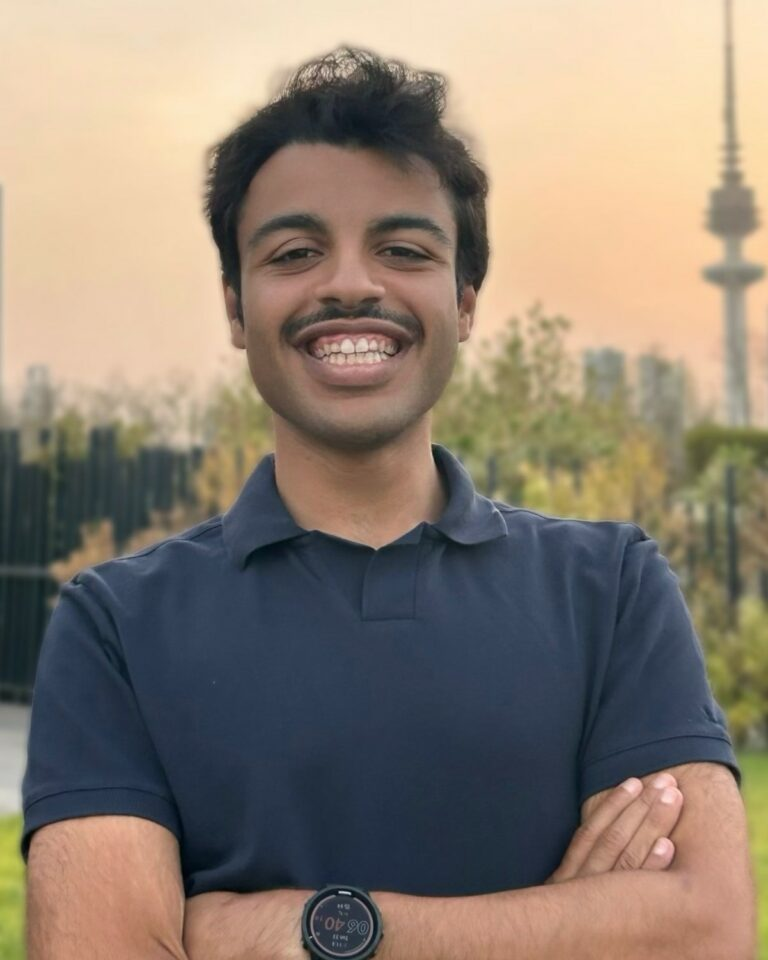
Our keynote speaker, Dr Siddharth Soni, Isaac Newton Trust Fellow at Cambridge Digital Humanities and affiliated lecturer at the Faculty of English, then addressed the audience with a talk on Common Ground, Common Duty: Open Humanities and the Global South, providing an account of how to think against neoliberal conceptions of ‘open’ and to reimagine what openness might look like if the Global South was viewed as a common ground space for building an open and international university culture. Dr Soni’s address set the tone for a rich, multi-layered exploration of Open Research on the day, urging attendees to think of open humanities as a form of knowledge that seeks to alter the form and content of knowledge systems rather than just opening Euro-American knowledge systems to global publics.

Dr Siddharth Soni Common Ground, Common Duty: Open Humanities and the Global South

The next talk was from Dr Stefania Merlo from the McDonald Institute for Archaeological Research and Dr Rebecca Roberts from the McDonald Institute for Archaeological Research and Fitzwilliam Museum who further explored the theme of the Global South in their practical perspective on how they managed the curation of digital archives for heritage management from their work on the projects: Mapping Africa’s Endangered Archaeological Sites and Monuments (MAEASaM) and Mapping Archaeological Heritage in South Asia (MAHSA). They reflected on the opportunities and challenges relating to the production and dissemination of information about archaeological sites and monuments in projects across Africa and South Asia as well as their experience working with and learning from local communities.

Dr Stefania Merlo and Dr Rebecca Roberts Open Data for Open Research – Reflections on the Curation of Digital Archives for Heritage Management in the Global South

An Open Research panel session was next which featured panellists with diverse backgrounds and expertise who addressed registrants’ pre-submitted and live questions. Some questions included the meaning of Open Research, its advantages and challenges, how Open Research can be engaged with by researchers (and in particular, early career researchers), and how it can be rewarded and embedded into the culture of research practices. There was engaging insights and debate amongst the panellists, led by Bertrand Russell Professor of Philosophy, Professor Alexander Bird. He shared the platform with Philosophy of Science Professor, Professor Anna Alexandrova, Psychiatry PhD student Luisa Fassi, Cambridge University Libraries (CUL) Interim Head of Open Research Services Dr Sacha Jones, Cambridge University Press & Assessment’s Research Data Manager Dr Kiera McNeice, and Cambridge’s Head of Research Culture Liz Simmonds.

Open Research Panel

Following lunch, a second panel of scholars working across the GLAM sector (Galleries, Libraries, Archives and Museums) took place. The panel was chaired by CUL’s Scholarly Communication Specialist, Dr Samuel Moore, and brought together experts who showcased their diverse work in this sector, from software development and museum practices to infrastructure and archiving support. The panel included Dr Mary Chester-Kadwell, CUL’s Senior Software Developer and Lead Research Software Engineer at Cambridge Digital Humanities, Isaac Newton Trust Research Associate in Conservation Dr Ayesha Fuentes from the Museum of Archaeology and Anthropology, Dr Agustina Martinez-Garcia, CUL’s Head of Open Research Systems, and Dr Amelie Roper, CUL’s Head of Research. Each panellist presented on a specialist area, including Open Research code and data practices in digital humanities, collections research, teaching and learning collections care, and Open Research infrastructure. A lively discussion followed from the presentations.

GLAM panel

In a workshop session, Tim Fellows, Product Manager for Octopus, outlined how Octopus is a free and alternative publishing model that can practically foster Open Research. The platform, funded by UKRI, is designed for researchers to share ‘micro publications’ that more closely represent how research is conducted at each stage of a project. In a demonstration of the platform, Tim Fellows showed how Octopus works, it’s design, user interface, and application all with the aim of aiding reproducibility, facilitating new ways of sharing research, and removing barriers to both publishing and accessing research. An in-depth discussion followed which centered on the ways the platform can be used as well as its uptake and application across various disciplines.

Tim Fellows Octopus.ac: Alternative Publishing Model to Foster Open Research

The final talk of the day was on Open Research and the coloniality of knowledge presented by Professor Joanna Page, Director of CRASSH and Professor of Latin American Studies. She discussed the topic with a specific focus on the questions of possession and access by outlining projects by three Latin American artists who have engaged with Humboldt’s legacy and the coloniality of knowledge. Using videos and imagery, Professor Page encouraged the audience to consider how they might identify where the principles of Open Research conflict with those of inclusion and cognitive justice, and what might be done to reconcile those ambitions across diverse cultures and communities. An engaging discussion ensued.

Professor Joanna Page Open Research and the Coloniality of Knowledge

A drinks reception brought the event to a close, allowing attendees a chance to mingle, network and continue the discussions. 

Special thanks to all speakers, attendees, and volunteers for making this event such a success. Stay tuned for information about our 2024 Open Research conference.

Cambridge Open Research Conference 2023: The stage is set

By Nicola Swann and Mandy Wigdorowitz, Office of Scholarly Communication, Cambridge University Libraries

The programme is ready, spaces are nearly full, and we are nearing Cambridge University Libraries’ annual conference on Open Research (OR), taking place at Downing College or online on Friday 17 November 2023. This year’s theme is Open Research for Inclusion: Spotlighting Different Voices in Open Research at Cambridge.

OR is designed to promote equity and inclusion by ensuring that research is accessible to all, regardless of research background, location, or affiliation. The conference will acknowledge that OR can look different in different areas, with the common goal of advancing knowledge and understanding. Giving a voice to OR from diverse perspectives can propel learning, collaboration, and allow us to learn from one another’s approaches to openness.

“The conference looks fantastic! It’s a really fabulous mix of papers and speakers, and really exciting in terms of moving Open Research conversations into different disciplinary practices. It is the first programme I’ve seen that truly integrates research and open into a joint conversation. It’s brilliant!”

Dr Jessica Gardner, University Librarian & Director of Library Services, Cambridge University Libraries

This blog post highlights the speakers who will be joining us on the day and the topics they will explore. We’re delighted to host OR experts who will show the value of open practices in typically under-represented disciplines and contexts. These include the Arts, Humanities, and Social Sciences, the GLAM sector (Galleries, Libraries, Archives, and Museums), and research from and about the Global South.

The day starts with a welcome address from Professor Anne Ferguson-Smith CBE FRS FMedSci, Pro-Vice-Chancellor for Research and International Partnerships and the Arthur Balfour Professor of Genetics, who is a key proponent of OR – see her views about OR on the Office of Scholarly Communication’s (OSC) website. Our Keynote speaker, Dr Siddharth Soni, Isaac Newton Trust Fellow at Cambridge Digital Humanities and affiliated lecturer at the Faculty of English, will then addresses us with a talk on Common Ground, Common Duty: Open Humanities and the Global South, providing an account of how to think against neoliberal conceptions of the ‘open’ and to reimagine what openness might look like if the Global South was viewed as a common ground space for building an open and international university culture.

Dr Stefania Merlo from the McDonald Institute for Archaeological Research and Dr Rebecca Roberts from the McDonald Institute for Archaeological Research and Fitzwilliam Museum will further explore the theme of the Global South in their practical perspective on how they managed the curation of digital archives for heritage management from their work on the projects: Mapping Africa’s Endangered Archaeological Sites and Monuments (MAEASaM) and Mapping Archaeological Heritage in South Asia (MAHSA).

We will then change pace with an OR panel session comprising panellists with diverse backgrounds and expertise who will address registrants’ pre-submitted questions. There will be engaging insights and debate amongst the panellists, led by Bertrand Russell Professor of Philosophy, Professor Alexander Bird. He will share the platform with Philosophy of Science Professor, Professor Anna Alexandrova, Psychiatry PhD student Luisa Fassi, Cambridge University Libraries (CUL) Interim Head of Open Research Services Dr Sacha Jones, Cambridge University Press & Assessment’s Research Data Manager Dr Kiera McNeice, and Cambridge’s Head of Research Culture Liz Simmonds.

The spotlight switches to the GLAM sector in the afternoon, with a second panel chaired by CUL’s Scholarly Communication Specialist Dr Samuel Moore. This panel brings together experts who will showcase their diverse work in the GLAM sector, from software development and museum practices to infrastructure and archiving support. The panel includes Dr Mary Chester-Kadwell, CUL’s Senior Software Developer and Lead Research Software Engineer at Cambridge Digital Humanities, Isaac Newton Trust Research Associate in Conservation Dr Ayesha Fuentes from the Museum of Archaeology and Anthropology, Dr Agustina Martinez-Garcia, CUL’s Head of OR Systems, and Dr Amelie Roper, CUL’s Head of Research. They will each expand on specialist areas, including OR code and data practices in digital humanities, collections research, teaching and learning collections care, and OR infrastructure. 

In a workshop session, Tim Fellows, Product Manager for Octopus, will outline how Octopus is an alternative publishing model that can foster OR. To round the day off, Professor Joanna Page, Director of CRASSH and Professor of Latin American Studies, will present on the considerations of OR and the coloniality of knowledge with a specific focus on the questions of possession and access.

In true Cambridge tradition, a drinks reception will bring the event to a close, allowing attendees a chance to mingle and continue the discussions.

Make sure to book your place so you don’t miss out. Take a look at the programme to register and join researchers, students, librarians, administrators, and publishers across the University of Cambridge at every career stage. Get in touch if you have any queries info@osc.cam.ac.uk.

Open Research in Cambridge: 2022 in review

2022 has been another fantastic year for Open Research in Cambridge and I’m so proud of what we have achieved together as a community of researchers, library staff, technicians, administrators, publishers and more. I’d like to highlight some of the key themes in our work this year and thank all who have contributed to this work in any way throughout the year (though I have limited myself to naming chairs of workstrands below). The following video by our Pro-Vice-Chancellor (Research), Prof Anne Ferguson-Smith, gives an indication of the importance that the university places on this work.

Understanding disciplinary differences

I know that I’m not alone in hearing that researchers in Arts, Humanities & Social Sciences disciplines often feel a disconnect between the language and priorities of “Open Science” and their experiences of how research is conducted – this is one of the reasons we choose to frame it as “Open Research” here in Cambridge. I see a strong desire from many to engage with open research practices, paired with frustration with the challenges of translating the terminology of open science to other areas. In order to better understand these issues, we established two working groups (Open Research in the Humanities and Open Qualitative Research), each of which was tasked with forgetting what they think they should do due to how open science is generally described, and instead describe what they see as the opportunities for open research within their disciplines.

The Open Research in the Humanities group was chaired by Prof Emma Gilby and supported by Dr Matthias Ammon. Their excellent report is already available on Apollo and through a series of blog posts here on Unlocking Research. The Open Qualitative Research group was chaired by Dr Meg Westbury and their report is due to come to the university’s Open Research Steering Committee in January. We will be sharing this more widely in early 2023 – it’s well worth watching out for! Both reports will inform how we talk about Open Research at Cambridge and will shape the transformative programme that we are in the process of developing.

Research data management

Our small but dedicated Research Data team, led by Dr Sacha Jones, has had another impressive year. Our Data Champions Network goes from strength to strength, and has expanded into departments that have not been represented in previous years. Other key projects have included a review of our research data services with recommendations for future development, a project on electronic research notebooks, and lots of work to support open research system developments, all while continuing to support researchers with data deposits and writing data management plans. This team is expanding next year which will enable even more work to meet the needs of different disciplines.

The future of scholarly publishing

We hosted a series of three strategic workshops on the future of scholarly communication earlier this year, developed in collaboration between Cambridge University Libraries and Cambridge University Press. Led by independent facilitator Mark Allin, participants across disciplines and career stages came together to discuss the problems of scholarly communication, potential long-term solutions to these problems and a strategy to help Cambridge get us there. The proposals emerging from the meeting are currently being developed and include newly developed infrastructures for diamond open access publishing projects and a series of high-level strategic meetings aimed at strategic improvements to equity in academic publishing. There are already diamond publishing initiatives within Cambridge, and projects will start in early 2023 to understand existing initiatives in greater detail and to provide the infrastructure to establish additional diamond journals. 

The library’s annual Open Research Conference took a similar visionary approach in its focus on the future of open access. Titled Open Access: Where Next?, the conference featured expert speakers on how we can think beyond open access toward more innovative, sustainable and equitable open futures. We heard from researchers excluded by certain approaches to open access, how other researchers are addressing issues through their own scholar-led approaches, alongside how openness fits into changing research cultures and can facilitate experimental publishing projects. A full round up with videos of each session is available on the Unlocking Research blog.  My thanks to Dr Bea Gini for her leadership in planning this conference.

Open Access now

While we are actively working towards a new future for scholarly publishing, we also need to ensure that our researchers have ways to make their work open access right now. We do this in a number of ways, engaging with the academic community and contributing expert open access advice on publishing agreements that are negotiating across the sector and administering the block grants that are provided by funders and the university to cover the costs of publishing in fully open access venues. All of this requires close reading and interpretation of funder requirements to ensure that we are able to support our researchers in what they are required to as well as what they would like to do. I’d like to specifically thank Alexia Sutton, who leads our Open Access team, and Dr Samuel Moore, our Scholarly Communication Specialist, for their leadership in this area.

We are particularly pleased with the engagement from across the university with the ongoing Rights Retention Pilot, which provides a route to open access for articles that cannot be made immediately available through existing publishing deals, are not eligible for the block grants mentioned above or where the publisher simply does not provide any route to immediate open access. We are now consulting on the development of a Self-Archiving Policy which is buit on what we have learned throught he pilot and will sit within our Open Access Publications Policy Framework. Members of the university can find out more by reading this document (accessible to Raven users only). It has been an honour to lead a dedicated group of library and research staff on this project.

Open research systems

Everything we do requires that we have the right technical infrastructure in place. The Open Research Systems team is led by Dr Agustina Martinez-Garcia and based within Cambridge University Libraries’ Digital Initiatives directorate. This year has seen projects to upgrade links between Symplectic Elements and Apollo, technical changes to support the rights retention pilot, a review of the open research systems landscape, contributing to thinking around future publishing platforms, electronic research notebooks and data infrastructure, and planning ahead for the upgrade to DSpace 7, improvements in the thesis service, and building connections between DSpace repositories and Octopus. This is not a comprehensive list and we plan to showcase more of their work on the blog in 2023.

Research enquiries, briefings and training

I want to end with huge thanks to the library staff based both in the Office of Scholarly Communication and in the Faculty & Department Libraries who do so much throughout the year, answering frontline research support queries, signposting as required, providing tailored briefings and training on highly complex and constantly changing topics. We especially value the disciplinary insights we get through working closely with the Research Support Librarians that are based within the Schools.

Join our team!

Open Research is an incredibly rewarding area to work in and the scale of what we’re trying to achieve is really ambitious. I’m delighted that the importance of what we are doing is recognised by both Cambridge University Libraries and the wider university and as a result we are expanding our team!

We are currently recruiting for an Open Research Community Manager to establish and develop a Cambridge Open Research Community, bringing researchers across the university community together through regular online and in person events to enable exchange of expertise in open and rigorous research practices. In January, we plan to advertise for two Research Data Coordinators and an Open Research Administrator, with a Research Services Manager post following later in the year. All of these roles will be listed on the university’s jobs site as well as on LinkedIn, mailing lists etc. If you’re interested in our work and would like to find out more about these opportunities please get in touch at info@osc.cam.ac.uk!


Open access: where next? – event round-up

Dr. Samuel Moore, Scholarly Communication Specialist, Cambridge University Libraries

On Friday 18th November, participants from across Cambridge and beyond gathered for a hybrid meeting on the future of open access publishing. Hosted by Homerton College, ‘Open Access: Where Next?’ explored issues relating to article-processing charges, research assessment and innovation in scientific publishing. 65 in-person attendees and 78 online attendees participated in the day-long event consisting of four panels and a keynote from Professor Gina Neff of the Minderoo Centre for Technology and Democracy.

Prof. Neff kicked off the event with a timely and insightful talk titled ‘Further than the academy: the stakes for open research’. Covering themes such as misinformation, preservation and widening participation in knowledge, Prof. Neff explored the importance of democratic and responsible approaches to our digital present and future, looking especially to libraries as key to supporting these issues.

The first panel of the day, ‘Further than privileged universities’, was introduced by Dr. Matthias Ammon and featured Dr. Juliet Vickery, Chief Executive of the British Trust for Ornithology, Dr. Tabitha Mwangi, Cambridge-Africa Programme Manager, and Dr. Stuart Pracy, Lecturer in Medieval History at the University of Exeter. Each panellist spoke on the challenges of open access that arise from either being outside privileged university spaces or without secure employment within them. Despite representing quite different communities, there were a number of commonalities between the experiences of each speaker, most notably the fact that moving from paying to access scholarly material to paying to publish it added a new exclusionary dimension to their ability to communicate research.

In the second panel, we heard from three speakers who are working against the move toward paying to publish. ‘Further than APCs and BPCs’ featured speakers working on publishing projects that do not require authors to pay processing charges to publish their work – so-called Diamond open access. Cambridge librarians Dr Meg Westbury (Academic Services Librarian, Human and Social Sciences) and Dr Yvonne Nobis (Head of Physical Sciences libraries) described their respective publishing projects, The Journal of Information Literacy and Discrete Analysis. The audience learned about both the challenges around running a journal on a shoestring, but also the advantages of a DIY approach to publishing without recourse to expensive publishing networks. In addition, Dr. Joe Deville of Lancaster University explained the work of the soon-to-launch Open Book Collective to collaboratively fund the publication of open access books in the humanities and social sciences.

After lunch, Niamh Tumelty chaired a roundtable with Cambridge researchers on research assessment and its relationship with publishing. Prof. Steve Russell, Head of Department of Genetics, described his work as Chair of DORA (the Declaration on Research Assessment) alongside the work needed for the university to fulfil its commitment to ensuring researchers are no longer judged by the venues in which they publish. Following this, Liz Simmonds – the University’s Head of Research Culture – described the pros and cons of alternative approaches to assessment such as narrative CVs. Finally, Prof. Emma Gilby of the Faculty of Modern and Medieval Languages and Linguistics explained the view from the humanities, particularly how declarations such as DORA are designed and implemented with the sciences in mind.

The final panel of the day was on innovations in scholarly publishing. Chaired by Dr. Samuel Moore, three panellists described their publishing approaches to moving beyond the traditional journal article. Dr. Mónica Moniz of Cambridge University Press & Assessment presented Research Directions – the press’ approach to publishing the research lifecycle across a variety of disciplinary questions. Following this, F1000’s Head of Data and Software Publishing, Dr. Beck Grant, described the publisher’s approach to automated data publishing in partnership with the Wellcome Sanger Institute. Finally, Dr. Damian Pattinson discussed eLife’s new approach to removing accept/reject decisions from its publishing process – and an invigorating discussion ensued!

At the end of the day, Niamh Tumelty summarised the event and reminded participants to fill out the postcards they were given at the start of the day to document what actions they will take in response to the issues covered in the conference. We will be posting these postcards to participants in January as a reminder of what you planned to do (with vouchers to three lucky recipients). Special thanks to all participants, attendees and organisers, but especially to Bea Gini for all her help with this, her last, event as part of the Office of Scholarly Communication. Thanks also to Clare Trowell for designing our postcards.

A new institutional open access fund for the University of Cambridge

Open Access is a powerful tool that enables researchers to share their research and maximise the impact of their work. However, the reality is that gold open access is a business model that is based on paying to publish, and it’s a business model that is primarily supported by research funders. What that means in practice is that gold open access often comes with a price tag that effectively excludes unfunded researchers.

The University of Cambridge has established a new institutional open access fund to provide financial support for unfunded researchers across the collegiate University. Researchers who do not have access to grant funds with which to pay the open access fees will be able to use the fund to pay the open access fees for their research or review papers in fully open access journals.  

Professor Anne Ferguson-Smith, Pro-Vice-Chancellor for Research explains that:

“This is significant step in ensuring that all University of Cambridge researchers can opt for gold open access publishing. We are proud to establish this fund that will be especially beneficial to early career researchers as well as other researchers in the collegiate University who are not eligible for the open access funds that are provided by grant funders. Significant inequalities remain in the global scholarly publishing system, however, so we continue our commitment to support different open access solutions that are available to any researchers, both within and outside the University”.

The new fund is one of the many ways that the University helps researchers make their research open access and complements our many Read & Publish deals, the Rights Retention Pilot and the facilitation of green self-archiving in the University’s institutional repository, Apollo. 

Who can use the new institutional open access fund?

Researchers who have a strong connection (typically research staff and students) with the University of Cambridge (including the Colleges) who have no way of paying for open access fees in fully open access journals.

What will the new institutional open access fund cover?

The fund can be used to pay open access fees for full research articles or non-narrative review papers in fully open access journals, provided there is no other way of paying the fee (for example, where there is no Read & Publish deal available to any of the authors, or where none of the author team has access to any funding).

How will the new institutional open access fund work?

The Open Access team can provide in principle funding decisions but cannot guarantee payment until a paper has been accepted for publication. Researchers are encouraged to seek an in-principle decision before incurring any fees by emailing the Open Access Team.

Where can I find more information about the new institutional open access fund?

There is more information on the Open Access website about the institutional fund, and the Open Access Team is available to answer any queries.

What about the bigger issue?

We are very conscious about the wider challenges with author-pays models of open access, for example for unaffiliated researchers and those in institutions without access to funding of this sort, and especially of the global equity issues that arise. We held several strategic workshops looking at these issues earlier this year and will continue to work towards finding a more equitable future for open access scholarly publishing.

Open Research in the Humanities: CORE Data

Authors: Emma Gilby, Matthias Ammon, Rachel Leow and Sam Moore

This is the third of a series of blog posts, presenting the reflections of the Working Group on Open Research in the Humanities. Read the opening post at this link. The working group aimed to reframe open research in a way that was more meaningful to humanities disciplines, and their work will inform the University of Cambridge approach to open research. This post reflects on the concept of FAIR data and proposes an alternative way of thinking about data in the humanities.

As a rule, data in the arts and humanities is collected, organised, recontextualised and explained. We are therefore putting forward this acronym as an alternative to LERU’s FAIR data (findable, accessible, interoperable, reusable). Our data is collected rather than generated; organised and recontextualised in order to further a cultural conversation about discoveries, methods and debates; and explained as part of the analytical process. Any view of scholarly comms as uniquely about the distribution of and access to FAIR data (‘from my bench to yours’) will seem less relevant to A&H academics. Similarly, the goal of reproducibility of data – in the sense in which this often appears in the sciences and social sciences, where it refers to the results of a study being perfectly replicable when the study is repeated – is, if anything, contrary to the aim of CORE data: i.e. the aim that this data should be built upon and thereby modified through the process of further recontextualization. Our CORE data, then, understood as information used for reference and analysis, is made up of texts, music, pictures, fabrics, objects, installations, performances, etc. Sometimes, this information does not belong to us, but is owned by another person or institution or community, in which case it is not ours to make public.

Opportunities

The A&H tend to bring information together in new ways to further discussion about socio-cultural developments across the globe. Available digital data is only the tip of the iceberg when it comes to the material that is worked with.[1] Arts and humanities scholars, who spend their lives thinking about the arrangement and communication of information, are acutely aware that archives (digital and otherwise) are not neutral spaces, but man-made and the product of human choices. This means that information available online, to a broadband-enabled public, is asymmetrical and distorted.

One of the main benefits of open research is that it is thought to make data globally accessible, especially to ‘the global south’ and to institutions with fewer available funds to ‘buy data in’. As we explore below (‘research integrity’), this unidirectional view of open access is problematic. In general, digital material tends to reproduce English-speaking structures and epistemologies. As FAIR data is redefined as CORE data, an attention to context will hopefully promote the diverse positions occupied by all those who make up the world and who produce research about it.

Support required

In order usefully to employ CORE data in the A&H, we need to bring to the surface and examine underlying assumptions about knowledge creation as well as knowledge dissemination.

The work of the digital humanities – rooted explicitly in digital technologies and the forms of communication that they enable – is obviously a vital part of these discussions about opening up the CORE data of the humanities. Digital work, in the same way as any other successful A&H research, needs to consider its own materiality and conditions of production, evaluate its own history, draw attention to its own limits, and navigate its trans-temporal relationships with data in other forms (the manuscript, the printed text, the painting, the piece of music). This is a developing field and one that still has an uneasy relationship with the existing tenure/promotions system.[2] Colleagues noted that training needs are evolving constantly. It is often hard to know where to turn for specific guidance in e.g. how to manage one’s own ‘born digital’ archives, how to deconstruct a twitter archive, and so on.

This issue also overlaps with the need, as part of the ‘rewards and incentives’ process outlined below, to evaluate the success of colleagues as they undertake this training and negotiate with these processes. DH is one of the most exciting and rapidly developing areas of research and needs to be widely resourced. But it would also be harmful to collapse all A&H research into ‘the digital humanities’. The work of colleagues whose CORE data is resistant, for whatever reason, to wide online dissemination in English also needs to be allocated the value it deserves: some publics are simply smaller than others.

Postscript: the group subsequently became aware of the CARE Principles of Indigenous Data Governance. These principles will also be considered when developing our services in support of data management and ethical sharing.


[1] Erzsébet Tóth-Czifra, ‘The Risk of Losing the Thick Description: Data Management Challenges Faced by the Arts and Humanities in the Evolving FAIR Data Ecosystem’, in Digital Technologies and the Practices of Humanities Research, edited by Jennifer Edmond (Open Book Publishers, 2014), https://doi.org/10.11647/OBP.0192.10

[2]See the excellent article by Cait Coker and Kate Ozment ‘Building the Women in Book History Bibliography, or Digital Enumerative Bibliography as Preservation of Feminist Labor’, Digital Humanities Quarterly 13 (3), 2019, http://www.digitalhumanities.org/dhq/vol/13/3/000428/000428.html – where the authors of the ‘Women in Book History’ digital bibliography still see the tenure system as ‘monograph-driven’, and had to fund their research through selling merchandise.

Open Research in the Humanities: The Future of Scholarly Communication

Authors: Emma Gilby, Matthias Ammon, Rachel Leow and Sam Moore

This is the second of a series of blog posts, presenting the reflections of the Working Group on Open Research in the Humanities.  Read the opening post here. The working group aimed to reframe open research in a way that was more meaningful to humanities disciplines, and their work will inform the University of Cambridge approach to open research.  This post considers the future of scholarly communication from a humanities perspective. 

PILLAR ONE: THE FUTURE OF SCHOLARLY COMMUNICATION 

This first pillar deals with ‘open access’ narrowly understood: the future of the publication landscape, and the question of the sustainability and viability of different publication models in an open access world.  

Opportunities 

The open access initiative in general values a wide range of contributions to academic life. The arts and humanities thrive on long-term, multi-scale, conversational, collaborative, interdisciplinary projects; all cultural work can be so defined. Any move towards research diversity therefore works in the favour of the arts and humanities.  

Open Research aims first at opening out ‘traditional’ research content, such as that published in journals and monographs. Thus it aims also to demystify the existing publication process. In general, it prioritizes the wide dissemination of public-facing research. Further, it allows us to envisage new forms of publication, such as the use of dynamic images and data visualisation as already undertaken in investigative journalism.1 Other examples of new Open Access formats include semi-public peer-to-peer review and the opportunity for readers to highlight passages and contribute to a crowd-sourced index of terms.2

Support required 

In the immediate and short term, A&H colleagues require institutional support to understand and get to grips with the current routes to open access within academic publishing, which present various advantages and challenges. For more detail see Plan S and the History Journal Landscape, A Royal Historical Society Guidance Paper https://royalhistsoc.org/policy/publication-open-access/plan-s-and-history-journals/ 

Current routes to OA in scholarly publishing include:  

  1. Paying directly for article or book processing charges levied by publishers. This is easy if one’s research falls among the very small percentage of A&H research that is funded by the research councils, who allow for such fees, but otherwise challenging.  
  1. Taking advantage of a ‘read and publish’ deal set up between a publisher and an institution. This is easy if one is at the right institution at the right time, but otherwise challenging. There is also confusion amongst colleagues about what happens when these time-limited, transitional deals expire: will publishers revert to simple processing charges (see above)? Or will all published material by then be fully OA (see below)?  
  1. The self-deposit in an OA institutional repository of a manuscript that is accepted for publication and peer reviewed but that has not been edited or typeset by the publisher in any way. This is easy with the right systems in place, but problematic because it neglects the import of the editing process in A&H research. Without undergoing this process, ‘accepted manuscripts’ are very vulnerable to errors, especially in the case of the very many scholars who regularly work in languages that are not their first, or in the case of early career scholars who are less familiar with critical processes and how to evidence them, or in the case of colleagues with various kinds of disabilities such as dyslexia. Other issues also abound with the deposit of manuscripts in repositories. In cases where scholars receive an acceptance that is subject to improvement, the final ‘date of acceptance’ is ambiguous for legal purposes. And in cases where the work in question uses copyrighted material, further legal issues emerge about when and how it may be possible to circulate this. In all these senses, then, many A&H colleagues simply dislike the thought of their ‘accepted manuscript’ circulating. In the case of institutional repositories, there seems to be a direct and obvious tension between the goals of open research and quality control.  
  1. Publishing with a fully OA journal or academic publisher that does not require a processing charge. This is obviously the most straightforward and therefore best route to OA, but raises the fundamental question of how such work is conducted and funded. The notion of the ‘scholar-led’ press, established and monitored by scholars themselves, presupposes that academics can somehow fit the work of the professional editor, copy editor, translator or type setter etc. into their spare time. In addition, many OA journals rely on charitable donations. Fundraising is also a skilled business: will universities’ development directors and offices be diverted to do the work of seeking these charitable donations? Is it possible for existing publishing houses and presses to construct a sustainable business model that allows for free and open publishing, while overlaying their own professional services onto the scholarly work provided by academics? Can already successful enterprises such as Open Book Publishers in Cambridge3 be ‘scaled up’? The members of the working group have not seen any impact assessments or pilot studies considering which of the current forms of scholarly communication will simply die out in the absence of subscription and royalty income. We would like to see evidence-based impact assessments as a matter of priority. In general, it is unclear whether even the largest and most prestigious scholarly societies will survive the loss of income that will result from a move to OA. As one member of our group put it, ‘the research is not open if it is dead’.  

Many questions remain, above and beyond those already evoked:  

  • The situation with respect to the goal of publishing of all academic monographs freely and openly remains extremely fluid, and all the enquiries we were able to make in the working group confirmed that this is an area of great uncertainty. Academic books require considerable up-front investment by publishers, and it is vital that this labour and expertise is properly supported in an open access model. How to ensure that open access books do not entail a race to the bottom in terms of editorial and production standards? 
  • Researchers and publishers will also have to think carefully about content such as book reviews, notices, short discussion pieces, author interviews and so on: content that is useful to the discipline, but peripheral to the article form and that would not generally appear in a repository, for example.   
  • The place of UK debates in the global publishing industry is unclear. Like all scholarly publishing, A&H publishing is international in nature and most journals and presses will draw from as wide an international field as possible. How will the editor of a UK-based journal, responding to the OA requirements of UK decision-making bodies, deal with international authors who are not subject to the same requirements or set of priorities? How will an international editor deal with UK academics?5 These questions come up repeatedly in conversations with colleagues.  
  • Scholarly societies in the arts and humanities do not charge a fortune for their journals, and also offer conferences, communities and support (financial and otherwise) for early-career scholars. To analyse the costs and benefits of access to their publications, it will be necessary to look across cost centres within any given institution. To offer a worked example of library costs from 2019, ‘the bundled UK cost for 2020 the RHS’s Transactions and its Camden book series is £205 (this is a maximum figure, excluding all discounts). In the financial year 1 July 2018-30 June 2019, RHS awarded (for example) £2,781.56 to support ECR researchers at York University and £3,177.16 to support ECR researchers at Oxford.’6 So it would be useful to see studies of the rate of institutional return on investment in publications by university libraries.  
  • Concerns about licensing were already well documented and summarized by Peter Mandler in 2014: ‘For one thing, we do not have full ownership of our texts ourselves – we use others’ words and images, often by permission. For another, we have our own norms of how best to incorporate one work within another – e.g. by quotation – which derivative use denies. Most important is our moral right (long acknowledged in law and ethics) to protect the integrity of our work. By all means read and disseminate our work free of charge, but do not change it as you are doing so – write your own work.’6  
  • Concerns about distortions allowed by CC BY in the reuse of oral history interviews and other sensitive/polemical content are important for many A&H colleagues as they are for our colleagues in the social sciences. 
  • Evidence of predatory publishers simply reusing content from repositories is starting to emerge, seemingly justifying concerns about CC BY as opposed to CC BY- NC-ND or CC BY-ND.7 

Footnotes

1See for instance a project on the takeover of real estate by the Church of Scientology in Clearwater, Florida: https://projects.tampabay.com/projects/2019/investigations/scientology-clearwater-real-estate, or a series of investigative articles on the post-9/11 burgeoning of the US intelligence services collected here: https://www.washingtonpost.com/people/william-m-arkin/

2Matthew Gold & Lauren Klein, eds. Debates in the Digital Humanities (2012), https://dhdebates.gc.cuny.edu

3 ‘We are a nonprofit independent publisher with no institutional backing. Open Book relies on sales and donations to continue publishing high-quality and free to read titles. We gratefully acknowledge the generous support of The Polonsky Foundationthe Thriplow Charitable Trust, the Jessica E. Smith and Kevin R. Brine Charitable Trust, The Progress Foundation and the Dutch Research Council (NWO).’ https://www.openbookpublishers.com

4 See the following testimony: ‘The bi-lingual, topic-specific journal I edit…draws articles from authors across the world and is published in Switzerland. Hence, specific OA requirements pertaining to UK-based authors will be considered in setting OA policy but will probably not be a determining factor. Hence, if strict requirements are introduced around OA in relation to UK funders, this may serve to reduce the possibility for UK-based authors to submit articles to my journal. This would obviously be an issue for the journal but would also be one for UK academics also, as it would result a more limited range of potential publication outlets.’ Margot Finn, Plan S and the History Journal Landscape, A Royal Historical Society Guidance Paper, pp. 47-8. 

5 Plan S and the History Journal Landscape, A Royal Historical Society Guidance Paper, p. 69, n. 110. 

6 Peter Mandler, ‘Open Access: a Perspective from the Humanities’, Insights 27 (2), 2014, http://doi.org/10.1629/2048-7754.89 

7 Guy Lavender, Jane Secker and Chris Morrison, ‘ What happens when you find your open access PhD thesis for sale on Amazon?’, 8th July 2021, https://blogs.lse.ac.uk/impactofsocialsciences/2021/07/08/what-happens-when-you-find-your-open-access-phd-thesis-for-sale-on-amazon/ 

Open Research at Cambridge Conference – Opening session

The Open Research at Cambridge conference took place between 22–26 November 2021. In a series of talks, panel discussions and interactive Q&A sessions, researchers, publishers, and other stakeholders explored how Cambridge can make the most of the opportunities offered by open research. This blog is part of a series summarising each event. 

The opening session, chaired by Dr Jessica Gardner (University Librarian and Director of Library Services) included talks by Professor Anne Ferguson-Smith (Pro-Vice-Chancellor for Research), Professor Steve Russell (Acting Head of Department of Genetics and Chair of Open Research Steering Committee), Mandy Hill (Managing Director of Academic Publishing at Cambridge University Press) and Dr Neal Spencer (Deputy Director for Collections and Research at the Fitzwilliam Museum). All four speakers foresee an increasingly open future, with benefits for both institutions and researchers. They also considered some of the challenges that still need to be worked through to avoid potential problems.

What is working well?

In recent years, we have made great progress in the proportion of publications that are open access. Over three quarters of publications with Cambridge authors last year were openly available in some form.

The trend is continuing and it is not unique to our institution. CUP have set an ambitious goal for the vast majority of research articles they publish to be open access by 2025.

Other forms of publication are becoming common, meeting different dissemination needs. Preprints have been the star of the show during the pandemic, allowing rapid dissemination while formal peer review follows down the line.

Diagram from Mandy Hill’s slide: ‘Increasingly open platforms and formal publishing will meet different dissemination needs’

In the scholarly communication arena, open access articles benefit from more downloads and citations. Museum-based projects involving artisans, schools and artists all found enthusiastic responses.

What can we look forward to?

Research culture is coming under the spotlight across the sector, and Cambridge has committed to an ambitious action plan to create a thriving environment to do research. Key principles include openness, collaboration, inclusivity, and fair recognition of all contributions.

Diagram from Prof Steve Russell: ‘Going Forward’

Implementing the San Francisco Declaration on Research Assessment (DORA) is part of this progress. We want to assess research on its own merits rather than on the basis of journal or publisher metrics. This also means recognising all research outputs and a broad range of impacts.

Reproducibility is increasingly recognised as critical in a number of disciplines. A developing UKRN group within the University aims to ‘take nobody’s word for it’ – but rather support reproducible workflows that underpin confidence in the conclusions of research. By sharing and rewarding best practice we can become world leaders in this area, and in open research more widely.

In the past, museum collections have tended to be documented in limited ways, with poor accessibility and interoperability, which made it hard to discover and use materials. Several exciting projects at the Fitzwilliam Museum and more broadly have started to change that. There are opportunities for a single discovery portal, tying together different collections. The Fitzwilliam Museum is also making its collection discovery process richer, by providing opportunities for deeper dives, and more connected, by linking with other collections and resources.

Deep zoom access to an image in the Fitzwilliam collection. Adapted from Dr Neal Spencer’s slide ‘Fitzwilliam Museum Collections Search’.

What problems should we be mindful of?

There are still barriers that hinder some open research aspirations. Historical constraints on the ways we find materials, conduct research, and publish results remain. Some systems may need to be reimagined, while not scrapping structures that are still serving us well.

Cambridge is a large and complex institution, where change takes time. Nevertheless, there is an established governance structures and an evolving set of policies that support open research.

Most importantly, researchers should be at the centre of the move towards open research. It is important that they benefit from open practices, rather than finding themselves torn between competing priorities. Conversations continued throughout the week to explore possible approaches in different disciplines, drawing from the rich diversity of experiences to shape the future of open research at Cambridge.

Why publishing Open Access should be your first choice: The OA advantage

The Open Research at Cambridge conference took place between 22–26 November 2021. In a series of talks, panel discussions and interactive Q&A sessions, researchers, publishers, and other stakeholders explored how Cambridge can make the most of the opportunities offered by open research. This blog is part of a series summarising each event. 

In our recent “Why OA should be your first choice” webinar hosted by the Cambridge University Library, attendees heard just how advantageous it is to opt for Gold OA when publishing their research. Backed by data pulled from recent analytics, our guest speakers illustrated the advantages and innovation taking place a Cambridge University Press, while also dispelling  OA myths. Despite the challenges that apply to authors (such as funder requirements, national mandates, or differentials of income), there is a clear advantage of publishing open access.

As an non-profit Academic Publisher, we support the dissemination of knowledge and we strive to make OA equitable and sustainable to researchers across different career stages, disciplines, and regions worldwide.

The recording of the session is available here:

OA Advantages for Journal Authors
Mounting evidence of and OA advantage – across all disciplines, substantial in scale, material in respect to impact, prolonged over time” – Daniel Pearce, Publishing Director, HSS Journals.

  • A broader spectrum of authors are able to go OA due to transformative agreements (also known as Read & Publish)
  • Across our disciplines OA articles receive 3 times more usage within their first year than subscription articles. Gold OA articles receive more citations within two year across HSS and STM in contrast to non-OA articles.
  • Increase Impact: 61% more mentions on social, 185% more likely to be referenced in new media or blogs, and 52% more likely to be referenced in a policy papers

OA Advantages for Books & Elements Authors

Flip It Open permits researchers to have the opportunity to get OA and makes research publicly accessible” – Andri Johnston, Digital & OA Projects Editor

  • Within the first 12 months usage is exponentially higher for OA books and OA Elements since each chapter can be used, shared, and cited
  • Sharing increases exponentially when all the chapters of a book are OA and OA books usage is  11-66 times higher (depending on the discipline).
  • Our Flip It Open program flips standard monograph as soon as they reach a specific sales threshold. Revenue for the title is generated thru institutional sales
  • Downloads for OA Elements gradually grow after 3 months, whereas downloads for non-OA Elements pan out after 4 weeks. Plus, OA Elements usage is 3 time higher than their non-OA counterparts.
  • OA helps alleviate disparities of foreign currency exchange, differentials of income, intellectual exclusions and makes publicly funded research accessible

OA Myths
“Removing barriers allow research findings to go far beyond siloed departments of research communities, with just internet connection.” – Andrew Sykes, Journals Marketing Director

  • “There’s no benefit to me”. OA content is freely available online with increased discoverability and higher citation and downloads for your work.
  • “OA means low quality”. Quality for CUP is paramount importance. All OA articles and book submissions to Cambridge go through the same peer review publication process as non-OA submissions. Predator publishing can be found through the Think Check Submit website to verify validity of journal
  • “OA is too expensive to me”. CUP has a number of publishing agreements with  institutions, which means you may be able to submit your work OA without paying a fee. Cambridge also partners with Research4Life which enables researchers from low- medium income countries to publish as open access.

Learn more here: Open Access at Cambridge University Press

The case for opening up collaboration: speed, recognition and impact

The Open Research at Cambridge conference took place between 22–26 November 2021. In a series of talks, panel discussions and interactive Q&A sessions, researchers, publishers, and other stakeholders explored how Cambridge can make the most of the opportunities offered by open research. This blog is part of a series summarising each event. 

Supporting collaboration in early research and research communications via open research tools has the potential to bring real benefits: from speeding up discovery in research by making more aspects of the production of research available to other researchers; to providing recognition for more component parts of the research process; to helping to disrupt and improve the article publishing model; to making interdisciplinary work less challenging and more impactful. But what are the barriers to doing this, and how can the research community overcome them in partnership with publishers and other stakeholders?

The session “The case for opening up collaboration: speed, recognition, and impact” started that conversation through a workshop in 3 parts. The recording of the session is available here:

The first section shared an update on 2 areas where Cambridge University Press is working to encourage collaboration. The first is Cambridge Open Engage, which offers rapid dissemination of early and open research outputs including working papers, preprints, research reports, conference posters and presentations. In response to COVID-19, Engage also began to offer a service for sharing event outputs, as more events became virtual. We saw that there were opportunities to bring benefits to conferences by hosting their outputs with solid scholarly communications infrastructure and speed – meaning that those who cannot attend the conference itself can access outputs and provide feedback to authors, authors can version their research after the event based on that feedback, and the research is citeable and able to accrue impact and metrics outside of the constraints of the conference itself.

Work is planned to boost Engage’s collaborative utility by adding new spaces called “Communities”. These will bring together broad communities of researchers working in interdisciplinary fields and will augment informal collaboration tools with a fit-for-purpose area where researchers can share their work, discuss their ideas and practices, and find collaborators.

We will be starting with a community for Climate Change & Sustainability, where we will draw together researchers from across disciplines from the humanities to atmospheric science, on a free-to-use platform that offers infrastructure for collaborative work of all kinds.

This area will include:

  • Curated & moderated discussion threads
  • Communities of practice-i.e. areas to share resources & learning on topics of importance to their professional competencies and/or research skills
  • Content alerts and invitations
  • Ability to invite commenters
  • Ability to find and follow contributors

The second example where we are supporting collaboration in research at Cambridge University Press was the innovative journal project Research Directions.  These journals will publish high quality, high-impact open access research with global reach in interdisciplinary subject areas, with the author responding to field-specific curated research questions or hypotheses.  

Unlike traditional journals, however, which are structured around a descriptive scope, authors publishing in Research Directions will be invited to publish research that takes incremental steps to answering a set of distinct research questions, intended to be definitive to a specific field. The resulting published outputs will be broken down into discrete parts- results, analysis, impact- each of which will be indexed, receive a DOI and be considered a published and citable research item. This approach, of breaking down research into its constituent parts, will allow greater collaboration at every stage of the research lifecycle. The published research outputs will be complemented by items on Engage (our preprint server) which would not usually be included in formal, peer-reviewed journal outputs. This might include items such as preprints, data sets, software descriptions, research posters and community briefs, giving visibility to the entire research journey as it progresses.

After these examples were shared, workshop attendees then spent some time identifying barriers to collaboration , logging the discussion in a Miro board. We focused on the following categories of scholarly collaboration, as defined by our Engage project team:

  • Network collaboration: the way that researchers discover and share new ideas, meet one another and become familiar with one another’s work.
  • Project collaboration: an example of this would be sharing documents across a large international research project where you have specific laboratory equipment in different places but need to share data with colleagues working on the same project.
  • Impact collaboration: in this category we think of activities that synthesize research and aim to communicate it more effectively, which is often an effort undertaken by groups of researchers coming from disparate projects. In some cases, it might also involve collaborators and audiences outside of research entirely: for example, the public, policymakers or practitioners in industry.

Research completed by Cambridge University Press has shown that many scholars use informal tools around collaboration. A lot of this growth in tool use was fairly organic, dependent on existing networks, resulting in frequent use of largely basic tools like email. The pressure to find a complement to the conference model has been building for years, partly because access to conference travel budgets vary widely depending on access to funds and/or where a researcher is based in the world. The pandemic has only made it more critical that we find new ways to provide feedback, build networks, and workshop research findings in advance of publication.