Category Archives: Humanities

Open Research for Inclusion – event round up

Dr Mandy Wigdorowitz, Open Research Community Manager, Cambridge University Libraries

On Friday 17 November 2023, participants from across Cambridge and beyond gathered for a hybrid meeting on Open Research from different perspectives. Hosted by Cambridge University Libraries at Downing College, ‘Open Research for Inclusion: Spotlighting Different Voices in Open Research at Cambridge‘ drew attention to different areas of Open Research that have been at the forefront of recent discussions in Cambridge by showcasing the scope and breadth of open practices in typically under-represented disciplines and contexts. These included the Arts, Humanities, and Social Sciences, the GLAM sector (Galleries, Libraries, Archives, and Museums), and research from and about the Global South. A total of 84 in-person and 75 online attendees participated in the day-long event consisting of a keynote address, two talks, two panels, and a workshop.

The conference opened with a welcome address from Professor Anne Ferguson-Smith CBE FRS FMedSci, Pro-Vice-Chancellor for Research and International Partnerships and the Arthur Balfour Professor of Genetics. Professor Ferguson-Smith emphasised the significance and timeliness of the conference and how it underscores the importance of the Open Research movement. She encouraged attendees to be open to new ideas, approaches, and perspectives that center around Open Research and to celebrate the richness of diversity in research.

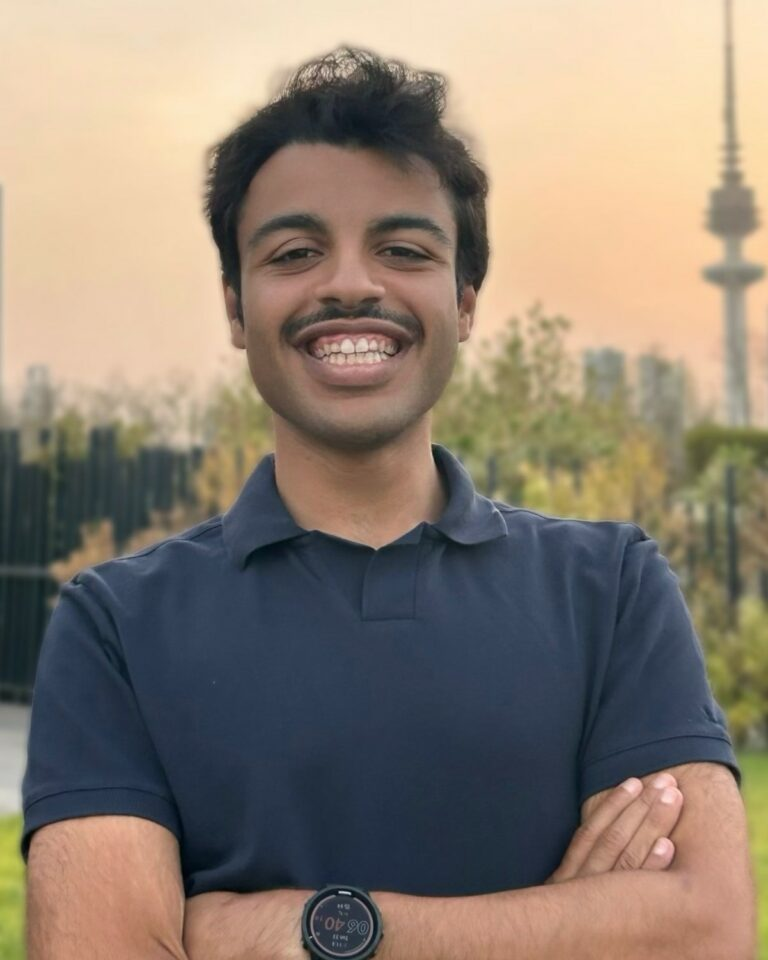
Our keynote speaker, Dr Siddharth Soni, Isaac Newton Trust Fellow at Cambridge Digital Humanities and affiliated lecturer at the Faculty of English, then addressed the audience with a talk on Common Ground, Common Duty: Open Humanities and the Global South, providing an account of how to think against neoliberal conceptions of ‘open’ and to reimagine what openness might look like if the Global South was viewed as a common ground space for building an open and international university culture. Dr Soni’s address set the tone for a rich, multi-layered exploration of Open Research on the day, urging attendees to think of open humanities as a form of knowledge that seeks to alter the form and content of knowledge systems rather than just opening Euro-American knowledge systems to global publics.

Dr Siddharth Soni Common Ground, Common Duty: Open Humanities and the Global South

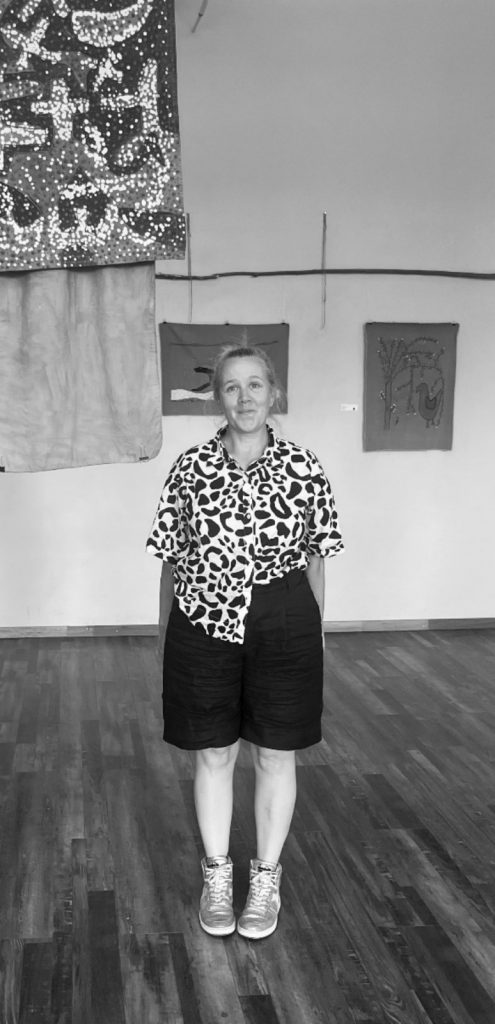
The next talk was from Dr Stefania Merlo from the McDonald Institute for Archaeological Research and Dr Rebecca Roberts from the McDonald Institute for Archaeological Research and Fitzwilliam Museum who further explored the theme of the Global South in their practical perspective on how they managed the curation of digital archives for heritage management from their work on the projects: Mapping Africa’s Endangered Archaeological Sites and Monuments (MAEASaM) and Mapping Archaeological Heritage in South Asia (MAHSA). They reflected on the opportunities and challenges relating to the production and dissemination of information about archaeological sites and monuments in projects across Africa and South Asia as well as their experience working with and learning from local communities.

Dr Stefania Merlo and Dr Rebecca Roberts Open Data for Open Research – Reflections on the Curation of Digital Archives for Heritage Management in the Global South

An Open Research panel session was next which featured panellists with diverse backgrounds and expertise who addressed registrants’ pre-submitted and live questions. Some questions included the meaning of Open Research, its advantages and challenges, how Open Research can be engaged with by researchers (and in particular, early career researchers), and how it can be rewarded and embedded into the culture of research practices. There was engaging insights and debate amongst the panellists, led by Bertrand Russell Professor of Philosophy, Professor Alexander Bird. He shared the platform with Philosophy of Science Professor, Professor Anna Alexandrova, Psychiatry PhD student Luisa Fassi, Cambridge University Libraries (CUL) Interim Head of Open Research Services Dr Sacha Jones, Cambridge University Press & Assessment’s Research Data Manager Dr Kiera McNeice, and Cambridge’s Head of Research Culture Liz Simmonds.

Open Research Panel

Following lunch, a second panel of scholars working across the GLAM sector (Galleries, Libraries, Archives and Museums) took place. The panel was chaired by CUL’s Scholarly Communication Specialist, Dr Samuel Moore, and brought together experts who showcased their diverse work in this sector, from software development and museum practices to infrastructure and archiving support. The panel included Dr Mary Chester-Kadwell, CUL’s Senior Software Developer and Lead Research Software Engineer at Cambridge Digital Humanities, Isaac Newton Trust Research Associate in Conservation Dr Ayesha Fuentes from the Museum of Archaeology and Anthropology, Dr Agustina Martinez-Garcia, CUL’s Head of Open Research Systems, and Dr Amelie Roper, CUL’s Head of Research. Each panellist presented on a specialist area, including Open Research code and data practices in digital humanities, collections research, teaching and learning collections care, and Open Research infrastructure. A lively discussion followed from the presentations.

GLAM panel

In a workshop session, Tim Fellows, Product Manager for Octopus, outlined how Octopus is a free and alternative publishing model that can practically foster Open Research. The platform, funded by UKRI, is designed for researchers to share ‘micro publications’ that more closely represent how research is conducted at each stage of a project. In a demonstration of the platform, Tim Fellows showed how Octopus works, it’s design, user interface, and application all with the aim of aiding reproducibility, facilitating new ways of sharing research, and removing barriers to both publishing and accessing research. An in-depth discussion followed which centered on the ways the platform can be used as well as its uptake and application across various disciplines.

Tim Fellows Octopus.ac: Alternative Publishing Model to Foster Open Research

The final talk of the day was on Open Research and the coloniality of knowledge presented by Professor Joanna Page, Director of CRASSH and Professor of Latin American Studies. She discussed the topic with a specific focus on the questions of possession and access by outlining projects by three Latin American artists who have engaged with Humboldt’s legacy and the coloniality of knowledge. Using videos and imagery, Professor Page encouraged the audience to consider how they might identify where the principles of Open Research conflict with those of inclusion and cognitive justice, and what might be done to reconcile those ambitions across diverse cultures and communities. An engaging discussion ensued.

Professor Joanna Page Open Research and the Coloniality of Knowledge

A drinks reception brought the event to a close, allowing attendees a chance to mingle, network and continue the discussions. 

Special thanks to all speakers, attendees, and volunteers for making this event such a success. Stay tuned for information about our 2024 Open Research conference.

Open Research in the Humanities: Research Evaluation 

Authors: Emma Gilby, Matthias Ammon, Rachel Leow and Sam Moore

This is the sixth and final of a series of blog posts, presenting the reflections of the Working Group on Open Research in the Humanities.  Read the opening post here. The working group aimed to reframe open research in a way that was more meaningful to humanities disciplines, and their work will inform the University of Cambridge approach to open research.  This post discusses opportunities and challenges for research evaluation in the arts and humanities. The direction of travel in the Open Research discussion is away from any straightforward use of metrics in research evaluation. This is hugely in favour of the arts and humanities.

Opportunities 

The arts and humanities have never used metrics in the same way as their STEM colleagues. This is partly because of the slower speed of publishing and the in-depth editorial process (18-24 months from submission to publication might be considered standard), and partly because ‘citation indices’ are less relevant when one’s contribution is to be part of a broad, ongoing cultural conversation rather than to generate data from scratch (see above, on CORE data). So the diversification of research evaluation enshrined in DORA (https://sfdora.org), and the questioning of the uncritical use of metrics and altmetrics by administrators, grant funders and promotion committees, is a positive development. It allows for a general move away from established academic platforms and formats, as discussed above.  

Support required 

Some pressing questions about research evaluation remain, which might account for some perceived hostility from some quarters towards a move away from established academic platforms. Who is doing the work of reading and assessing these multiple new formats? How do we evaluate success? Is success measured in terms of ‘reach’ – number of Twitter followers or blog readers etc? This would take us down the route of clickbait and skew towards already-popular, English-language material; this is a particular danger with processes designed to evaluate web traffic.  

What guidance is available for established academics looking to credit other colleagues for their social media contributions, in particular? An anxiety often expressed is that ‘there is a lot of rubbish on the internet’. How do we sift through? In general, research evaluation takes time and effort, and there is a sense that this work needs to be properly measured and quantified. For example, if an evaluator spends 20 minutes per CV on 60 CVs, that is 20 hours of work before one even gets into reading and evaluating actual outputs. In the context of a busy teaching term, such additional labour is barely possible and contributes to a general sense of stress within the profession. Looking for a kind of shorthand to facilitate swift and accurate evaluation of a wide range of (possibly unfamiliar) formats is therefore the pragmatic approach.  

The discussion of narrative CVs in the DORA context implies an amalgamation of the traditional CV and the cover letter. In our institution as no doubt in others too, it would be useful to have some HR guidance here on what appointment panels should ask for (e.g. no cover letter, but a paragraph each on a candidate’s three main research achievements?).  

There was a feeling in the working group that Cambridge is perhaps behind other universities who make ‘open research’ a category for assessment in itself, and who guide their employment panels and candidates accordingly. Indeed, Cambridge’s traditional division of the criteria for promotion into the discrete categories of ‘research’, ‘teaching’ and ‘general contribution’ seems actively to work against the whole idea of ‘open research’. It suggests unhelpfully that ‘service to the community’, ‘teaching’ and ‘research’ do not overlap. This division seems to have survived the recent overhaul of the academic promotions exercise.  

Open Research in the Humanities: Research Integrity and Care 

Authors: Emma Gilby, Matthias Ammon, Rachel Leow and Sam Moore

This is the fourth in a series of blog posts presenting the reflections of the Working Group on Open Research in the Humanities.  Read the opening post here. The working group aimed to reframe open research in a way that was more meaningful to humanities disciplines, and their work will inform the University of Cambridge approach to open research.   This post considers research integrity in the context of arts & humanities research.

Research integrity applies to A&H disciplines in gathering CORE data, conveying interpretations, maintaining disciplinary standards, and privileging diversity, transparency, respect, and accountability. This is ‘careful’ scholarship in its truest sense. Our conversation here took the idea of careful scholarship in two main directions, considering the labour associated with the work as process, and the labour associated with establishing and maintaining decolonial integrity. This means allowing for and legitimizing diverse voices, methods and ways of thinking.    

Opportunities 

As the Open Research conference held in November 2021 stated in its call for contributions: 

We have moved beyond the myth of the lone genius: research is a collaborative endeavour. We need to approach all stages of research more openly, to facilitate collaboration and the incremental growth of ideas. Breaking down the walls around information will enable more stakeholders, both lay and professional, to become involved and deepen their trust in research.1

In fact, the myth of the lone scholarly genius is a relatively recent phenomenon, and many of the scholarly processes in which the A&H are engaged pre-date it. The open research movement offers authors the opportunity to look beyond their own status as author, to consider the wider scholarly ecosystem, the processes behind scholarship, the networks of people involved, so that these are acknowledged openly rather than lost. As we have already stated, editing is at the heart of scholarly publishing, taking research into a legitimate, citable, creditable publication. This is particularly the case in A&H research that targets smaller scholarly communities: ‘For society publishers, where we see responsiveness to the community of researchers as mission critical, editorial work is mission central.’² 

More fundamentally, a crucial element of research integrity is tackling the need for appropriate and fair representation across a diversity of voices and communities. A major question for arts and humanities research is how to open up and take account of the global wealth of different voices – opening up to ‘fugitive’ voices that have not traditionally been archived or recognised or able to embody the ‘status’ of author in the first place. 

Support required 

As far as the existing scholarly community is concerned, editing can brought into the open: divided into the work of General Editors, who evaluate overall content and the general direction of intellectual contributions, and who make decisions about what work to accept on the basis of peer review; the work of Managing Editors, who are the chief manuscript editors and engage with the business of day-to-day communication with authors; the work of Copy Editors, who make script clear and consistent; and the work of Type Setters, who even in the digital age arrange documents for publication. All these people share care and responsibility for disciplinary standards. They also require a salary, which brings us back to the future of scholarly communications and the question of funding. Making this labour visible and public is an important way to avoid the exploitation (and self-exploitation) that is endemic in academia.  

Careful consideration here needs to be given to the issue of appropriate and fair representation across a diversity of voices and communities. Open research does not necessarily or without effort tackle the omission of voices from the public sphere, typically those of the non-white, non-male, non-cis, non-anglophone world.3 Indeed, without explicit reflection on decolonial integrity, the move towards open research paradoxically risks a homogenizing effect: allowing researchers to disseminate their research on the condition that they imitate or ventriloquize a certain subset of languages or conventions.

[1] Open Research at Cambridge 2021, call for contributions (no longer accessible online)

[2] Angela Cochran and Karin Wulf ‘Editing is at the Heart of Scholarly Publishing’, 24th April 2019, https://scholarlykitchen.sspnet.org/2019/04/24/editing-is-at-the-heart-of-scholarly-publishing/

[3] Lorena Gautherau, ‘Decolonizing the Digital Humanities’,  20th November 2017, https://recoveryprojectappblog.wordpress.com/2017/11/20/incubator-decolonizing-the-digital-humanities/; see also the article by Coker and Ozment cited above.

‘We found that Open Science policies, mostly stemming from Europe, frame “openness” as a vehicle to promote technological change as part of an inevitable and necessary cultural shift to modernity in scientific production. The global reach of these narratives, and the technologies, standards and models these narratives sustain, are dictating modes of working and collaborating among those who can access them, and creating new categories of exclusion that invalidate knowledge that cannot meet this criteria, putting historically marginalized researchers and publics at further disadvantage.’ D. Albornoz et al., ‘Framing Power: Tracing Key Discourses in Open Science Policies’, ELPUB 2018, https://dx.doi.org/10.4000/proceedings.elpub.2018.23

See also: Rebekka Kiesewetter, Undoing scholarship: Towards an activist genealogy of the OA movement, Tijdschrift voor GenderstudiesVolume 23, Issue 2, Jun 2020, p. 113 – 130

https://www.aup-online.com/content/journals/10.5117/TVGN2020.2.001.KIES The authors of ‘Labour of Love: An Open Access Manifesto for Freedom, Integrity and Creativity in the Humanities and Interpretive Social Sciences’ refer to ‘the increasingly imperiled principles of academic freedom, integrity, and creativity’.  Andrea E. Pia et al., ’Labour of Love: An Open Access Manifesto for Freedom, Integrity, and Creativity in the Humanities and Interpretive Social Sciences’, 16th July 2020, https://commonplace.knowledgefutures.org/pub/y0xy565k/release/2

Open Research in the Humanities: CORE Data

Authors: Emma Gilby, Matthias Ammon, Rachel Leow and Sam Moore

This is the third of a series of blog posts, presenting the reflections of the Working Group on Open Research in the Humanities. Read the opening post at this link. The working group aimed to reframe open research in a way that was more meaningful to humanities disciplines, and their work will inform the University of Cambridge approach to open research. This post reflects on the concept of FAIR data and proposes an alternative way of thinking about data in the humanities.

As a rule, data in the arts and humanities is collected, organised, recontextualised and explained. We are therefore putting forward this acronym as an alternative to LERU’s FAIR data (findable, accessible, interoperable, reusable). Our data is collected rather than generated; organised and recontextualised in order to further a cultural conversation about discoveries, methods and debates; and explained as part of the analytical process. Any view of scholarly comms as uniquely about the distribution of and access to FAIR data (‘from my bench to yours’) will seem less relevant to A&H academics. Similarly, the goal of reproducibility of data – in the sense in which this often appears in the sciences and social sciences, where it refers to the results of a study being perfectly replicable when the study is repeated – is, if anything, contrary to the aim of CORE data: i.e. the aim that this data should be built upon and thereby modified through the process of further recontextualization. Our CORE data, then, understood as information used for reference and analysis, is made up of texts, music, pictures, fabrics, objects, installations, performances, etc. Sometimes, this information does not belong to us, but is owned by another person or institution or community, in which case it is not ours to make public.

Opportunities

The A&H tend to bring information together in new ways to further discussion about socio-cultural developments across the globe. Available digital data is only the tip of the iceberg when it comes to the material that is worked with.[1] Arts and humanities scholars, who spend their lives thinking about the arrangement and communication of information, are acutely aware that archives (digital and otherwise) are not neutral spaces, but man-made and the product of human choices. This means that information available online, to a broadband-enabled public, is asymmetrical and distorted.

One of the main benefits of open research is that it is thought to make data globally accessible, especially to ‘the global south’ and to institutions with fewer available funds to ‘buy data in’. As we explore below (‘research integrity’), this unidirectional view of open access is problematic. In general, digital material tends to reproduce English-speaking structures and epistemologies. As FAIR data is redefined as CORE data, an attention to context will hopefully promote the diverse positions occupied by all those who make up the world and who produce research about it.

Support required

In order usefully to employ CORE data in the A&H, we need to bring to the surface and examine underlying assumptions about knowledge creation as well as knowledge dissemination.

The work of the digital humanities – rooted explicitly in digital technologies and the forms of communication that they enable – is obviously a vital part of these discussions about opening up the CORE data of the humanities. Digital work, in the same way as any other successful A&H research, needs to consider its own materiality and conditions of production, evaluate its own history, draw attention to its own limits, and navigate its trans-temporal relationships with data in other forms (the manuscript, the printed text, the painting, the piece of music). This is a developing field and one that still has an uneasy relationship with the existing tenure/promotions system.[2] Colleagues noted that training needs are evolving constantly. It is often hard to know where to turn for specific guidance in e.g. how to manage one’s own ‘born digital’ archives, how to deconstruct a twitter archive, and so on.

This issue also overlaps with the need, as part of the ‘rewards and incentives’ process outlined below, to evaluate the success of colleagues as they undertake this training and negotiate with these processes. DH is one of the most exciting and rapidly developing areas of research and needs to be widely resourced. But it would also be harmful to collapse all A&H research into ‘the digital humanities’. The work of colleagues whose CORE data is resistant, for whatever reason, to wide online dissemination in English also needs to be allocated the value it deserves: some publics are simply smaller than others.

Postscript: the group subsequently became aware of the CARE Principles of Indigenous Data Governance. These principles will also be considered when developing our services in support of data management and ethical sharing.


[1] Erzsébet Tóth-Czifra, ‘The Risk of Losing the Thick Description: Data Management Challenges Faced by the Arts and Humanities in the Evolving FAIR Data Ecosystem’, in Digital Technologies and the Practices of Humanities Research, edited by Jennifer Edmond (Open Book Publishers, 2014), https://doi.org/10.11647/OBP.0192.10

[2]See the excellent article by Cait Coker and Kate Ozment ‘Building the Women in Book History Bibliography, or Digital Enumerative Bibliography as Preservation of Feminist Labor’, Digital Humanities Quarterly 13 (3), 2019, http://www.digitalhumanities.org/dhq/vol/13/3/000428/000428.html – where the authors of the ‘Women in Book History’ digital bibliography still see the tenure system as ‘monograph-driven’, and had to fund their research through selling merchandise.

Open Research in the Humanities: The Future of Scholarly Communication

Authors: Emma Gilby, Matthias Ammon, Rachel Leow and Sam Moore

This is the second of a series of blog posts, presenting the reflections of the Working Group on Open Research in the Humanities.  Read the opening post here. The working group aimed to reframe open research in a way that was more meaningful to humanities disciplines, and their work will inform the University of Cambridge approach to open research.  This post considers the future of scholarly communication from a humanities perspective. 

PILLAR ONE: THE FUTURE OF SCHOLARLY COMMUNICATION 

This first pillar deals with ‘open access’ narrowly understood: the future of the publication landscape, and the question of the sustainability and viability of different publication models in an open access world.  

Opportunities 

The open access initiative in general values a wide range of contributions to academic life. The arts and humanities thrive on long-term, multi-scale, conversational, collaborative, interdisciplinary projects; all cultural work can be so defined. Any move towards research diversity therefore works in the favour of the arts and humanities.  

Open Research aims first at opening out ‘traditional’ research content, such as that published in journals and monographs. Thus it aims also to demystify the existing publication process. In general, it prioritizes the wide dissemination of public-facing research. Further, it allows us to envisage new forms of publication, such as the use of dynamic images and data visualisation as already undertaken in investigative journalism.1 Other examples of new Open Access formats include semi-public peer-to-peer review and the opportunity for readers to highlight passages and contribute to a crowd-sourced index of terms.2

Support required 

In the immediate and short term, A&H colleagues require institutional support to understand and get to grips with the current routes to open access within academic publishing, which present various advantages and challenges. For more detail see Plan S and the History Journal Landscape, A Royal Historical Society Guidance Paper https://royalhistsoc.org/policy/publication-open-access/plan-s-and-history-journals/ 

Current routes to OA in scholarly publishing include:  

  1. Paying directly for article or book processing charges levied by publishers. This is easy if one’s research falls among the very small percentage of A&H research that is funded by the research councils, who allow for such fees, but otherwise challenging.  
  1. Taking advantage of a ‘read and publish’ deal set up between a publisher and an institution. This is easy if one is at the right institution at the right time, but otherwise challenging. There is also confusion amongst colleagues about what happens when these time-limited, transitional deals expire: will publishers revert to simple processing charges (see above)? Or will all published material by then be fully OA (see below)?  
  1. The self-deposit in an OA institutional repository of a manuscript that is accepted for publication and peer reviewed but that has not been edited or typeset by the publisher in any way. This is easy with the right systems in place, but problematic because it neglects the import of the editing process in A&H research. Without undergoing this process, ‘accepted manuscripts’ are very vulnerable to errors, especially in the case of the very many scholars who regularly work in languages that are not their first, or in the case of early career scholars who are less familiar with critical processes and how to evidence them, or in the case of colleagues with various kinds of disabilities such as dyslexia. Other issues also abound with the deposit of manuscripts in repositories. In cases where scholars receive an acceptance that is subject to improvement, the final ‘date of acceptance’ is ambiguous for legal purposes. And in cases where the work in question uses copyrighted material, further legal issues emerge about when and how it may be possible to circulate this. In all these senses, then, many A&H colleagues simply dislike the thought of their ‘accepted manuscript’ circulating. In the case of institutional repositories, there seems to be a direct and obvious tension between the goals of open research and quality control.  
  1. Publishing with a fully OA journal or academic publisher that does not require a processing charge. This is obviously the most straightforward and therefore best route to OA, but raises the fundamental question of how such work is conducted and funded. The notion of the ‘scholar-led’ press, established and monitored by scholars themselves, presupposes that academics can somehow fit the work of the professional editor, copy editor, translator or type setter etc. into their spare time. In addition, many OA journals rely on charitable donations. Fundraising is also a skilled business: will universities’ development directors and offices be diverted to do the work of seeking these charitable donations? Is it possible for existing publishing houses and presses to construct a sustainable business model that allows for free and open publishing, while overlaying their own professional services onto the scholarly work provided by academics? Can already successful enterprises such as Open Book Publishers in Cambridge3 be ‘scaled up’? The members of the working group have not seen any impact assessments or pilot studies considering which of the current forms of scholarly communication will simply die out in the absence of subscription and royalty income. We would like to see evidence-based impact assessments as a matter of priority. In general, it is unclear whether even the largest and most prestigious scholarly societies will survive the loss of income that will result from a move to OA. As one member of our group put it, ‘the research is not open if it is dead’.  

Many questions remain, above and beyond those already evoked:  

  • The situation with respect to the goal of publishing of all academic monographs freely and openly remains extremely fluid, and all the enquiries we were able to make in the working group confirmed that this is an area of great uncertainty. Academic books require considerable up-front investment by publishers, and it is vital that this labour and expertise is properly supported in an open access model. How to ensure that open access books do not entail a race to the bottom in terms of editorial and production standards? 
  • Researchers and publishers will also have to think carefully about content such as book reviews, notices, short discussion pieces, author interviews and so on: content that is useful to the discipline, but peripheral to the article form and that would not generally appear in a repository, for example.   
  • The place of UK debates in the global publishing industry is unclear. Like all scholarly publishing, A&H publishing is international in nature and most journals and presses will draw from as wide an international field as possible. How will the editor of a UK-based journal, responding to the OA requirements of UK decision-making bodies, deal with international authors who are not subject to the same requirements or set of priorities? How will an international editor deal with UK academics?5 These questions come up repeatedly in conversations with colleagues.  
  • Scholarly societies in the arts and humanities do not charge a fortune for their journals, and also offer conferences, communities and support (financial and otherwise) for early-career scholars. To analyse the costs and benefits of access to their publications, it will be necessary to look across cost centres within any given institution. To offer a worked example of library costs from 2019, ‘the bundled UK cost for 2020 the RHS’s Transactions and its Camden book series is £205 (this is a maximum figure, excluding all discounts). In the financial year 1 July 2018-30 June 2019, RHS awarded (for example) £2,781.56 to support ECR researchers at York University and £3,177.16 to support ECR researchers at Oxford.’6 So it would be useful to see studies of the rate of institutional return on investment in publications by university libraries.  
  • Concerns about licensing were already well documented and summarized by Peter Mandler in 2014: ‘For one thing, we do not have full ownership of our texts ourselves – we use others’ words and images, often by permission. For another, we have our own norms of how best to incorporate one work within another – e.g. by quotation – which derivative use denies. Most important is our moral right (long acknowledged in law and ethics) to protect the integrity of our work. By all means read and disseminate our work free of charge, but do not change it as you are doing so – write your own work.’6  
  • Concerns about distortions allowed by CC BY in the reuse of oral history interviews and other sensitive/polemical content are important for many A&H colleagues as they are for our colleagues in the social sciences. 
  • Evidence of predatory publishers simply reusing content from repositories is starting to emerge, seemingly justifying concerns about CC BY as opposed to CC BY- NC-ND or CC BY-ND.7 

Footnotes

1See for instance a project on the takeover of real estate by the Church of Scientology in Clearwater, Florida: https://projects.tampabay.com/projects/2019/investigations/scientology-clearwater-real-estate, or a series of investigative articles on the post-9/11 burgeoning of the US intelligence services collected here: https://www.washingtonpost.com/people/william-m-arkin/

2Matthew Gold & Lauren Klein, eds. Debates in the Digital Humanities (2012), https://dhdebates.gc.cuny.edu

3 ‘We are a nonprofit independent publisher with no institutional backing. Open Book relies on sales and donations to continue publishing high-quality and free to read titles. We gratefully acknowledge the generous support of The Polonsky Foundationthe Thriplow Charitable Trust, the Jessica E. Smith and Kevin R. Brine Charitable Trust, The Progress Foundation and the Dutch Research Council (NWO).’ https://www.openbookpublishers.com

4 See the following testimony: ‘The bi-lingual, topic-specific journal I edit…draws articles from authors across the world and is published in Switzerland. Hence, specific OA requirements pertaining to UK-based authors will be considered in setting OA policy but will probably not be a determining factor. Hence, if strict requirements are introduced around OA in relation to UK funders, this may serve to reduce the possibility for UK-based authors to submit articles to my journal. This would obviously be an issue for the journal but would also be one for UK academics also, as it would result a more limited range of potential publication outlets.’ Margot Finn, Plan S and the History Journal Landscape, A Royal Historical Society Guidance Paper, pp. 47-8. 

5 Plan S and the History Journal Landscape, A Royal Historical Society Guidance Paper, p. 69, n. 110. 

6 Peter Mandler, ‘Open Access: a Perspective from the Humanities’, Insights 27 (2), 2014, http://doi.org/10.1629/2048-7754.89 

7 Guy Lavender, Jane Secker and Chris Morrison, ‘ What happens when you find your open access PhD thesis for sale on Amazon?’, 8th July 2021, https://blogs.lse.ac.uk/impactofsocialsciences/2021/07/08/what-happens-when-you-find-your-open-access-phd-thesis-for-sale-on-amazon/ 

Open Research in the Humanities

Authors: Emma Gilby, Matthias Ammon, Rachel Leow and Sam Moore

This is the first in a series of blog posts, presenting the reflections of the Working Group on Open Research in the Humanities. The working group aimed to reframe open research in a way that was more meaningful to humanities disciplines, and their work will inform the University of Cambridge approach to open research. This post introduces the working group and provides a top level overview of the issues the group discussed between July and December 2021.

The Working Group on Open Research in the Humanities was chaired by Prof. Emma Gilby (MMLL) with Dr. Rachel Leow (History), Dr. Amelie Roper (UL), Dr. Matthias Ammon (MMLL and OSC), Dr. Sam Moore (UL), Prof. Alexander Bird (Philosophy), and Prof. Ingo Gildenhard (Classics). We met for four meetings in July, September, October and December 2021, with a view to steering and developing services in support of Open Research in the Humanities. We aimed notably to offer input on how to define Open Research in the Humanities, how to communicate effectively with colleagues in the Arts and Humanities (A&H), and how to reinforce the prestige around Open Research. We hope to add our perspective to the debate on Open Science by providing a view ‘from the ground’ and from the perspective of a select group of humanities researchers. These disciplinary considerations inevitably overlap, in some measure, with the social sciences and indeed some aspects of STEM, and we hope that they will therefore have a broad audience and applicability.

Academics in A&H are, in the main, deeply committed to sharing their research. They consider their main professional contribution to be the instigation and furthering of diverse cultural conversations. They also consider open public access to their work to be a valuable goal, alongside other equally prominent ambitions: aiming at research quality and diversity, and offering support to early career scholars in a challenging and often precarious employment landscape.  

Although A&H cover a diverse range of disciplines, it is possible to discern certain common elements which guide their profile and impact. These common elements also guide the discussion that follows.  

  • A&H colleagues tend to produce longer and more intensively edited books and articles. The in-depth study of 80,000 words+ is still considered to be a particularly useful and therefore prestigious research output. This work is deeply reliant upon the additional work of librarians, translators, copy editors, managing editors, general editors, etc., all of whom are highly skilled professionals in their own right. 
  • A&H scholars would often go further than our STEM colleagues in wanting the open access version of our work to correspond to the final version of record, as opposed to an unformatted (and therefore unfinished) ‘accepted manuscript’ or ‘preprint’. This is because, as just mentioned, editorial activity (the work as process) is a vital part of the end result (the work as product). Moreover, in A&H, citations often refer to individual pages rather than to an article as a whole, so having access to versions with differing pagination is unhelpful for authors and readers. 
  • A&H work can be vastly commercially profitable, especially in the entertainment industries, but often has an indirect commercial use value, and one does not get the sense that profiteering is a discipline-wide issue. Far fewer A&H journals would be owned by for-profit multinational businesses. They tend instead to be closely connected to scholarly societies, who themselves plough their profits back into running conferences and supporting communities and early career scholars, while maintaining a diverse set of publishing arrangements with university or smaller scholarly presses. The complaint from colleagues in STEM that profit-oriented journals ‘take our work and then sell it back to us’ is less frequently heard in A&H contexts; A&H researchers would perhaps tend to have a less antagonistic relationship to publishers than in STEM.  
  • A&H scholars do not tend to produce data from scratch via experiment. The material that we work with would often be available in the form of printed texts or images, or generated via discussion in the case of, say, oral histories or interview pieces. However, we also often deal with data that we do not own. In these cases, we pay to publish from private archives or collections or from other resources that are under copyright.   
  • A much smaller percentage of A&H research is funded by the research councils than is the case in the STEM subjects.  To an extent, this follows from the fact that (notwithstanding the copyright payments mentioned above) A&H research is often less expensive to carry out than STEM research, requiring less equipment, space etc. Even so, there is a significant funding gap in the A&H, often partially filled by registered charities such as the Leverhulme Trust, the British Academy, etc. Department and faculty research budgets are vanishingly small.  
  • Many A&H researchers (often in fields such as music, art history, drama and so on) are located outside the higher education system altogether, working for instance in museums, galleries, private houses or collections, theatres, or charities.  
  • It is less the case in the A&H than in the sciences that English is the international language of communication. Indeed, publication in foreign-language journals or the translation of one’s books into languages other than English would be a particular mark of prestige in the A&H, demonstrating international reach, irrespective of the size of the publics reached.  

The Five Pillars of Open Research in the Arts and Humanities: Opportunities for Cultural Change 

The Working Group set itself the task of revisiting a document produced in 2018 by the League of European Research Universities (LERU): Open Science and its Role in Universities: A Roadmap for Cultural Change. LERU’s ‘eight dimensions of open science’, often referred to as the ‘eight pillars’, are as follows: 

  1. The Future of Scholarly Publishing 
  1. FAIR data (findable, accessible, interoperable and reproducible) 
  1. The European Open Science Cloud (EOSC) 
  1. Education and Skills 
  1. Rewards and Incentives 
  1. Next-generation Metrics 
  1. Research Integrity 
  1. Citizen Science  

The outline and detailed descriptions of the ‘eight pillars’ are often explicitly or implicitly science-based, and reflect assumptions about knowledge production in the STEM disciplines. We have now rewritten these to give the ‘five pillars of open research in the arts and humanities’. A more detailed examination of each pillar follows, as a way to structure our recommendations for the ways in which our institution, and HE institutions in general, can support open research in the A&H. In each of the five sections, detailed in the next five blog posts, opportunities are noted and recommendations for institutional support, development and training are given.

  1. The Future of Scholarly Communication
  2. CORE Data
  3. Research Integrity and Care 
  4. Public Engagement
  5. Research Evaluation

The full, citable report is available in Apollo: https://doi.org/10.17863/CAM.86734