Embarking on a career in open access

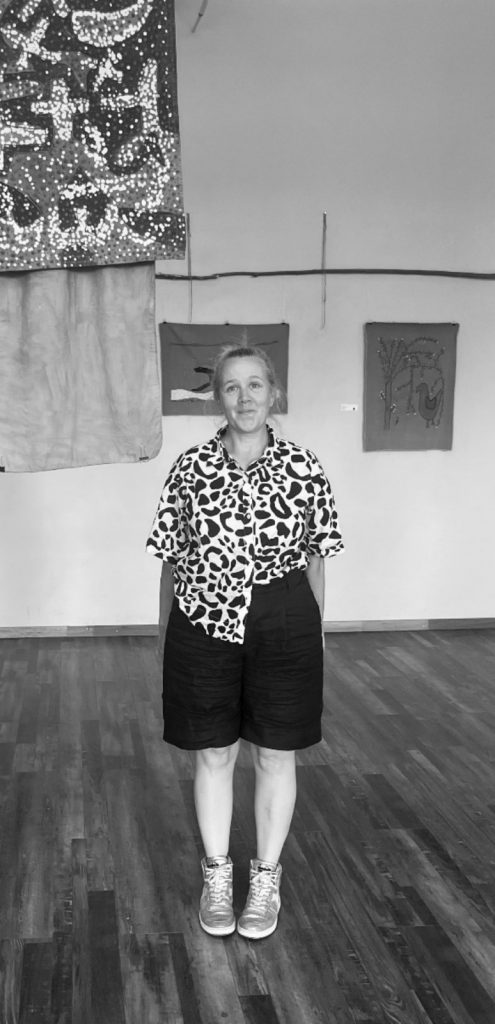
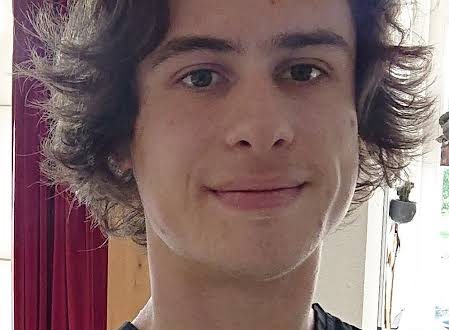
Lorraine and Olivia started working as Scholarly Communication Support in the Open Access team at the Office of Scholarly Communication (OSC) in the University Library this summer. In this interview, they share their experience of starting a new role in the field of open access, from the perspective of their respective backgrounds in academia and publishing. 

What does working in Scholarly Communication Support entail and what are your responsibilities in this role? 

For the first few months joining the Open Access team we both started looking at “Fast Track deposits”, the simplest route of depositing author’s manuscripts into Apollo, the University of Cambridge institutional repository. This system allows the team to process items more quickly than the manual Apollo deposit. Since its launch in September 2018, it has considerably helped to reduce the workload as manuscript submission for archiving in Apollo continues to increase in view of the upcoming REF2021. On a daily basis, we also deal with queries from tickets created on the Open Access Helpdesk, contacting authors and publishers when further information is required and manually depositing manuscripts on Apollo while also updating their records on Symplectic Elements, the University’s research information management system.

Olivia and I are now being trained to respond to researchers’ funding queries and to process invoices for journals’ open access fees from the RCUK and COAF block grants. In order to do this we have had to learn more in depth about open access requirements and Research Councils’ funder requirements.

More recently, we have been working with Units of Assessment to support them with the open access component for REF (Research Excellence Framework) compliance, attending training sessions and reviewing Unit of Assessment outputs for eligibility. This has involved researching and interpreting the REF 2021 requirements for open access to disseminate effectively to academics and administrators. It has been illuminating to gain the perspective of different faculties, the way that they have to engage with REF, and their grapples with open access compliance. 

What are your respective backgrounds and how did you decide to start working in OA? 

Lorraine: Prior to working in open access, I completed a PhD in History of Art in Cambridge, looking at specific intersections between early modern artworks, medicine, and theories of the imagination. I also worked as a postdoctoral researcher at CRASSH (Centre for Research in the arts, social sciences and humanities) for one year. 

I first became interested in OA and Scholarly Communication during my studies as a PhD representative for my peers in History of Art between 2017 and2018, the year that electronic deposits of PhD theses via Apollo became a requirement. There were anxieties from my peers around this new requirement, especially in relation to the open access feature: what would this mean for publishing their first monographs from their PhD thesis as Early Career Researchers? Would publishers still be interested in their work after it had been made OA? And, especially, what about the hundreds of copyrighted images present in their theses? It would have taken months to obtain permission to reproduce all of those images. During this time, I liaised with the OSC, the head of the AHRC  Doctoral Training Partnership programme (as part of the RCUK, the AHRC also has its own open access requirements that apply to PhDs), communicated with faculty staff during meetings, and reported the advice I had gathered to my peers. I see this new position in the OSC Open Access team as an excellent opportunity to understand better what happens behind the scenes of an institutional repository and gain more knowledge about the broader picture of open access in academic research. 

Olivia: I left academic publishing with a sense that the model was broken. Expensive paywalls restrict access to those seeking to access information and academics were becoming increasingly disenchanted with the publishing model. These issues particularly hit home following two separate instances. The first, a letter sent to the publisher by a prisoner seeking further information on a criminology text, one which was prohibitively expensive and inaccessible to such an individual. The second, a cuttingly written forward by an academic around monograph publishing and the ivory towers in which university elites and academic publishers co-exist. 

Academic publishing very much feels like the other side of what I am doing with open access, making research as freely and widely available as possible. 

How do you think your past experiences have helped you to have the necessary skills for working in OA? 

Lorraine: As a Cambridge student, I acquired a good knowledge of Cambridge’s unique research and teaching landscape (Schools, Faculties, Departments, Colleges, Research centres, etc.). My academic background also meant that I had hands-on understanding about the process of research, publishing in a peer-reviewed journal, and even submitting my outputs through Symplectic Elements. These were really helpful starting my new role: understanding how researchers work is crucial in scholarly communication and definitely helps me to advise and communicate with researchers better. I am, for instance, particularly interested in the relationship between open access and third-party copyright (especially images from cultural heritage institutions, i.e. galleries, libraries, archives and museums) and the challenges it brings to researchers in the Arts and Humanities. 

Olivia: I have found my previous work in publishing an asset working in open access because of my knowledge of the editorial and production process as well as publishing revenue models. I am familiar with the time scales for journal articles and books production as well as publishers’copyright requirements which I have found I am using on a regular basis. Working extensively with academics in a production role, I am aware of the competing pressures placed on them and their need for clear and accessible information on fulfilling publishing commitments or REF compliance.

Now that you have started your new roles, what are the tips you would give to someone interested in starting a career in OA? 

Picking up from last year’s blogpost, and from our own experience: keeping up to date with developments, attention to detail, supporting academics and seeking support from the open access community are four key areas when starting in a career in OA.

Keeping up to date with developments and attention to detail

Publisher’s and funders’ open access policies change very quickly, as do the methods we adopt within the team to cope with the workflow and with the challenges brought by REF 2021. Anyone starting a career in OA needs to keep up to date with changes, be capable of doing in-depth research about those, and be comfortable admitting not knowing everything! The landscape is constantly changing and having an awareness of new proposals and initiatives makes the big picture much clearer. 

Supporting academics 

Give academics a break. It will take you a while to feel confident with policy and guidance and for you, it is your whole job. For the academics submitting their papers and contacting the repository, this is one small part of their role; you need to guide them through it as painlessly as possible. 

Seek support 

You cannot and do not know everything about open access. Luckily, there are plenty of wonderful expert colleagues who can help, so it is really important to know how to work within a team and keep building the necessary knowledge as a group. 

Published 25 October 2019

Written by Lorraine de la Verpilliere, Olivia Marsh

This icon displays that the content of this blog is licensed under CC BY 4.0

Image Copyright and Open Access in the Arts and Humanities

Copyright is a crucial topic in the Humanities because researchers in several disciplines (especially history of art, my field of study) rely on images for their work and because publishers usually require authors to pay copyright holders for permission to reproduce those images – failure to do so would make the author and the publisher liable for copyright infringement. 

At the OSC Symposium last 2nd October 2019 (Open Access Monographs: From Policy to Reality), Dr Nicola Kozicharow’s presentation on ‘Open Research Publishing in the Humanities’ made quite an impact on the discussions of the day. This early career historian of art, specialised in 19th– and 20th-century European and Russian art, talked about the challenge of publishing when third-party image copyright is involved. She detailed the difficult and sometimes grotesque situations that she and her contributor faced when publishing her first co-edited book Open Access, tracking down image copyright holders and paying exorbitant reproduction fees (1).

Not many academics outside the Arts and Humanities know about the invisible labour and material cost involved when working with images. Researchers struggle to find images on various heritage institutions’ websites (or GLAMs, as we call them – i.e. galleries, libraries, archives and museums), and pay to obtain digital images ‘for private use’ when the original work is unavailable or located too far. They often end up paying again in order to re-use those images when publishing their research. Even more frustrating is the lack of consistency between different institutions with regard to the amount of the fees and to the exemptions granted. If you beg the museum repeatedly and reach out to curators, you may have a small chance to have your permission fees waived (but still often in return for providing a free copy of your book/article). However, when sales department/companies act as intermediaries between researchers and museums, this kind of trick is most likely to fail, and the chances of opening the discussion about the absurdities of the fees get even slimmer. In 2018, Bridgeman Images, one of those ‘Image companies’, obtained the exclusive right of selling and licensing all images from Italian national museums, which was catastrophic news for art history (see their statement here).

The situation feels even more unacceptable when it concerns out-of-copyright works of art. In this case, heritage institutions in fact do not own copyright over the work as it has fallen in the public domain. Most GLAMs, however, manage to keep control of these works’ images by banning photography (the famous ‘no photo’ policies in permanent collections or temporary exhibitions) and by creating copyright by making their own photograph of the work that they subsequently sell to researchers. 

 An article by medieval art historian Kathryn M. Rudy published in Times Higher Education (also quoted by Kozicharow at the symposium) is a good example (2). There, Rudy detailed specific examples she encountered in her career and broke down the (shockingly high) real cost of working with images – she claims that the fees to publish images for her academic work since 2011 total £24,000 from her own pocket.* “The more successful I am, the poorer I get”, she says. The article went viral on academic Twitter networks and retweets and comments shine a light on the fact that many scholars face similar problems – one user ironically pointed out that it would be much cheaper to include with each book sold a packet of postcards from the museum than paying their prohibitive reproduction fees! (@winchester_books). 

This thorny issue of image copyright permissions in research publications is sadly not new. In the last couple of years, however, historians of art in the UK have succeeded to keep the issue at the front of the public debate. Back in 2017, an ‘End-fees-for-images’ campaign was started by Dr Bendor Grosvenor and Dr Richard Stephen. Along with 28 leading British art historians, they openly called for UK national museums to abolish image fees for out of copyright works of art in a letter published in The Times (3). Many other researchers in the field quickly added their names to this call through a petition on change.org. This campaign was supported in parallel by Grosvenor’s blog, Art History News – his strong presence in the media as a BBC4 presenter and on social media (@arthistorynews) also helped to promote the campaign.

This campaign revealed that there are in fact tools in the UK’s legal arsenal that art historians could use to limit fees. The 2015 Re-Use of Public Sector Information Regulations (RPSI), for instance, which “prevents publicly funded bodies from commercialising public assets” including publicly owned pieces of art. These regulations “do allow image fees to be charged, but only to cover the actual costs involved, and a very small ‘profit’”(4). They remain, however, very little used and barely known – both by researchers and museums. Interestingly, during the OSC’s Open Access Monographs symposium, it was also brought up that ‘fair dealing’ exceptions to copyright by way of quotation for the purpose of ‘criticism or review’ have not often been used by researchers and applied to visual material (5). Both RPSI and ‘fair dealing’ by quotation are in the end quite complex legal tools and, understandably, no art historians nor their publishers want to take the risk of a court case. We also have to take into account the wish of scholars to preserve good relationships with national heritage institutions in the UK – as images are their primary materials, their academic work depends on it entirely! 

During the Open Access Monograph symposium, the comment was made that this issue of high image reproduction fees as a barrier to Open Access publication was a misconception – that the real problem was instead about wider ‘digital’ and ‘online’ issues. However, the fact remains that permission fees are much higher if the image falls into the following categories (often used in image permission fees forms): ‘worldwide’, ‘online’, and ‘freely available’. How is this supposed to encourage researchers in the art and humanities to publish their research Open Access? We could, however, also frame the issue in a more positive way – what if Open Access itself could help humanities researchers deal with images better? Dr Kozicharow acknowledged the great support she received from Open Book Publishers (OBP) in allowing her to reproduce as many colour images she needed for her book. Kathryn M. Rudy, in her recent book also published with OBP, was able to display images in an innovative way (6). In order to contain costs, when images were already widely available, she instead added links on stable GLAMs websites – even QR codes in the case of the printed edition! Perhaps art historians should see open access publishing as a good opportunity to find innovative ways to think about solutions for images. Of course, there remains the problem of how Open Access is perceived in the Humanities, open access books not being sufficiently reviewed and often not deemed legitimate enough in the process of securing permanent positions and promotions – but this is a separate issue. 

What would be needed to help with image permission costs in art and humanities publishing?

In light of the growing requirements for open access publications, there should be better financial provisions to support researchers from universities and funding bodies. A recent report on Open Access from the Universities UK Open Access and Monographs Group, however, shows that there is a growing acknowledgement of the impossible situation faced by specific disciplines who rely on third-party material when publishing – such as history of art or archaeology. The UUK OA Monographs group notably recommended that “Given the already complex nature and expense of re-use clearance for illustrations and other third-party rights material in books, and the additional complexity and expense introduced by OA, an exception should be considered in any OA policy for books that require significant use of third-party rights materials” (7). 

Most of all, cultural heritage institutions have to do better. It does not seem unreasonable to be able to reproduce an image for free with the appropriate credit to the institution when a work of art is in the public domain. Some institutions worldwide have already started making their image collections open access or at least free of copyright fees for researcher’s publications. For example, Gallica, the Bibliothèque Nationale de France’s digital library, just changed its policy in favour of the latter. Positive changes such as these, that benefit the public and research, are being recorded and supported by the excellent Open GLAM initiative, funded by the European Commission. The new EU copyright directive (provided it can apply after Brexit?) should give the final push to get there, as it will allow free re-use of images of works of art in the public domain, even for commercial purposes.

Published 25 October 2019

Written by Dr Lorraine de la Verpillière 

This icon displays that the content of this blog is licensed under CC BY 4.0

*Correction: The  £24,000 figure in fact corresponds to fees Rudy paid to obtain the high-res image files for her academic work since 2011. The figure gets even higher when including the said images copyright fees – in the same article, she mentions for instance a £5,683 invoice from the Bodleian for the reproduction cost of her next book.

If you are a researcher at Cambridge University and need more information about third-party copyright, the following resources are for you:

 Libguides

Architecture & History of Art: Copyright and plagiarism

Copyright for Researchers 

Copyright helpdesk: email copyright-help@lib.cam.ac.uk 

Face-to-face training sessions [available to Cambridge University only]

Copyright: a survival guide (for PhD students in Humanities, Arts and Social Sciences) 

Do You Really Own Your Research? Copyright, Collaboration, and Creative Commons 

Your faculty or department may also run bespoke sessions, asking your librarian is the best way to find out.

References

(1) Louise Hardiman and Nicola Kozicharow, Modernism and the Spiritual in Russian Art: New Perspectives. Cambridge, UK: Open Book Publishers, 2017, https://doi.org/10.11647/OBP.0115

(2) Kathryn M. Rudy, ‘The true costs of research and publishing’, Times Higher Education, August 29 2019 (Url: https://www.timeshighereducation.com/features/true-costs-research-and-publishing#survey-answer)

(3) Matthew Moore, ‘Museum fees are killing art history, say academics’, The Times, November 6 2017 (Url: https://www.thetimes.co.uk/edition/news/museum-fees-are-killing-art-history-say-academics-qhfwmdws6 accessed: 10/10/2019)

(4) Bendor Grosvenor, ‘Why museums should abolish image fees (ctd.)’, Art History News blog, August 20 2018 (Url: https://www.arthistorynews.com/articles/5241_Why_museums_should_abolish_image_fees_(ctd.) accessed: 10/10/2019)

(5) Amendments to the The Copyright, Designs and Patents Act 1988 in the UK law since 2014, http://www.legislation.gov.uk/uksi/2014/2356/regulation/3/made

(6) Kathryn M. Rudy. Image, Knife, and Gluepot: Early Assemblage in Manuscript and Print. Cambridge, UK: Open Book Publishers, 2019, https://doi.org/10.11647/OBP.0145 

(7) Universities UK Open Access and Monographs Group, ‘Third-party rights’, in Open access and monographs evidence review, October 2019, p. 10-12 (PDF: https://www.universitiesuk.ac.uk/policy-and-analysis/reports/Documents/2019/UUK-Open-Access-Evidence-Review.pdf accessed 13/10/2019).

Chasing cash cows in a swamp? Perspectives on Plan S from Australia and the USA

Plan S was born in Europe, yet from the very start it aspired to accelerate conversations around open access on a global scale. After all, if free access to research outputs is good in one place, it will be good everywhere, right? Well, it turns out that things may not be that simple.

In this Open Access Week, we look East and West to find out how Plan S is being received across the globe. Dr Danny Kingsley explores how reliance on foreign students has trapped Australian universities in a ‘Faustian bargain’ with publishers and reduced the scope for change. Micah Vandegrift reports on the type of conversations that Plan S has inspired in the USA, as well as the potential political barriers, sounding a note of cautious optimism.

The uptake of Plan S or equivalent principles in countries beyond Europe is crucial to the overall success of the movement. Publishers are using the fact that uptake currently has limited geographic scope to stall change, arguing that they cannot alter their model to suit the requirements of a relatively small percentage of authors. The number of supporting funders is still small and concentrated in Europe, with a few US players. China initially looked set to join in and thus change the game, but since the end of 2018 we have seen little progress on that front. Has Plan S been successful in shaping conversations around the world?

Hearing from our colleagues in other countries highlights some of the promises and challenges Plan S is facing in making an impact outside Europe. Learning about those raises a number of interesting points for how we advocate for open access at home too.

Dr Danny Kingsley: Australia

Photo of Sydney Opera House over a calm sea.
Sydney Opera House. ‘ Plan S has not really caused much of a ripple Down Under ‘.

Rankings are a natural enemy of openness

When first approached by the Office of Scholarly Communication to write a piece about Plan S in Australia, my initial response was it would be very short. That is, Plan S has not really caused much of a ripple Down Under. Those in the know – people working in scholarly communication and some senior members of research institutions – are aware and watching closely. But as far as opening up a general discussion amongst the academic community, this simply hasn’t happened.

Over the past six months I have been trying to understand where some of the problems lie when it comes to openness in Australia. It is more fundamental than the usual concerns researchers have about Open Access, and goes to the heart of how universities work here.

Where the money flows

First a quick run-down on how research funding to universities works in Australia. There are only two government funders – the National Health and Medical Council (NHMRC) and the Australian Research Council (ARC). The amount of funding these granted in 2017-2018 was about $943 million and $758 million respectively to all research organisations. As a comparison, the Wellcome Trust endowed in the range of £10m – £50m in Australia in 2017-18. For those interested there is a full breakdown of sources of research funding.

The funder policies on Open Access and Research Data Management are pretty weak overall. The NHMRC policy requires that any peer reviewed publication be available in a repository 12 months after publication and “strongly encourages researchers to consider the reuse value of their data and to take reasonable steps to share research data and associated metadata arising from NHMRC supported research”. The ARC policy requires the metadata of research outputs to be available in a repository 3 months after publication and the work to be OA 12 months after publication. But the policy specifically states: “For the purposes of this policy, Research Outputs do not include research data and research data outputs.”

Resourcing limitations mean these policies are not monitored, and there are no sanctions for non-compliance. This means they are basically ineffective, given the findings of a study last year that identified what policies need to ensure compliance.

But these policies simply reflect a lack of policy generally in Australia, partly due to the revolving door that has been the Prime Ministership over the past five years. So, on face value, the reason for the lack of engagement with discussions around Plan S just reflect this lassitude.

But I am wondering if there might be something deeper at play here.

Cash cow

Australian universities are heavily financially reliant on overseas students, with the numbers of international students several multiples greater than any other comparable university worldwide. Numbers of overseas students have doubled since 2008, with 398,563 students enrolled in 2018. In one instance, the University of Sydney, fees from Chinese students make up one fifth of its annual revenue with $500 million in 2017. Taken across the country, these figures outweigh public research funding significantly.

While this dependence has been labelled as highly risky from a financial perspective, it is also causing serious issues elsewhere in the sector including concerns about eroding educational standards. But it is also causing a perversion in the way research is managed.

The role of the ranking

University rankings are extremely important in the recruitment of overseas students. The vast majority of Australian university websites list some interpretation of their rankings. Monash University and the University of Western Australia both note they are in the “top 100 universities in the world”. Other universities are more specific, naming their place, like UNSW at 43rd in the world and University of Queensland listing no fewer than five rankings, trumped by Queensland University of Technology with six rankings listed.

Chasing rankings comes at a price. In some instances, increasing a University’s position in the rankings is a specific strategy, with the University of Canberra a recent success story.

There is incredible pressure on researchers in Australia to perform. This can take the form of reward, with many universities offering financial incentives for publication in ‘top’ journals. This is fairly widespread, with some universities having this position on the public record. For example, Griffith University’s Research and Innovation Plan 2017-2020 includes: “Maintain a Nature and Science publication incentive scheme”. Publication in these two journals comprises 20% of the score in the Academic Ranking of World Universities.

Other institutions take a more draconian position. Murdoch University’s proposed ‘academic career framework’ identifies specific numbers of articles researchers are expected to publish in top journals per year. Not surprisingly this approach has been highly criticised for its “extremely narrow view of academic career success”.

Australia’s Chief Scientist has recently been arguing the need for a different way of assessing our researchers, with concern that the current system is fuelling bad science. With exception of some groundswell activity, this is as close as anyone is getting to using the ‘reproducibility’ word here in Australia, possibly from nervousness in the sector from government interference in the allocation of research grants in 2018. There is certainly nothing comparable to the UK or the US on this issue.

The Open Access challenge

But what has all of this to do with Open Access or Plan S? Well, everything actually.

For a start, signing up to the Declaration of Research Assessment (DORA), or the Leiden Manifesto is one of the principles of Plan S, with the Wellcome Trust stating that it will not fund research at institutions that have not signed up. Only a handful of Australian research organisations have signed DORA, none of which are universities. Given many Australian institutions are not only judging researchers on their publication record, but in some cases proscribing which journals in which they are allowed to publish, it would be extremely difficult for these institutions to become a signatory to DORA or the Leiden Manifesto.

But the main problem for the open agenda is the total reliance on specific metrics that deliver ranking numbers – metrics which enfold Australian universities into a Faustian bargain with the large commercial publishers.

Australian universities are not engaging with Plan S because they cannot afford to. And while the Australian funders remain silent on the topic (literally – a search for Plan S on each website comes up empty), there is little incentive to worry about it.

If anything, this situation further underlines the need to shift the academic reward system away from the single measure of publication of novel results in high impact journals.  Given how deeply ingrained that measure is in Australia it will be interesting to see where we are at this time next year.

Micah Vandegrift: USA

An image of a river in the USA.
A meandering river in the USA. Plan S has sparked conversations in the USA, but progress is slow.

A shot heard around the world

A little more than a year ago, open access had its “shot heard around the world” moment. Plan S expanded out from Europe, encompassing angst and excitement, requiring think-pieces from thought leaders, policy briefs from the wonks, and general malaise from lots of stakeholders. The European open agenda is, by design or by accident, shaping the horizon and Plan S continues to be a marker of that progression. I had the unique opportunity to be on the ground in Europe for most of the fallout last fall, and now with the benefit of time and geographic remove, I am observing the after effects, especially in how U.S.-based research communities are responding in kind. 

Ripples and tides

The greatest surprise is that Plan S seems to be the thing that is getting people from all corners out to debate the issues. The tidal wave of Plan S seems to have crashed on our shores with something for everyone – publishers, libraries, researchers, and funders. Librarianship tends to pivot around shifts in the publishing landscape, finding crevices to leverage our expertise and chances to show off that knowledge to researchers, and I expected Plan S to offer that as well. The weird thing, though, is that the responses have been uneven, distributed, and displaced. For example, I was invited along with Rick Anderson of Scholarly Kitchen fame to debate the Plan in front of 200+ managing and technical editors as the plenary session at their conference. On the flipside, Dr. Kelvin Droegemeier, announced as Director of the White House Office of Science and Technology Policy in January 2019 (after a vacancy since something happened in November 2016), flippantly addressed Plan S in an interview simply saying “we won’t ever tell people where to publish.” Bizarrely, a research policy affecting labs and scholars from Norway to Portugal is giving me a chance to meet and chat with publisher colleagues more than ever before, and not opened any new doors for communicating finer points of licensing with faculty on my campus. 

A slow-flowing river

Following the current into the near future, I believe that there are three tributaries that will come together. Funders will continue to exert their influence, supplanting publishers as drivers of the conversation, disciplines will adapt discipline-specific means of scholarly sharing (see the rise of pre-prints [PDF]), and policy makers will attempt to legislate cautious action toward a global research marketplace. However… in the U.S. context there are two barriers that could dam the flow. Uncertainty in our political climate, and an America-first foreign policy agenda, is boiling up concern about “undue foreign influence,” and I fear that isolationism will compel a counter narrative to the open and public sharing of research worldwide. Secondly, America is a god-damn huge country and developing a coherent national framework for openness seems to be a fool’s errand. However, what sometimes appears to be a bog can actually be a river barely inching along. If Plan S was a splash, Plan Open U.S. will be a steady drip, creating geologic formations of systemic change toward a more open research ecosystem. 

Conclusions

We read Danny and Micah’s contributions with great interest. They raised several questions about Plan S, which we hope to discuss with Micah after today’s talk.

  1. What can we do to increase engagement of our local academic communities with the open access agenda?
  2. Is it possible to uncouple decisions about research practice from financial or political/ideological considerations?
  3. How can government funders find a balance between dictating open research mandates and respecting the academic freedom of researchers?
  4. Can institutions measure research accurately without creating perverse incentives?
  5. Is there any country in the world where the mention of politicians does not trigger an immediate eye-roll?

Published 24 October 2019

Written by Dr Danny Kingsley (Scholarly Communication Consultant) and Micah Vandegrift (Open Knowledge Librarian at NC State University Libraries).

Compiled by Dr Beatrice Gini

This icon displays that the content of this blog is licensed under CC BY 4.0

Opening Up the Research Support Ambassadors

This Open Access Week sees the launch of the fully open version of our popular Research Support Ambassador programme. This initiative has been running in Cambridge libraries since 2015 and has seen over one hundred staff from across the library network enhance their knowledge of scholarly communication. It has also been through several different versions, transitioning from a taught face-to-face programme to an internal online course. The time is now right to open up this content to a wider audience and launch the programme as a resource for anyone who wants to make use of it. You can watch an online trailer for the programme on our OSC YouTube channel.

Research Support Ambassador logo

The Ambassador programme offers interested library staff the chance to learn about the fundamentals of scholarly communication and research support from data management and open access to copyright and assessing impact. It was first conceived in 2015 as part of the initial phase of training offered by the newly established Office of Scholarly Communication (OSC) which was tasked with improving the support offered to researchers by the library network. The OSC quickly realised that Cambridge library staff were keen to get more involved but perhaps that they needed a thorough grounding in the basics in order to improve their confidence levels. The Research Ambassadors were launched as a way to get people up to speed at the same time as producing an output which could be shared with the wider community. As with all new initiatives, it was not without its problems and these are highlighted in the case study that I wrote about the programme a couple of years ago. When I took over the programme in late 2015 I listened to the feedback from participants and began to evolve i into its current form as an educational programme. Initially this was delivered in a series of face-to-face workshops with participants being asked to work on a project like an online resource as an outcome that they could point to but it soon became obvious that this was too much for many busy library staff to commit to and so the project element was dropped and we focused on developing key knowledge. The next run of the programme used a blended learning approach with a mixture of in-person and online training but even this proved difficult for many staff to complete and so the programme was moved completely online in 2018. Feedback indicated that participants found both the content and the format useful, especially as they had the flexibility to learn around their other commitments and could dip back into the content as needed to refresh their knowledge. At the same time the OSC were starting to get a lot of enquiries from people outside Cambridge wanting to know if the content was available for everyone and so we have decided to open it up to anyone who wants to see it. As the programme was Cambridge focused this was not just a case of transferring the content so I took the opportunity to update and refresh all of the content.

The programme is now a resource and this terminology is deliberate. I didn’t want to call it a course as this comes with the expectation that people need to complete everything in order to get the best out of it. Learners can of course go through all of the units in turn and build their knowledge that way but they can also dip into content as needed as a refresher. The resource has six units which loosely follow the research lifecycle:

  • an introduction to scholarly communication 
  • research data management 
  • open access 
  • publishing research 
  • copyright
  • metrics and impact   

Each unit comes with a suggested completion time and learning outcomes but these are there to offer learners some guidance before they invest their time. The six units offer a brief introduction to the topic using a mixture of content from text and videos to podcasts and activities so it there should be something for everyone. Although of this content is optional, it helps to increase the flexibility of the resource so that it becomes truly open to more people. 

Research Support Ambassador screen shot showing part of the website
Research Support Ambassador screen shot

Turning an in-house programme into an open educational resource was not without other challenges. Obviously the original programme had a defined audience of Cambridge librarians who have a shared history and terminology. In the process of making the resource open I had to make sure that it was more accessible to a wider audience so I removed anything that was ‘Cambridge specific’ and gathered wider examples that I could use to illustrate the points I was making. I also had to make sure that I considered accessibility including making sure that images were labelled with alt-text and providing transcripts for videos. This was a good learning experience for me and something especially useful ahead of new government accessibility guidelines being introduced. However, this was very much a solo project and there will inevitably be something I have missed so we are launching the Ambassadors as a Beta resource with an option for people to offer feedback. I very much hope people will take us up on this and offer suggestions for inclusions and improvements. The resource is largely being released under a CC-BY-NC-SA 4.0 licence which means that others are free to adapt and build on the content. If anyone does this I would be really interested to learn about it! You can also find a ready-made information leaflet and a cartoon abstract of the case study which can be downloaded and shared if you want to promote the resource to a group of people.

On a more personal note, the launch of the online Research Support Ambassador resource marks the end of my time working in the Office of Scholarly Communication. I will still be involved in projects to educate the library community in research support including some future plans for the Ambassador programme but day to day I am moving to be a research support librarian within the wider university. I’ve enjoyed educating librarians in research support so much and I really hope that people will find the online Ambassador resource useful. The main message I want librarians to take away is that they have a lot to offer in this area. The theme of Open Access Week 2019 is ‘open for whom’ and I really hope that by collating what I have learnt in the last four years I can help make research support and scholarly communication open for the wider library community.

Published 24 October 2019

Claire Sewell (Research Support Skills Coordinator turned Research Support Librarian, Cambridge University Libraries) @ces43

This icon displays that the content of this blog is licensed under CC BY 4.0

Open Access monographs: Reflections from our recent symposium

Open access book formats have been under discussion for several years and have attracted interest – and concern – from researchers in Humanities, Arts and Social Sciences as well as amongst institutions, publishers, and funders. Earlier this month the Office of Scholarly Communication organised a one-day symposium on ‘Open Access monographs: from policy to reality which took place at St Catharine’s College, Cambridge. It aimed to enable discussion about the open access monographs agenda and its future challenges with the Cambridge community and beyond, to bring together researchers with publishers, funders, experts and innovators in the field of open monograph publishing, and to share experiences about the opportunities and realities of publishing an open access book. 

In this blog we summarise the key themes that emerged from this symposium. In favour of simplicity we accept that many of the issues discussed do not belong to one theme category only and are interlinked with each other. 

Picture showing the front cover of the symposium programme.
Symposium programme

‘What would it take to implement open access books for REF?’ 

This was one of the first questions in Prof Martin Paul Eve’s (Birkbeck, University of London) keynote speech which highlights an uncomfortable truth in the discussions about open access monograph policy in the UK these days. 

‘To publish 75% of anticipated monographic submission output for the next REF would require approximately £96m investment over the census period. This is equivalent to £19.2m per year. Academic library budgets as they are currently apportioned would not support this cost.’ [1] 

The figures are staggering and immediately show that money is the number one challenge in any discussions about monographs in this context. Which brings us swiftly to our first theme: The economics of open access. 

The economics of open access 

The distribution of the economics is the most important factor in the puzzle of open access monograph publishing. The overall consensus from both publishers and academics are that BPCs (Book Publishing Charges) for monographs do not work well in the humanities. They scale badly and concentrate costs. However, it is clear that one business model does not fit all in this sphere. A diversity of business models and ecosystems in which monographs can be published as open access would give authors choice and avoid monopolies. It was thought provoking to hear Rupert Gatti say that Open Book Publishers couldn’t scale up on their current business model to publish 250-300 books (10 times the amount they do now) but they shouldn’t have to. Instead, they can envisage a system where numerous small publishers like themselves exist next to large publishers, like Cambridge University Press (CUP). The idea of avoiding monopolies is not only key for authors but also readers as having a few publishers controlling the methods of distribution of this literature could end up restricting the way we access and use content. 

Questions were also raised about how BPCs (or their replacement) should be set. Monographs vary in length and complexity, usually determined by their subject matter, which in turn have vastly different production costs. Should there then be a pricing structure that better reflects this? And in a culture of openness, can we ask publishers to be transparent about their costs and services so researchers can make more informed choices about where to spend their grant money? 

Publishers are very aware of the impact that open access is having on the business models and the need to maintain quality in production and the peer review process. CUP stated that digital sales are becoming an important part of monograph publishing and that timing of open access is also quite an important factor in the economics. Exploring models of delayed open access might provide one solution to protecting publisher incomes whilst still opening up access to content. 

‘Students cannot learn without images’ (Dr Nicky Kozicharow, University of Cambridge)

Another important piece of the puzzle is who pays for the costs of publishing an open access book? The current model used for STEMM (Science, Technology, Engineering, Mathematics and Medicine) journal article APCs (Article Processing Charges), where funders usually pay the costs, was referred to an epistemic injustice that should not be replicated as researchers in less economically developed countries are disadvantaged.

The problem around costs of reproducing third-party images was also widely discussed, especially by Dr Nicky Kozicharow. Not enough is being done to support researchers, such as art historians, who rely on images for teaching and research activities. There is a (perceived) lack of training in copyright, which was a useful message, if not an uncomfortable one, to our librarians who routinely deliver training in this and are now revisiting their communications about this. But also image holders should consider how they support researchers – whilst some big holders, such as The Metropolitan Museum of Art, the Wellcome Trust, the Getty Collection and Wikimedia, do provide images free of charge, there was the suggestion that other collection holders should consider opening up access for researchers at affiliated institutions. This access would need to continue for a number of years beyond that affiliation so the images are accessible during the period in which a book will often be written up. 

Ethics, Equality, Diversity and Inclusion 

“Who and what is OA for? We need to start with the right question” (Prof Margot Finn, President of the Royal Historical Society) 

It is also important to view the economic question of who can afford to pay to publish an open access monograph through the lens of equality and inclusion. How can we ensure everyone has equal access to the opportunity to publish open access? Is open access a human right? The role of politics here is critical if we want to make open access work for everyone. Policymakers need to consider issues such as access, gender and nationality when making decisions that institutions and publishers have to interpret and adhere to.

Another group that suffers from the current set up for open access monographs are the early career researchers (ECRs). They often work in a precarious situation, moving between institutions on short term contracts. This restricts their ability to publish a monograph, which takes considerable time and effort. It is important that when institutions look to sign up to and implement statements such as DORA (San Francisco Declaration on Research Assessment), that both monographs and journal articles are considered when looking at academic career progression. 

Of course, as we strive to make open access work for everyone, we need to be mindful of impinging on academic freedoms. As noted by Dr Steven Hill (Director of Research, Research England), researchers should still be free to choose the questions they study within the constraints of the system. Academics should also be free to choose the licence that they publish their work under. This has been a major sticking point for many academics (as we have previously written) with CC BY licences seen as an ethical issue in the humanities. Instead, what is needed is a softening of licence choices with options such as non-commercial and non-derivative available – a point also highlighted in the recent Universities UK report on ’Open Access and Monographs’. Finally, we should not make assumptions that the ethical issues around licenses are the same worldwide, because they are not. 

Scalability and sustainability 

‘We need to understand fully the obstacles that underpin academic research in order to have a sustainable, scalable, global open access model – but we are not there’ (Prof Margot Finn, President of the Royal Historical Society)

The issues around open access monographs are, at times, inextricably linked. Problems to do with economics are inseparable from issues of fairness (to sum the above section up badly) but also in scalability and sustainability. The academic monograph has its own distinct ecosystem in scholarly research. Open access monographs have a global readership, but production of open access books is not necessarily global, but concentrated on local or national levels. We need to consider the far-reaching consequences of this, including the relationship between the ‘global’ academic researcher and the ‘local’ publisher. We must also consider the role of the policymakers, often European, who set the rules in one country or part of the world and those academics who are not part of this system. Do the levels of academics in these countries and their outputs justify this dominance? We should also obtain more information on how open access books are used in order to justify the expenditure in publishing them, yet Hannah Hope, speaking for the Wellcome Trust, commented that the impact of open access books is hard to measure. Download statistics are often available and provide one measure. For example, UCL Press have had 2.5 million book downloads since its launch four years ago and Open Book Publishers report that their books are being freely accessed worldwide by over 20,000 readers each month. 

The ability of publishers to innovate is seen as a key factor in the sustainability and scalability of open access monograph publishing. The size of the publisher will most probably determine their ability to innovate, with smaller publishers being in a better position to ‘take risks’ and try out new models, even if such models end up failing or not being appropriate to implement in bigger organisations due to scalability and financial constraints. Radical OA are experimenting with various business models and bringing down BPCs. The RHS’s New Historical Perspectives (NHP) book series is designed to provide high-quality publishing support to ECR historians (ECRs defined as researchers within 10 years of finishing their PhD) whilst absorbing the costs of BPCs and relying on a generous donation to cover some of the image costs. Indeed, ‘Learned societies have a long history of innovation and experimentation in publishing’ according to Prof Margot Finn, but how they take their experimentation to the next level is yet to be figured out. 

Understanding how open access monographs can scale and be sustainable is key to figuring out the type of open access that will prevail. Green open access is not considered to be the future goal for CUP, who are experimenting with a number of different business models such as consortium models, crowdfunding and freemium models. They have also been engaging with authors, researchers and librarians worldwide to understand the monograph landscape better and to demystify issues concerning publishing process. Likewise, SpringerNature voiced concerns with green open access and although open access humanities publications account for a very small proportion of their overall open access publications (~10%) they feel that they are well positioned for a more open future. 

Collaboration, relationships, communication 

Publishing is not the end point. Academy as a whole needs to engage with that’ (Dr Rupert Gatti Trinity College/Faculty of Economics/Open Book Publishers) 

What is clear is that there are many players in the field of open access monograph publishing and continued and open communication between all parties is key. Within institutions, academics and research support providers (such as librarians) need to have conversations to ensure the help required is accessible, so authors are not battling with copyright issues alone or remain unaware of the full spectrum of publishing options available to them. Senior leaders at universities must engage with their academic communities to understand the issues they face. They can then in turn engage with policymakers to encourage realistic rules and guidance that would lead to meaningful, measurable outcomes. It was reassuring to hear that consultative approaches are being taken and we welcome the continuation of these. 

Publishers also have an important role in re-defining their relationship with academics. As Prof Martin Paul Eve questioned, are publishers solely service providers and academics content creators or are both parties co-producers and academic collaborators in the research process? Prof Roger Kain emphasised ‘the relationship of an author with their publisher with a journal is a very different relationship to the relationship of an author and their publisher with a monograph’ and as such this may lead to the chance to experiment further with business models, if publishers offer more added value through intellectual support for their authors. Of course, Learned Societies and holders of large collections of images have to be involved as well so that their position within the research process is well understood. These conversations should also happen in and between different geographical places because academic research will always have international collaborations. 

We also have to be mindful of the messages that come out of these conversations. Time and again we heard the notion that “open access means bad peer review” is still alive in the academic community. This is a myth that all publishers, as well as librarians and other research support staff, are keen to debunk. Another myth is the misconception that “open access is the end of print”. As Prof Roger Kain put it ‘open access does not mean wholly replacing the physical copies of a book but help creators of content to reach wider audiences…OA and print will co-exist’. The term “open science” was noted as appearing to exclude the humanities and, therefore, disengaging researchers before they’ve even got started, even though open science includes all disciplines (this is the reason why in Cambridge we prefer to use “open research”). The language used in Plan S communication was seen as being too opaque, especially for non-native English speakers. If we are encouraging open research, we should be using language that is open and transparent, especially when open research is an international endeavour, as already mentioned. It is important that messages are correct and clear so humanities scholars and other stakeholders can engage fully in debates about the future of open access monograph publishing. 

Summary 

‘If we are going to take open access for monographs forward in a timely fashion it has to be taken forward as a shared enterprise…an enterprise involving academics as content creators, their funders, their universities…but above all their publishers’ (Prof Roger Kain, School of Advanced Study, University of London & Chairman of the UUK OA Monographs Group)

The symposium saw common themes emerging around issues with open access for monographs as the system currently stands, but also the potential benefits and possibilities that open access could open up into the future. There was consensus that open access needs to go forward as a shared enterprise with all stakeholders being equal players. Looking into the future there was also concern about the visibility of humanities research going forward when compared to the natural sciences and that humanities authors should strive to demonstrate the impact of their publishing activities. 

Many of the themes discussed in this symposium echoed the recommendations as well as concerns outlined in the Universities UK Open Access Monograph report which was published a few days after this symposium took place. The report emphasised that complex questions still remained around issues such as costs, scalability and business models, but it was positive to read statements that the ‘academic book occupies a very distinct space in scholarly research’ reinforcing the fact that monographs are fundamentally different in intention and in kind when compared with journals or fields of research, and that ‘academic book publishing is an international activity’, with whatever implications this entails, as discussed earlier. 

Perhaps it is fitting to conclude with a dose of pragmatism by quoting one of Dr Steven Hill’s remarks at the end of the symposium 

‘...a really strong dose of pragmatism has entered this debate; that we all recognise that there are different visions of utopia that different actors in the system might have, but we can see that some of our visions of utopia have to be compromised in order to achieve something that is better than we have now and enable the kind of innovative scholarship that more openness will drive’. 

and a note of optimism by Prof Martin Paul Eve who said the following when he was asked if there are lessons to be learnt from how open access has been applied to journals so far. 

‘…we can learn a lot from how the open access debate has played out. I think we also learn a lot in seeing how compromises were reached within that to get to a point that is far better than a decade ago in terms of open access for journals…Momentum is growing, and acceptance is growing. And the idea that we don’t lose quality when things are available openly is growing. All these things are positive and I think we need to take those positives, articulate them from the start and see where that takes us rather than re-inventing the wheel, having the same argument, the same debates, and ending up in the same place, probably, but 20 years from now rather that in the next decade’

Recordings and most of the presentations are available in the University of Cambridge institutional repository, Apollo as well as the OSC YouTube channel. We would like to acknowledge that this symposium was supported by the Arcadia Fund, a charitable fund of Lisbet Rausing and Peter Baldwin. 

References

(1) Source: Eve, M.P. et al., (2017). Cost estimates of an open access mandate for monographs in the UK’s third Research Excellence Framework. Insights. https://doi.org/10.1629/uksg.392) 

Published 23 October 2019 

Written by Dr Lauren Cadwallader and Maria Angelaki 

This icon displays that the content of this blog is licensed under CC BY 4.0

Open Research at the University of Cambridge: What have we done so far?

At the start of 2019 the University of Cambridge announced its Position Statement on Open Research. This blog looks at what has been happening since then and the current plans for making research at Cambridge more open.

Our Position

In February 2019, the University of Cambridge set out its position on open research to support and encourage open practices throughout the research lifecycle for all research outputs. The Position Statement made clear that both the University and researchers have responsibility in this space and that there would be no one size fits all approach to how to be open. As part of forming a position on open research, the University also created the Open Research Steering Committee to oversee the open research agenda of the University. This Committee is currently looking at three key areas –training, infrastructure and Plan S.

Training

In 2018, we ran a survey on open research [available to Cambridge University only] which highlighted our research community’s desire for more training on open research practices and tools. In order to delve into this further, a pilot was run with the Faculty of Education who submitted a disproportionately high number of responses to the survey, suggesting a strong interest in open research. The pilot, run earlier this year, encompassed six face-to-face training sessions on topics around open research, such as managing digital information, copyright, and publishing. These sessions were well received by both PhD students and postdocs.

In tandem to this, work is also being carried out to make the provision of open research related training more strategic, sustainable and efficient. For example, some of the courses the Office of Scholarly Communication run have already been embedded into existing PhD programmes, such as Doctoral Training Centres or the centrally run Researcher Development Programme but we could still increase the opportunities to work more closely with other parts of the University. With so many other pressures on time, it is essential we work together with all stakeholders involved to ensure we get the balance of training offered correct, so that we maximise the time benefits/costs of both the trainer and the student.

Finally, the question of sustainability for open research training is also being investigated. How can we ensure open research training reaches the 9,000 or so academics and postgraduate students we have at Cambridge? One answer to this question is online training. We are currently developing a digital course which will introduce the basics of open research, complementary to the soon-to-be-launched online research integrity training. However, we know that researchers value face-to-face sessions too, and intend to continue to develop our face-to-face offer, where we can provide deeper knowledge and discuss issues in more detail. Within the libraries at Cambridge we are also starting to work more closely with research support librarians and others in department libraries who can offer expertise and guidance that is tailored to the discipline.

Infrastructure

The University Position Statement on Open Research says “University support is important to make Open Research simple, effective and appropriate” and a key part of that support is in the form of infrastructure. This is a complicated area because it involves a number of service providers at the University who all have different priorities as well as the large body of researchers, who have a huge variety of needs and technical abilities. Finding common solutions or tools will always be difficult in a large, research intensive institution like Cambridge, which has Schools spread across the spectrum of arts, humanities, social sciences and STEMM subjects.

The Open Research Steering Committee is made up of representatives from across the University both from different academic Schools and University services. This is key to ensure that the drive towards open research infrastructure is holistic and proportional in the context of other University agendas. A landscape review of the services already provided has been carried out as has a ‘wish list’ of IT infrastructure that researchers would like. Whilst the ‘wish list’ has been carried out in a context wider than open research, it is really heartening to see many ‘wishes’ relate to systems that would improve open research practices.

There is also work underway to look at how research notebooks (or electronic lab notebooks if you prefer) are being used across the University. A trial of notebooks run in 2017 resulted in the decision not to provide an institution-wide research notebook platform, but guidance instead. This new work under the auspices of the Open Research Steering Committee aims to build on this work by extending the guidelines to include principles around data security, data export and procurement.

Plan S

Plan S looms large on our horizon and will present a challenge when it comes into force in 2021. Whilst we are waiting to see to what extent UKRI’s updated open access policy will reflect Plan S principles, we are busy contributing to the Transparent Pricing Working Group. This group was convened by the Wellcome Trust in partnership with UKRI and on behalf of cOAlition S to bring together publishers, funders and universities to develop a framework to guide publishers on how to communicate about the price of the services in a practical and transparent manner. The University is also looking into how we can implement the principles of DORA, which are supported by cOAlition S. This work is being led by Professor Steve Russell, an academic advocate for open research, and the work will very much be done in consultation with our academic community.

Summary

Cambridge is showing its commitment to enabling open research by taking seriously its role in providing infrastructure, training and the right culture for our academics. These areas need to be tackled holistically and the oversight of the Open Research Steering Committee should allow this to happen. It is important that we are collaborative with our research community and we hope that we have got that balance right with the inclusion of academics in the main Committee and working groups. Ensuring open research is embedded in everyday practice at the University will, of course, take time but we think we are making a good start.

Published 22nd October 2019

Written by Dr Lauren Cadwallader

This icon displays that the content of this blog is licensed under CC BY 4.0

Searching Open Access: steps towards improving discovery of OA in a less than 100% OA world

At the heart of the University of Cambridge’s Open Access Policy is the commitment “to disseminating its research and scholarship as widely as possible to contribute to society”.

Behind this aim is the benefit to researchers worldwide, as the OA2020 vision has it, to “gain immediate, free and unrestricted access to all of the latest, peer-reviewed research”. It’s some irony indeed that the growth of the availability of research as open access does not automatically result, without further community investment, in a corresponding improvement in discoverability.

Key stakeholders met at the British Library to discuss the issue at the end of 2018 and produced an Open Access Discovery Roadmap , to identify areas of work in this space and encourage collaboration in the scholarly communications community.[1] A major theme included the dependence on reliable article licence metadata, but the main message was finding the open infrastructure/interoperability solutions for long-term sustainability “ensuring that the content remains accessible for future generations”.

New web pages on Open Access discovery

Recognizing where we are now, and responding to the present, (probably) partial awareness of the insufficiencies in the OA discovery landscape, Cambridge University Library has added pages to its e-resources website to highlight OA discovery tools and important websites indexing OA content. The motivations for highlighting the options for OA discovery on the new pages is described in this blog post. Our main aim is to bring to light search and discovery of OA as a live topic and prevent it “languishing in undiscoverable places rather than being in plain sight for everyone to find.”[2]

Recently, data from Unpaywall for July 2019 has been used to forecast for growth in availability of articles published as OA by 2025, predicting on the basis of current trends, but conservatively – without even taking full account of the impact of Plan S, for example. This forecast for 2025 predicts

  • 44% of all journal articles will be available as OA
  • 70% of article views will be to OA articles.[3]

Unpaywall’s estimate for availability OA right now is 31%. A third (growing soon to a half) is a significant proportion for anyone’s money, and wanting to signal the shift we have used that statistic as our headline on the page summarizing the most well-known and commonly-used Open Access browser plugins.

Screenshot containing the following text: 'Open Access Browser Plugins.A third to a half of articles have an OA version, but finding them can be a challenge. Save time with these easy-to-install OA discovery tools that search repositories, preprint servers, etc. for you'
Screenshot of Open Access browser plugins webpage

We want the Cambridge researcher to know about these plugins and to be using them, and aim to give minimal but salient information for a selection of one, or several, to be made. Our recommendation is for the Lean Library extension “Library Access” but we have been in touch with Kopernio and QxMD and ensured that members of the University registering to use these plugins will also pick up the connection to our proxy server for seamless off campus access to subscription content where it exists, before the plugin offers an alternative OA version.

Once installed in the user’s browser, the plugin will use the DOI and/or a combination of article metadata elements to search the plugin’s database and multiple other data sources. A discreet, clickable pop-up icon will become live (change colour), on finding an OA article and will deliver the link or the PDF direct to the user’s desktop. Most plugins are compatible with most browsers, Lean’s Library Access adding compatibility with Safari last month.

Each plugin has a different history of development and certain features that distinguish it from others, and we’ve attempted to bring these out on the page. For example noting Unpaywall’s trustworthiness in the library space thanks to its exclusion of ResearchGate and Academia.edu; its harvesting and showing of licence metadata; and its reach with integrating search of its data via library discovery systems. Features we think are relevant for potential users looking for a quick overview of what’s out there are also mentioned, such as Kopernio’s Dropbox file storage benefits and integration with Web of Science and QxMD’s special applications for medical researchers and professionals.

In an adjacent page, Search Open Access, there is coverage of search engines focused on discovering OA content (Google Scholar; 1findr; Dimensions; CORE), a range of sites indexing OA content in different disciplines, both publisher- and community-based, and a selection of repositories and preprint servers, including OpenDOAR.

A screenshot containing the following text: 'Search Open Access. Our selection of the leading and trusted sources to find OA content'
Screenshot of Search Open Access webpage

We hope the site design, based on the very cool Judge Business School Toolbox pages, gets across the basics about the OA plugins available and encourages their take-up. The plugins will definitely bring to the researcher OA alternative versions when subscription access puts the article behind a paywall and, regardless, will expose OA articles in search results that will otherwise be hard to find. The pages’ positioning top-left on the e-resources site is deliberately intended to grab attention, at least for reading left-to-right. It is interesting to see the approach other Universities have taken, using the LibGuide format for example at Queen’s University Belfast and at the University of Southampton.

Experiences with Lean Library’s Library Access plugin

Cambridge has had just over a year of experience implementing Lean Library’s Library Access plugin, and it’s been positive. The impetus for the institutional subscription to this product was as much to take action on the problem for the searcher of landing on publisher websites and struggling with Shibboleth federated sign-on. This problem is well documented (“spending hours of time to retrieve a minimal number of sources”) and most recently is being addressed by the RA21 project.[4] Equally though we wanted to promote OA content in the discovery process, and Lean Library’s latest development of its plugin to favour the delivery of the OA alternative before the default of the subscription version, is aligned with our values (considerations of versioning aside).

So we’re aiming to bring Lean to Cambridge researchers’ attention by recommending it as the plugin of choice for the period we’re in the transition to “immediate, free and unrestricted access” for all. It is only Lean that is providing the 24-hour updated and context-sensitive linking to our EZproxy server for off campus delivery of subscription content plus promoting OA alternative versions via the deployment of the Unpaywall database. The feedback from the Office of Scholarly Communication is favourable and the statistics support the positivity that we hear from our users (for the last year 66,731 for Google Scholar enhanced links; 49,556 article alternative views; a rough estimate against our EZproxy logs showing a probable 2/5 of off campus users are accessing the proxy via Lean).

One area of concern is the ownership of Lean by SAGE Publications, in contrast to the ownership say of Unpaywall as a project of the open-source ImpactStory, and what this means for users’ privacy. The concerns are shared by other libraries implementing Lean.[5] Our approach has been to make the extension’s privacy policy as prominent as possible on our page dedicated to promoting Lean, and to engage with Lean in depth over users’ concerns. We are satisfied with the answers to our questions from Lean and that our users’ data is adequately protected. Even in a rapidly changing arena for OA discovery tools the balance is not so fine when it comes to recommending installation of the Library Access plugin over a preference for the illegitimate and risk-prone SciHub.

Libraries’ discovery services are geared for subscription content

Allowing for influence of searchers’ discipline on choice of discovery service, it’s little surprise that the traditional library catalogue, even when upgraded to a web scale discovery service, prejudices inclusion of subscription over OA content. Of course it does, because this is the content the libraries pay for in the traditional subscription model and the discovery system is pretty much built around that. iDiscover is Cambridge’s discovery space for institutional subscriptions and print holdings of the University’s libraries and within iDiscover Open Access repository content has been enabled for search. Further, the pipe for the institutional repository content (Apollo) is established.

Nonetheless Cambridge will be looking to take advantage of the forthcoming link resolver service for Unpaywall. This is due for release in November 2019 and will surface a link to search Unpaywall from iDiscover when subscription content is unavailable. This link should kick in usually when the search in iDiscover is expanded beyond subscription content, and a form of which has been enabled already by at least one university by including the oadoi.org lookup in the Alma configuration.

English: The reefer ship Ivory Tirupati arriving in Brest with heavy list.
Français : Le navire frigorifique Ivory Tirupati arrivant à Brest, avec une gîte importante
A listing ship.  Picture by Hervé Cozanet, licensed under the Creative Commons Attribution-Share Alike 3.0 Unported license.

The righting moment in the angle of list is that point a ship must find to keep it from capsizing, and Library discovery system providers’ integration with OA feels a bit like that – the OA indication was included in the May 2018 iDiscover release and suppliers have been working with CORE for inclusion of CORE content since 2017. That righting moment may be just over the horizon as integration with Unpaywall arrives, and the “competition” element dissipates, as the consultancy JISC used to review the OA discovery tools commented: “As the OA discovery landscape is crowded, OA discovery products compete for space and efficacy against established public infrastructure, library discovery services and commercial services”.[6]

A diffuse but developing landscape

Easy-to-install and effective to use, the OA discovery tools we are promoting are still widely thought of as at best providing a patch, a sticking-plaster, to the problem. A plethora of plugins is not necessarily what the researcher wants, or is attracted by, however necessary the plugin may be to saving time and exposing content in discovery. Possibly the really telling use case has yet to be tried wherein the plugin comes into its own in a big deal cancellation scenario.

Usage statistics for the Lean Library Access plugin are probably a reflection of the fact that the provision of most article content that is required by the University is available via IP access as subscription, and the need for the plugin is almost entirely limited to the off campus user. The Lean plugin’s relatively modest totals are though consistent with reports of plugin adoption by institutions that have cancelled big deals. The poll of the Bibsam Consortium members revealed 75% of researchers did not have any plug-in installed; the percentage for the University of Vienna in particular was 71%; the KTH Royal Institute of Technology authors “rarely used” a plugin.[7]

Another conjecture is that there is an antipathy to any plugin that could be collecting browsing history data and however “dumb” and programmatically-erased, the concern over privacy is such that the universal adoption libraries may hope for is unachievable. The likeliest explanation is possibly around the tipping-point from subscription to OA, and despite the Apollo repository’s usage being one of the highest in the country (1.1 million article downloads from July 2018 to July 2019), Cambridge’s reading of Gold OA is c. 13% of total subscription content, including journal archives. A comparison with the proportions of percentage views by OA types in Unpaywall’s recently published data (cited above) suggests this is on the low side in terms of worldwide trends, but it must be emphasized this is a subset of OA reading and excludes green, hybrid, and bronze. Just consider for instance the 1.5 billion downloads from arXiv globally to date.[8] Similarly, the stats from Unpaywall are overwhelmingly persuasive of the success of the plugin, as of February 2019 it delivered a million papers a day, 10 papers a second.

Graph is showing a steady growth in the total number of open access items from less than 475,000 in January 2016 to nearly 1,700,000. Likewise, the number of institutional repositories increased from 96 to 180 during the same period.
IRUS-UK growth of open access items since January 2016 (The red bars indicate total items, orange bars number of articles and green bars number of articles with DOIs. The blue line indicates the number of institutional repositories)

The inspirational statistician and “data artist” Edward Tufte wrote:

We thrive in information-thick worlds because of our marvellous and everyday capacities to select, edit, single out, structure, highlight, group, pair, merge, harmonize, synthesize, focus, organize, condense, reduce, boil down, choose, categorise, catalog, classify, list, abstract, scan, look into, idealize, isolate, discriminate, distinguish, screen, pigeonhole, pick over, sort, integrate, blend, inspect, filter, lump, skip, smooth, chunk, average, approximate, cluster, aggregate, outline, summarize, itemize, review, dip into, flip through, browse, glance into, leaf through, skim, refine, enumerate, glean, synopsize, winnow the wheat from the chaff, and separate the sheep from the goats.[9]

There’s thriving and there’s too much effort already. Any self-respecting OA plugin user will want to winnow, and make their own decisions on the plugin(s). In a less than 100% OA world, that combination of subscription and OA connection separated from physical location (on/off campus) is a critical advantage of the Lean Library offering, combined as it is with the Unpaywall database. Libraries will find much to critique in the institutional dashboards or analytics tools now built on top of some plugins (e.g. distinction of the physical location when accessing the alternative access version in the Kopernio usage for instance).

From the OA plugin user’s perspective, the emerging cutting edge is currently with the CORE Discovery plugin, as reported at the Open Repositories 2019 conference, in the “first large scale quantitative comparison” of Unpaywall, OA Button, CORE OA Discovery and Kopernio. This report reveals important truths for OA plugin critical adopters, for instance showing less than expected overlap in comparison of the plugins’ returned results from the test sample of DOIs, and the assertion “we can improve hit rate by combining the outputs from multiple discovery tools”.[10]

It’s become popular for our present day Johnson to quote his namesake, so in that vogue we should expect the take-up of Lean Library and CORE Discovery to bring closer that “resistless Day” when researchers the world over get “immediate, free and unrestricted access to all of the latest, peer-reviewed research” and the “misty Doubt” over the OA discovery landscape will be lifted.[11]


[1] Flanagan, D. (2018). Open Access Discovery Workshop at the British Library, Living Knowledge blog 18 December 2018. DOI: https://dx.doi.org/10.22020/v652-2876

[2] Fahmy, S. (2019). Perspectives on the open access discovery landscape, JISC scholarly communications blog. https://scholarlycommunications.jiscinvolve.org/wp/2019/04/24/perspectives-on-the-open-access-discovery-landscape/

[3] Piwowar, H., Priem, J. & Orr, R. (2019). The future of OA: a large-scale analysis projecting Open Access publication and readership. DOI: https://www.biorxiv.org/content/10.1101/795310v1

[4] Hinchliffe, L. Janicke. (2018). What will you do when they come for your proxy server?, Scholarly Kitchen blog. https://scholarlykitchen.sspnet.org/2018/01/16/what-will-you-do-when-they-come-for-your-proxy-server-ra21/

[5] Ferguson, C. (2019). Leaning into browser extensions, Serials Review, v. 45, issue 1-2, p. 48-53.

[6] Fahamy, S. (2019). Perspectives on the open access discovery landscape. JISC Scholarly Communications blog. https://scholarlycommunications.jiscinvolve.org/wp/2019/04/24/perspectives-on-the-open-access-discovery-landscape/

[7] See the presentations from the LIBER 2019 conference on zenodo here https://zenodo.org/record/3259809#.XaA0Qr57lhF and here https://zenodo.org/record/3260301#.XaAz6757lhF

[8] arXiv monthly download rates, https://arxiv.org/stats/monthly_downloads

[9] Tufte, E. Envisioning information, Cheshire, Connecticut, Graphics Press, p. 50.

[10] Knoth, P. (2019). Analysing the performance of open access discovery tools, OR 2019, Hamburg, Germany. https://www.slideshare.net/petrknoth/analysing-the-performance-of-open-access-papers-discovery-tools

[11] Johnson, S., In Eliot, T. S., Etchells, F., Macdonald, H., Johnson, S., & Chiswick Press,. (1930). London: a poem: And The vanity of human wishes. London: Frederick Etchells & Hugh Macdonald. l. 146.


Published Monday 21 October 2019

Written by James Caudwell (Deputy Head of Periodicals & Electronic Subscriptions Manager, Cambridge University Library)

Towards widespread Open Research: insights from Cambridge Data Champions and beyond

The Cambridge Data Champions are an example of a community of volunteers engaged in promoting open research and good research data management (RDM). Currently entering its third year, the programme has attracted a total of 127 volunteers (86 current, 41 alumni) from diverse disciplinary backgrounds and positions. It continues to grow and has inspired similar initiatives at other universities within and outside the UK (Madsen, 2019). Dr Sacha Jones, Research Data Coordinator at the Office of Scholarly Communication, recently shared information about the programme at ‘FAIR Science: tricky problems and creative solutions’, an Open Science event held on 4th June 2019 at The Queen’s Medical Research Institute in Edinburgh, and organised by a previous Cambridge Data Champion – Dr Ralitsa Madsen. The aim of this event was to disseminate information about Open Science and promote the subsequent set-up of a network of Edinburgh Open Research Champions, with inspiration from the Cambridge Data Champion programme. Running a Data Champion programme, however, is not free of challenges. In this blog, Sacha highlights some of these alongside potential solutions in the hope that this information may be helpful to others. In this vein, Ralitsa adds her insights from ‘FAIR Science’ in Edinburgh and discusses how similar local events may spearhead the development of additional Open Science programmes/networks, thus broadening the local reach of this movement in the UK and beyond.  

#FAIRscienceEDI 

On 4 June 2019, the University of Edinburgh hosted ‘FAIR Science: tricky problems and creative solutions’ – a one-day event that brought together local life scientists and research support staff to discuss systemic flaws within current academic culture as well as potential solutions. Funded by the Institute for Academic Development and the UK Biochemical Society, the event was popular – with around 100 attendees – featuring both students, postdocs, principal investigators (PIs) and administrative staff. The programme featured talks by a range of local researchers – Dr Ralitsa Madsen (postdoctoral fellow and event organiser), Dr William Cawthorn (junior PI), Prof Robert Semple (Dean of Postgraduate Research and senior PI), Prof Malcolm Macleod (senior PI and member of the UK Reproducibility Network steering group), Prof Andrew Millar (senior PI and Chief Scientific Advisor on Environment, Natural Resources and Agriculture, for Scottish Government), Aki MacFarlene (Wellcome Trust Open Research Programme Officer), Dr Naomi Penfold (Associate Director, ASAPbio), Dr Nigel Goddard and Rory Macneil (RSpace developers) and Robin Rice (Research Data Service, University of Edinburgh), and Dr Sacha Jones (University of Cambridge). All slides have been made available via the Open Science Framework, and “live” tweets can be found via #FAIRScienceEDI.  

Shifting the balance of research culture for the better. Image source: Presentation by Ralitsa Madsen, ‘Why FAIR Science and why now?

Why is open science important? What is the extent of the reproducibility problem in science, and what are the responsibilities of individual stakeholders? Do all researchers need to engage with open research? Are the right metrics used when assessing researchers for appointment, promotion and funding? What are the barriers to widespread change, and can they be overcome through collective efforts? These were some of the ‘tricky’ problems that were addressed during the first half of the ‘Fair Science’ event, with the second half focussing on ‘creative solutions’, including: abandoning the journal impact factor in favour of alternative and fairer assessment criteria such as those proposed in DORA; preprinting of scientific articles and pre-registration of individual studies; new incentives introduced by funders like the Wellcome Trust who seek to promote Open Science; and data management tools such as electronic lab notebooks. Finally, the event sought to inspire local efforts in Edinburgh to establish a volunteer-driven network of Open Research Champions by providing insight into the maturing Data Champion programme at the University of Cambridge. This was a popular ‘creative solution’, with more than 20 attendees providing their contact details to receive additional information about Open Science and the set-up of a local network. 

Overall, community engagement was a recurring theme during the ‘FAIR Science’ event, recognised as a catalyst required for research culture to change direction toward open practices and better science. Robert Semple discussed this in the greatest detail, suggesting that early stage researchers – PhDs and post-docs – are the building blocks of such a community, supported also by senior academics who have a responsibility to use their positions (e.g. as group leaders, editors) to promote open science. “Open Science is a responsibility also of individual groups and scientists, and grass roots efforts will be key to culture shift” (Robert Semple’s presentation). On a larger scale, Aki MacFarlene aptly stated that a supportive research ecosystem is needed to support open research; for example, where institutions as well as funders recognise and reward open practices.  

Insights from the Cambridge Data Champion programme 

The Data Champions at the University of Cambridge are an example of a community and a source of support for others in the research ecosystem. Promoting good RDM and the FAIR principles are two fundamental goals that Data Champions commit to when they join the programme. For some, endorsing open research practices is a fortuitous by-product of being part of the programme, yet for others, this is a key motivation for joining.

This word cloud depicts the reasons why the Cambridge Data Champions applied to become a Data Champion (the larger the text size, the more common the response). It is based on data from 105 applicants responding to the following: “What is your main motivation for becoming a Data Champion?”  

Now that the Data Champion programme has been running for three years, what challenges does it face, and might disclosing these here – alongside ongoing efforts to solve them – help others to establish and maintain similar initiatives elsewhere?

Four main challenges are outlined that the programme either has or continues to experience. These are discussed in increasing scale of difficulty to overcome. 

  • Support
  • Retention 
  • Disciplinary coverage 
  • Measuring effectiveness 

(See also a recent article about the Data Champion programme by James Savage and Lauren Cadwallader.) 

What challenges does the Cambridge Data Champion programme face and how may these be overcome? (image: CC0) 

Support 

At a basic level, an initiative like the Data Champion programme needs both financial and institutional support. The Data Champions commit their time on a voluntary basis, yet the management of the programme, its regular events and occasional ad hoc projects all require funds. Currently, the programme is secure, but we continue to seek funding opportunities to support a community that is both expanding and deserving of reward (e.g. small grants awarded to Data Champions to support their ‘championing’ activities). Institutional support is already in place and hopefully this will continue to consolidate and grow now that the University has publicly committed to supporting open research

Retention 

Not all Data Champions who join will remain Data Champions. In fact, there is a growing community of alumni Data Champions. There are currently 41 alumni Data Champions. From the feedback provided by just over half of these, 68% left the programme because they left the University of Cambridge (as expected given that the majority of Data Champions are either post-docs or PhD students), and 32% left because of a lack of time to commit to the role. Of course, there might be other reasons that we are not aware of, and we cannot speculate here in the absence of data. Feedback from Data Champions is actively sought and is an essential part of sustaining and developing this type of community.

We are exploring various methods to enhance retention. To combat the pressures of individuals’ workloads, we are being transparent about the time that certain activities will involve – a task or process may be less overwhelming when a time estimate is provided (cf ‘this survey should take approximately ten minutes to complete’). We also initiated peer-mentoring amongst Data Champions this year, in part to encourage a stronger community. We are attempting to enhance networking within the community in other ways, during group discussion sessions in the bimonthly forums, and via a virtual space where Data Champions can view each other’s data-related specialisms – with mutual support and collaboration as intended by-products. These are just a few examples, and given that Data Champions are volunteers, retention is one of several aspects of the programme that requires frequent assessment.

Disciplinary coverage 

Cambridge has six Schools – Arts and Humanities, Humanities and Social Sciences, Biological Sciences, Physical Sciences, Clinical Medicine, and Technology – with faculties, departments, centres, units, institutes nested within these. The ideal situation would be for each research community (e.g. a department) to be supported by at least one Data Champion. Currently this is not the case, and the distribution of Data Champions across the different disciplinary areas is patchy. Biological Sciences is relatively well-represented by Data Champions (there are 22 Data Champions to represent around 1742 researchers in the School, i.e. 1.3%) (see bar chart below). There is a clear bias towards STEM (science, technology, engineering and maths) disciplines, yet representation in the social sciences is fair. At the more extreme end is an absence of Data Champions in the Arts and Humanities. We are looking to resolve this via a more targeted approach, guided in part by insights gained into researcher needs via the OSC’s training programme for arts, humanities and social sciences researchers. 

The bars depict the number of Data Champions within each School. Percentage values give the number of Data Champions as a proportion of the total number of researchers within each School. For example, within the School of Clinical Medicine, the ratio of Data Champions to researchers is around 1:100 (researchers include contract and established researchers, and PhD students).

Measuring effectiveness  

Determining how well the Data Champion programme is working is a sizeable challenge, as discussed previously. In those research communities represented by Data Champions, do we see improvements in data management, do we see a greater awareness of the FAIR principles, is there a change in research culture toward open research? These aspects are extremely difficult to measure and to assign to cause and effect, with multiple confounding factors to consider. We are working on how best to do this without overloading Data Champions and researchers with too many administrative tasks (e.g. surveys, questionnaires, etc.). Yet, the crux is for there to exist good communication and exchange of information between us (as a unit that is centrally managing the Data Champion programme) and the Data Champions, and between the Data Champions and the researchers who they are reaching out to and working with. We need to be the recipients of this information so that we can characterise the programme’s effectiveness and make improvements. As a start, the bimonthly Data Champion forums are used as an ideal venue to exchange and sound out ideas about best approaches, so that decisions on how to measure the programme’s impact lie also with the Data Champions.

A fifth challenge – recognition and reward 

At the ‘FAIR Science’ event, two speakers (Naomi Penfold and Robert Semple) made a plea for those researchers who practise open science to be recognised for this – a change in reward culture is required. In a presentation centred on the misuse of metrics, Will Cawthorn referred to poor mental health in researchers as a result of the pressures of intrinsic but flawed methods of assessment. Understandably, DORA was mentioned multiple times at ‘FAIR Science’, and hopefully, with multiple universities including the University of Cambridge and University of Edinburgh as recent signatories of DORA, this marks the first steps toward a healthier and fairer researcher ecosystem. This may seem rather tangential to the Data Champions, but it is not: 66% of Data Champions, current and alumni, are or have been researchers (e.g. PhDs, post-docs, PIs). Despite the pressures of ‘publish or perish’, they have given precious time voluntarily to be a Data Champion and require recognition for this.

This raises a fifth challenge faced by the programme – how best to reward Data Champions for their contributions? Effectively addressing this may also help, via incentivisation, toward meeting three of the four challenges above – retention, coverage and measurement. While there is no official reward structure in place (see Higman et al. 2017), the benefits of being part of the programme are emphasised (networking opportunities, skills development, online presence as an expert, etc.), and we write to Heads of Departments so that Data Champions are recognised officially for their contributions. Is this enough? Perhaps not. We will address this issue via discussions at the September forum – how would those who are PhD students, post-docs, PIs, librarians, IT managers, data professionals (to name a few of the roles of Data Champions) like to be rewarded? In sharing these thoughts, we can then see what can be done.

Towards growing communities of volunteers 

The Cambridge Data Champion programme is one among several UK- and Europe-wide initiatives that seek to promote good RDM and, more generally, Open Science. Their emergence speaks to a wider community interest and engagement in identifying solutions to some of the key issues haunting today’s academic culture (Madsen 2019). While the foundations of a network of Edinburgh Open Research Champions are still being laid, TU Delft in the Netherlands has already got their Data Champion programme up and running with inspiration from Cambridge. Independently, several Universities in the UK have also established their own Open Research groups, many of which are joined together through the recently established UK Reproducibility Network (UKRN) and the associated UK Network of Open Research Working Groups (UK-ORWG). Such integration fosters network crosstalk and is a step in the right direction, giving volunteers a stronger sense of ‘belonging’ while also actively working towards their formal recognition. Network crosstalk allows for beneficial resource sharing through centralised platforms such as the Open Science Framework or through direct knowledge exchange among neighbouring institutions. Following ‘FAIR Science’ in Edinburgh, for example, a meeting to discuss its outcome(s) involved members from Glasgow University’s Library Services (Valerie McCutcheon, Research Information Manager) and the UKRN’s local lead at Aberdeen University (Dr Jessica Butler, Research Fellow, Institute of Applied Health Science). Thus, similar to plans in Aberdeen, the ‘FAIR Science’ organisers are currently working with Edinburgh University’s Research Data Support team to adapt an Open Science survey developed and used at Cardiff University to guide the development of a specific Open Science strategy. This reflects the critical requirements for such strategies to be successful – active peer-to-peer engagement and community involvement to ensure that any initiatives match the needs of those who ought to benefit from them.

The long-term success of Open Science strategies – and any associated networks – will also hinge upon incorporation of formal recognition, as alluded to in the context of the Cambridge Data Champion programme. The importance of formal recognition of Open Science volunteers is also exemplified in SPARC Europe’s recent initiative – Europe’s Open Data Champions – which aims to showcase Open Data leaders who help ‘to change the hearts and minds of their peers towards more Openness’.

For formal recognition to gain traction, it will be critical to work towards recruitment of several prominent senior academics on board the Open Science wagon. By virtue of their academic status, such individuals will be able to put Open Science credentials high on the agenda of funding and academic institutions. Indeed, the establishment of the UKRN can be ascribed to a handful of senior researchers who have been able to secure financial support for this initiative, in addition to inspiring and nucleating local engagement across several UK universities. The ‘FAIR Science’ experience in Edinburgh supports this view. While difficult to prove, its impact would likely have been minimal without the involvement of prominent senior academics, including Professor Robert Semple (Dean of Postgraduate Research), Professor Malcolm Macleod (UKRN steering group member) and Professor Andrew Millar (Chief Scientific Advisor on Environment, Natural Resources and Agriculture, for Scottish Government). Thus, in addition to targeted and continuous communication by the ‘FAIR Science’ organisers before and after the event, ongoing efforts to establish a network of Edinburgh Open Research Champions has been dependent on these senior academics and their ability to mobilise essential forces throughout the University of Edinburgh.

Amongst several other factors, community engagement is central to making improvements toward reproducibility, Open Science and Open Research in general. There are multiple stakeholders involved with their own responsibilities, and senior academics are a notable part of this. Image source: Robert Semple’s presentation at #FAIRscienceEdi, ‘The “Reproducibility Crisis”: lessons learnt on the job’

Top-down or bottom-up? 

Establishing and maintaining a champions initiative need not be conceived of as succeeding via either a top-down or bottom-up approach. Instead, a combination of the best of both of these approaches is optimal, as hopefully comes across here. The emphasis on such initiatives being community driven is essential, yet structure is also required so as to ensure their maintenance and longevity. Hierarchies have little place in such communities – there are enough of these already in the ‘researcher ecosystem’ – and the beauty of such initiatives is that they bring together people from various contexts (e.g. in terms of role, discipline, institution). In this sense, the Cambridge Data Champions community is especially robust because of its diversity, being comprised of individuals who derive from highly varied roles and disciplinary backgrounds. Every champion brings their own individual strengths; collectively, this is a powerful resource in terms of knowledge and skills. Through acting on these strengths and acknowledging their responsibilities (e.g. to influence, teach, engage others), and by being part of a community like those described here, champions have the opportunity to make perhaps a wider contribution to research than ever anticipated, and certainly one that enhances its overall integrity.

References 

Higman, R., Teperek, M. & Kingsley, D. (2017). Creating a community of Data Champions. International Journal of Digital Curation 12 (2): 96–106. DOI: https://doi.org/10.2218/ijdc.v12i2.562   

Madsen, R. (2019). Scientific impact and the quest for visibility. The FEBS Journal. DOI: https://doi.org/10.1111/febs.15043 

Savage, J. & Cadwallader, L. (2019). Establishing, Developing, and Sustaining a Community of Data Champions. Data Science Journal 18 (23): 1–8. DOI: https://doi.org/10.5334/dsj-2019-023 

Published 16 September 2019

Written by Dr Sacha Jones and Dr Ralitsa Madsen 

This icon displays that the content of this blog is licensed under CC BY 4.0

Cambridge Data Champions – reflections on an expanding community and strategies for 2019

The Cambridge Data Champions (DCs) advocate good Research Data Management (RDM) and Open Data practices to researchers locally in their departments, within Cambridge University in general, and sometimes further afield. They network with one another, exchange good methods of RDM, share ideas and, as a collective, reflect on current issues surrounding RDM, Open Data and researcher engagement, where a major shared goal is to establish best practices when it comes to research data. By attending bi-monthly forums facilitated by the Research Data Team, the DCs convene as a community, hear speakers presenting on relevant topics, and engage in workshops that will help them in their ‘championing’ activities. Following up from our latest blog which summarised how a workshop led to the creation of cartoon postcards as a new tool to add to the DCs’ resource kit for RDM advocacy, we are now reflecting on initiatives that sprung from workshops during the past year and are considering the challenges and opportunities that this programme brings as it approaches the end of its third year. 

Growing 

The programme started in Autumn 2016, comprising researchers who volunteered to become local community experts and advocate on research data management and sharing. Our first call welcomed 43 DCs (September 2016), our second call 20 DCs (March 2018) and the third call 40 DCs (January 2019). For simplicity, this year we also added to our statistics the “affiliate” DCs, who are colleagues who contribute to the DC community in other ways (as interested members of Cambridge’s RDM Project Group) and not necessarily through channelling their RDM efforts for the benefit of a specific department.

We are now a community comprised of 87 active DCs. 

Graph showing number of Data Champions (current and alumni) per year between 2016 and 2019.
Total number of Data Champions who joined in each year (orange column indicates Champions who are still active; blue column indicates Champions who are now alumni).

Communities within a community 

Over the last year we caught ourselves using words such as the ‘old DCs’ and the ‘new DCs’ and what we really meant was ‘established DCs’ and ‘new DCs’, with the latter group being those joining the programme each year. In September we celebrate the programme’s third birthday and it is reasonable to expect that there will be more experienced DCs who have already built their networks and have, more or less, a stable offering of RDM support and an enhanced understanding of the needs of their department. On the other hand, there are those who are being welcomed into the group who seek, to differing degrees, initial support from both the RDM team and their fellow colleagues in order to become successful DCs. It is easy to imagine that different layers are being developed with different needs, both in terms of support and engagement.  

Through various activities and feedback from DCs, we now have a good quantity of raw data to analyse their needs for being, as we called it, ‘a good Data Champion’. We have brainstormed ideas which we are putting into action to respond to the challenges of an ever-growing Data Champions group. 

Planning  

DC Welcome Pack 

Word cloud image of "welcome" in different languages  - front page of the Data Champion Welcome pack.

Every year we circulate the Data Champions Welcome Pack to coincide with the inductions we organise to welcome new DCs into the group. This year we included in the pack what it is expected from a DC when s/he joins the programme so that expectations are clearly communicated from the beginning and are the same for everybody. 

Document describing what Data Champions are expected to do as part of the Programme.
Page from the Cambridge Data Champions Welcome Pack

Bi-monthly forums 

Lightning talks have been introduced as a standard item in each forum. These have provided DCs with the opportunity to discuss aspects of RDM they are working on (e.g. new tools and techniques), or to feed back to the group on DC activities undertaken in their departments and data-related events they have attended so that the whole group can benefit. Importantly, the lightning talks have been used by DCs to problem solve, where the collective knowledge and experience of DCs attending a forum has been harnessed to address particular challenges faced by individual DCs. This is where the community aspect of the programme truly shines. 

It is always a priority for us to invite speakers to forums who are external to the programme, reflecting the needs of both the new and established DCs. For example, Hannah Clements from Cambridge University’s Researcher Development Programme (RDP) spoke to the DCs at the January forum about mentoring, providing guidance on how support can be best delivered within the DC community. In the May forum, we had talks and discussions from a panel of experts working on different aspects of data archiving. The panellists came from across the University bringing a diversity of experience, grounded in clinical governance, computing, and more traditional archiving. These examples are just a couple of the themes that we have covered so far in the forums, which have been derived predominantly from information provided by (and the needs of) the DCs themselves. Additional topics that we plan to cover in future forums include issues surrounding reproducibility, IP and commercialisation, publishing and the impact of research data.  

Key aims of these forums are to not only facilitate networking between DCs but to also act as an arena for the transfer of knowledge along the ‘researcher pipeline’, from forum to DCs and from DCs to researchers in their departments.   

DC specialisation group 

As a community, we need to be able to map expertise internally and understand the make-up of such an organic group at any given moment. This makes it is easier to support each other and create collaborations, but also improves how we promote the programme externally.

Table showing specialisation categories and sub-categories for Data Champions
Areas of expertise amongst our Data Champions

This led to the formation of the DC specialisation group, consisting of one of us and six of the DCs, which determined how to categorise expertise within the group. As a result, a spreadsheet was created where all DCs can chart their specialist areas and update or amend when necessary (and at least annually). We have top level categories for simple statistical analysis and second level categories that offer more specific details for the benefit of the DC community. 

The next stage is to include the wider research community and improve how various stakeholders can reach the appropriate Data Champions for initial advice and support in RDM issues. One way to do this is by presenting more coherent and consistent specialisations on the Data Champions’ website, using the categories which we have already created for internal use within the group. This stage is due to begin this month and we hope to report on our efforts next year.  

Branding group 

A growing community is inevitably going to bring to the forefront various identity discussions. With this in mind, we formed a branding group to examine if a DC logo should be created to enhance the Data Champions’ visibility and raise their profile amongst their peers when advocating for RDM. A logo has been created and is going through various stages of approval before it will be released later this year. 

Pilot programme – Mentoring  

In February 2019, we initiated a pilot mentoring project as part of the induction process for the new DCs. The mentors are established DCs who have volunteered to support those new DCs wishing to take part in this pilot exercise. This followed on from our January forum where the benefits of mentoring for both mentees and mentors were outlined by Hannah Clements of RDP. At this forum, which preceded the University-wide call for new DCs, we also held a workshop where DCs were divided into three groups and asked three questions: what do you wish you knew when you first became a DC that you know now; what could you offer as mentors to the new DCs; how do you think the mentor-mentee system could work? The responses from DCs in the three groups informed the implementation, structure and aims of the mentoring pilot.  

Our aim is to learn from this project in close consultation with both mentors and mentees. We want to see if this process helps new DCs to establish themselves within their departments/institutes. Will it be effective? The findings will inform our steps for the following year. Watch this space! 

Fostering clusters within departments 

We have excellent examples of departments that promote their DCs within their institutions. A good example is the Chemistry department, which has a cluster of five DCs who work together in their advocacy. During this year’s call for new DCs, and with help from the Department Librarian, we used a targeted approach at advertising the DC Programme within the Department of Engineering. This was highly successful, resulting in ten new Data Champions from Engineering from various roles and Academic Divisions. They represent a hub with the local knowledge, experience and skills to assess their department’s needs and explore best approaches to support good RDM practices and Open Research, ones that are tailored to the discipline.  

Alumni community 

Heading toward the programme’s third birthday means that we are growing bigger but also that we are developing an alumni community as well. This is a different kettle of fish but it is on our radar to investigate how we can foster this distinct group and build a network that is not only Cambridge based but has a more national and even international outlook.  

Funding  

Let’s not forget that the DC programme consists of volunteers. We are in the process of seeking more funds to support this ever increasing community, to run expanding bimonthly forums, and to be able to offer grants to assist DCs in their endeavours. As an example, we supported one of the DCs, James Savage, to bring the programme to the international stage in November at the SCIDataCon 2018 in Botswana. He talked about the programme as well as his experience of being a DC. This resulted in James writing a paper together with Lauren Cadwallader, to be published soon in Data Science Journal (the accepted manuscript and associated data available now in Apollo, the Cambridge University institutional repository). 

An exciting year so far! 

During this third year of the DC programme the number of active DCs across the University of Cambridge has doubled. We can only anticipate it growing further each year, yet balanced by an expanding community of alumni DCs as, for example, DCs leave Cambridge. The DC community is inherently dynamic, as is the programme. Because of this, we always seek to respond and adapt to changing conditions in novel and beneficial ways while maintaining the programme’s core structure to provide strong foundations. This has been a period of reflection, organisation and anticipation, all required to drive the Data Champion programme forward and tackle current challenges effectively, as well as those that lie ahead – more on this to come soon!  

Written by Maria Angelaki and Dr Sacha Jones

Published 20 June 2019

License logo CCBY

Engagement, infrastructure and roles: themes at #ScholComm19

Dr Beatrice Gini, the Office of Scholarly Communication’s new Training Coordinator, recently attended the inaugural Scholarly Communication Conference at the University of Kent. In this post she reviews the main themes and discussions from the event.

ScholComm19 – a brand new conference, a supportive community, an inclusive space: what a treat for a newcomer to scholarly communication! Having recently started a job within the Office of Scholarly Communication, I had high expectations for this conference as an opportunity to learn a lot from fellow practitioners, and I was not disappointed. Sarah Slowe and the team at the University of Kent should be congratulated for their drive in starting up a new gathering that draws together all the different strands of Scholarly Communications, giving those working at the coalface a chance to get together and share best practice.

With the whole of Friday given over to lightning talks, there were too many speakers for me to do them justice individually, so instead I will attempt to summarise the major themes, as I understood them. The full conference programme can be found here.

Engaging researchers

Many of the speakers focused on the way we work with researchers. Hardly surprising, perhaps, as our jobs tend to involve as much advocacy and training as they do practical support. While at times this is a challenge, many have found ways to deliver our messages more effectively:


  • A personal touch – Cassie Bowman from London South Bank University was faced with a lack of researcher engagement, due to the limitations of the technological platform, the complex terminology, the conflicting demands of policies, the difficulties in correcting initial misunderstandings, and the researchers’ fear of getting it wrong. She overcame these not by commissioning large scale change, but through her own personal touch. Her one-to-one sessions are carefully tailored to each researcher and produce long-lasting changes in attitudes. She reaches people through posters and infographics, sprinkling on a little competition (for the highest download figures) to boost interest. Lucy Lambe also spoke on the benefits of one-to-one sessions, alongside workshops and advice on the web, for her publishing advice service for researchers at LSE.
  • A bit of fun – The Publishing Trap game is now well-known in ScholComm circles, but it was new to me, and I was blown away. It takes players through a cleverly-crafted path from PhD student to retired researcher and beyond – all the way to gravestone, in fact – replicating the emotional highs and lows of a research career. Most importantly, though, it asks players to make crucial decisions that spark discussions on Open Access, copyright, skills, and more. Why not organise a fun session to surprise those who may (crazily!) believe that copyright is boring?
  • Useful information – We need to deliver information that is trustworthy and useful. Kirsty Wallis (University of Greenwich) stressed the importance of over-preparing and tailoring sessions to the needs of the people in the room. Her talk gave a useful blueprint of how we could teach academics to ‘speak social media’ through a flexible and hands-on workshop. ‘We need to be a credible source of information’ – this was one aspect of Julie Baldwin’s (University of Nottingham) exploration of why academics ‘get copyright so copywrong’. Engaging researchers with copyright issues is more important than ever now, at a time of change in the law. The University of Kent’s Chris Morrison gave a whistle-stop tour of the history of copyright law, followed by a sneak preview of the way the law may change once the new EU directive is implemented (yes, Brexit did flash briefly on the screen at this point, but it should not have a significant impact on copyright decisions).

Compliance vs culture change

Ian Carter’s talk on the study he ran with JISC on Research Data Management and Sharing raised a strong theme, which was echoed in many of the discussions I had during breaks. His interviews with representatives from 34 institutions revealed that there is a tension in the way we attempt to engage researchers with RDM and open data: on the one hand we say ‘you must do this to receive money/progression/recognition’, on the other we say ‘doing this benefits science and the wider world’. My belief is that the former is likely to generate small, short term wins on compliance rates, but potentially generate resentment. The latter requires more advocacy, but it is likely to generate true buy-in from researchers. Dr Carter advocates that the second approach, which aims for culture change, is indeed the most likely to succeed in the long term. He throws a challenge to all of us when he reports that researcher engagement is variable, RDM leadership is often fragile, responsible staff can be isolated, and few institutions consider all important aspects in their strategies. There is hope, however. As repositories develop better functionality and we find better ways to evidence the benefits of RDM and open data, we may see this area of research support grow into new strengths.

Infrastructural headaches

Repositories are the bread-and-butter of any Open Access support team: they are wonderful digital treasure troves, opening up our university’s invaluable research to the world and preserving it in perpetuity… but at times they can cause tremendous headaches too! A number of speakers shared the challenges they faced, as well as their solutions, saving the rest of us a lot of time and paracetamol. While there is still a split between institutions on the issue of whether depositing in a repository is done by researchers or mediated by support staff, it looked to me as though the trend is towards self-deposit by academics, which will mean more and more of us require automated systems for checking and updating records.

  • Nicola Barnett focused on how staff at the University of Leeds deal with the need to update repository records after they are officially published, for instance to set the correct embargo deadlines. She shared a useful set of instructions to automatically generate a list of recently published publications using Excel and a CrossRef API.
  • The diversity of publishers’ policies was arguably the greatest time-consuming hurdle in Suzanne Atkins’ work on making more monographs Open Access at the University of Birmingham. She ran a very successful pilot project to open up book chapters from one department, which had a glut of materials that could be made instantly OA, if the authors consented. While this work was very worthwhile and likely puts the team ahead when it comes to the next REF, it was hindered by the need to check every single policy and by the publishers’ insistence on relying on case-by-case decision, rather than applying blanket policies.
  • If your current system is just not up to requirements, switching to a new one can be a good time investment in the long run, but it can come with its own demands. Catherine Parker and her team at the University of Huddersfield found this out when they had to manually migrate all previous records – a great feat that really brought out their community spirit and was accomplished in (only?) two and a half months of intensive work. Stuart Bentley from the University of Hull highlighted some of the challenges of switching to Worktribe, as well as considering the improved functionality in the new system.

Roles and time

Finally, several speakers examined the way teams are structured, often in the context of the age-old question of how to get it all done in the time we have.

  • Surveys run by Catherine Parker and Ian Carter revealed a great disparity in the size of the research support and data management staff between institutions, with teams varying in size from one to well over a dozen. Even the areas where they are employed vary, with most being in libraries, but some belonging to research strategy offices. Lone workers have the blessing and the curse of having to take on all aspects of the work, from maintaining the repository to liaising with faculty members and running training, while large teams can specialise their staff.
  • Jane Belger and Anne Lawson talked about their experience of sharing the role of Research and Open Access Librarian at the University of West England at Bristol. Having worked out the logistics of syncing schedules and the questions of when to divide up projects and when to collaborate, their main conclusion is that two people can be ‘more than the sum of their parts’.
  • The multiplicity of roles was evident both in the talks and in the chats during breaks. Almost every speaker gave an introduction to their institution, which was key to understanding their perspective. A case in point was from Isabel Benton, from Leeds Arts University. She highlighted the peculiar challenges of working at a place where as many as 43% of outputs are in non-traditional format such as art show or exhibition: how do you capture those in a repository? (Hint: with a creative mix of media, check out the repository to know more.

*****

There was lots to think about on the train home. The overwhelming feeling, though, was of a community that genuinely cares about doing our very best to support researchers, and is dedicated to helping each other, both within institutions and beyond.

Published 30 May 2019
Written by Dr Beatrice Gini
Creative Commons License